




How to Navigate Probate Trust Administration
Administering a trust or estate after someone passes away involves complex legal and financial decisions that can overwhelm even the most organized family members. The difference between probate and trust administration matters significantly in Florida, and understanding these distinctions helps you avoid costly mistakes.
At Rubino Findley, PLLC, we’ve guided countless trustees and executors through probate trust administration in Boca Raton and throughout Palm Beach County. This guide walks you through the key steps, common obstacles, and best practices that make the process smoother for everyone involved.
What Separates Probate from Trust Administration
Trust administration and probate serve different paths through estate settlement, and Florida law treats them distinctly. Probate is a court-supervised process that becomes necessary when someone dies with assets titled in their individual name and no beneficiary designations. In Florida, formal probate requires filing a petition with the circuit court in the county where the decedent lived, appointing an executor or administrator, and obtaining court approval for major actions like selling real estate or distributing assets. This process typically takes 6 to 12 months, though complex estates can stretch longer.

How Summary Administration Speeds Up Probate
Summary administration streamlines the timeline when the estate value excluding exempt property is $75,000 or less. This faster track reduces the process to roughly 2 to 4 months. Summary administration eliminates many of the formal requirements that slow down standard probate, making it an attractive option for smaller estates. The court still oversees the process, but with fewer procedural steps and less administrative burden.
Trust Administration Operates Outside the Court System
Trust administration bypasses court involvement entirely. When a revocable trust becomes irrevocable upon the settlor’s death, the trustee named in the trust document steps in immediately without needing court appointment or supervision. The trustee’s authority comes directly from the trust instrument itself, not from a judge. This distinction matters enormously for speed and cost. A trust-based estate plan eliminates the need for published notices to creditors, formal inventories, or court orders for asset distribution, saving families thousands in legal fees and months of waiting.
Asset Titling Determines Whether Probate Applies
Florida law determines probate necessity based on how assets are titled and whether beneficiary designations exist. Real estate, bank accounts, investment portfolios, and business interests held solely in the decedent’s name must pass through probate unless they have payable-on-death or transfer-on-death designations. Retirement accounts and life insurance policies with named beneficiaries bypass probate automatically. The same applies to assets held in a revocable trust.
Intestacy and the Role of Florida Law
If someone dies intestate without a will or trust, Florida’s intestacy statutes (Chapter 732) dictate distribution to surviving spouses, children, parents, or more distant relatives in a fixed order. Probate becomes mandatory in these situations because the court must determine who inherits and oversee the process. Conversely, if a comprehensive trust exists with all major assets retitled into the trust’s name, probate may be avoided entirely.
Choosing Between Executor and Trustee Roles
The executor or trustee role determines administration type and complexity. An executor manages probate through court, while a trustee administers a trust outside court. Understanding which assets you control and how they’re titled reveals whether probate is unavoidable or preventable. This clarity becomes essential as you move forward with understanding the specific obligations that fall on your shoulders as either executor or trustee.
What Makes Trust Administration Difficult
Administering a trust after someone passes involves juggling competing interests, unexpected financial obligations, and family dynamics that can turn contentious fast. The trustee inherits legal duties that Florida Statutes Chapter 736 enforces strictly, and mistakes cost money and relationships. Three obstacles emerge repeatedly: beneficiaries with conflicting expectations about distributions and timelines, tax liabilities and creditor claims that drain the estate, and family conflicts that threaten to derail the entire process.

These challenges overlap and amplify each other, making trust administration far messier than the legal framework suggests.
Beneficiary Communication Determines Success or Failure
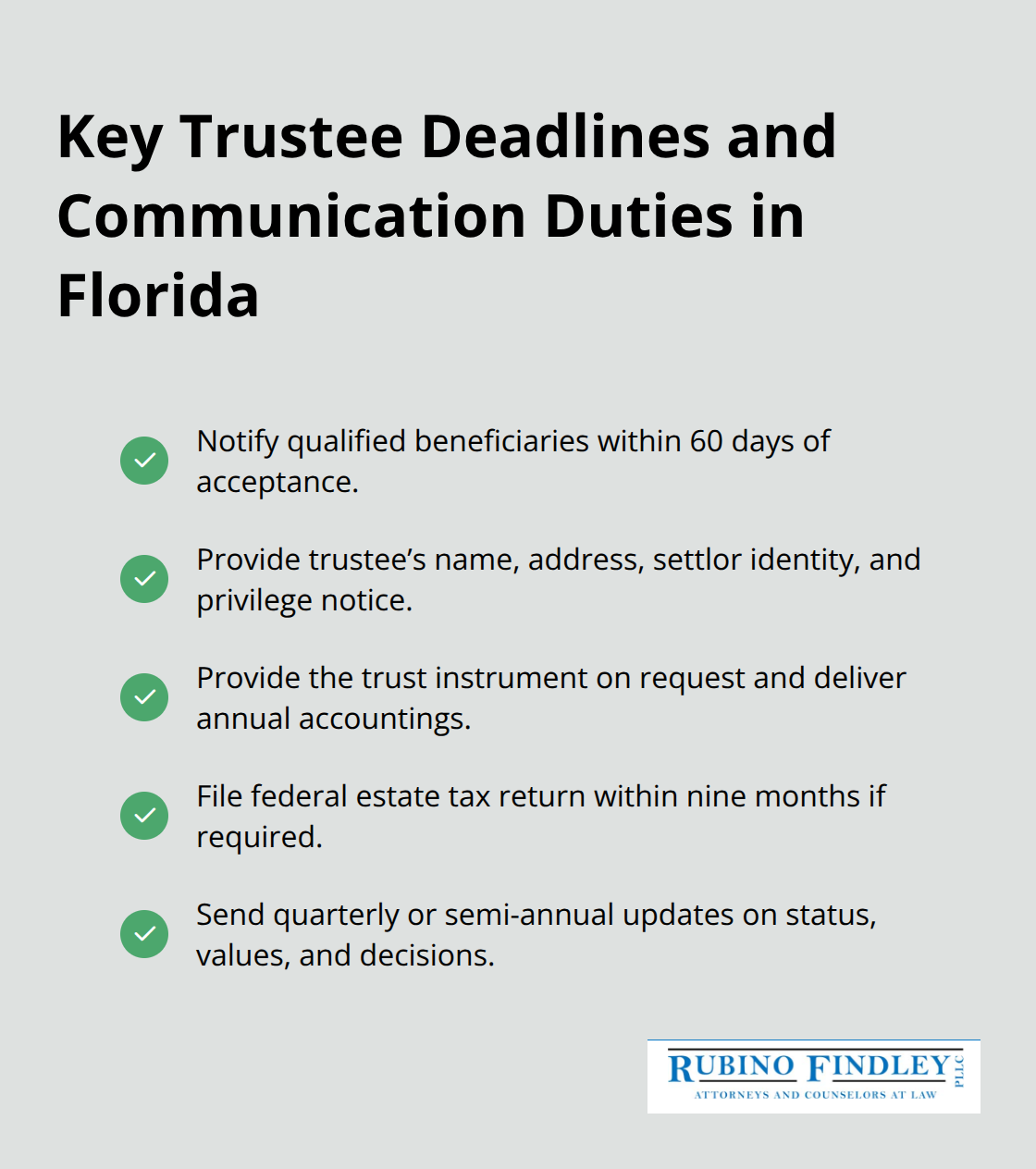
Beneficiaries need information, but trustees often withhold details to avoid conflict or simply because they don’t understand what Florida law requires. Under Florida Statutes 736.0813, the trustee must notify qualified beneficiaries within 60 days of accepting the trust, providing the trustee’s name and address, identifying the settlor, and confirming that fiduciary lawyer-client privilege protects trustee communications. Beneficiaries have the right to request a complete copy of the trust instrument and to receive annual accountings from irrevocable trusts. Failing to provide this information creates legal exposure and guarantees family tension.
The trustee who communicates proactively about asset values, distributions, timelines, and any limitations in the trust document prevents misunderstandings that later explode into litigation. Many trustees avoid these conversations because they fear difficult questions, but silence creates worse problems. Annual accountings should detail opening and closing balances, all receipts and distributions, investment performance, and fees paid. Families understand trusts better when they see the numbers and the reasoning behind distribution decisions.
Debts and Tax Obligations Often Surprise Trustees
The trustee must identify and pay valid creditor claims before distributing assets to beneficiaries. Florida law sets a claims period, and creditors can pursue the estate if proper notice isn’t given. Estate income taxes, federal estate taxes on larger estates, and state fiduciary income taxes all fall on the trustee’s shoulders. The IRS allows nine months from the date of death to file the federal estate tax return (Form 706) if the estate exceeds the filing threshold. Many trustees distribute assets too quickly without setting aside funds for taxes, creating personal liability when the bill arrives. Professional appraisals of real estate, business interests, and collectibles establish values needed for tax returns and protect against IRS challenges. Trustees should consult with an accountant or attorney before making any significant distributions to ensure tax obligations won’t exceed remaining assets.
Family Disputes Require Clear Documentation and Boundaries
When beneficiaries disagree about distributions, investment decisions, or the trustee’s compensation, litigation becomes likely unless the trustee has documented every major decision in writing. Beneficiaries sometimes claim the trustee favored one heir over another or mismanaged investments. Maintaining detailed records of all communications, investment decisions, and distributions protects the trustee legally and demonstrates good faith. If a beneficiary objects to the trustee’s actions, Florida law allows the trustee to seek judicial approval through nonjudicial settlement agreements or court proceedings. The trustee who acts transparently and follows the trust document precisely minimizes exposure to surcharge claims or removal. When family conflict threatens the trust’s administration, an attorney can help the trustee navigate trust disputes while protecting beneficiary interests and fulfilling fiduciary duties under Florida law. The next section covers the practical steps that prevent these obstacles from derailing your administration process.
How to Protect Your Administration With Documentation and Communication
Create a Master File for Every Trust
Documentation forms the backbone of trustee defense in probate trust administration. Every decision, every conversation with beneficiaries, and every distribution requires a paper trail that withstands legal scrutiny. Trustees face litigation not because they acted wrongly, but because they failed to document their actions. Create a master file for each trust that contains copies of the trust instrument, the death certificate, all beneficiary notices you’ve sent, accountings prepared, investment statements, appraisals, tax returns, and correspondence with beneficiaries or professionals. Florida Statutes 736.0813 requires trustees to maintain records that support the information provided to qualified beneficiaries, and courts expect contemporaneous documentation of major decisions.
Document Every Major Transaction and Decision
When you sell real estate, obtain a written appraisal from a licensed appraiser and file that appraisal in your trust records. When you make distributions, send written confirmation to each beneficiary showing what was distributed, when, and why. When a beneficiary asks questions, respond in writing rather than by phone. This creates an undisputed record if disputes emerge later. Many trustees use spreadsheets to track opening balances, deposits, distributions, and closing balances each month, which satisfies the accounting requirements under Florida law and prevents the accusation that funds disappeared without explanation. Annual accountings should be prepared in accordance with Florida Statutes 736.08135 standards and delivered to qualified beneficiaries by the anniversary date of the trustee’s acceptance of the trust. If a family trust company manages the trust, the terms may permit accounting only at termination or on demand, but voluntary annual accountings prevent litigation regardless.
Establish a Communication Schedule With Beneficiaries
Communication discipline prevents most trust administration disputes before they start. Within 60 days of accepting the trust, notify all qualified beneficiaries in writing of your acceptance, provide your full name and address, identify the settlor, and confirm that fiduciary lawyer-client privilege protects your communications with any attorney you hire. Then establish a communication schedule that reaches beneficiaries every quarter or semi-annually with updates on trust status, asset values, and any major decisions pending. Beneficiaries who receive regular information feel included and trust the process, while those left in the dark assume the worst. When beneficiaries request copies of the trust instrument, provide them promptly without argument. When they ask about asset values, respond with current statements. When they question distributions or investment decisions, explain the trust language and your reasoning.
Respond Promptly to Beneficiary Requests
This approach costs nothing but time and prevents expensive litigation. If family members fundamentally disagree about distributions or the trustee’s compensation, a nonjudicial settlement agreement allows all interested parties to resolve the matter without court involvement, provided the outcome could receive court approval. An attorney can draft these agreements to bind all parties and prevent future claims. The trustee who acts with transparency and follows the trust document precisely minimizes exposure to surcharge claims, removal, or disputes that consume years and drain estate assets. Professional guidance ensures you meet Florida’s strict requirements while protecting yourself and your beneficiaries.
Final Thoughts
Probate trust administration in Boca Raton demands attention to detail, consistent communication, and strict adherence to Florida law. Trustees who notify beneficiaries promptly, maintain comprehensive records of every decision, prepare annual accountings, and respond to requests without delay prevent disputes before they start and protect themselves legally when questions arise later. Florida Statutes Chapter 736 enforces fiduciary duties strictly, and courts hold trustees accountable for failures in communication, documentation, or accounting that drain estates and damage family relationships.
Professional guidance matters because trust administration involves tax obligations, creditor claims, and beneficiary rights that interact in complex ways and catch unprepared trustees off guard. An attorney familiar with Florida probate law can review your trust document, identify potential pitfalls specific to your situation, and ensure you meet statutory deadlines and requirements. The time to seek guidance is now, not after problems develop and litigation becomes necessary.
We at Rubino Findley, PLLC help trustees and executors navigate probate trust administration throughout Palm Beach County. Contact us to schedule a consultation and discuss your specific situation with someone who understands Florida estate law and the practical challenges trustees face.