




Estate Planning vs Financial Planning: Key Differences
Many people confuse estate planning with financial planning, thinking they’re the same thing. They’re not-and that confusion can leave your family and assets unprotected.
At Rubino Findley, PLLC, we help Palm Beach County residents understand how these two strategies work differently and why you need both. This guide breaks down estate planning vs financial planning so you can build a complete protection strategy.
What Estate Planning Actually Does
How Estate Planning Protects Your Assets and Family
Estate planning controls what happens to your assets, property, and family decisions if you become incapacitated or pass away. Without it, Florida’s intestacy laws take over-the state decides who inherits your home, bank accounts, and investments, regardless of your actual wishes. According to AARP, probate in Florida stretches beyond a year and consumes 3–7% of your estate’s value in costs alone. An estate plan protects your family from costly delays by establishing clear legal documents that direct asset distribution, name guardians for minor children, and authorize trusted people to make financial and medical decisions on your behalf.
The Documents That Make Your Plan Work
The documents that compose an estate plan serve specific functions. A will outlines how your assets transfer after death and names an executor to manage the process. A revocable living trust allows your assets to pass outside probate entirely, meaning faster distribution and complete privacy-your family won’t see court filings or delays. A durable power of attorney names someone to handle your finances if you’re unable to do so, while a healthcare directive specifies your medical preferences and designates who makes health decisions if you can’t.
Why Boca Raton Residents Benefit From Proper Planning
These documents work together to eliminate gaps. Boca Raton residents particularly benefit from trusts because Florida has no state estate tax, making the focus shift to avoiding probate delays and protecting assets from creditors. Without these documents in place, your family faces court proceedings, potential disputes over your wishes, and months of waiting to access accounts or settle your estate. An experienced estate planning attorney from Rubino Findley, PLLC in Boca Raton can help Palm Beach County families establish these documents properly so everything functions smoothly when it’s needed most.
Now that you understand what estate planning accomplishes, the next step involves recognizing how financial planning operates differently-and why you need both strategies working together.
What Financial Planning Actually Accomplishes
How Financial Planning Builds Wealth During Your Lifetime
Financial planning focuses on growing and protecting your money during your lifetime to meet specific goals-retirement, education funding, home purchase, or wealth accumulation. Where estate planning handles what happens after you’re gone, financial planning addresses what happens right now.
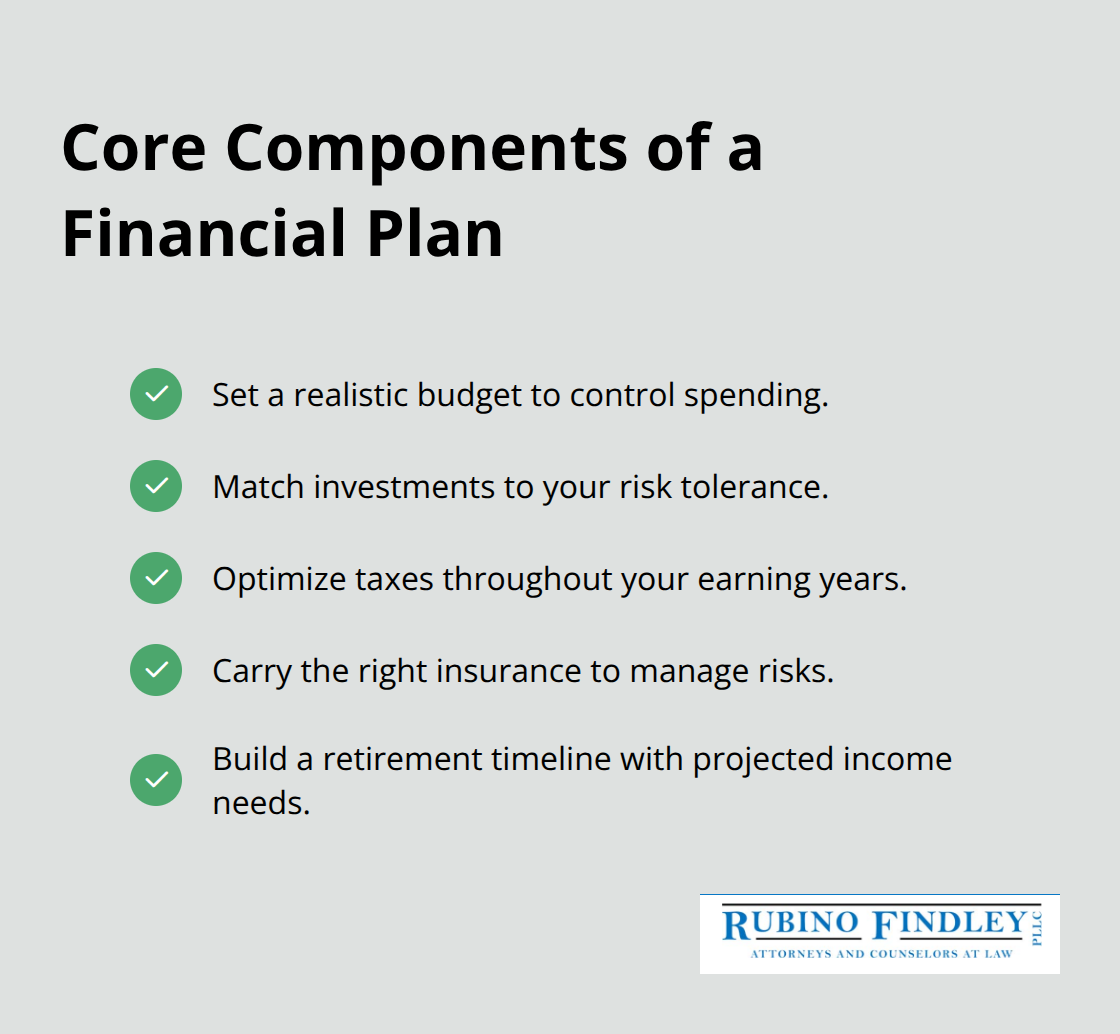
A financial plan typically includes budgeting strategies to control spending, investment allocation matched to your risk tolerance, tax optimization throughout your earning years, insurance coverage to protect against unexpected losses, and a retirement timeline with projected income needs.
Real Goals Financial Planning Addresses
For Palm Beach County residents, this might mean calculating how much you need to save monthly to retire at 60, determining whether a rental property investment makes sense given your income, or adjusting your portfolio after a significant inheritance. The American Bar Association emphasizes that estate planning is an ongoing process, and the same applies to financial planning-life changes like a promotion, bonus, or market downturns require adjustments to your strategy.
The Timing and Purpose That Separate the Two
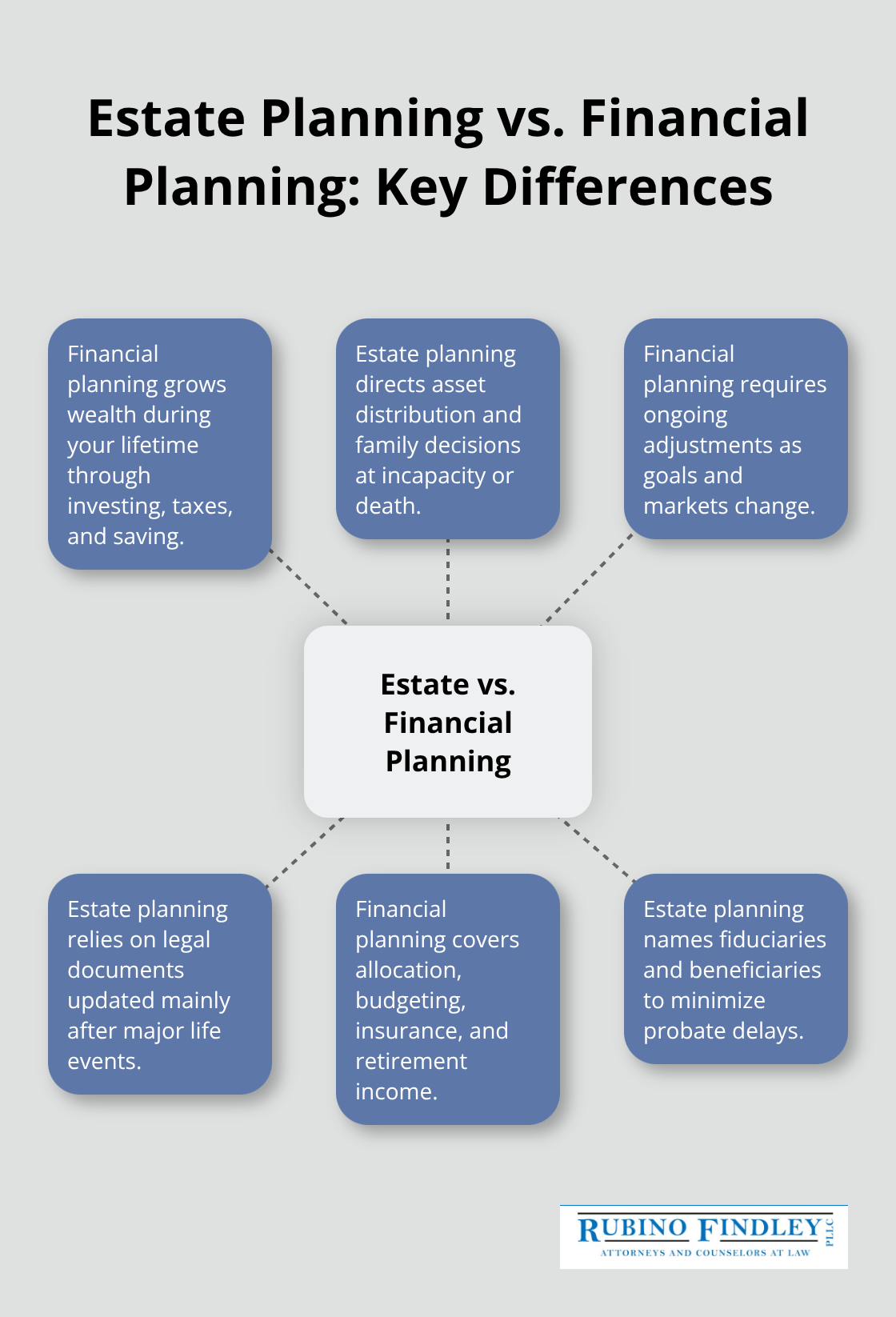
Financial planning answers questions like: How much should I invest in stocks versus bonds? Can I afford to pay off my mortgage early? Do I have enough saved for healthcare costs in retirement? Estate planning answers: Who inherits my house? Who manages my assets if I’m incapacitated? How do I minimize probate delays for my family? Financial planning is built on projections and ongoing adjustments; estate planning is built on legal documents that remain relatively static until major life events trigger updates.
How Often You Update Each Strategy
You might work with a financial advisor to rebalance your investments quarterly, but you’ll work with an estate planning attorney perhaps every 3–5 years for document reviews. Neither replaces the other-a comprehensive financial strategy paired with proper legal documents ensures your wealth grows efficiently during your lifetime and transfers smoothly afterward. Understanding how these two strategies complement each other reveals why most Palm Beach County families need both working in tandem.
How Estate Planning and Financial Planning Work Together
Alignment Creates Financial Security
Your financial plan and estate plan must communicate with each other, or you’ll create gaps that cost your family time and money. Financial planning builds your wealth through smart investment decisions, tax optimization, and disciplined saving. Estate planning ensures that wealth transfers to the people you choose, on the timeline you prefer, without court delays. The problem: many Palm Beach County residents treat these as separate projects handled by different professionals who never speak to one another. If your financial advisor recommends maxing out your retirement accounts but your estate plan doesn’t address how those assets transfer to your beneficiaries, you’ve solved half the problem.
The Cost of Treating Them Separately
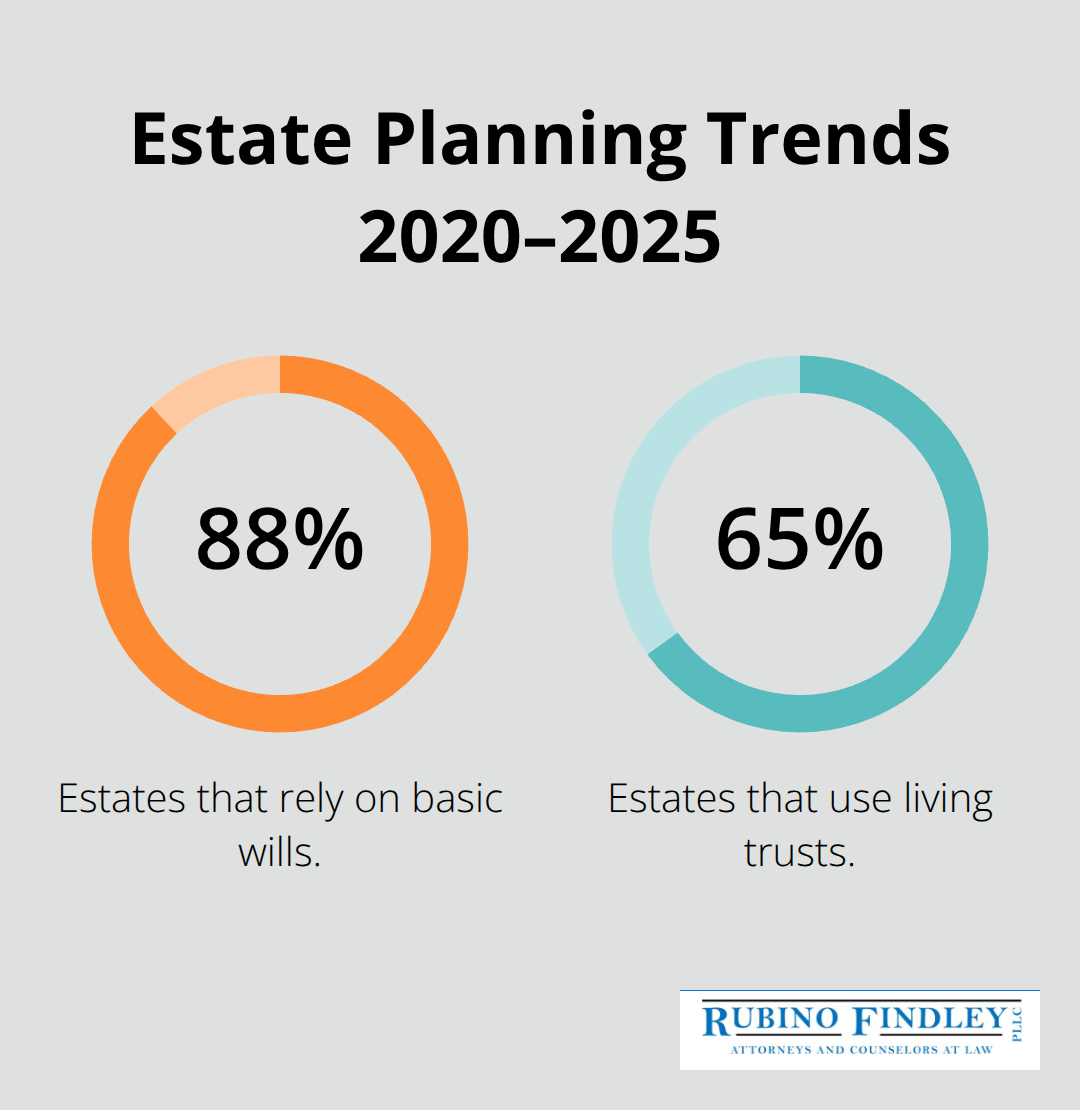
According to Estate Planning Trends 2020–2025, 88% of estates rely on basic wills, yet only 65% use living trusts-meaning most people have legal documents that send their assets through probate anyway, regardless of how efficiently they accumulated them. Your financial success means nothing if your family spends 3–7% of your estate’s value paying probate costs in Florida while waiting months to access accounts. The two strategies must align: your investment allocation should match your estate plan’s distribution timeline, your insurance coverage should reflect who depends on your income, and your tax planning should account for both lifetime strategies and post-death transfers.
Integration Prevents Costly Mistakes
The misconception that these two fields operate independently has cost Palm Beach County families thousands in unnecessary taxes and delays. If you’ve built a portfolio worth $2 million through disciplined investing but your will sends everything through probate, you’ve optimized your growth while guaranteeing your heirs face court proceedings, legal fees, and public disclosure of your assets. Conversely, an iron-clad estate plan with trusts means nothing if your financial plan leaves you underfunded for retirement, forcing you to raid accounts designated for your beneficiaries. Your financial advisor should know your estate plan exists; your estate planning attorney should understand your investment structure and insurance coverage. This coordination prevents scenarios where you’ve named the wrong beneficiary on a retirement account, where your trust assets don’t align with your actual holdings, or where your tax strategy during life conflicts with your distribution goals after death.
What Coordination Looks Like in Practice
When your financial and estate strategies work together, your beneficiary designations on retirement accounts match your trust structure, your life insurance proceeds flow to the right accounts at the right time, and your tax burden shrinks both during your lifetime and after your death. Palm Beach County families who coordinate these strategies avoid probate delays, minimize tax liability, and ensure their heirs receive assets efficiently. The only way to achieve complete financial security is treating these as one unified system, not two separate boxes.
Final Thoughts
Estate planning and financial planning serve different purposes, but they’re equally important for protecting your family and wealth. Financial planning grows your assets during your lifetime through smart investing, budgeting, and tax strategies, while estate planning ensures those assets transfer to your chosen beneficiaries without probate delays, court costs, or state interference. The distinction between estate planning vs financial planning matters because treating them as separate projects leaves gaps that cost your family thousands of dollars and months of waiting.
Palm Beach County residents who coordinate both strategies avoid these costly mistakes. Your financial advisor needs to know your estate plan exists, and your estate planning attorney needs to understand your investment structure and insurance coverage. When these professionals communicate, your beneficiary designations align with your trust structure, your tax burden shrinks both during life and after death, and your heirs receive assets efficiently without probate proceedings.
The sooner you establish proper documents and align them with your financial strategy, the more protection you build for the people who depend on you. We at Rubino Findley, PLLC help Palm Beach County families create wills, trusts, powers of attorney, and other documents that work seamlessly with their overall financial picture. Contact our team to discuss your specific situation and understand what documents you need for your family.