



Probate Timing Florida: Planning For Short And Long Delays
Probate in Florida can take anywhere from months to years, and the timeline depends heavily on your estate’s complexity and whether disputes arise. At Rubino Findley, PLLC, we help families understand probate timing in Florida so they can plan accordingly.
The good news is that many delays are preventable with proper planning and the right guidance from the start.
How Long Does Probate Actually Take in Boca Raton
Summary Administration for Smaller Estates
Summary administration moves fastest for smaller estates, typically wrapping up in less than a month if the total value stays at or below $75,000 with no known creditors. This streamlined path requires all beneficiaries’ consent, an original death certificate, and the decedent’s paid funeral bill. The court order often arrives within a few weeks, making it the quickest option available under Florida law.
Formal Probate Timelines in Palm Beach County
Formal probate, the full court-supervised process, generally takes 12 to 15 months in Palm Beach County, though straightforward uncontested estates can close in 6 to 9 months. The timeline hinges on statutory waiting periods that Florida law mandates regardless of how organized you are. Florida requires the will to be filed within 10 days of learning about the death, and creditor notices must be published in the county newspaper for at least two weeks. Known creditors get 30 days from service to file claims, while unknown creditors have three months from publication. These windows are non-negotiable, meaning even a perfectly administered estate hits a minimum baseline of several months before distributions can happen.
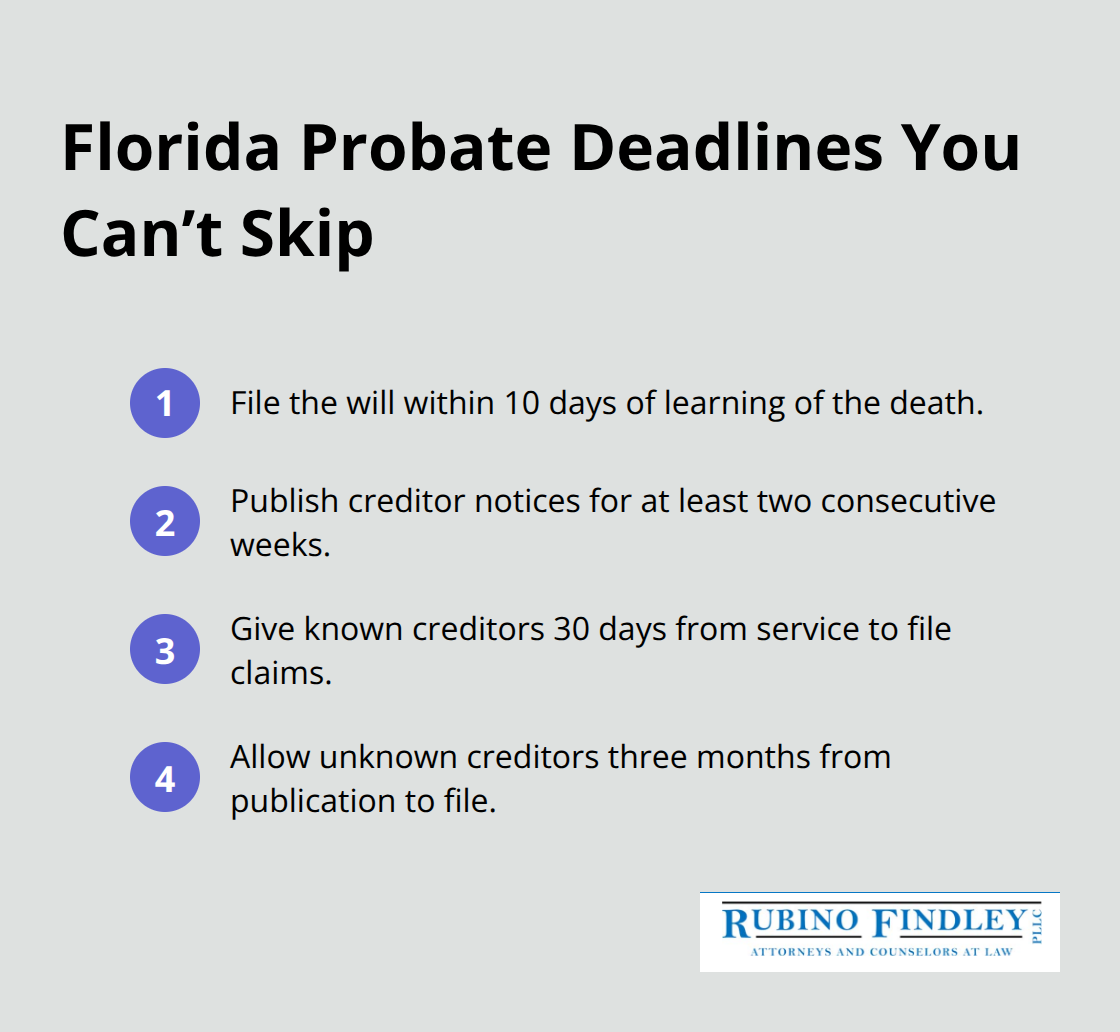
The three-month creditor objection window alone sets the floor for how fast probate can move, and final income tax filings often push the true completion date into the following calendar year, even after beneficiaries receive their shares.
Real Estate and Asset Complications
Real estate ownership is the single biggest driver of longer timelines, especially when family members disagree about selling or when title issues surface. If a home needs to be sold, factor in appraisals, marketing, inspections, and closing-often adding four to eight months beyond the administrative close. An occupying heir who refuses to leave the property can freeze the entire process, and probate litigation over partition actions (forcing a sale of jointly owned property) creates fire-sale conditions and lengthy court battles. Debts and unpaid taxes also extend the timeline because creditors must be satisfied before distributions occur, and if the estate contests a claim or discovers unexpected liabilities, additional court hearings delay closure.
Documentation and Early Planning
Missing or incomplete documentation-a lost deed, unclear asset ownership, or a will stored in an unknown location-cascades into amended filings and court corrections that add weeks or months. Organize all important documents upfront, designate someone to locate the will immediately, and have an attorney review estate plans before probate begins to catch problems early and avoid preventable delays. These steps reduce friction during administration and position your family to move through the process more smoothly. The disputes that follow-among heirs, over asset valuations, and around complex debts-often determine whether your estate closes on schedule or faces months of additional court involvement.
What Derails Probate in Boca Raton
Family Conflict Over Assets and Distributions
Family conflict over who receives what remains the most destructive force in Florida probate, and it accounts for a significant portion of cases that stretch beyond 12 months. When heirs disagree about the will’s validity, the personal representative’s actions, or how assets should be distributed, the estate enters contested territory. Will contests and disputes over interpretation require court resolution, which means depositions, motions, and hearings that consume months.
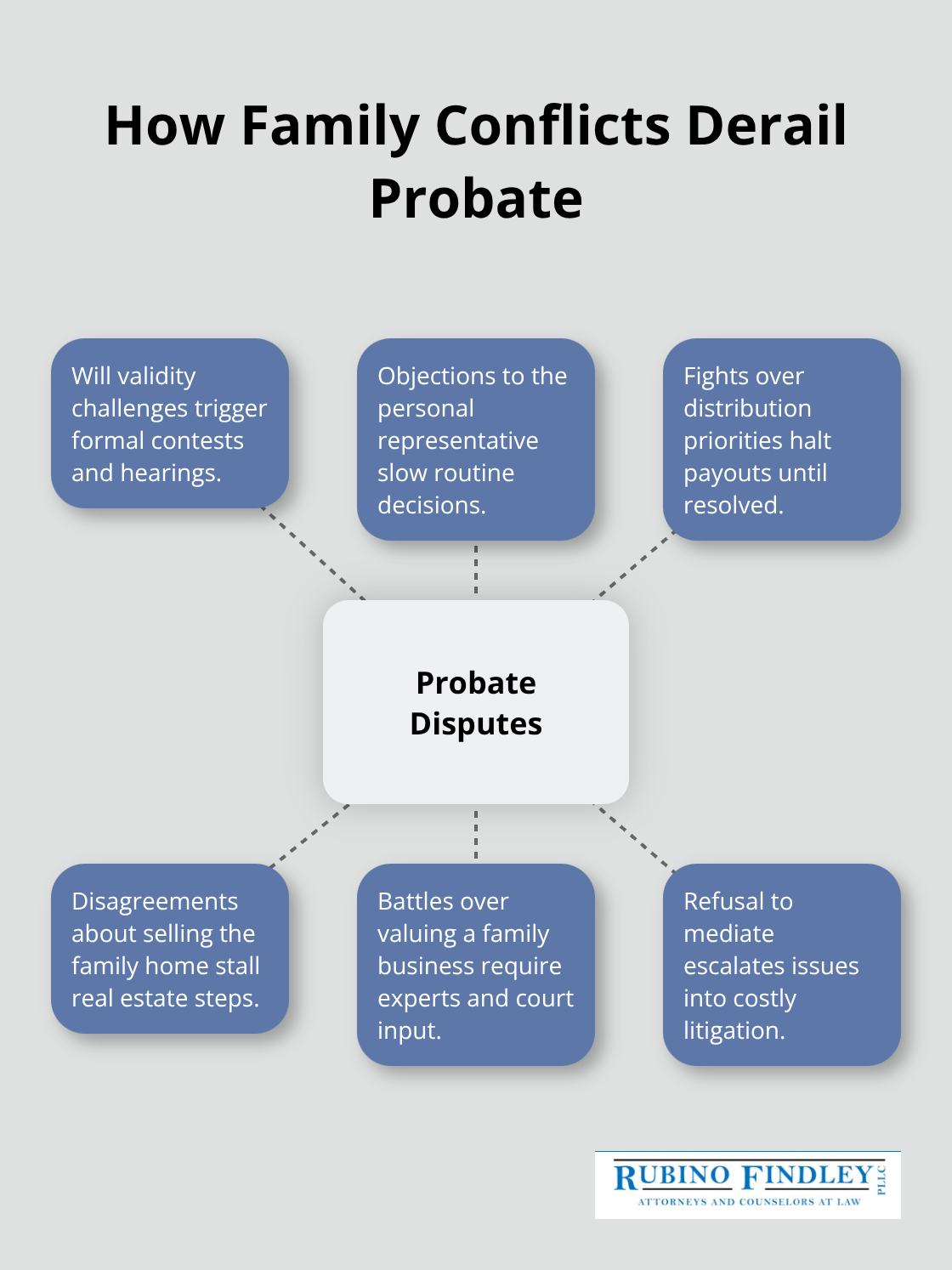
A disagreement between a surviving spouse and adult children over whether to sell the family home, or tension between beneficiaries over valuation of a family business, forces the personal representative into a defensive position. You cannot distribute assets while a contest is pending, and even minor disagreements can escalate into formal litigation if beneficiaries refuse mediation. Legal fees and court costs erode the estate value that heirs actually receive.
Communication Reduces Misunderstandings
Transparent updates about asset values, debts, and timelines reduce misunderstandings that turn into objections. Communicate through your attorney with all beneficiaries from the start. This approach prevents disputes from hardening into positions that require court intervention. When beneficiaries understand the process and receive regular updates, they are far less likely to challenge the personal representative’s decisions or contest distributions.
Asset Valuations and Hidden Debts
Complex asset valuations and undiscovered debts create a second major delay. Real estate appraisals take weeks, business valuations require forensic accountants, and retirement accounts with beneficiary designations must be verified against the actual account records to avoid disputes. Unknown creditors have three months from publication of the Notice to Creditors to file claims, meaning the estate cannot fully close until that window expires. If the decedent owned a commercial property with liens or had outstanding tax liabilities that surface late, the personal representative must resolve these before distributions happen.
Documentation Problems That Cascade
Missing or invalid documentation-a deed recorded under a different name, a will stored in a safe deposit box no one knew about, or unclear ownership of investment accounts-forces amended filings and additional court approvals. The worst scenario occurs when the original will cannot be located within 10 days of death; Florida law requires filing within that window, and delays in finding it cascade into every subsequent deadline. Organize all documents now: store the will in a known location, keep a current inventory of bank accounts and property titles, and designate someone responsible for locating these materials immediately after death.
Outdated Estate Plans Invite Disputes
An outdated or ambiguous estate plan invites disputes that extend timelines significantly. Have an attorney review your documents every three to five years to catch inconsistencies before probate begins. This proactive step prevents the conflicts that arise when beneficiaries interpret unclear language differently or when asset ownership no longer matches what the will describes. The next section examines how to prevent these delays through strategic planning and professional guidance.
How to Actually Speed Up Probate in Boca Raton
Hire an Attorney Who Knows Florida Probate Law
The fastest way to reduce probate delays is to work with an attorney who understands Florida’s probate code and navigates procedural requirements without wasting time on avoidable mistakes. Florida requires the will filed within 10 days of death, creditor notices published within specific timeframes, and claims objections handled on tight schedules-miss any of these and you add weeks to the timeline. An attorney catches filing errors before the court rejects them, coordinates with creditors efficiently, and files complete documentation the first time rather than submitting incomplete paperwork that courts send back for corrections. In Palm Beach County, formal probate typically runs 12 to 15 months, but that baseline assumes everything goes smoothly; an attorney prevents the procedural stumbles that push timelines to 18 months or beyond.
Communicate Transparently With Beneficiaries
An attorney communicates with beneficiaries on your behalf, which reduces misunderstandings that turn into objections and formal disputes. When beneficiaries hear updates through counsel rather than directly from the personal representative, they feel the process is transparent and less likely to challenge decisions. This communication discipline alone prevents months of litigation in many estates. Real estate sales move faster when an attorney coordinates with appraisers, title companies, and buyers simultaneously rather than letting these tasks stack sequentially. The attorney also handles creditor claims strategically-objecting to invalid claims promptly and settling legitimate ones early so the estate can close without waiting for every possible claim to expire.
Organize Estate Documents Now
Organizing your estate documents now eliminates the delays that plague probate later. Create a written inventory of all bank accounts, real estate deeds, investment statements, life insurance policies, and retirement account beneficiary designations, then store this list somewhere accessible so your family can locate assets quickly. Title all major assets clearly and consistently; if your home is titled under your name but your brokerage account is under a variation of your name, that inconsistency creates title issues that require amended filings during probate.
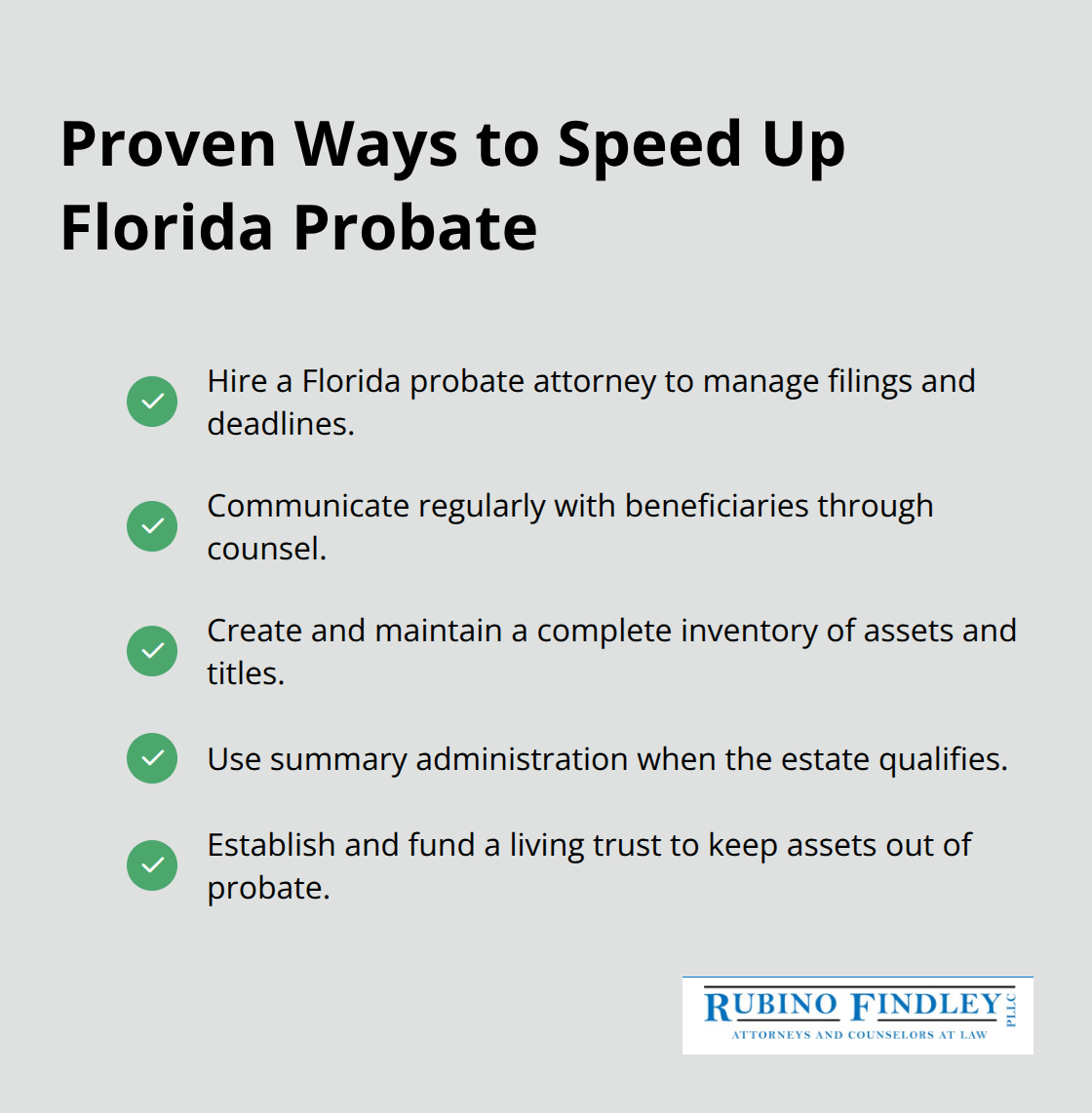
Store the original will in a safe location and tell your designated executor exactly where it is-a will stored in an unknown safe deposit box or attorney’s office becomes impossible to retrieve within the 10-day filing window, which cascades into every subsequent deadline.
Consider Summary Administration or Trusts
Try summary administration if it qualifies for your situation; estates with assets totaling $75,000 or less and no known creditors can close in weeks rather than over a year, provided all beneficiaries consent upfront. For larger estates, trusts bypass probate entirely and allow distributions to happen privately without court involvement, though trusts require careful administration and regular beneficiary communication to prevent disputes. A living trust funded during your lifetime keeps real estate and investment accounts out of probate, which eliminates court delays, publication requirements, and creditor claim periods. The tradeoff is that trusts demand more attention during administration-no court oversight means beneficiaries must trust the trustee to handle accountings and distributions fairly, so build in mandatory accountings and third-party reviews at key milestones to maintain transparency.
Work With Rubino Findley, PLLC for Your Situation
Rubino Findley, PLLC helps Palm Beach County families choose between probate and trust-based planning based on their specific assets, family dynamics, and goals. Reach out to discuss which approach fits your situation and how to structure your estate plan to minimize delays and protect your family’s interests.
Final Thoughts
Probate timing in Florida hinges on planning decisions you make today, not on luck or court schedules. Formal probate in Palm Beach County typically takes 12 to 15 months, but summary administration can close in weeks if your estate qualifies. The difference between a smooth process and one that stretches into years often comes down to whether you organized your documents, communicated clearly with beneficiaries, and chose the right administration path before probate began.
The statutory waiting periods-the 10-day will filing window, the two-week creditor publication requirement, and the three-month creditor claim period-are non-negotiable, and you cannot speed past these deadlines. You can, however, eliminate the delays that stack on top of them by addressing missing documents, unclear asset ownership, family disputes, and procedural errors before they derail your estate. An organized estate plan with a clear will or funded trust, combined with transparent communication and professional guidance, prevents most of these delays from taking root.
Start now by creating a written inventory of your assets, storing your will in a known location, and designating someone responsible for locating it immediately after your death. Have an attorney review your estate plan every three to five years to catch inconsistencies before probate begins. We at Rubino Findley, PLLC help Palm Beach County families establish wills, trusts, and durable powers of attorney that protect their interests and minimize delays when probate becomes necessary-reach out to schedule a free consultation and discuss which planning approach fits your family’s needs.