




Pet Trust Planning Florida: How to Protect Your Pet’s Future
Your pet depends on you for everything-including what happens to their care and finances if you’re no longer able to provide it. Most pet owners never think about pet trust planning in Florida, leaving their beloved companions vulnerable.
At Rubino Findley, PLLC, we help families create legally binding plans that protect their pets’ futures. This guide walks you through the options available to you.
Why Pet Trust Planning Matters in Florida
Pet Ownership and the Planning Gap
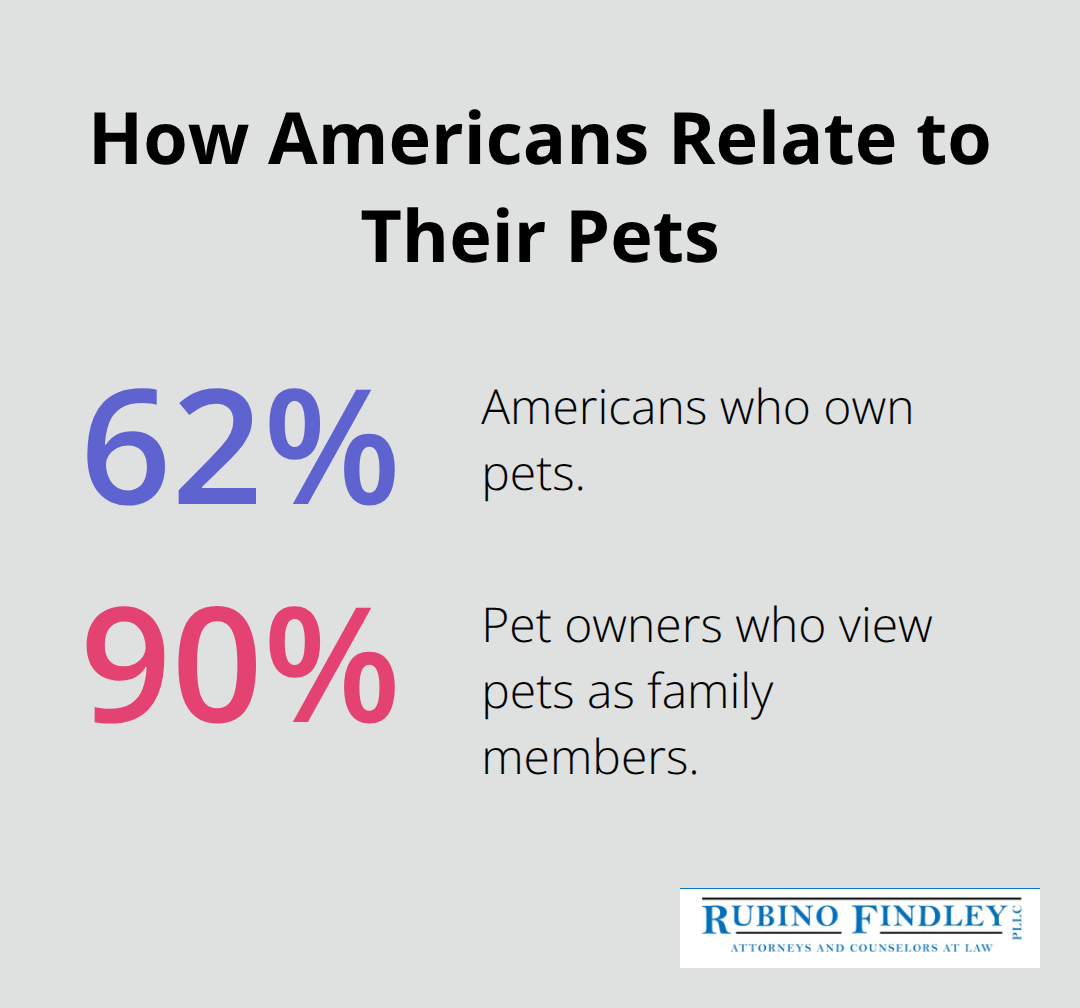
About 62% of Americans own pets, with roughly 90% viewing them as family members, according to The Harris Poll. Yet most pet owners never create a legal plan for their animals’ care. In Florida, this oversight creates a dangerous gap between what owners want and what actually happens when illness, injury, or death strikes. Without a written pet trust or guardianship plan, your pet could end up in a shelter, with someone you wouldn’t have chosen, or worse.
Florida’s Legal Framework for Pet Protection
Florida law recognizes pet trusts under Florida Statutes §736.0408, which means you have a legitimate legal tool to prevent this outcome. The statute allows you to establish a trust that lasts for your pet’s entire lifetime and designates exactly who cares for them and how their care gets funded. This isn’t optional paperwork-it’s the difference between your pet receiving the life you want for them and an uncertain future.
Real Consequences of Inaction
Shelters across the country euthanize thousands of animals annually because owners died or became incapacitated without naming a caregiver. Your family members might assume they’ll step in, but assumptions create conflict and delays. One person may be unwilling to take on a 15-year commitment, another may lack the financial resources, and a third might disagree on medical decisions. Meanwhile, your pet waits in a boarding facility with bills mounting daily.
What a Pet Trust Actually Protects
Florida allows pet trusts to specify not just who cares for your pet but how much money goes toward that care, what decisions the caregiver can make, and what happens if the first caregiver becomes unavailable. You can name backup caregivers, set aside funds for veterinary emergencies, and even designate how remaining money flows to animal charities after your pet dies. These protections transform a vague hope into a legally enforceable plan that courts will uphold.
Now that you understand why pet planning matters, the next step is learning how to actually set up a pet trust in Florida and make these protections real.
How to Set Up a Pet Trust in Florida
Separate Your Trustee and Caregiver Roles
Setting up a pet trust in Florida requires three concrete decisions: who manages the money, how much money you set aside, and what instructions you leave behind. The difference between a pet trust that works and one that fails often comes down to these specifics. Florida Statutes §736.0408 gives you the legal framework, but you need to fill in the details that match your pet’s actual life.
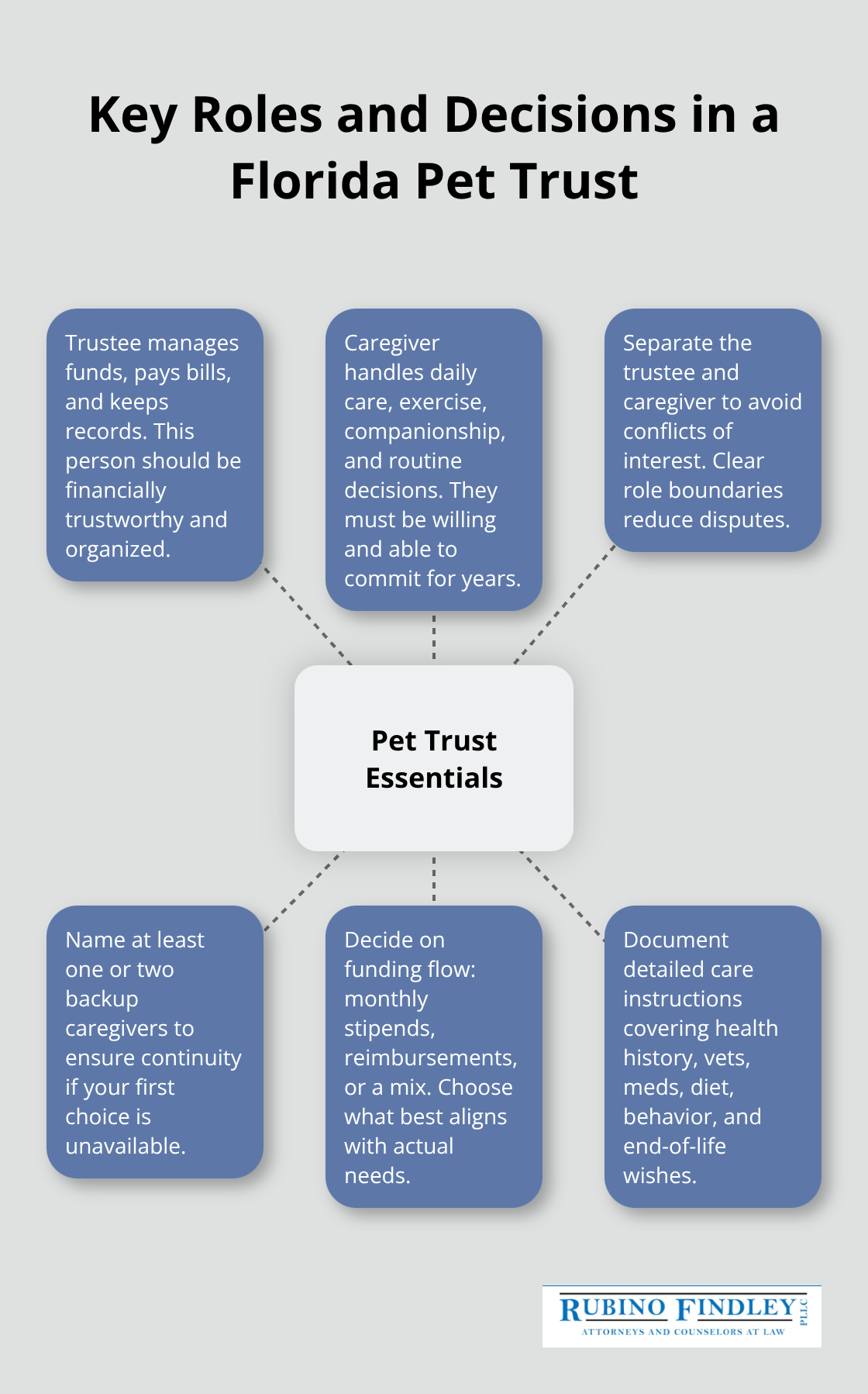
Start by separating the two roles that many people mistakenly combine. Your trustee manages the funds and pays bills, while your caregiver provides daily care like feeding, exercise, and companionship. Combining these roles creates a conflict of interest and invites disputes. Name someone you trust completely with money as your trustee, and name someone physically capable and willing to commit years to your pet as the caregiver.
These should be different people.
Choosing the Right Trustee and Caregiver
For your trustee, pick someone organized who understands basic financial management or will work closely with an accountant. Many people name a financial institution, a family member with accounting experience, or a professional fiduciary. Your caregiver must genuinely want the responsibility and will spend years with your pet, making daily decisions about their health, behavior, and comfort.
Ask potential caregivers directly if they can commit long-term, and be honest about your pet’s needs, costs, and personality quirks. Don’t assume a family member will automatically step up. Name backup caregivers as well-at least one or two additional people who can take over if your first choice becomes unavailable or unwilling.
Calculate Realistic Expenses and Funding Methods
Funding your pet trust requires calculating realistic expenses and deciding how to deliver money to the caregiver. Average annual costs for dogs run around $600, cats around $400, and birds around $250 according to common estimates, but your pet’s actual costs depend on age, health conditions, and your preferences. If your dog requires specialized arthritis medication or your cat needs kidney-friendly food, expenses climb significantly.
Add emergency reserves for unexpected veterinary bills, which can easily exceed $2,000. Many people fund pet trusts through life insurance policies, which provide a lump sum to the trust upon death, or through direct transfers from savings accounts. Life insurance works especially well for long-lived pets like parrots that can live 40 years or more. Decide whether your caregiver receives monthly payments, reimbursement for actual expenses, or a combination of both (monthly payments offer predictability, while reimbursement aligns spending with actual needs).
Document Your Pet’s Complete Health and Care Instructions
Document your pet’s complete health history, current veterinarians, medications, dietary requirements, behavioral habits, exercise routines, and any fears or preferences. Write down what your pet eats daily, favorite toys, how they respond to strangers, and whether they get anxious during thunderstorms. Include the names and phone numbers of your current veterinarian and any specialists your pet sees.
Specify your wishes for end-of-life care, such as whether you want euthanasia considered if your pet faces terminal illness or severe pain, and whether you prefer burial, cremation, or another option. Add identification details like microchip numbers, tattoos, or distinctive markings so the trustee can verify the correct animal receives care. These instructions transform abstract good intentions into actionable guidance that your caregiver can actually follow.
Prepare for Transitions and Ongoing Oversight
Once you’ve named your trustee and caregiver, established funding, and documented care instructions, you’ve created the foundation for your pet’s protection. However, a pet trust only works if the people involved understand their roles and the caregiver actually receives the funds when needed. The next step involves choosing the right legal documents to formalize these arrangements and ensure your pet trust integrates properly with your overall estate plan.
Legal Documents That Protect Your Pet in Boca Raton
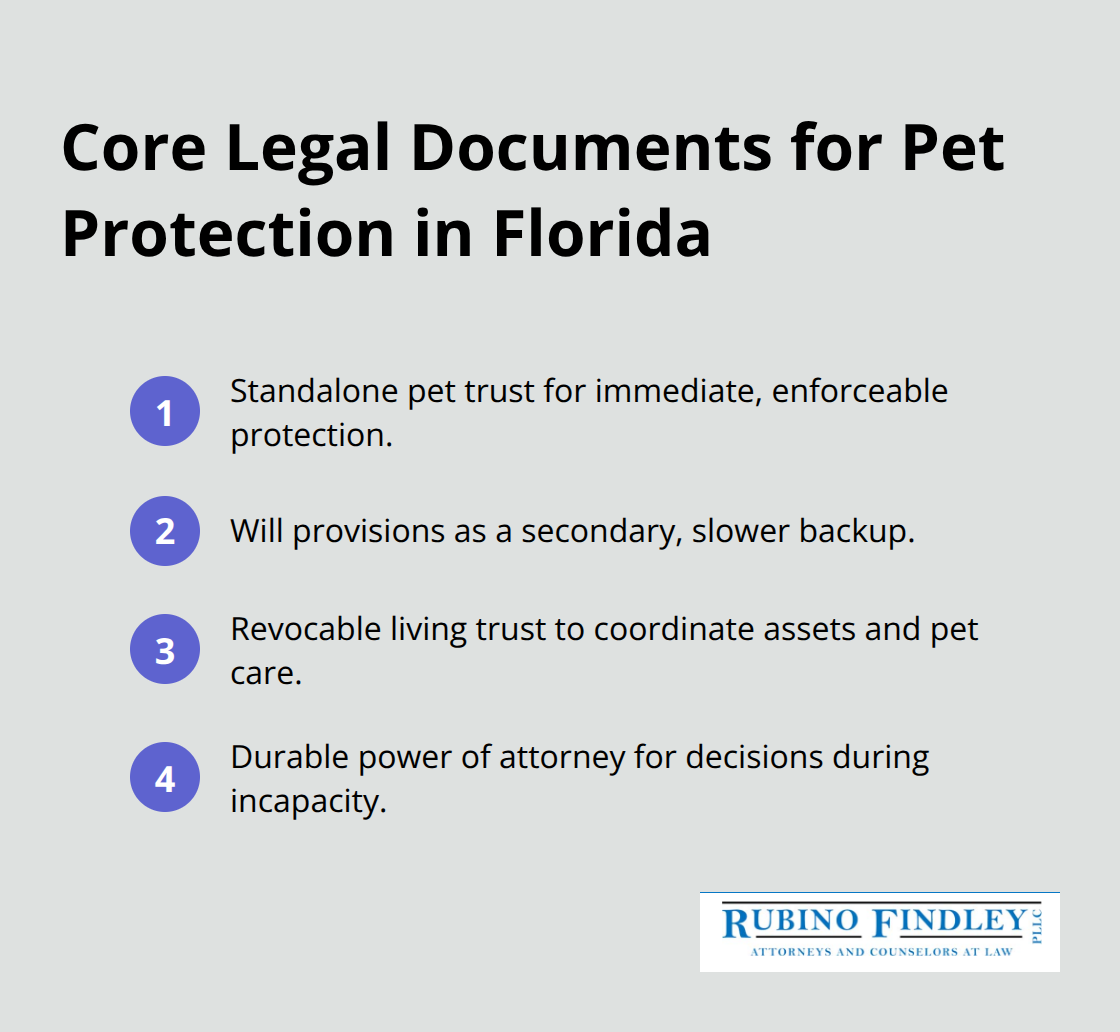
A pet trust in Florida requires the right legal documents to actually function when you need it most. Many pet owners mistakenly think a handwritten note or a verbal conversation with a family member counts as a plan, but Florida courts won’t enforce vague intentions. You need formal documentation that specifies your pet’s caregiver, the trustee managing funds, and the exact instructions for care. The choice between a standalone pet trust, provisions in your will, a revocable living trust that includes pet care language, and a durable power of attorney comes down to your specific situation and how quickly you need the plan to take effect.
Standalone Pet Trusts Offer Immediate Protection
A standalone pet trust funded during your lifetime offers the clearest path forward. Florida Statutes §736.0408 authorizes this approach, allowing you to transfer money to the trust immediately and designate an enforcer who ensures the caregiver receives funds without waiting for probate. This matters because probate in Florida typically takes six to twelve months, and your pet cannot wait that long for money to arrive. If you fund a standalone pet trust through a life insurance policy or a dedicated savings account now, your pet’s caregiver accesses money within days of your death. The trustee then uses that money exclusively for your pet’s benefit, with the court able to step in if disputes arise about how funds are spent.
Include detailed care instructions in the trust document itself, not in a separate note that might get lost. Specify monthly payment amounts to your caregiver, backup caregivers if the first becomes unavailable, and how remaining funds flow to animal charities or your estate after your pet dies. The enforcer role can be filled by someone you name in the trust or, if you name no one, a court will appoint someone if needed. Many people choose a professional fiduciary or their attorney as enforcer since this person must monitor the trustee’s actions and ensure the caregiver receives proper compensation.
Will-Based Pet Provisions Create Secondary Protection
Including pet care provisions in your will creates a second layer of protection but carries significant timing problems. Your will only takes effect after probate concludes, meaning your pet waits months without clear legal direction or immediate funding. Courts generally treat pet provisions in wills as advisory rather than binding, giving judges discretion to ignore your stated wishes if they believe better arrangements exist. A will works best as a backup mechanism that names your preferred caregiver and trustee, reinforcing those same designations you made in your pet trust.
Revocable Living Trusts Coordinate Pet and Estate Planning
If you have a revocable living trust that covers your overall estate, add pet trust language to that document to keep everything coordinated and allow your successor trustee to manage both your assets and your pet’s care without separate legal proceedings. The revocable living trust avoids probate entirely, which accelerates funding to your caregiver by months compared to a will-based approach. This integration simplifies administration and reduces the chance that your pet’s care instructions get overlooked during the settlement of your estate.
Durable Power of Attorney Protects Your Pet During Incapacity
A durable power of attorney serves a different purpose: it names someone to make immediate medical and financial decisions for your pet if you become incapacitated but are still living. This document matters because it prevents a guardianship proceeding if you suffer a stroke or accident and cannot communicate your pet’s care wishes. Your agent under the power of attorney can authorize emergency veterinary surgery, manage your pet’s daily care, and access funds in your accounts to pay for that care while you recover or while your estate is being settled. Without this document, hospitals and veterinarians may refuse to take direction from anyone except a court-appointed guardian, delaying critical care decisions.
Final Thoughts
Pet trust planning in Florida protects what matters most when you cannot act. Name a trustee to manage funds, designate a caregiver for daily care, calculate realistic expenses, document your pet’s health and behavioral needs, and choose the right legal documents to formalize everything. A standalone pet trust funded during your lifetime offers the fastest protection, while a revocable living trust coordinates pet care with your broader estate plan.
Without these documents in place, your pet faces uncertainty. Family members may disagree about care decisions, probate delays can leave your pet without immediate funding, and courts may override your stated wishes if they lack legal force. Thousands of animals enter shelters annually because owners died without naming a caregiver or trustee.
Professional legal guidance transforms good intentions into enforceable plans. At Rubino Findley, PLLC, we help families throughout Palm Beach County establish wills, trusts, powers of attorney, and pet trust provisions that work together seamlessly. Contact Rubino Findley, PLLC to schedule a free consultation and learn how we can help you secure your pet’s future with a comprehensive estate plan.