



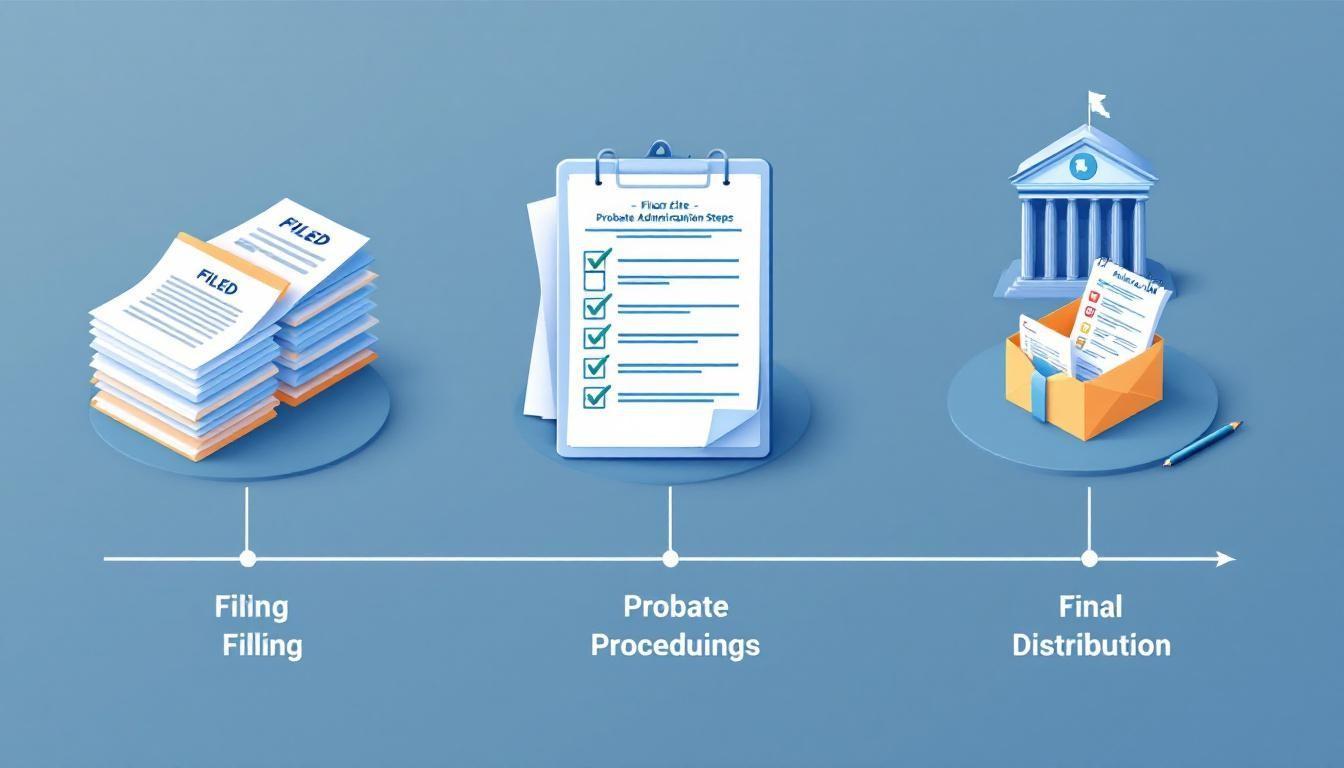
Probate Administration Steps Florida: From Filing to Final Distribution
Probate administration in Florida can feel overwhelming when you’re grieving and managing an estate at the same time. The process involves multiple steps, strict deadlines, and specific court requirements that vary significantly from other states.
We at Rubino Findley, PLLC help families in Boca Raton navigate these probate administration steps in Florida with clarity and confidence. This guide walks you through each phase, from filing your initial petition to distributing assets to beneficiaries.
Understanding Florida Probate Administration
What Probate Is and Why It Matters in Florida
Probate is the court-supervised legal process that transfers a deceased person’s assets to their heirs or beneficiaries. In Florida, probate becomes necessary when someone passes away with assets titled solely in their name or without automatic transfer mechanisms like beneficiary designations. Not all assets require probate-life insurance with named beneficiaries, payable-on-death accounts, and real estate held with rights of survivorship bypass the process entirely. However, homes, bank accounts, investment portfolios, and vehicles titled to the decedent alone must go through probate to legally transfer ownership.
Florida Statute Chapter 733 governs this process, and the requirements are strict. The court must admit any valid will to probate, appoint a personal representative to manage the estate, and notify all creditors before beneficiaries receive anything. Without probate, a beneficiary has no legal authority to access bank accounts, sell property, or settle debts on behalf of the estate. This legal framework exists to settle a person’s financial affairs and distribute assets according to their wishes or Florida law.
How Florida’s Process Differs From Other States
Florida stands out because it offers multiple probate pathways depending on estate size and complexity. Summary administration applies when the estate contains less than $75,000 in non-exempt assets or the person died more than two years ago, with this threshold increasing to $150,000 on July 1, 2026. Summary administration typically takes two to three months and costs roughly $3,500 in flat fees, making it significantly faster and cheaper than formal administration. Formal administration handles larger or more complex estates and typically runs six to twelve months.
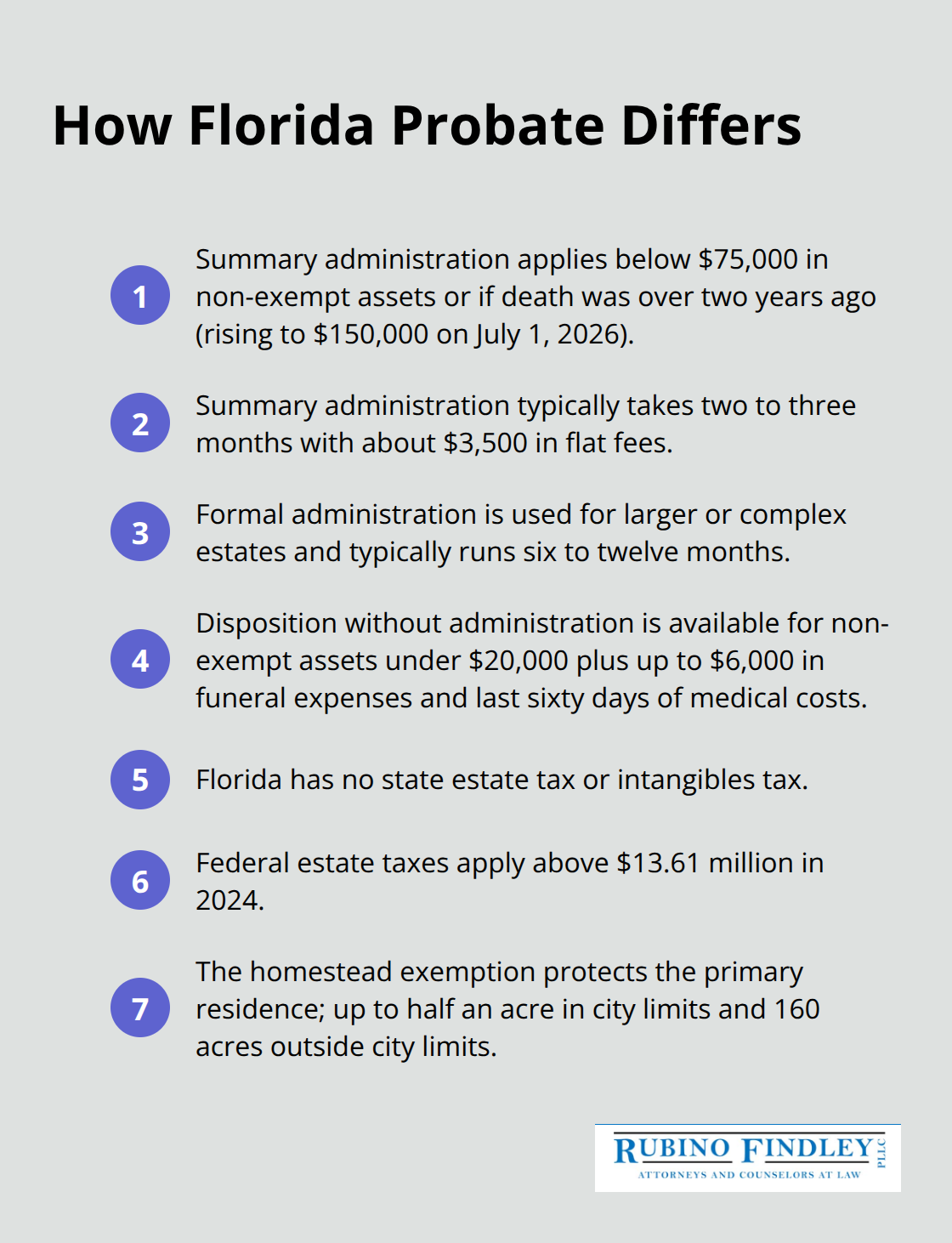
Florida also provides disposition of personal property without administration for very small estates with non-exempt assets under $20,000 (plus up to $6,000 in funeral expenses and last sixty days of medical costs). Another advantage is that Florida has no state estate tax or intangibles tax, which reduces the overall tax burden compared to states like New York or California. However, federal estate taxes still apply to estates exceeding $13.61 million in 2024. The homestead exemption in Florida protects the primary residence from most creditors and provides valuable protection for surviving spouses and children, with the property shield extending up to half an acre inside city limits and 160 acres outside city limits.
Timeline and Realistic Costs
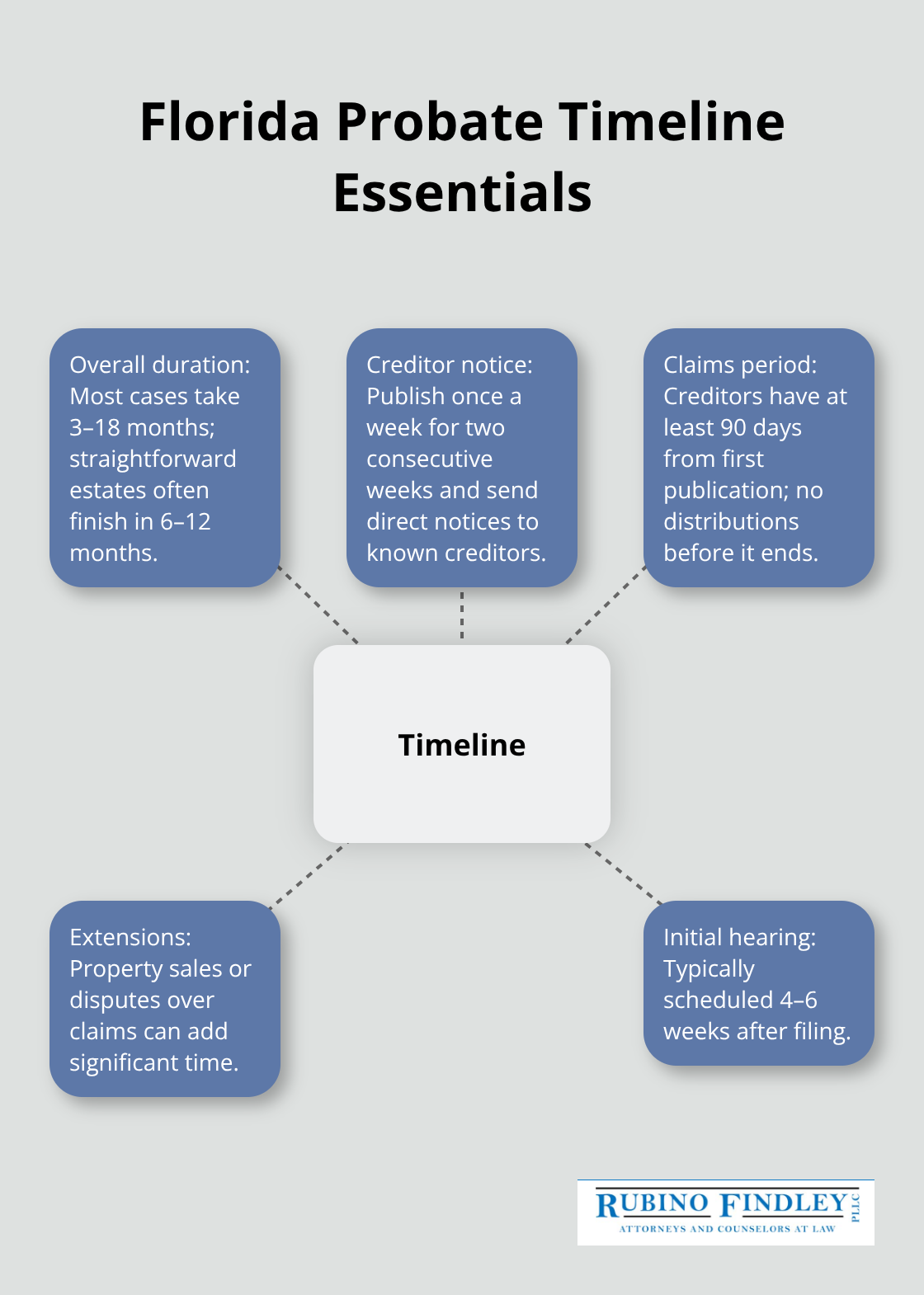
Most Florida probate cases take between three and eighteen months from start to finish, with straightforward estates typically resolving in six to twelve months. The personal representative cannot distribute assets to beneficiaries until at least ninety days pass from the date creditors received notification, as Florida law provides a three-month claims period for creditors to file claims against the estate. If real property must be sold or disputes arise over claims, the timeline extends significantly.
Filing fees range from $345 to $405 depending on the county, and publication costs for the notice to creditors run approximately $250. Attorney fees for formal administration typically fall between $2,000 and $6,000 for straightforward cases, though complex estates with litigation cost substantially more. The personal representative may receive compensation of up to three percent of the estate value for their service, though the estate pays this amount. All costs and fees come from the estate before any distributions reach beneficiaries, which means a $200,000 estate with $5,000 in probate costs distributes $195,000 to heirs.
What Happens Next in the Filing Process
Understanding these foundational concepts prepares you for the actual filing steps. The process begins with specific documents and information that the court requires before it can officially open your probate case.
Filing and Initial Steps in the Probate Process
Gathering the Documents You Need
Before you officially begin probate in Florida, you must collect specific documents and information that the court requires. The original will stands as the first critical document-Florida law requires the custodian to deposit it with the Clerk of the Circuit Court within ten days of learning about the death. If no will exists, you’ll need the death certificate, a list of the decedent’s assets and debts, and information about potential heirs. You’ll also need the decedent’s financial records, property deeds, bank statements, and investment accounts.
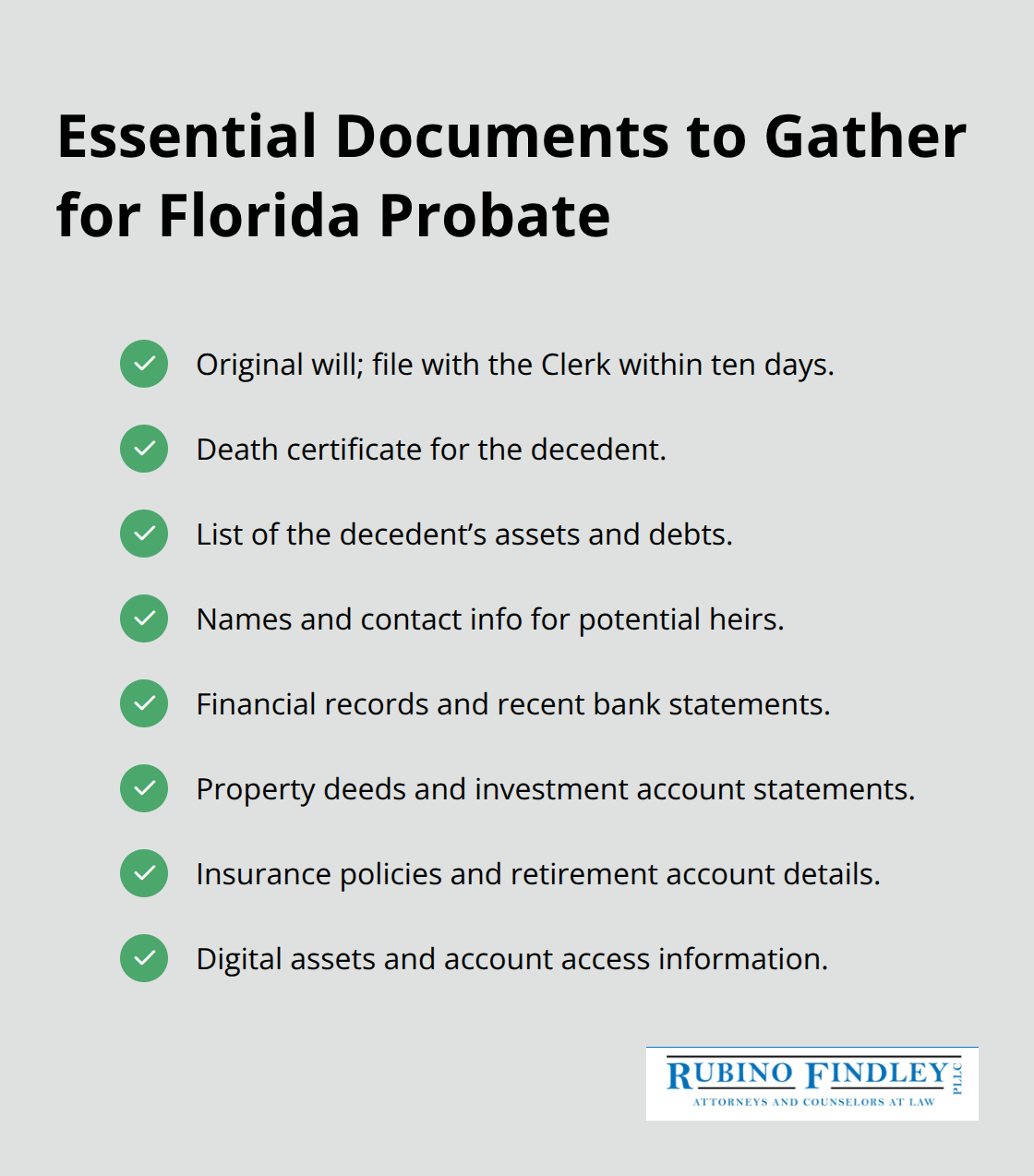
Many families overlook insurance policies, retirement accounts, and digital assets during this phase, but these documents matter significantly. They help determine whether probate is even necessary. Assets with named beneficiaries or joint ownership often avoid probate entirely, which can save months and thousands in costs. Organize these materials before meeting with an attorney-having everything ready upfront prevents delays that can add weeks to the filing process.
Submitting Your Petition to the Court
Filing the petition with the court is straightforward once you have the documents prepared. In Palm Beach County, you’ll file either a Petition for Summary Administration or a Petition for Formal Administration depending on estate size, and the filing fee runs between $345 and $405. The petition must go through the 15th Judicial Circuit’s Online Scheduling System, not by mail or in-person delivery-this requirement catches many people off guard.
Once filed, the Clerk assigns a case number and the court schedules an initial hearing, typically within four to six weeks. From this point forward, Florida law imposes strict notification requirements that directly affect your timeline.
Publishing Notice and Notifying Creditors
You must publish a Notice to Creditors in a newspaper with print circulation in the county where the decedent lived, and this publication must appear once a week for two consecutive weeks. Known creditors receive direct written notice, and heirs and beneficiaries receive a Notice of Administration. These notification steps cannot be rushed-creditors have a minimum ninety days from the first publication date to file claims against the estate.
This three-month window is non-negotiable under Florida Statute 733.702. You cannot distribute assets to beneficiaries before this period ends, regardless of how simple the estate appears. Attempting to bypass it creates personal liability for the personal representative.
The Critical Waiting Period
The ninety-day creditor claims period represents the longest single constraint in most Florida probate cases. During these months, the personal representative must identify all estate assets, prepare an inventory, and begin the process of settling outstanding debts. This waiting period exists to protect creditors and ensure the estate handles all legitimate claims fairly. Once this period expires and no disputed claims remain, the personal representative can move forward with asset distribution-but only after addressing the next major phase of probate administration.
Asset Management and Debt Settlement
Identifying and Valuing Estate Assets
The period between filing your petition and distributing assets involves identifying what the estate owns, determining its value, and addressing what it owes. This phase demands accuracy because mistakes create delays and potential liability for the personal representative. Florida Statute 733.604 requires you to create a comprehensive inventory of all probate assets within sixty days of receiving Letters of Administration. This inventory includes real property, bank accounts, investment portfolios, vehicles, jewelry, artwork, and any other tangible or intangible property titled solely in the decedent’s name.
Many families discover assets they didn’t know existed during this process-forgotten savings accounts, uncashed dividend checks, or safety deposit boxes. Professional appraisers establish accurate fair market values on the date of death for items like real estate, artwork, or collectibles. These valuations affect both estate taxes and distributions. Undervaluing assets can trigger IRS scrutiny, while overvaluing them wastes estate resources on unnecessary taxes.
Handling Creditor Claims and Debts
You must identify and pay all legitimate debts before beneficiaries receive anything. Known creditors have thirty days from receiving direct notice to file claims, while creditors who only see the published notice have ninety days from first publication. The ninety-day waiting period gives you time to settle obligations without rushing distributions.
Common estate debts include mortgages, credit card balances, medical bills from the final illness, and property taxes. Florida law allows you to contest fraudulent or inflated claims, which protects the estate from predatory creditors attempting to drain assets. The personal representative faces personal liability if creditor claims are mishandled, making professional guidance essential for estates with significant assets or complex financial situations.
Managing Tax Obligations
Federal estate taxes apply to estates exceeding $13.61 million in 2024, though most Florida estates fall well below this threshold. You must still file Form 706 with the IRS within nine months of death if the estate qualifies, even if no taxes are ultimately owed (this deadline cannot be extended without substantial justification). State and federal income taxes for the decedent’s final year, plus any income earned by the estate during administration, must be filed and paid from estate assets.
The personal representative carries personal liability if taxes go unpaid, making this responsibility one of the most serious obligations in probate administration.
Final Thoughts
Florida probate administration steps require patience and attention to detail, but understanding the process removes much of the mystery surrounding estate settlement. The timeline and costs vary significantly based on estate complexity, but most straightforward cases resolve within six to twelve months at a cost between $2,000 and $6,000 in attorney fees. The ninety-day creditor claims period is non-negotiable and represents the longest single constraint in most probate cases, and missing deadlines or mishandling creditor claims creates personal liability for the personal representative.
You should seek legal guidance immediately after a death occurs, not months later when problems have already developed. An attorney helps you determine whether probate is necessary, select the appropriate administration type, and navigate court filings correctly. Without proper guidance, families often make costly mistakes that extend timelines and drain estate assets unnecessarily, and professionals who understand Florida probate law and local court requirements can prevent these complications.
We at Rubino Findley, PLLC help families in Boca Raton and throughout Palm Beach County handle probate administration with confidence. Beyond probate, we also assist with estate planning services including wills, trusts, and durable powers of attorney to help you avoid these complications entirely. Contact us to schedule your free consultation and discuss your specific situation with our team.