




Broward County Estate Planning: Local Solutions for Florida Families
Most Broward County families put off estate planning because they think it’s only for the wealthy or elderly. The truth is that without a solid plan, your family could face years of probate, unexpected taxes, and painful disagreements over your assets.
At Rubino Findley, PLLC, we’ve seen firsthand how the right documents protect what matters most. This guide walks you through the essential steps to secure your family’s future.
Why Estate Planning Protects What Matters Most
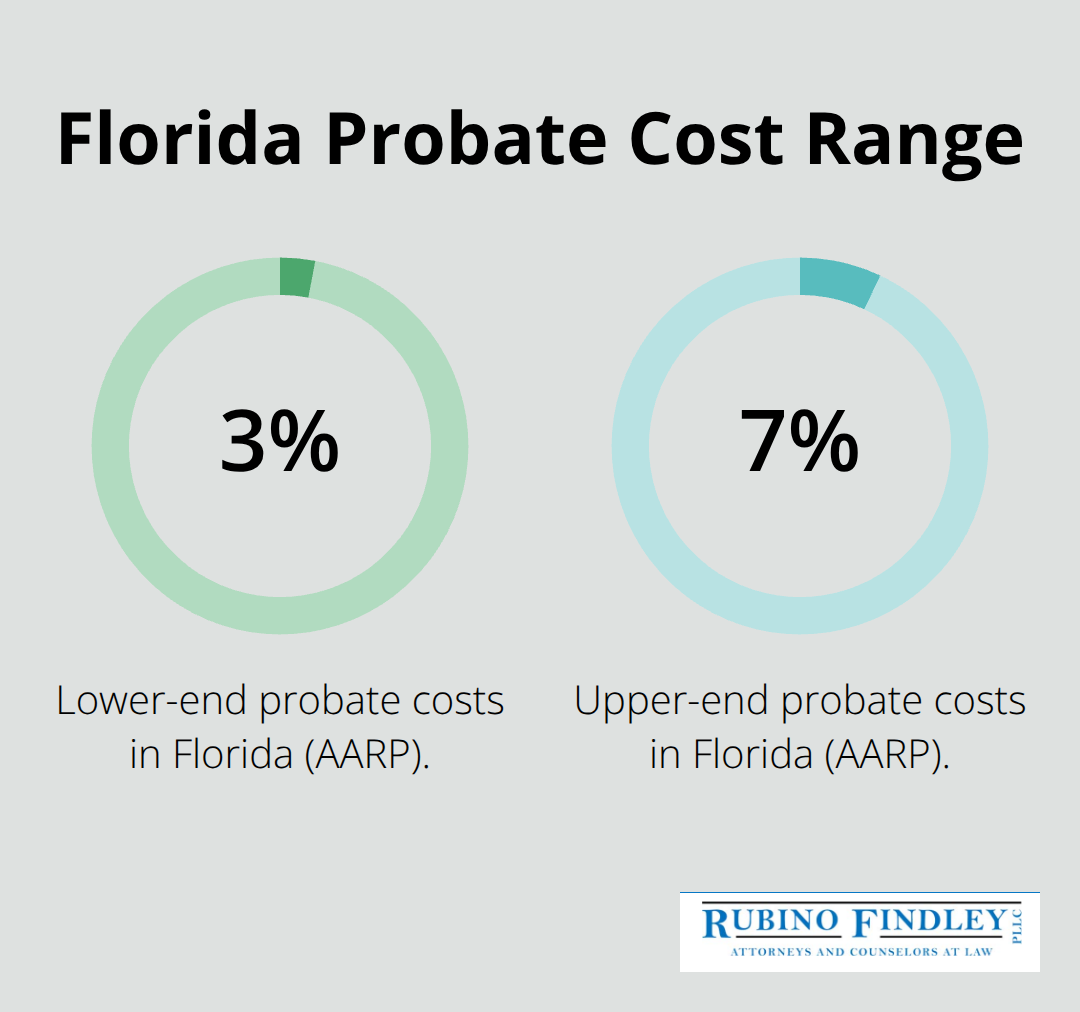
Probate in Florida costs between 3% and 7% of your estate’s value according to AARP, and the process typically stretches from several months to over a year. Without a plan in place, your family doesn’t just wait-they pay. Court fees, attorney costs, and delays compound while your assets sit frozen.
A revocable living trust bypasses probate entirely when you retitle assets into it during your lifetime, keeping your family’s inheritance moving forward without public court proceedings. This matters for Broward County families because the local probate system follows strict timelines, and delays mean your spouse might struggle to pay the mortgage or your children’s guardianship could land in the hands of a court-appointed stranger rather than someone you chose.
Protecting Your Children and Your Legacy
If you have minor children, an estate plan isn’t optional-it’s the only way to guarantee they’re raised by someone you trust. Without a guardianship designation in writing, Florida courts decide who raises your kids, and that decision doesn’t always align with your wishes. Beyond guardianship, a trust lets you control when and how your children receive inheritance money. Instead of handing a 21-year-old their entire inheritance, you can structure distributions at ages 25, 30, and 35, ensuring they’re financially mature enough to handle it. For blended families, clear trust language prevents stepchildren disputes and clarifies which biological and step-relatives inherit what-vague wills spark years of litigation that drain the estate and fracture relationships.
Keeping Family Peace When It Matters Most
When a parent dies without clear instructions, siblings fight over assets, question the executor’s decisions, and sometimes sue each other. Research on estate disputes shows that unclear or outdated documents are the primary cause of conflict. A well-drafted trust or will with explicit instructions eliminates guesswork and gives your family a roadmap to follow. Healthcare directives and durable powers of attorney prevent even more conflict (your family won’t argue about whether to pursue aggressive treatment or sell the house to cover care costs) because your written wishes already decided it.
What Happens Next
The documents you choose-wills, trusts, powers of attorney, and healthcare directives-form the foundation of your protection plan. Each one serves a specific purpose, and together they address the financial, medical, and family decisions that matter most.
Key Estate Planning Documents You Need
The Revocable Living Trust: Your Foundation for Privacy and Control
A revocable living trust sits at the center of most solid estate plans because it gives you control during your lifetime and transfers assets to your family without probate when you pass.
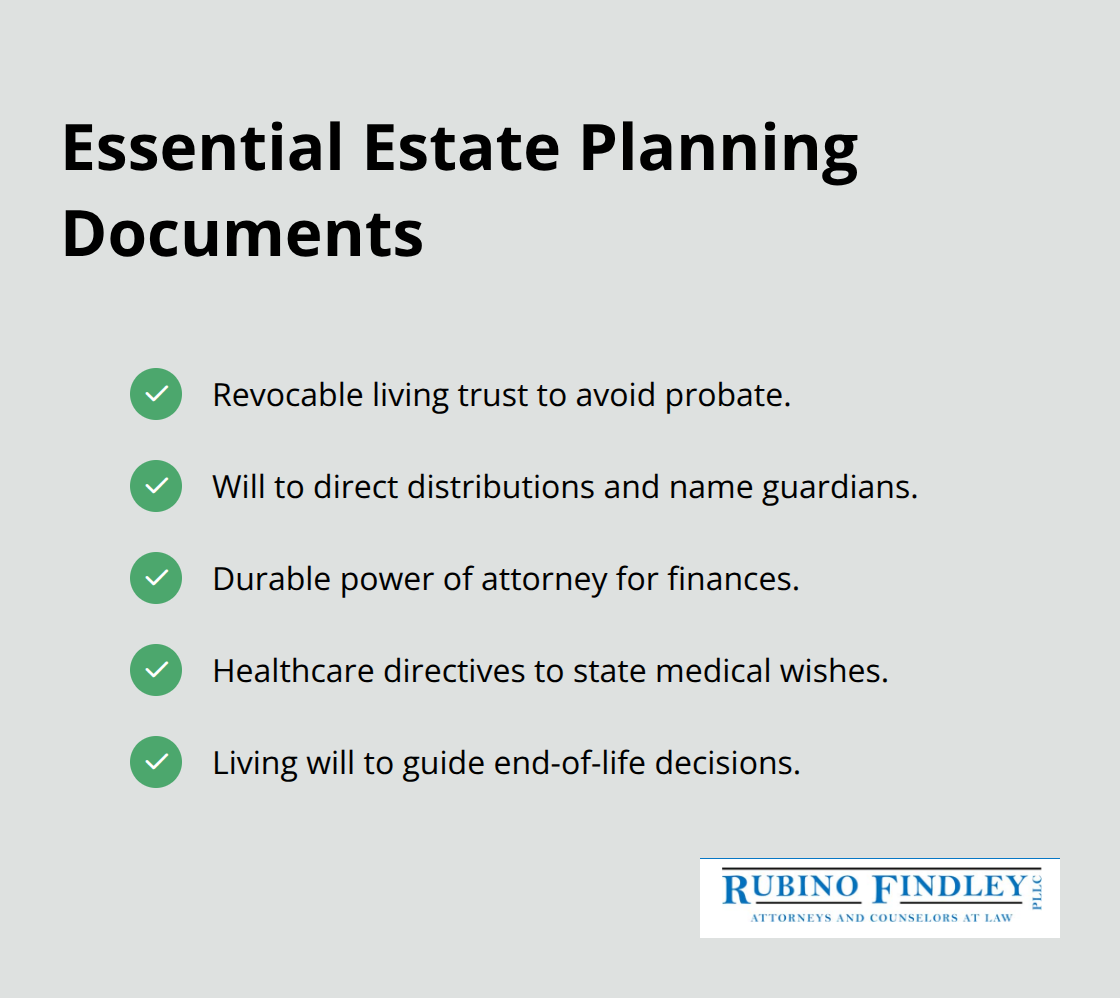
Unlike a will, which becomes public record and must go through court proceedings, a trust keeps your financial details private and allows your successor trustee to move assets to beneficiaries within weeks rather than months or years. You fund the trust by retitling property, bank accounts, and investments into the trust’s name during your lifetime-this step matters more than the document itself, since unfunded trusts offer no protection. The combination of a properly funded trust with other documents creates a comprehensive shield for your family’s financial future.
Powers of Attorney: Managing Your Finances When You Cannot
A durable power of attorney names someone to handle your finances if you become unable to manage them, preventing your family from needing court approval to pay bills or access accounts. This document takes effect immediately or upon incapacity, depending on how you structure it, and it remains valid even if you become mentally incapacitated. Your agent can pay household expenses, manage investments, and handle business matters without court involvement, which saves your family time and money during a crisis. Choosing the right person for this role requires someone with financial responsibility and the ability to act in your best interest, not their own.
Healthcare Directives: Controlling Your Medical Future
Healthcare directives and living wills work together to spell out your medical wishes and name someone to make treatment decisions if you cannot communicate your preferences. Florida law requires that healthcare directives comply with Florida Statutes to be valid, so generic online templates often fail when hospitals need them most. Your healthcare directive prevents your family from arguing about whether to pursue aggressive treatment or allow natural death, because your written wishes already decided it. This document protects both your autonomy and your loved ones from the burden of making life-or-death decisions without clear guidance.
Selecting Trustees and Agents: The Right Person Matters
Many Broward County families make the mistake of choosing a trustee or financial agent based on who they trust personally rather than who can actually manage the responsibility. A trustee must maintain detailed records, handle investments prudently, and file tax returns on behalf of the trust; if they miss deadlines or mismanage assets, beneficiaries can sue to remove them and recover losses. Your successor trustee should have financial knowledge or willingness to hire professional help, and they must live close enough to manage local property or business matters. If no family member fits that role, naming a corporate trustee or professional fiduciary protects beneficiaries and removes the burden from relatives who might struggle with the job.
Digital Assets: Protecting Your Online Life
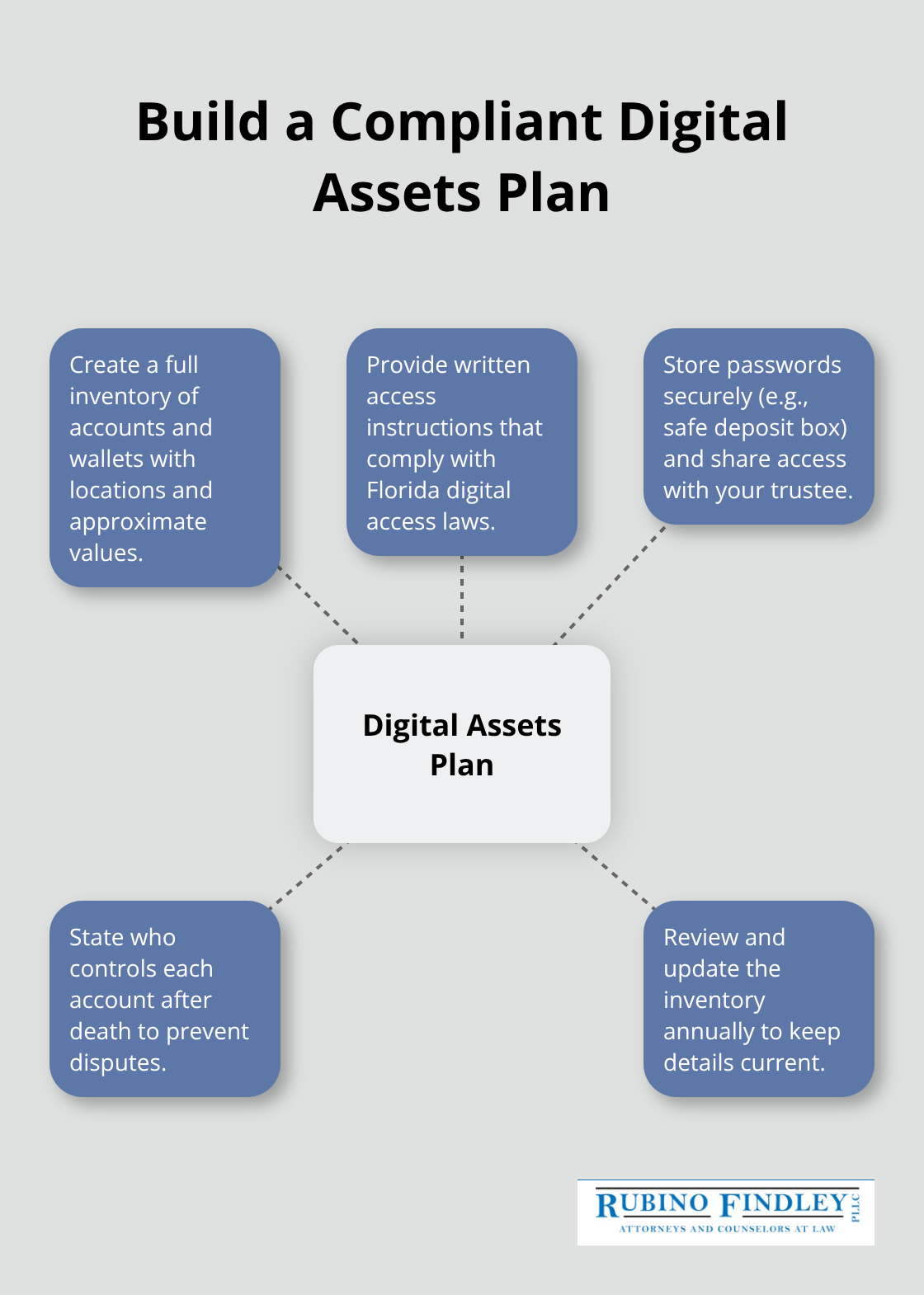
Digital assets-cryptocurrency wallets, online banking passwords, business accounts, and social media profiles-require explicit instructions in your estate documents about how to access them and who controls them after your death. Florida’s digital access laws require written instructions that comply with state law, and passwords stored in a safe deposit box or shared with your trustee ensure your digital life does not vanish when you do. Without these specifics, your family may lose access to valuable accounts, cryptocurrency, or online businesses that have real monetary worth. The documents you choose must address these modern assets to protect everything your family depends on.
Common Estate Planning Mistakes Broward County Residents Make
Ignoring Your Documents After Life Changes
Most Broward County families create an estate plan and then ignore it for ten years, only to discover that their documents no longer reflect their actual life. Marriage, divorce, the birth of children or grandchildren, significant asset purchases, and moves between states all trigger the need for immediate updates. A will or trust written before your second marriage may still name your first spouse as executor or leave everything to children from your first relationship, which can spark litigation that costs tens of thousands in legal fees and months of court battles.
Florida law does not automatically update documents after major life events, so your outdated paperwork becomes legally binding regardless of whether it matches your current wishes. The American Bar Association recommends reviewing your estate plan every three to five years, but most people never review theirs. If you have experienced a divorce, remarriage, significant inheritance, business sale, or relocation since you last updated your documents, you are operating with a plan that no longer protects your family.
Selecting the Wrong Trustee or Executor
Choosing the wrong trustee or executor creates a different kind of disaster. Your brother might be family, but if he has no financial discipline, struggles with record-keeping, or lives out of state, naming him as trustee almost guarantees conflict with beneficiaries and potential breach-of-fiduciary-duty claims. Trustees must file annual tax returns, maintain detailed accounting records, file probate accountings with the court if required, and manage investments with the same care a professional would use.
When trustees miss deadlines or fail to document their decisions, beneficiaries can petition the court to remove them and recover losses, which drains the estate and fractures family relationships. A corporate trustee, professional fiduciary, or co-trustee arrangement that pairs a family member with a professional handles the financial and administrative burden more effectively. This structure protects beneficiaries and removes the burden from relatives who might struggle with the job.
Failing to Document Digital Assets and Access Instructions
Digital assets compound trustee mistakes because most trustees do not know where cryptocurrency wallets, online business accounts, or password managers are located. Without explicit written instructions that comply with Florida law, those assets effectively vanish. Your trustee needs a detailed inventory of every account, its location, the approximate value, and step-by-step access instructions stored securely and updated annually.
Cryptocurrency wallets, online banking passwords, business accounts, and social media profiles require specific directions in your estate documents about how to access them and who controls them after your death. Florida’s digital access laws require written instructions that comply with state law, and passwords stored in a safe deposit box or shared with your trustee ensure your digital life does not vanish when you do. Without these specifics, your family may lose access to valuable accounts, cryptocurrency, or online businesses that have real monetary worth. If you have never provided your designated trustee with this information, your plan fails at the moment it matters most.
Final Thoughts
Estate planning protects your family from probate delays, unexpected taxes, and painful disagreements over your assets. A revocable living trust funded during your lifetime, combined with a durable power of attorney and healthcare directives, forms the foundation of a solid plan. Regular reviews every three to five years or after major life changes keep your documents aligned with your actual wishes.
Broward County estate planning requires local knowledge of Florida law and probate procedures. We at Rubino Findley, PLLC help families throughout Palm Beach County and Broward County establish wills, trusts, powers of attorney, and healthcare directives that protect what matters most. Our team works with you to create documents that reflect your wishes and comply with Florida law, avoiding the generic templates that fail when families need them most.
The right time to start is now-accidents happen without warning, and without proper paperwork in place, someone other than your loved ones may be making decisions about your assets, accounts, property, and family. Contact us today to schedule your free consultation and begin protecting your family’s future.