



Pet Trust Florida: Providing for Your Pet Even After You’re Gone
Your pet depends on you for everything today. But what happens to them after you’re gone?
A pet trust in Florida is a legal tool that protects your animal’s future by naming a caregiver, setting aside funds, and documenting their care needs. At Rubino Findley, PLLC, we help pet owners in Boca Raton create plans that keep their companions safe and cared for, no matter what happens.
Why Your Pet Needs Legal Protection Right Now
Without a pet trust, your beloved companion faces an uncertain future if you become incapacitated or pass away. Best Friends Animal Society reports that over 500,000 pets enter shelters annually because owners died or became unable to care for them. Florida law does not automatically transfer pet ownership through a will, creating a dangerous gap between your death and someone stepping in to provide care. A pet trust closes this gap by legally naming a caregiver, setting aside dedicated funds, and documenting exactly how your pet should be cared for. Florida Statute 736.0408 authorizes pet trusts, recognizing them as enforceable legal documents that protect animals alive during your lifetime. This means your pet’s care is not left to chance, family disagreements, or the whims of whoever finds them.
How Florida Pet Trusts Differ From Regular Wills
Florida pet trusts operate under the state’s Trust Code and function like a revocable living trust specifically designed for your animal. When you create a pet trust, you designate two separate roles: a Pet Trustee who manages the funds and oversees care, and a Pet Caregiver who handles daily responsibilities. The trustee distributes money to the caregiver on a schedule you determine, whether monthly or quarterly, so steady funding flows throughout your pet’s life. The trust terminates only when your last pet dies, meaning it can last 10, 15, or 20+ years depending on your animal’s age and breed.
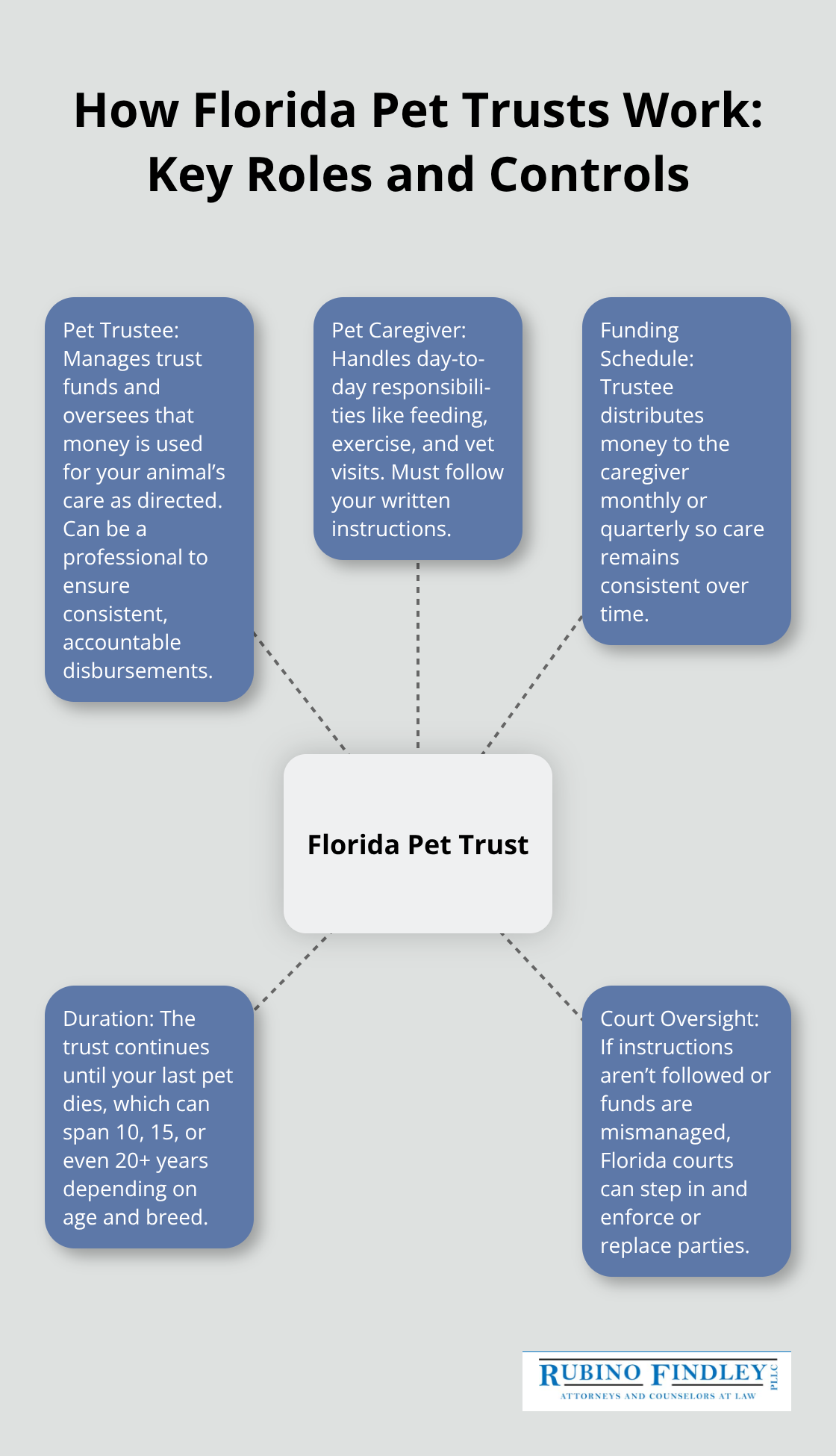
You control every detail: diet, veterinary protocols, living arrangements, exercise routines, and even end-of-life preferences. If the caregiver fails to follow your instructions or the trustee mismanages funds, Florida courts can intervene and appoint a new enforcer to protect your pet’s welfare.
Calculate Realistic Costs to Prevent Underfunded Care
Most pet owners dramatically underestimate lifetime costs. Dogs typically require $1,500 to $3,000 annually, while cats need $800 to $1,500 yearly; these costs rise significantly with chronic conditions like diabetes or kidney disease. A 10-year-old dog may need $25,000 to $35,000 over its remaining lifespan, while a young cat could require $40,000 or more. Add a 20 percent buffer for inflation and emergency medical care. Florida law caps trust funding to what is actually needed for pet care, so excess money returns to your estate, but underfunding guarantees your caregiver will struggle financially and your pet’s quality of life suffers. Work with your veterinarian to estimate realistic costs, then fund the trust with cash, investment accounts, or life insurance proceeds designated specifically for pet care. Avoid funding with property, which creates liquidity problems when the trustee needs to pay the caregiver quickly.
What Happens Next in Your Pet Trust Plan
With legal protection in place and realistic funding established, you must now address the practical details of who will care for your pet and how they will receive instructions. The next section covers naming the right caregiver and trustee, two decisions that directly determine whether your pet thrives or merely survives after you’re gone.
Setting Up Your Pet Trust in Boca Raton
Select a Caregiver Who Will Actually Commit
The right caregiver matters far more than most pet owners realize, and this decision requires honest conversations before you finalize anything. Ask yourself: who will actually commit to caring for your pet for the next 10, 15, or 20 years? A family member may love your animal but lack the financial stability or physical ability to manage daily care, veterinary appointments, and specialized diets. Contact your potential caregiver directly and discuss the responsibility in detail-do not assume they will accept the role. Explain the financial arrangement, care requirements, and time commitment. If they hesitate or seem uncertain, move to your backup choice immediately.
Separate Money Management From Daily Care
The Pet Trustee handles money management separately from the Pet Caregiver, so you might select a professional trustee like a bank or attorney to manage disbursements while your chosen caregiver focuses on daily care. This separation prevents conflicts and protects your pet’s welfare. If your caregiver is a family friend who struggles with financial management, a professional trustee will deliver monthly payments on schedule and keep trust assets protected. Florida law allows you to name multiple successors for both roles, so if your primary caregiver becomes ill or unwilling to serve, the next person steps in without court delays.
Calculate Realistic Costs From Your Veterinarian
Funding must be specific and realistic, tied directly to your pet’s actual expenses rather than vague estimates. Contact your veterinarian and request a detailed breakdown: annual wellness visits, vaccinations, food costs, grooming, medications, and potential emergency care. A dog with diabetes requires insulin injections, frequent vet visits, and special food-costs easily exceed $3,000 annually. A senior cat with kidney disease needs prescription diet and regular bloodwork, adding $1,500 to $2,500 yearly.
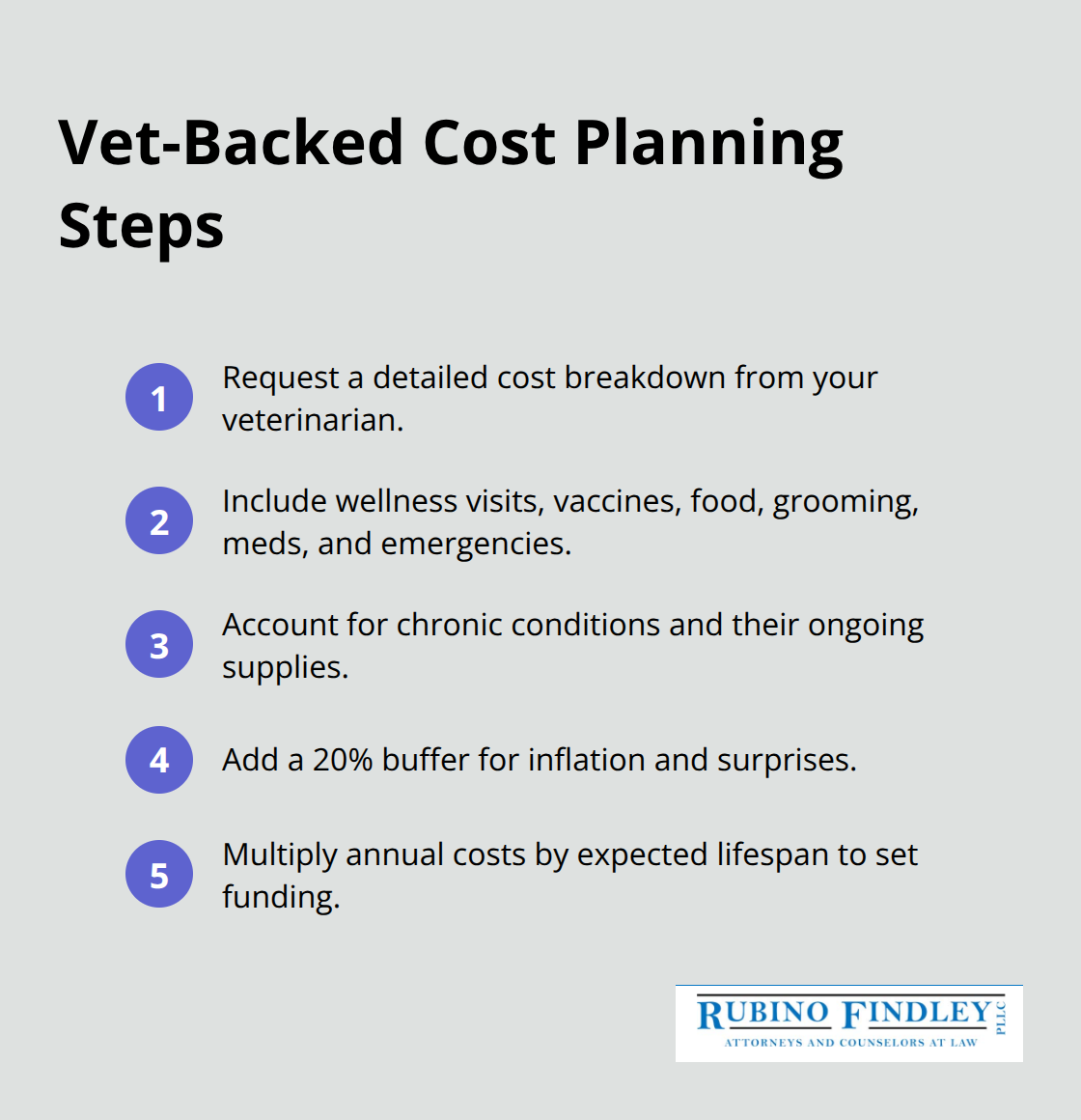
Once you have numbers from your vet, add 20 percent for inflation and unexpected emergencies, then calculate the total for your pet’s expected lifespan.
Fund With Liquid Assets, Not Property
Fund the trust with cash or investment accounts designated specifically for pet care-never use real estate, which forces the trustee to sell property when quick caregiver payments are needed. Document exactly how the trustee should distribute funds: monthly payments to the caregiver, direct veterinary bill payment, or quarterly reimbursements for expenses. Include detailed care instructions covering diet brands, veterinary protocols, exercise routines, living arrangements, medication schedules, and end-of-life preferences like cremation or burial. The more specific your written instructions, the less room exists for the caregiver to deviate from your wishes or for family disputes to arise.
Enforce Your Instructions Through Florida Courts
Florida courts enforce these instructions and can replace a caregiver who ignores them, so clarity protects your pet’s welfare long after you cannot. With funding in place and care instructions documented, you now face the final step: ensuring your pet trust integrates smoothly into your overall estate plan and that all documents work together to protect your animal’s future.
What Pet Owners Get Wrong About Care Planning
Caregivers Need Direct Conversations, Not Assumptions
Most pet owners assume that naming a caregiver in conversation or a will protects their animal’s future. It does not. Discussing your pet’s care with a potential caregiver requires far more than a casual mention at dinner. You must sit down with them, explain the daily responsibilities in detail, discuss the financial arrangement, and confirm they will genuinely commit for 10, 15, or 20+ years. Many pet owners skip this conversation entirely and later discover their chosen caregiver never agreed to anything. A family member might love your dog but lack the physical ability to handle walks, grooming, and vet appointments. A friend might refuse to sacrifice their lifestyle for an animal they did not choose. Without explicit agreement beforehand, your pet ends up in a shelter or with someone unprepared to care for them.
Contact your potential caregiver now, in writing if necessary, and ask directly. If they hesitate or seem uncertain, identify a backup caregiver immediately and repeat the process. Do not assume anyone will step in out of obligation or affection.
Underfunding Leaves Your Caregiver in Financial Crisis
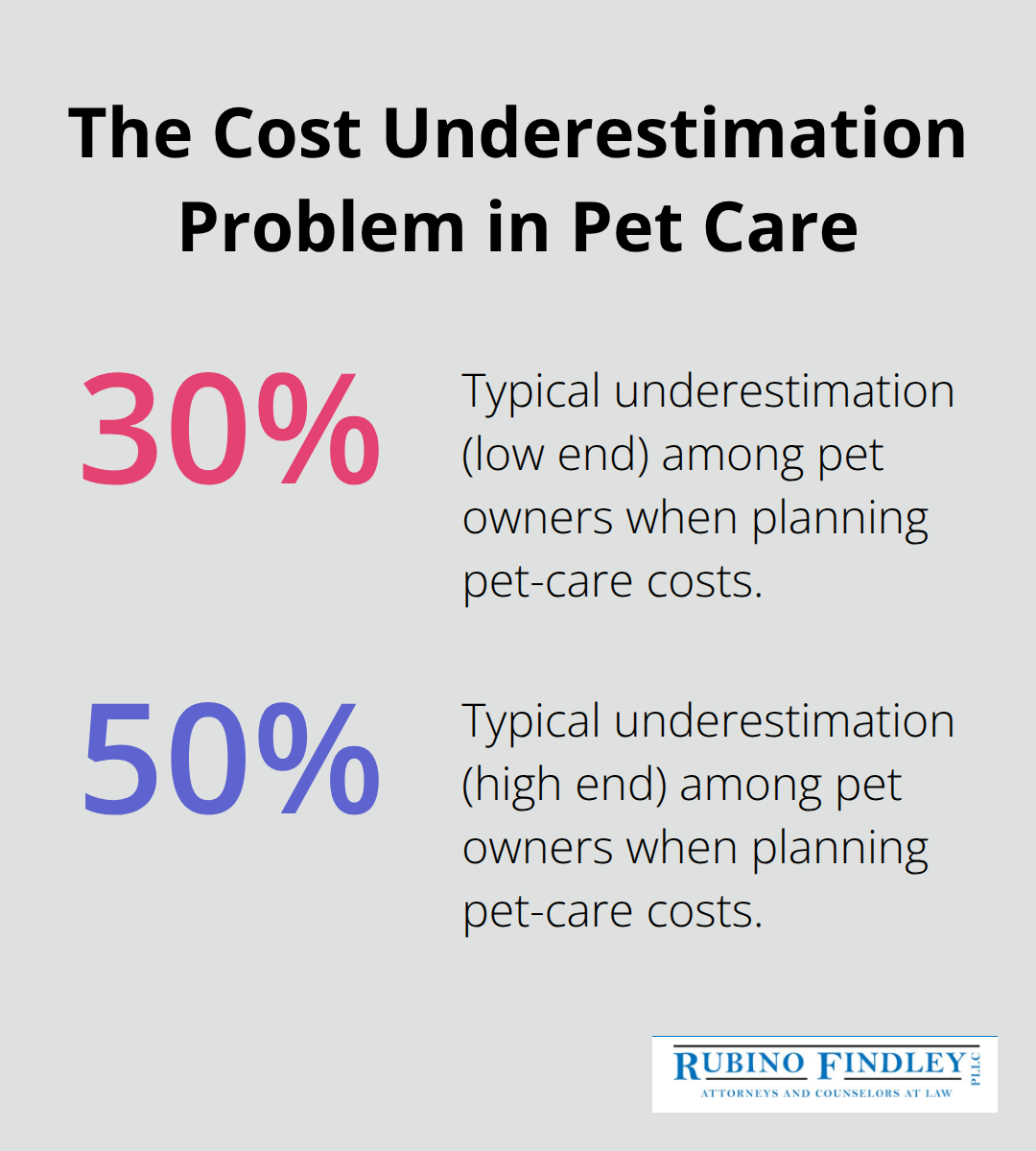
Underfunding a pet trust creates a second critical failure that undermines everything else in your plan. A caregiver earning $2,500 monthly cannot absorb veterinary bills, specialty food, or medications from their own income. Pet owners typically underestimate expenses by 30 to 50 percent, leading to inadequate trust funding that forces caregivers into difficult financial choices. If your dog requires $3,000 annually but you only fund the trust with $15,000, the caregiver faces a serious shortfall after five years.
The animal’s quality of life deteriorates when money runs out, and your caregiver must choose between their own financial stability and your pet’s medical care.
Work with your veterinarian to calculate realistic lifetime costs, then fund accordingly. A young cat could require $40,000 or more over its lifespan; a senior dog might need $25,000 to $35,000. Add 20 percent for inflation and emergencies to protect against cost increases your caregiver cannot predict.
Written Instructions Hold Legal Weight in Florida Courts
Failing to document your wishes in a legally enforceable pet trust represents an equally damaging mistake. A handwritten note or verbal instructions carry no legal weight in Florida. Your family members might disagree about whether to spend money on expensive surgery or choose euthanasia. Without written instructions and a formal trust structure with a trustee and enforcer, Florida courts cannot intervene to protect your pet’s welfare.
The trustee and enforcer serve as your insurance policy against disputes and neglect. They hold legal authority to ensure your pet receives the care you specified and to replace a caregiver who ignores your instructions. Florida Statute 736.0408 authorizes these enforcement mechanisms, giving courts the power to step in when your animal’s welfare is at risk. An attorney experienced in Florida pet trusts can draft documents that withstand legal challenges and protect your animal when you cannot.
Final Thoughts
Your pet trust in Florida protects your animal when you cannot, but only if you act now. Without a formal plan, your pet faces shelter placement, family disputes over care, or worse. The three mistakes covered here-skipping caregiver conversations, underfunding the trust, and avoiding legal documentation-destroy even the best intentions.
A properly structured pet trust with realistic funding, a committed caregiver, and written instructions prevents all three failures at once. Your pet depends on you today, and a pet trust ensures that dependency does not become abandonment tomorrow. Contact your veterinarian for realistic cost estimates, identify a caregiver willing to commit, and reach out to an attorney experienced in Florida estate planning.
We at Rubino Findley, PLLC are ready to guide you through the process of drafting and funding a pet trust that reflects your wishes and protects your animal’s welfare. Visit our website to learn more about our estate planning services and schedule your free consultation today.