



Probate Administration Steps Florida: From Inventory to Distribution
Probate administration in Florida involves several distinct phases, each with specific legal requirements and timelines. We at Rubino Findley, PLLC help families navigate these probate administration steps in Florida, from the initial inventory phase through final asset distribution.
The process can stretch months or even years, depending on estate complexity and creditor claims. Understanding each step helps you prepare for what’s ahead.
What Happens During Probate Administration
The Personal Representative’s Core Responsibilities
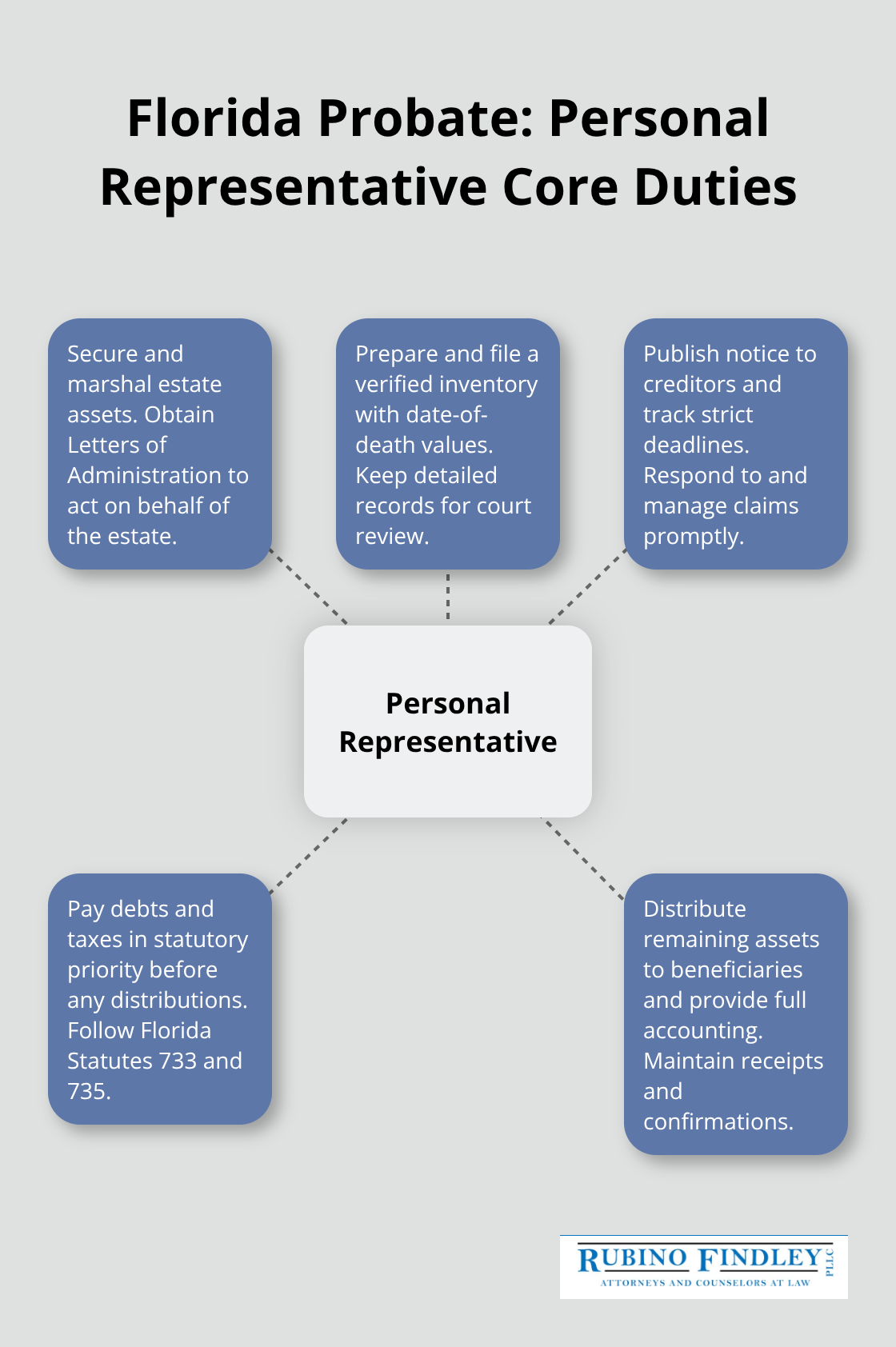
Probate administration in Florida follows a structured court process that moves your loved one’s estate through several mandatory phases. The personal representative-typically named in the will or appointed by the court-takes control of all estate assets, pays debts and taxes, and distributes remaining property to beneficiaries. This isn’t a passive role. The personal representative must actively secure property, obtain Letters of Administration from the court authorizing their actions, file verified inventories listing every asset with its date-of-death value, respond to creditor claims within strict deadlines, and account for every dollar spent. Florida Statutes 733 and 735 govern these steps, and courts enforce them rigorously. Missing a single deadline or filing a document incorrectly triggers court deficiencies that delay everything. For example, creditor notices must appear in a newspaper for two consecutive weeks, and known creditors have 30 days after service to file claims. If you miss that publication, the timeline restarts.
Asset Valuation and Documentation Requirements
Real estate appraisals for inventory purposes typically cost $300–$800 per property. Beneficiaries have the right to request written explanations of how assets were valued under Florida Probate Rule 5.340. The personal representative must document every asset with photographs, secure locations, and exact descriptions. Asset control must happen immediately: change all locks on real property, freeze bank accounts, secure vehicles, and document personal property with photographs. Opening a separate estate account using the estate’s federal tax ID prevents commingling funds and demonstrates proper stewardship to the court.
Timeline Expectations and Creditor Claim Periods
Summary administration-available for estates valued at $75,000 or less in non-exempt assets, or when the decedent died more than two years ago-completes in roughly 3–8 weeks. Formal administration typically runs 6–12 months, though uncontested estates with minimal creditor claims sometimes close in as little as three months. The creditor claim period alone spans three months from first newspaper publication, and disputes over claim validity add another 3–6 months.
Statutory Debt Payment Priority
Florida law requires that all debts be paid in statutory priority order under Florida Statutes 733.707. Administration expenses and funeral costs come first, followed by federal and state taxes, medical expenses, and family allowances before other creditors receive anything. If the estate is insolvent, creditors within lower priority classes receive nothing. Courts enforce these priorities strictly, and violating the order exposes the personal representative to personal liability. The personal representative must understand this hierarchy before distributing a single dollar to beneficiaries, as improper distributions can result in court-ordered recovery actions against the representative personally.
What Goes Into Your Inventory
The 60-Day Filing Deadline and Core Requirements
Florida Statutes 733.604 requires the personal representative to file a verified inventory within 60 days of receiving Letters of Administration, listing every asset with its fair market value as of the date of death. This deadline is not optional, and courts reject incomplete or late inventories, triggering deficiency orders that push your closing date back months. Start immediately by collecting bank statements, investment account statements, property deeds, vehicle titles, and insurance policies. Contact each financial institution directly and request the account balance as of the date of death, not today’s balance. Courts view inventory amendments as normal; they view concealed assets as fraud.
Valuing Real Estate and Personal Property
Real estate requires formal appraisals, which typically cost $300–$800 per property depending on location and complexity. For personal property like jewelry, art, or collectibles valued over $5,000, obtain written appraisals from qualified appraisers rather than estimating values. Beneficiaries have the right under Florida law to request written explanations of how any asset was valued, so document your methodology carefully. Photograph all personal property and describe items precisely (not just “antique furniture” but “mahogany dining table, 1950s, with six chairs”), and note the location of each item. If you discover additional property after filing the initial inventory, file an amended or supplementary inventory immediately rather than concealing it from the court.
Documenting Debts and Tax Obligations
Contact the decedent’s mortgage lender, credit card companies, and utility providers to obtain final statements and payoff amounts as of the date of death. Request tax transcripts from the IRS and the Florida Department of Revenue to identify any outstanding tax liabilities. If the decedent owned a business, you may need a business valuation from an accountant, which can cost $2,000–$10,000 depending on complexity. Medical bills often arrive months after death, so do not assume you have found all of them. Once you publish the notice to creditors in the newspaper for two consecutive weeks, known creditors have 30 days after service to file claims, and unknown creditors have three months from the first publication. Florida Statutes 733.702 sets strict deadlines for claim filing, and missed deadlines bar most claims permanently.
Creating Your Asset and Debt Spreadsheet
Create a spreadsheet that lists asset description, location, date-of-death value, source of valuation, and the date you verified it. This spreadsheet becomes your road map for the entire administration and prevents you from accidentally forgetting an asset or miscalculating a value when distributions arrive. The spreadsheet also serves as your primary tool when creditors file claims and when you prepare the final accounting for court review. Accurate documentation at this stage eliminates confusion later and demonstrates to the court that you handled the estate with care and precision.
Managing Creditor Claims and Finalizing Estate Settlements
Publishing Notice and Setting Claim Deadlines
The moment you receive Letters of Administration, you must publish a notice to creditors in a newspaper of general circulation for two consecutive weeks. Florida Statutes 733.2121 governs this requirement, and skipping it or publishing in the wrong newspaper invalidates your creditor claim deadlines entirely. The notice must include the estate name, case number, and a statement that creditors have three months from the first publication to file claims. Known creditors receive direct written notice, and they have the later of three months or 30 days after service to file. Unknown creditors who miss the three-month deadline face permanent bars from collecting, with limited exceptions for fraud or omission.
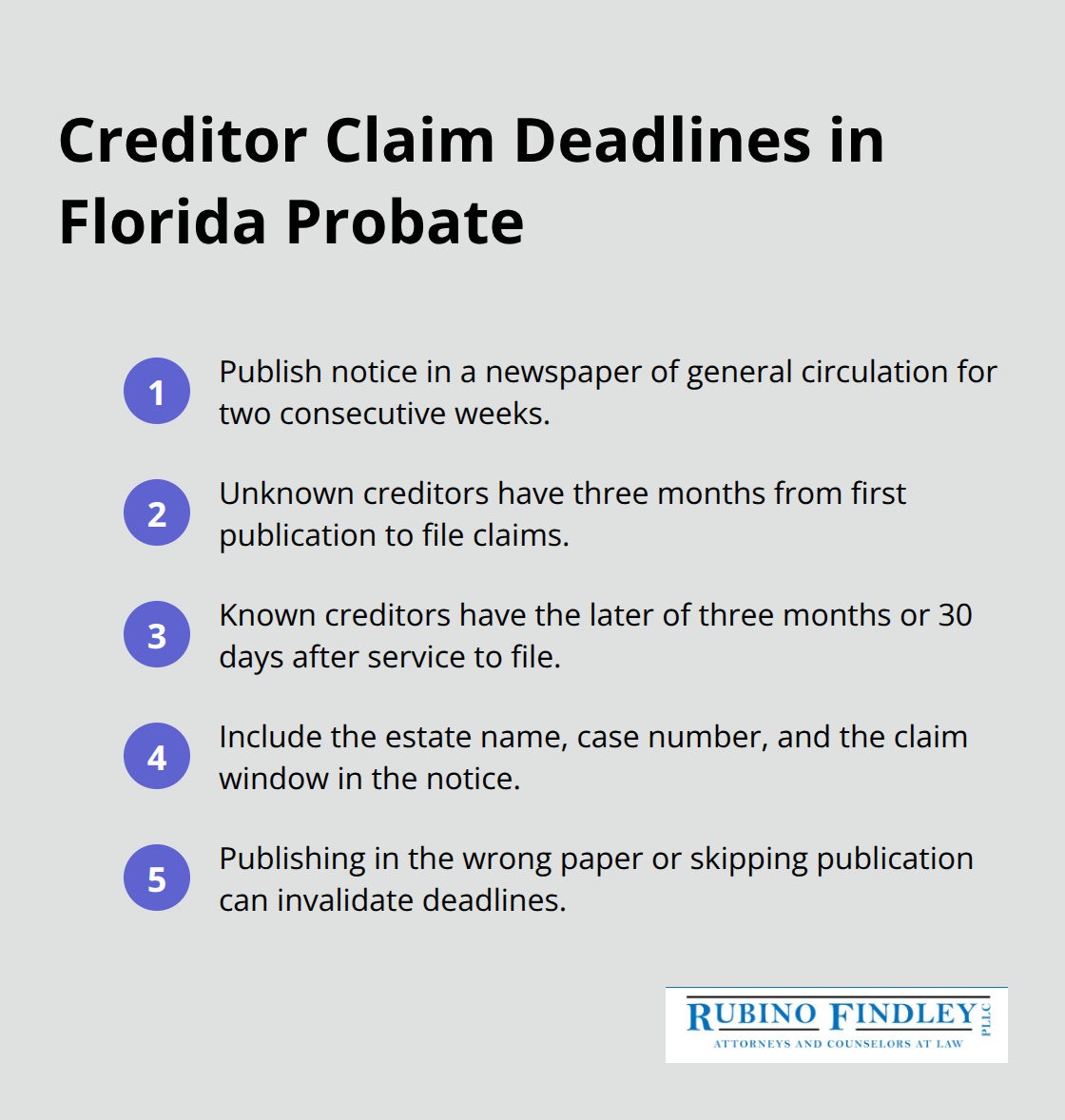
This newspaper publication creates a hard deadline that protects the estate from surprise claims years later.
Reviewing and Objecting to Claims
Once the creditor claim period opens, claims arrive by mail, email, and sometimes hand delivery. Each claim must state the creditor’s name, the amount owed, the basis for the claim, and supporting documentation. You are not obligated to pay any claim immediately. Instead, you review each one against the estate’s records, the decedent’s financial statements, and any proof the creditor provides. Many claims arrive inflated, unsupported, or duplicated from multiple collection agencies. Objections to claims must be filed with the court within specific deadlines under Florida Statutes 733.705, and disputes over claim validity frequently delay distributions by three to six months. Creditors sometimes file claims against homestead property or exempt assets, hoping the personal representative will not challenge them. You must object to these claims aggressively, because paying them violates Florida law and exposes you to personal liability for mishandling exempt property.
Handling Federal and State Tax Obligations
Federal and state taxes rank high in the statutory payment priority under Florida Statutes 733.707. File the decedent’s final income tax return by the normal April deadline unless you receive an extension. If the estate generates more than $600 in income during administration, file Form 1041 with the IRS and report all estate income, deductions, and distributions to beneficiaries on Schedule K-1. Florida has no state estate or inheritance tax, which simplifies matters considerably compared to northern states. However, the federal estate tax exemption for 2026 stands at approximately $15 million per individual, meaning most Palm Beach County estates avoid federal estate tax entirely unless they exceed that threshold. Obtain tax clearance letters from both the IRS and the Florida Department of Revenue before closing the estate, as courts will not discharge the personal representative without them. These letters confirm that all tax obligations have been satisfied and that the estate owes nothing further.
Documenting Administrative Costs and Expenses
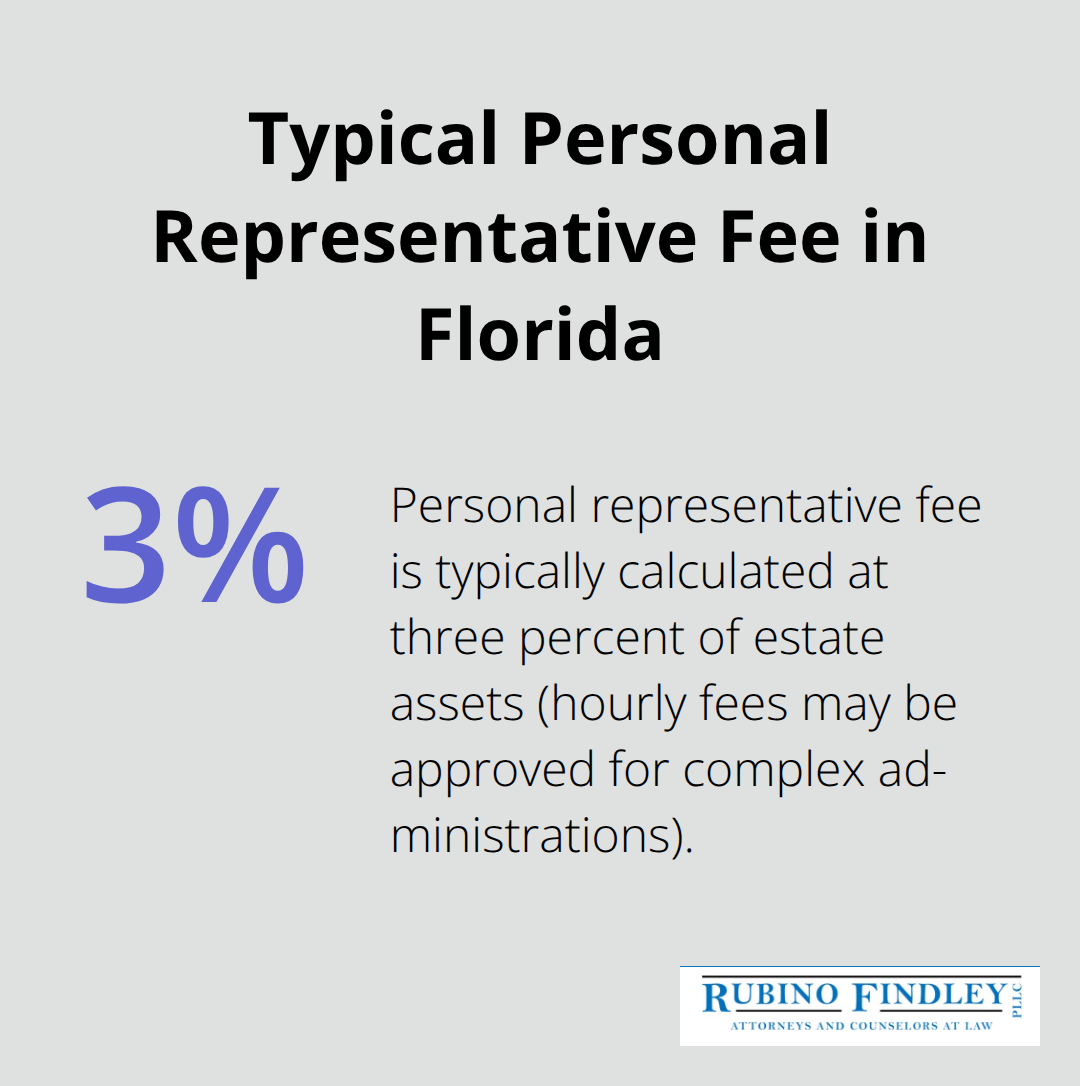
Administrative costs-court filing fees, appraisal expenses, publication costs, and attorney fees-are paid from estate funds before any distribution to beneficiaries. Court filing fees typically run $300–$400, newspaper publication costs around $250, and appraisal fees range from $300 to $800 per property. Personal representative fees in Florida are typically calculated at three percent of estate assets, though the court may approve reasonable hourly fees for complex administrations. All of these costs must be documented in your final accounting, which you file with the court before requesting discharge.
Preparing and Filing the Final Accounting
The final accounting shows every dollar received by the estate, every dollar spent, and every dollar distributed. Courts scrutinize final accountings carefully, and incomplete or inaccurate accountings trigger deficiency orders that delay closing indefinitely. Prepare your final accounting by category: opening balance, asset income, creditor payments, tax payments, administrative expenses, and distributions to beneficiaries. Provide supporting documentation for every entry-bank statements, cancelled checks, appraisals, tax returns, and court orders. Beneficiaries have the right to examine the final accounting and object to any item they believe is incorrect or improper. If a beneficiary objects, the court may hold a hearing to resolve the dispute, which adds weeks or months to the closing timeline. Providing a draft accounting to beneficiaries before filing it with the court allows them to raise questions or concerns in advance rather than after formal filing.
Closing Your Probate Administration
Once creditor claims are resolved and the final accounting receives court approval, the personal representative transfers assets to beneficiaries through multiple methods depending on asset type. Real property transfers via a new deed prepared by your attorney and recorded in the county where the property sits, while bank accounts transfer through wire or check made payable to the beneficiary. Vehicles transfer through title changes filed with the Florida Department of Motor Vehicles, and personal property like jewelry or artwork transfers through physical delivery with a signed receipt confirming the beneficiary received their share. Each beneficiary should sign a receipt and release acknowledging they received their distribution and releasing the personal representative from further liability.
The discharge petition marks the final step in probate administration steps Florida requires. This petition includes the final accounting, proof of all distributions via signed receipts, tax clearance letters from the IRS and Florida Department of Revenue, and a statement confirming all creditor claims have been resolved. Courts typically discharge the personal representative within 30 to 60 days if all documents are complete and no beneficiary objects.
The probate administration steps in Florida demand precision and attention to deadlines that vary by estate type and complexity. We at Rubino Findley, PLLC in Boca Raton help families throughout Palm Beach County navigate probate from start to finish and protect you from personal liability.