



Probate Court Florida Procedures: Understanding The Steps To Settlement
Navigating probate court Florida procedures can feel overwhelming when you’re managing a loved one’s estate. The process involves multiple steps, strict filing deadlines, and complex legal requirements that vary by situation.
At Rubino Findley, PLLC, we help families in Boca Raton understand each phase of probate settlement so they can move forward with confidence.
What Path Does Your Estate Take Through Florida Probate?
Three Probate Routes Available in Florida
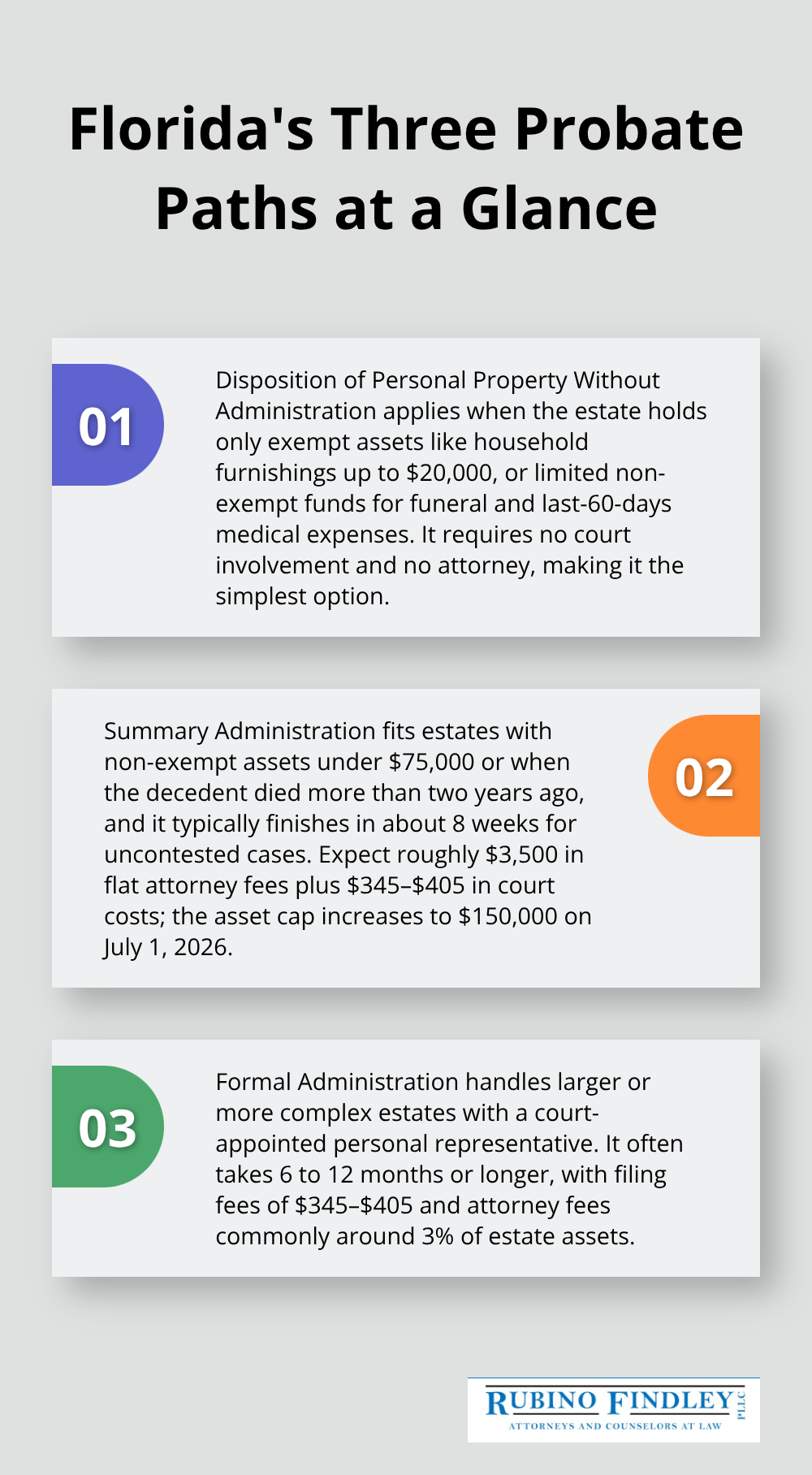
Florida offers three distinct probate pathways, and selecting the right one saves thousands of dollars and months of waiting. The simplest route is Disposition of Personal Property Without Administration, available when the estate contains only exempt assets like household furnishings up to $20,000 or non-exempt property limited to funeral expenses up to $10,000 plus medical expenses from the last 60 days of illness. This option requires no court involvement and no attorney. Summary Administration comes next for estates with non-exempt assets under $75,000, or any estate where the decedent died more than two years ago. Summary Administration takes roughly 8 weeks for uncontested cases and costs around $3,500 in flat fees plus court costs of $345 to $405. The threshold for Summary Administration increases to $150,000 on July 1, 2026, making this path available to more families.
Formal Administration for Complex Estates
Formal Administration handles larger or complex estates and requires the court to appoint a personal representative. This process typically takes 6 to 12 months or longer and involves filing a petition, obtaining Letters of Administration, publishing notices to creditors, compiling inventories, and paying debts before distribution. The filing fee for Formal Administration ranges from $345 to $405 depending on asset value, and attorney fees often run around 3% of estate assets.
Where and How You File
Your estate’s location and structure determine where you file. If the decedent lived in Florida, you file in the county where they resided. For out-of-state residents who owned Florida property, Ancillary Administration becomes necessary to handle Florida assets separately from the domicile probate in their home state. The original will must be deposited with the clerk within 10 days of death (either hand-delivered to the courthouse or mailed to the clerk’s office).
Assets That Avoid Probate Entirely
Non-probate assets bypass court entirely, including life insurance with a named beneficiary, pay-on-death bank accounts, transfer-on-death vehicle titles, and property held with rights of survivorship. Homestead property receives special protection in Florida probate, with surviving spouses entitled to a life estate or 50% interest that does not require formal administration to transfer if proper deeds are in place. Understanding which assets fall into probate versus non-probate categories before death prevents unnecessary court involvement and accelerates settlement for your family. Once you identify your estate’s structure and the appropriate probate pathway, the next phase involves preparing the specific documentation and filings that the court requires.
What Happens After You File for Probate in Florida
Letters of Administration and Initial Court Actions
Once you file for probate, the personal representative enters a structured process with hard deadlines that move the estate toward settlement. In Formal Administration, the court issues Letters of Administration within 4 to 6 weeks of filing, and these letters serve as your key to accessing bank accounts, managing property, and conducting estate business. The personal representative must immediately publish a Notice to Creditors in a newspaper of general circulation-this is not optional, and failure to publish creates liability exposure.
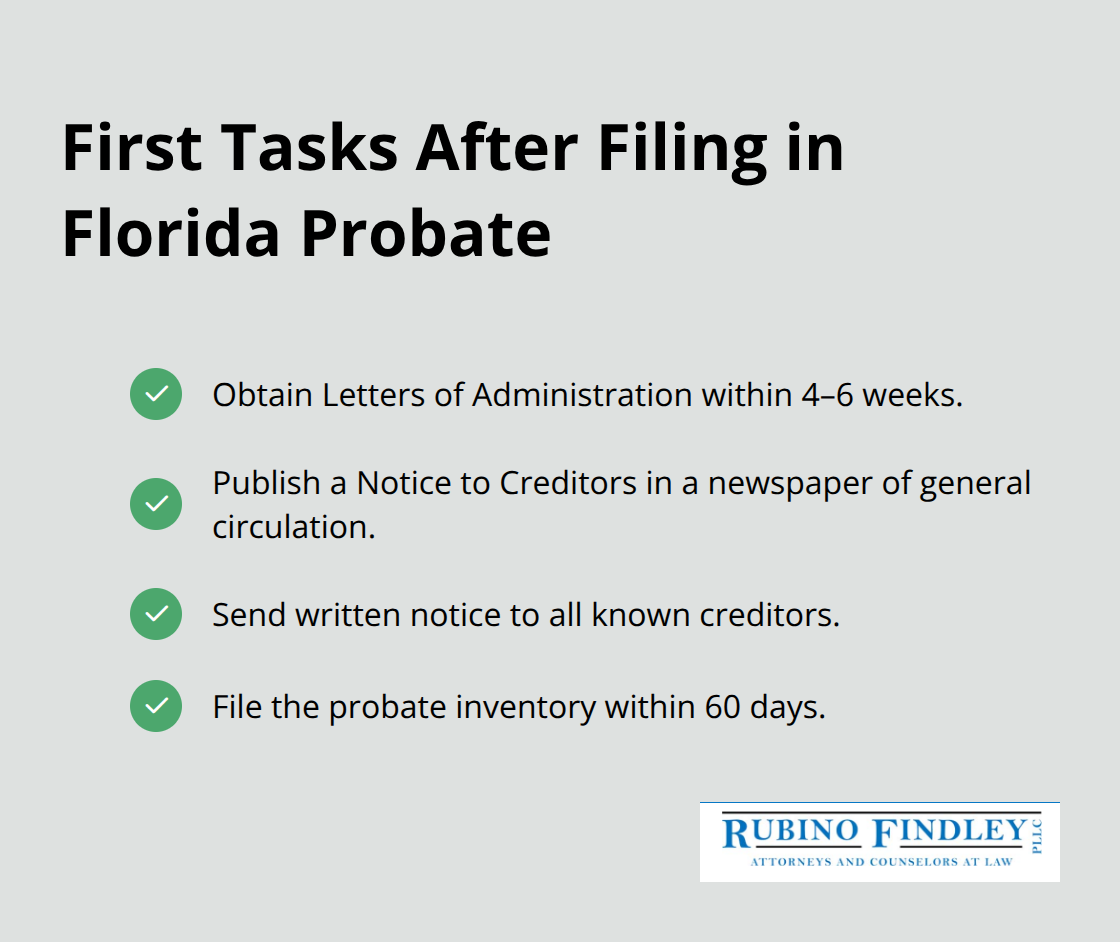
Known creditors receive written notice separately, and they have 90 days from publication to file claims. This creditor period protects the estate from surprise debts surfacing months later.
Inventory and Asset Discovery
The personal representative compiles a detailed inventory of all probate assets within 60 days and files it with the court. During this phase, the personal representative works with banks, investment firms, and insurance companies to gather account statements, property valuations, and life insurance documentation. Tracking down old accounts, locating safe deposit boxes, and obtaining appraisals for real estate or collectibles can stretch several weeks. The personal representative also carries a fiduciary duty to pay valid debts, estate administration expenses, and taxes before distributing anything to beneficiaries, which means the estate must remain funded during this entire period.
Debt Resolution and Final Accounting
Asset distribution cannot begin until creditor claims are resolved and the personal representative pays all legitimate debts, taxes, and administration costs. The personal representative files a Final Accounting with the court showing all receipts, disbursements, and proposed distributions-this document must itemize every penny spent and every dollar remaining. Beneficiaries receive notice of the Final Accounting and have 30 days to object if they believe the accounting is inaccurate. Once the court approves the Final Accounting, the personal representative distributes assets according to the will or intestacy law and obtains a discharge from the court, formally closing the estate.
Summary Administration’s Compressed Timeline
In Summary Administration, this entire process compresses into roughly 8 weeks because there is no personal representative appointment, no formal creditor notice period, and no inventory requirement-making it significantly faster for smaller estates. The key difference is that Summary Administration requires beneficiaries to certify there are no unpaid debts or creditor claims, shifting some risk to them rather than the estate. Personal representatives must document every action they take during probate because courts scrutinize accounting closely, and missing documentation can delay distributions or trigger disputes among beneficiaries. Understanding these procedural requirements prepares you for the challenges that often arise when multiple beneficiaries compete for assets or when creditors contest the estate’s ability to pay claims.
What Stops Probate Settlements in Boca Raton
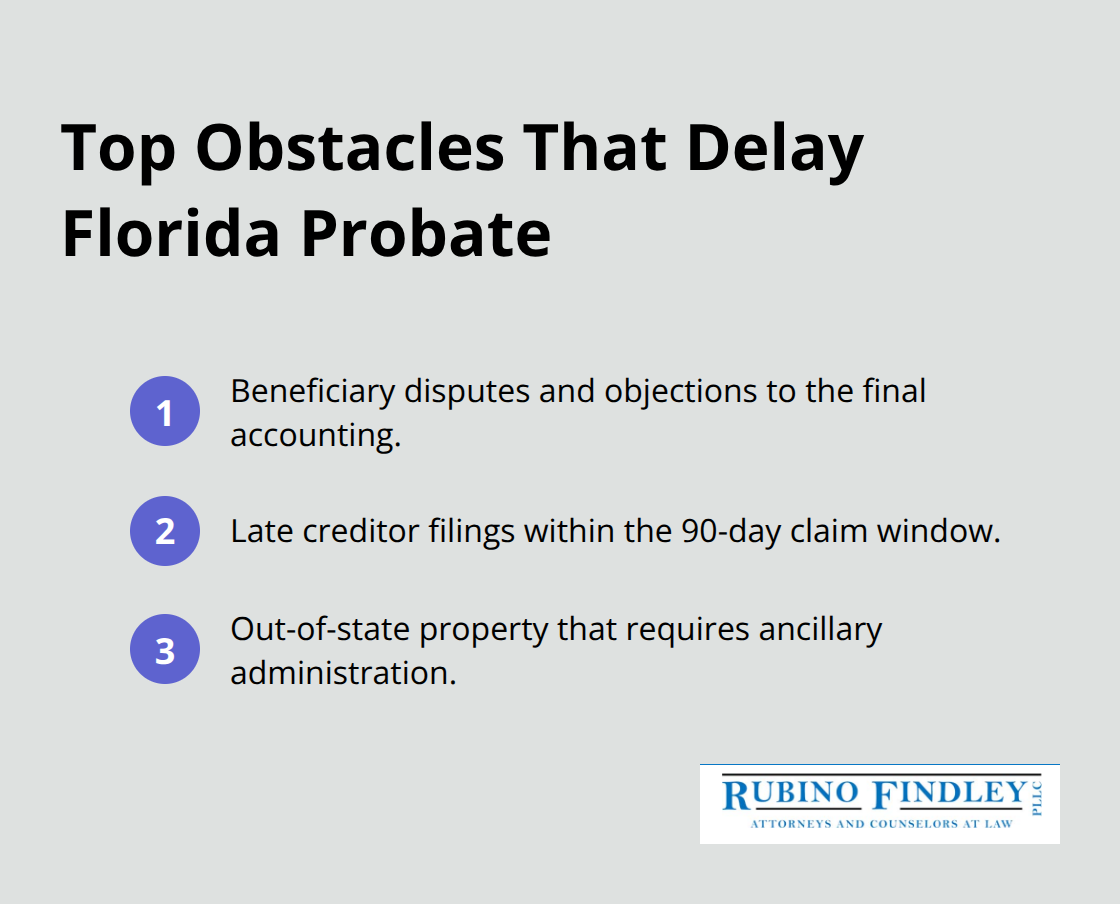
Probate rarely moves smoothly from filing to final distribution. Families face three recurring problems that extend timelines, drain estate funds, and sometimes force litigation. Beneficiary disputes rank first as a source of delay. When the will is ambiguous or a family member believes they were unfairly excluded, litigation expenses mount quickly.
Florida courts charge filing fees of $300–$500 per lawsuit, and attorney fees to litigate beneficiary claims often exceed $5,000 to $15,000 depending on complexity. One beneficiary objecting to the final accounting can delay distributions by months while the court reviews the personal representative’s spending. Courts scrutinize accounting closely, and missing receipts or unclear entries give unhappy beneficiaries ammunition to challenge distributions. A surviving spouse with an elective share claim-worth approximately 30% of the decedent’s elective estate under Florida law-can force asset sales to satisfy their entitlement if the will provides less. These disputes consume time and money that should flow to beneficiaries, and they escalate when multiple heirs have competing interests or when blended families create tension over who inherits what.
Creditor Claims Delay Final Distributions
Creditor claims present the second major obstacle to settlement. The personal representative must publish notice to creditors in a newspaper of general circulation, and creditors then have 90 days from publication to file claims against the estate. Some creditors wait until the final weeks of the deadline to submit claims, which delays the personal representative’s ability to close the estate because all claims must be resolved before distributions occur. Medical debts from the decedent’s final illness, mortgage balances on real estate, and old credit card accounts can consume significant portions of the estate if the personal representative fails to prioritize claims correctly. Florida law establishes a statutory priority for claims: expenses of administration and funeral costs come first, then debts with liens like mortgages and tax claims, then general unsecured debts like credit cards.
Out-of-State Assets Require Separate Court Action
Out-of-state assets create the third critical challenge. If the decedent owned real estate in another state but lived in Florida, ancillary administration becomes necessary-meaning a separate probate case must be opened in the other state to transfer that property. This requirement doubles court fees, extends timelines to 12–18 months, and requires hiring attorneys in multiple states. The personal representative must coordinate between probate courts and manage assets across different legal systems, which introduces delays when documents move between jurisdictions. Planning ahead with revocable living trusts can prevent ancillary administration entirely, since trust assets transfer outside probate without requiring court involvement in multiple states.
Final Thoughts
Florida probate court procedures demand attention to multiple deadlines, competing interests, and complex filing requirements that can derail even straightforward estates. The three pathways available-Disposition Without Administration, Summary Administration, and Formal Administration-each serve different situations, with timelines ranging from 8 weeks to 12 months or longer depending on asset complexity and creditor claims. Missing a single deadline or failing to document expenses properly triggers litigation that extends settlement by months and depletes funds that should reach your family.
The personal representative carries significant responsibility throughout the process, from publishing notices and compiling inventories to resolving creditor claims and filing final accounting with the court. An attorney prevents costly mistakes by ensuring proper filing, managing creditor disputes before they escalate, and handling the accounting requirements that courts scrutinize closely. For out-of-state assets requiring ancillary administration, an attorney coordinates across multiple jurisdictions and protects your interests in each state.
Planning before probate becomes necessary offers the most effective protection for your family. Revocable living trusts, beneficiary designations, and proper deed structures eliminate probate entirely and avoid the expense and delay that families face in court. We at Rubino Findley, PLLC help families in Boca Raton establish wills, trusts, and powers of attorney that protect their wishes and simplify settlement for loved ones-contact us for a free consultation to discuss your estate plan today.