




Palm Beach Probate: Understanding Local Requirements and Timelines
Navigating Palm Beach probate can feel overwhelming when you’re grieving and managing an estate simultaneously. The process involves specific local requirements, strict timelines, and potential pitfalls that cost families thousands in unnecessary delays.
At Rubino Findley, PLLC, we’ve guided countless families through probate in Palm Beach County. This guide walks you through what to expect and how to protect your interests.
How Florida’s Probate Framework Works in Boca Raton and Palm Beach County
Three Paths Through Florida Probate
Florida’s probate system operates under Chapters 732 and 733 of the Florida Statutes, creating a structured process for transferring assets after someone dies. The state recognizes three distinct paths: Formal Administration for larger or contested estates, Summary Administration for smaller estates under $75,000, and Disposition of Personal Property Without Administration for minimal estates. Which path applies to your situation determines everything from court involvement to timeline length.
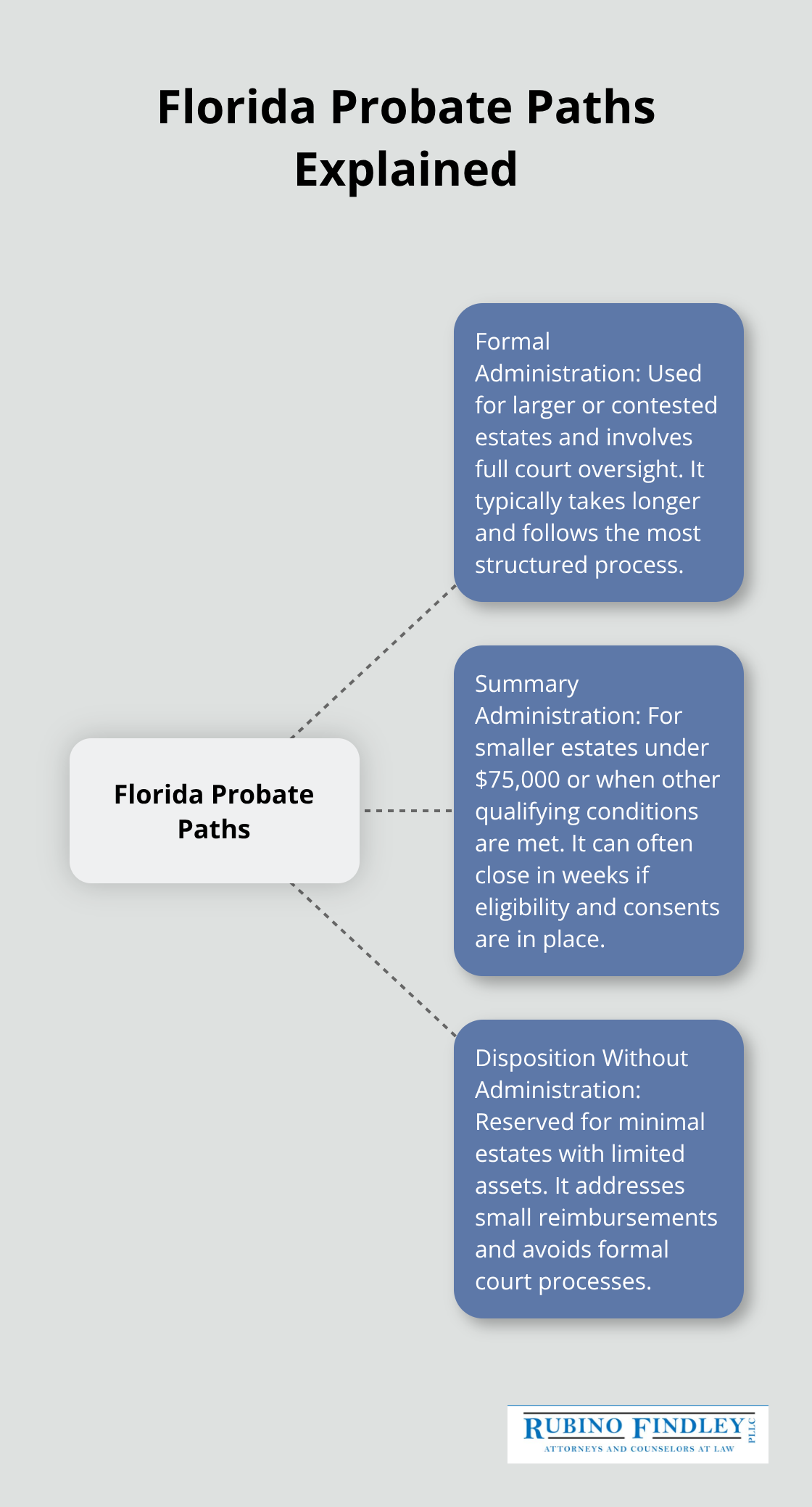
Formal Administration requires court oversight and typically takes 12 to 15 months. Summary Administration can close in under two months if eligibility requirements are met. The decedent’s residency at death determines which Florida county handles the case, so Palm Beach County probate follows the 15th Judicial Circuit’s local rules and procedures. These distinctions directly affect how much you’ll spend, how long the process takes, and what paperwork the court demands.
Why These Distinctions Matter
Many families mistakenly believe probate is optional or that they can navigate it without legal guidance. Florida law imposes strict filing deadlines, publication requirements, and creditor notification periods that, if missed, can invalidate the entire administration or expose the personal representative to personal liability. The framework isn’t theoretical-it’s enforceable and unforgiving.
The Personal Representative’s Legal Role
The personal representative, sometimes called an executor or administrator, holds significant legal responsibility under Florida law. This person must be at least 18 years old, mentally competent, and cannot have a felony conviction. If a will exists, the named executor typically serves; if there’s no will, the court appoints a personal representative, usually a surviving spouse or family member.
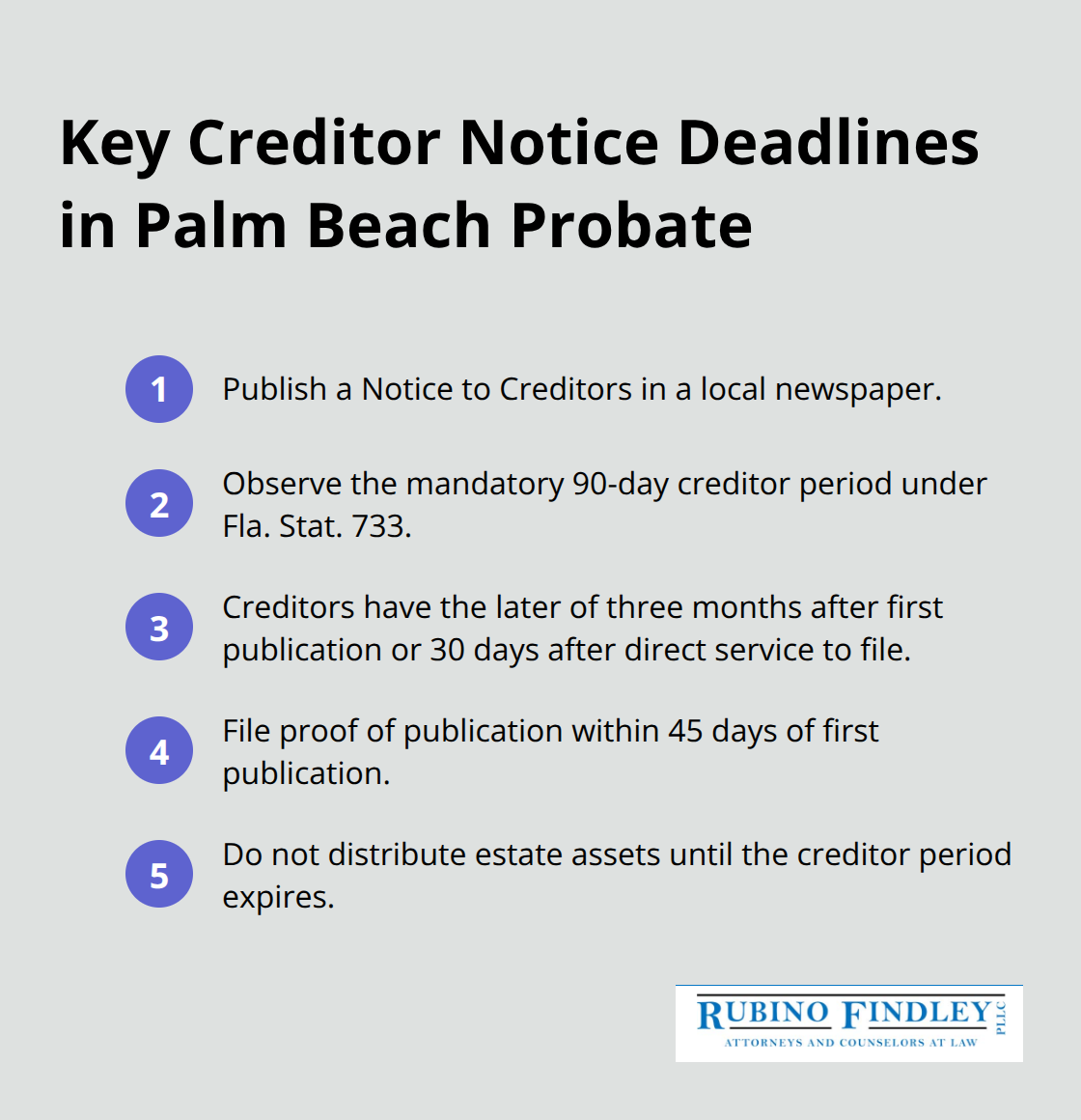
The personal representative collects all estate assets, inventories them, pays valid debts in the correct statutory order, files required notices and accountings with the court, and distributes remaining assets to beneficiaries. Florida law imposes a 90-day creditor notice period for Formal Administration, meaning creditors receive notification through publication in a local newspaper and direct notice to known creditors. The personal representative must file proof of publication within 45 days of first publication, and creditor claims generally must be filed within three months of that publication or they’re barred forever.
Managing Fiduciary Duties and Deadlines
Managing these deadlines without missing filing windows or statutory requirements pressures many personal representatives to hire legal counsel, even in smaller estates. The fiduciary duty carries real consequences-a personal representative who mishandles funds, fails to notify required parties, or distributes assets prematurely faces personal liability. Beneficiaries or creditors can sue the personal representative directly, potentially wiping out their own assets to cover the mistake.
These strict requirements and potential personal liability create the foundation for understanding what happens next in the probate timeline. The initial filing and court notification process sets everything in motion, and missing even one deadline can cascade into months of additional delays.
How Long Does Probate Actually Take in Boca Raton
Timeline Varies by Administration Type
The timeline for closing a probate estate in Palm Beach County depends entirely on which path you take through Florida’s system. Formal Administration typically stretches 12 to 15 months from the date the personal representative receives Letters of Administration from the court. Summary Administration can close in under two months if all beneficiaries consent and the estate qualifies by value. These aren’t estimates-they’re realistic benchmarks based on how the 15th Judicial Circuit processes cases and how Florida Statutes 732 and 733 structure filing deadlines.
Initial Filing Moves Quickly
The initial filing itself moves quickly. Once you submit the will and death certificate to the Palm Beach County Clerk’s Probate Division, the court appoints a personal representative within days. However, the real timeline clock starts when the personal representative must publish a Notice to Creditors in a local newspaper. This 90-day creditor period under Florida Statute 733 is non-negotiable. Creditors have until the later of three months after first publication or 30 days after direct service to file claims. Missing this window means creditors are barred forever, but you cannot distribute estate assets until this period expires.
Publication Requirements Demand Precision
The Clerk does not publish notices for non-indigent parties, so you must arrange service with a newspaper of general circulation in Palm Beach County and file proof of publication within 45 days of the first publication date. Many families underestimate how strictly the court enforces these publication deadlines. The personal representative must also file a Statement Regarding Creditors within four months after the first publication of the Notice to Creditors, listing all known creditors and any claims received.
Asset Distribution and Final Accounting
Once creditor claims close, asset distribution can begin, but only after all valid debts, taxes, and the personal representative’s attorney fees are paid in the statutory order required by Florida law. Final accounting and discharge typically occur within 12 months from issuance of Letters of Administration if no disputes arise. However, objections to the final accounting must be served within 30 days of service, and the court schedules hearings within 90 days. If beneficiaries contest distributions or creditor disputes emerge, the estate stays open indefinitely.
Summary Administration Eliminates the Creditor Notice Period
Summary Administration sidesteps much of this timeline because it eliminates the 90-day creditor notice requirement. The decedent must have died more than two years ago, the estate value must not exceed $75,000 after exemptions, or the will must explicitly request Summary Administration. All beneficiaries must consent in writing. When these conditions align, the personal representative files a petition with the Clerk, and the court can issue an order approving Summary Administration in weeks rather than months. The Clerk’s office in West Palm Beach processes these petitions through the Online Scheduling System, which is the only way to submit probate orders in Palm Beach County-you cannot file by mail or in person.
Understanding these timelines reveals why certain probate challenges emerge during the process. Disputes over creditor claims, contested distributions, and family disagreements often surface during the months when assets sit frozen and tensions run high.
What Goes Wrong During Palm Beach Probate
Will Disputes and Unenforceable Protections
Will disputes surface frequently in Palm Beach County probate cases, and they rarely resolve quietly. A common trigger is a will executed in another state that beneficiaries challenge on grounds of improper witnessing, missing dates, or alleged lack of mental capacity at execution. Florida probate courts recognize wills valid under another state’s laws, but this does not prevent litigation. The problem intensifies because Florida Statutes section 732.502 makes no-contest clauses unenforceable, meaning any beneficiary can challenge a will without fear of losing their inheritance if they lose the dispute. This legal reality transforms every questionable will into a potential courtroom battle.
Creditor Claims and Payment Order Liability
Creditor claims compound these challenges significantly. Creditors must file claims within three months of first publication of the Notice to Creditors or 30 days after direct service, whichever is later, but many creditors miss these windows entirely. The personal representative then faces pressure from beneficiaries demanding distributions while unknown or late-filed claims linger. Florida law requires the personal representative to file a Statement Regarding Creditors within four months after first publication, listing all known creditors and received claims. If a creditor surfaces after distribution occurs, the personal representative faces potential personal liability.
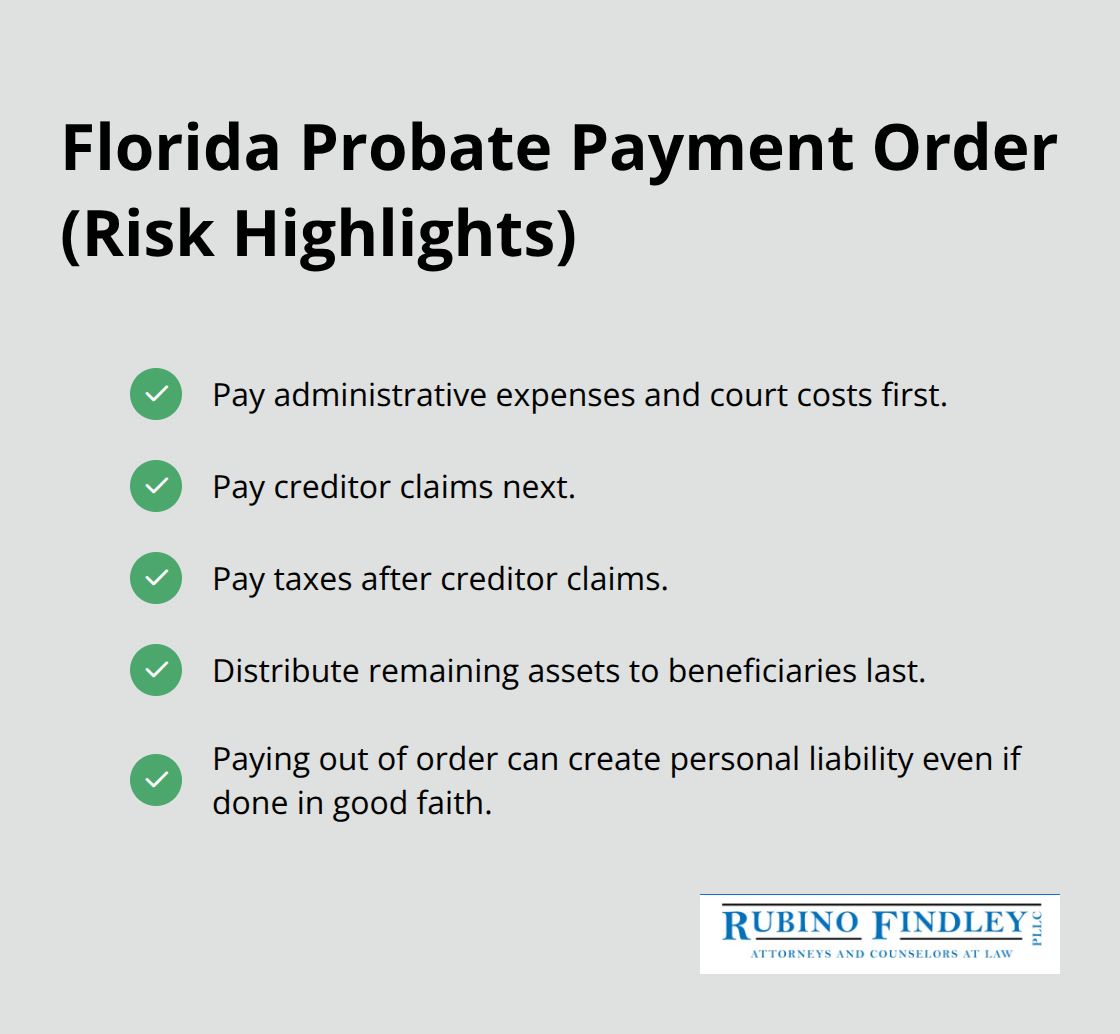
The statutory order of payment matters enormously: administrative expenses and court costs come first, then creditor claims, then taxes, then distributions to beneficiaries. Mispaying in the wrong order creates liability exposure that personal representatives cannot escape, even if they acted in good faith. This rigid hierarchy protects creditors but exposes personal representatives to significant financial risk.
Family Conflicts and Frozen Assets
Family disagreements escalate quickly once assets freeze during the creditor notice period and beneficiaries realize how long distributions will take. Disputes over who receives specific items, whether the personal representative handles funds appropriately, and disagreements about whether an estate qualifies for Summary Administration versus Formal Administration consume months and drain resources. The 15th Judicial Circuit requires all probate orders to be submitted through the Online Scheduling System only, meaning orders cannot be filed by mail or in person, which delays responses to family conflicts.
When beneficiaries contest the personal representative’s accounting or object to proposed distributions, the court schedules hearings within 90 days, but the estate remains open and frozen until resolution. This waiting period creates genuine financial hardship for beneficiaries who depend on inheritance proceeds.
Valuation Disputes and Appraisal Gaps
The most damaging disputes emerge over asset valuation, particularly for personal property and real estate. Without certified appraisals, beneficiaries later claim items were undervalued or improperly distributed. Florida law requires written appraisal reports for high-value items, yet many personal representatives skip this step to save money, creating ammunition for future litigation. These practical realities explain why contested probate in Palm Beach County regularly extends beyond 15 months and why costs escalate dramatically beyond initial estimates.
Conclusion
The probate process in Palm Beach County demands precision, timing, and knowledge of local court procedures that catch many families off guard. Missing a single filing deadline, publishing notices incorrectly, or mishandling creditor claims creates liability that extends far beyond the initial mistake. Personal representatives who attempt to navigate Palm Beach probate without legal guidance frequently face personal liability, extended timelines, and family conflict that could have been prevented.
We at Rubino Findley, PLLC guide families through every stage of probate administration in Palm Beach County. We handle the publication requirements, file all court documents through the 15th Judicial Circuit’s Online Scheduling System, manage creditor claims within statutory deadlines, and prepare final accountings that satisfy the court. Whether your estate qualifies for Summary Administration or requires Formal Administration, we handle the complexity so you can focus on your family.
The cost of hiring an attorney for Palm Beach probate is far less than the cost of personal liability, extended administration, or family litigation. Contact Rubino Findley, PLLC today to discuss your probate needs and take the first step toward closing your estate efficiently. We can review your situation, explain your options, and provide a transparent fee structure upfront.