




Probate Litigation Basics: Key Concepts For Florida Families
When a loved one passes away in Florida, their estate often goes through probate-a legal process that can become complicated quickly. Disputes over wills, asset distribution, and executor decisions happen more often than many families realize.
We at Rubino Findley, PLLC help Palm Beach County families navigate probate litigation basics and understand their rights when conflicts arise. This guide breaks down what you need to know about probate disputes in Boca Raton and how the court system works.
Understanding Probate Litigation in Boca Raton
Probate litigation occurs when disputes arise during the administration of a deceased person’s estate in Florida courts. Unlike straightforward probate where assets transfer smoothly to heirs, litigation happens when someone challenges the will’s validity, questions the personal representative’s decisions, or claims they were wrongfully excluded from the inheritance. Florida Statute 731 through 735 governs these disputes, and the court system in Palm Beach County handles hundreds of contested cases annually.
The Scope of Probate Disputes
The scope of probate litigation ranges from relatively simple disagreements about asset distribution to complex cases involving allegations of undue influence or fraud. Will contests represent a significant portion of probate litigation in Florida, with courts requiring clear and convincing evidence to overturn a will’s validity. Disputes over whether an executor properly managed estate assets, paid creditors fairly, and distributed funds according to the will’s terms also trigger litigation regularly.
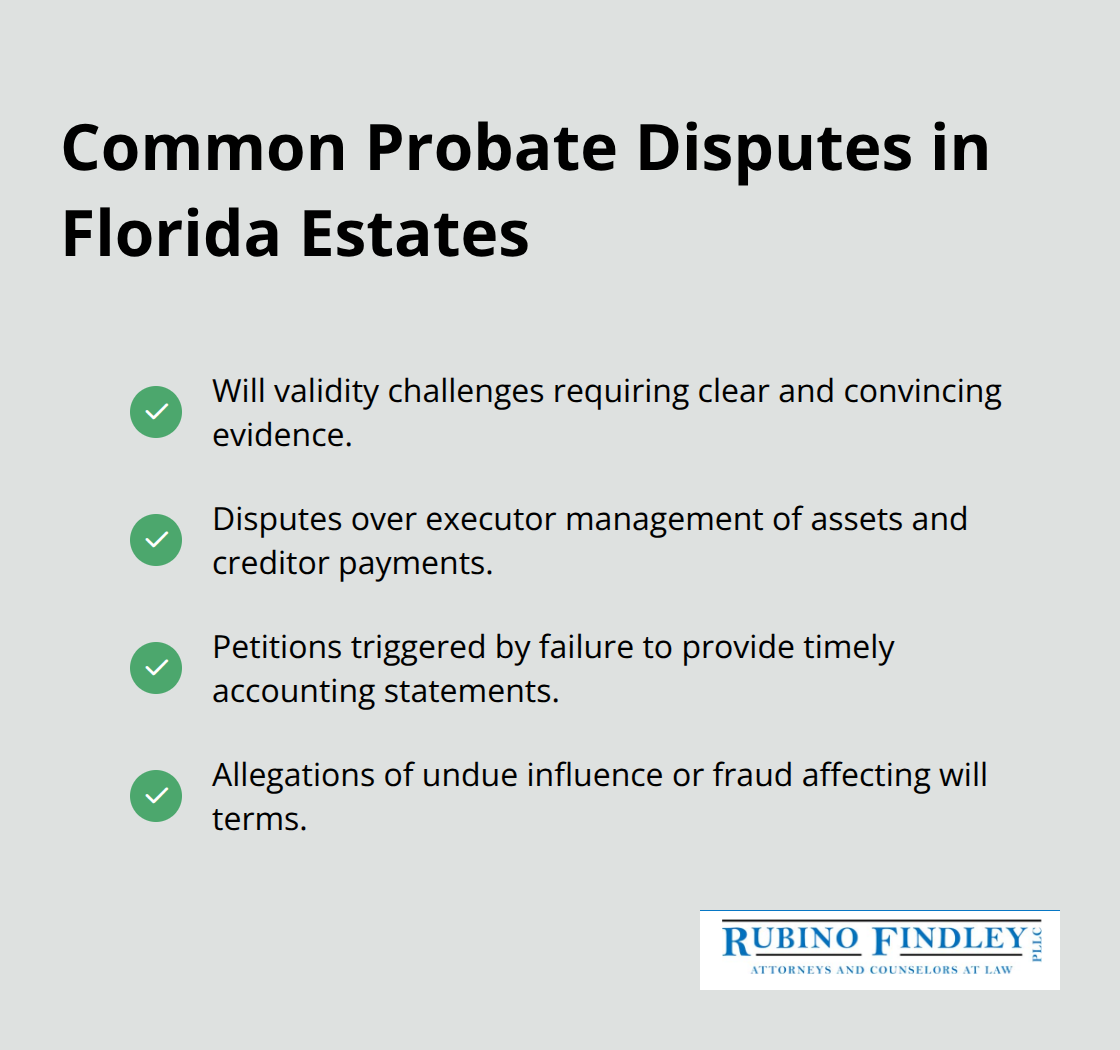
When a personal representative fails to provide accounting statements within a reasonable timeframe or refuses to disclose financial information, beneficiaries have legal grounds to petition the court for intervention.
When Family Members Disagree About the Estate
Probate litigation becomes necessary when family members cannot agree on fundamental matters regarding the estate. A beneficiary who believes they received less than their rightful share may file a claim against the personal representative for breach of fiduciary duty. If evidence suggests the decedent lacked mental capacity when signing the will, or that someone pressured them into unfavorable terms, the court can invalidate the document entirely.
Claims of undue influence occur in approximately 5 to 10 percent of contested estates according to probate litigation patterns in Florida, often involving situations where a caregiver, new spouse, or close associate allegedly manipulated the decedent. Fraud claims focus on whether someone intentionally deceived the decedent about the will’s contents or their own relationship to the estate. Disputes over asset distribution arise when the will’s language is ambiguous, when assets cannot be located, or when creditors claim the estate owes them money that reduces what beneficiaries receive.
How Personal Representative Decisions Create Conflict
The personal representative’s decisions about which debts to pay first, whether to sell property quickly or hold it, and how to handle tax obligations frequently generate conflict among heirs with competing interests. Some beneficiaries may want immediate distributions, while others prefer the representative to preserve assets for long-term growth. When the representative’s actions appear to favor one heir over another, or when financial decisions lack transparency, litigation often follows. Understanding who holds power in these situations and what rights each party possesses helps families recognize when court intervention becomes appropriate.
Key Players and Their Roles in Probate Litigation in Boca Raton
The personal representative, also called the executor, holds tremendous power over the estate during probate administration. Florida Statute 733.212 outlines their core duties: they must notify interested parties within reasonable time, take inventory of all assets, safeguard property, publish notice to creditors, file tax returns, pay legitimate debts, and distribute remaining assets according to the will or Florida law. The personal representative can charge a statutory fee up to 3 percent of estate assets in some circumstances, creating financial incentive to complete administration efficiently.
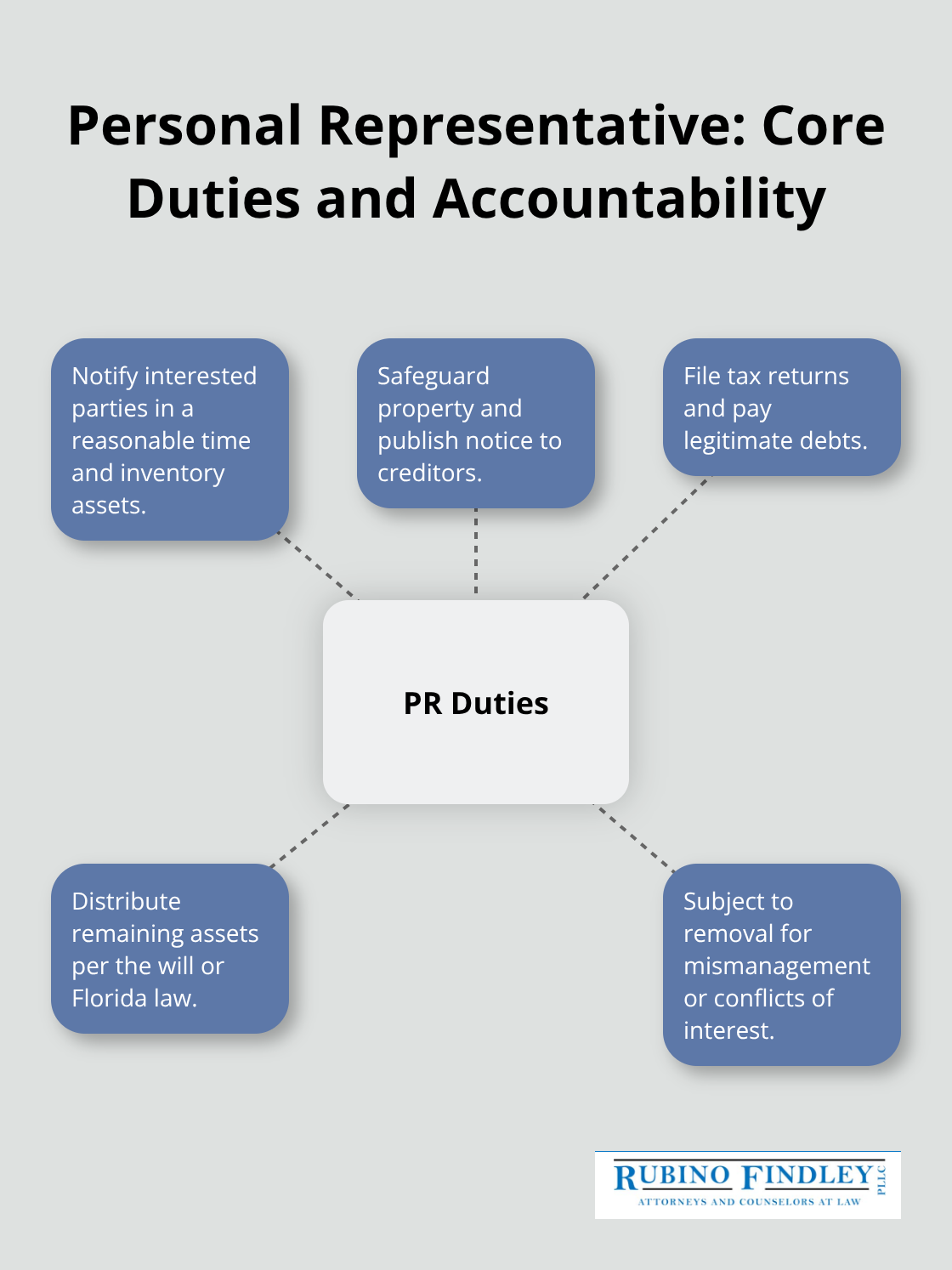
However, this power comes with strict accountability. If a beneficiary suspects the personal representative mismanaged funds, paid excessive fees to themselves or their attorney, or deliberately delayed distributions, Florida courts can remove them entirely and appoint a replacement.
How Courts Remove Personal Representatives
The 15th Judicial Circuit in Palm Beach County handles hundreds of removal petitions annually, with courts examining whether the representative acted in the estate’s best interest or prioritized their own gain. Courts remove personal representatives for mismanagement, conflicts of interest, or failure to perform duties under Florida Statute 733.504. A single act of misconduct can trigger removal, or a pattern of poor decisions can accumulate until a beneficiary petitions the court for intervention. Once removed, the representative loses all authority to act on behalf of the estate, and the court appoints a successor to complete the administration process.
What Beneficiaries Can Challenge
Beneficiaries possess specific legal rights to demand transparency and accountability from the personal representative. Under Florida Statute 733.604, the personal representative must provide an inventory within 60 days of appointment, and beneficiaries can petition for accounting statements showing where money went and when. If the personal representative refuses to provide these documents or drags out the process beyond 12 months without legitimate reason, beneficiaries have grounds to file a breach of fiduciary duty claim. The court can compel disclosure, impose penalties, and even surcharge the representative personally if they misappropriated funds.
Special Protections for Spouses and Minor Children
A surviving spouse in Florida holds additional protections under Florida Statute 732.2075, which grants them an elective share of up to 30 percent of the estate regardless of what the will states, preventing complete disinheritance. Minor children and incapacitated beneficiaries may have a guardian ad litem appointed to protect their interests separately from the personal representative’s decisions. These protections exist because vulnerable family members cannot advocate for themselves during probate administration.
When the Court Steps In
Beneficiaries also possess the right to challenge how assets were valued, whether the representative sold property at fair market value, and whether creditor claims were paid appropriately. When multiple heirs disagree fundamentally about estate administration, the court can appoint an independent trustee or special master to oversee remaining distributions and resolve conflicts objectively. These court-appointed officials act as neutral parties who answer to the judge rather than to any single beneficiary or the personal representative. Understanding these roles and protections helps families recognize when they should petition the court for intervention and what outcomes they can realistically expect from probate litigation.
Why Wills Get Challenged and What It Takes to Win in Boca Raton
Will contests represent the most frequent trigger for probate litigation in Florida courts, with validity challenges focusing on whether the decedent possessed mental capacity when signing, whether someone exerted undue pressure, or whether execution procedures violated Florida Statute 732.502 and 732.503. To invalidate a will, the challenger must present clear and convincing evidence-a high legal standard that requires more than simply doubting the will’s legitimacy. Courts examine whether the testator understood the nature and extent of their assets, recognized who their family members were, and comprehended how the will distributed their property. Cognitive decline alone does not invalidate a will if the decedent retained testamentary capacity at the moment of signing.
Undue Influence and Manipulation Claims
Undue influence claims allege that someone manipulated the testator through coercion, threats, or psychological pressure into creating terms they would not have chosen independently. These claims surface in approximately 5 to 10 percent of contested estates in Florida, frequently involving caregivers, new spouses, or individuals who stand to inherit substantially under the challenged will. Courts scrutinize whether the influencer had opportunity to pressure the testator, whether they benefited from the will’s terms, and whether the testator’s decisions deviated dramatically from prior estate plans. A will leaving everything to a new caregiver while excluding adult children who previously received substantial bequests raises red flags that prompt judicial investigation.
Fraud and Intentional Deception
Fraud claims focus on intentional deception about the will’s contents or the influencer’s relationship to the decedent, requiring proof that someone knowingly misrepresented facts to manipulate the testator’s decisions. Unlike undue influence, which involves pressure or coercion, fraud requires demonstrating that the testator relied on false information when making their testamentary decisions. Courts demand specific evidence of the deceptive statements and proof that the testator would have acted differently had they known the truth.
Asset Distribution Disputes and Fiduciary Breaches
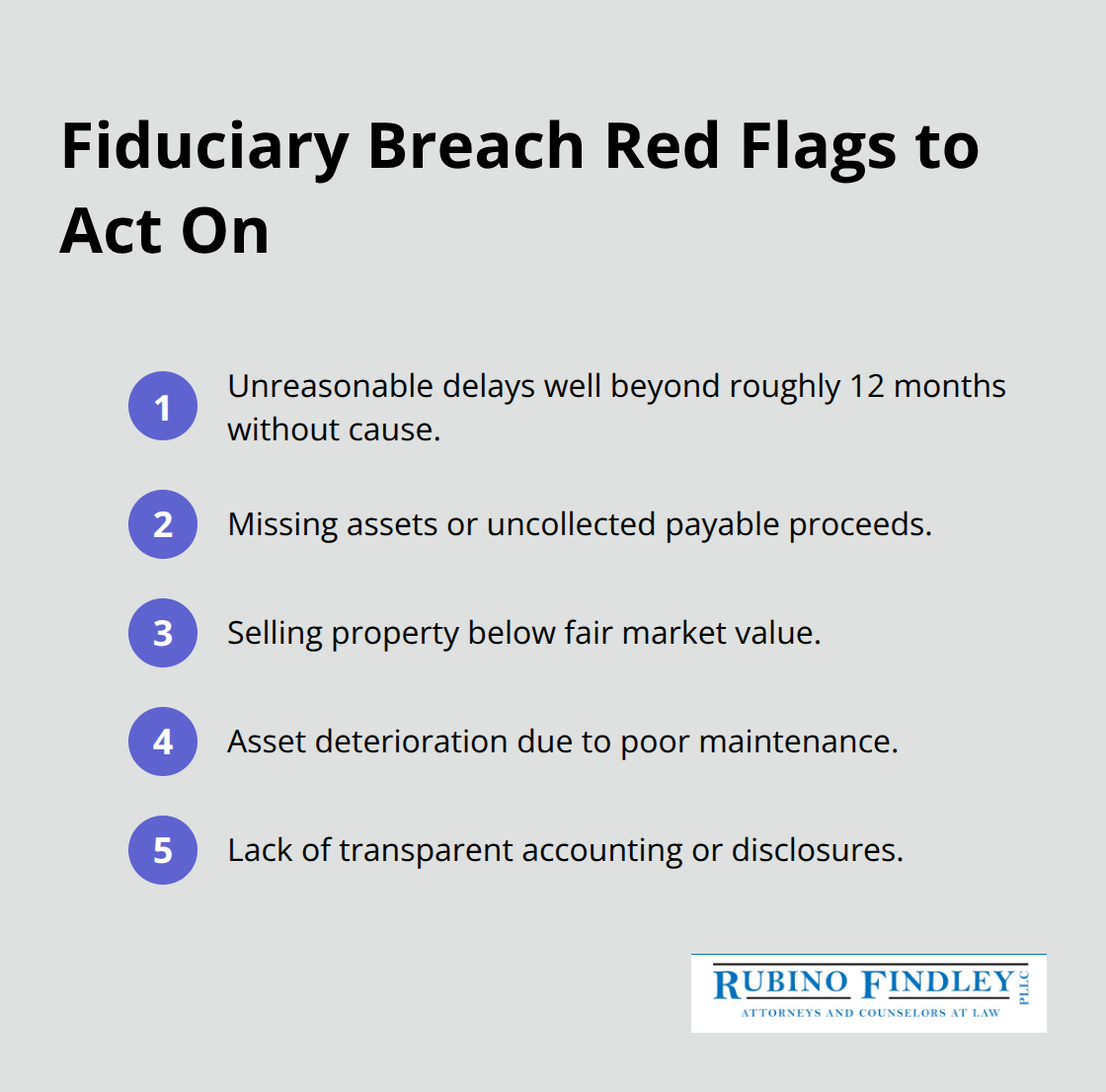
Asset distribution disputes arise when the will’s language creates ambiguity, when property cannot be located, or when creditor claims consume funds that beneficiaries expected to receive. Personal representatives often face conflicting interests when one heir wants immediate distributions while another prefers asset preservation for growth. Some representatives sell estate property hastily at below-market prices, triggering claims that they breached their fiduciary duty to maximize asset value. Others delay distributions for years without legitimate justification, frustrating beneficiaries who need their inheritance.
Under Florida Statute 733.612, the personal representative must distribute the estate within a reasonable timeframe, typically 12 months unless circumstances justify delay. When a representative cannot account for missing assets, fails to collect life insurance proceeds with named beneficiaries, or allows estate property to deteriorate without maintenance, beneficiaries possess grounds to petition the court for removal and surcharging. Courts can force the representative to pay the estate from their own pocket if they mismanaged assets through negligence or self-dealing.
When to Pursue Litigation Versus Settlement
Litigation serves beneficiaries’ interests when clear evidence supports their claims and when the stakes justify the time and expense involved in court proceedings. Settlement negotiations might preserve family relationships while achieving fair outcomes, particularly in cases where evidence remains ambiguous or where multiple heirs share competing interests in the estate’s resolution. Understanding these dispute categories helps families recognize when court intervention becomes necessary and when alternative approaches might better serve their long-term interests.
Final Thoughts
Probate litigation basics show that family disputes over estates stem from real disagreements about wills, asset management, and fiduciary responsibility. Florida law grants beneficiaries the right to demand transparency, challenge questionable decisions, and petition courts for intervention when representatives mismanage assets or act in self-interest rather than the estate’s benefit. Spouses receive statutory protections through elective share rights, and minor children gain guardians ad litem to advocate separately (these legal safeguards exist because probate administration involves significant money and family relationships simultaneously).
Legal representation in Boca Raton becomes essential when disputes escalate beyond simple disagreements. Probate litigation requires understanding Florida Statutes 731 through 735, court procedures in the 15th Judicial Circuit, and how to present evidence that meets the clear and convincing standard courts demand. Attempting to navigate contested estates without guidance often results in missed deadlines, weakened legal positions, and outcomes that could have been prevented with proper counsel.
If you face probate disputes or want to prevent them through proper planning, we at Rubino Findley, PLLC help Palm Beach County families establish wills, trusts, and powers of attorney that reduce litigation risk. We also represent clients in active probate disputes across Florida. Reach out to schedule a free consultation and discuss your specific situation with someone who understands both estate planning and contested administration.