




Florida Trust Planning: Building a Solid Framework for Your Estate
Most Florida residents don’t realize that without a trust, their estate will go through probate-a costly and public process that can take months or even years. Florida trust planning gives you control over how your assets transfer to your loved ones while avoiding these delays and expenses.
At Rubino Findley, PLLC, we help families in Boca Raton build trust frameworks that protect their wealth and simplify what comes next. The right trust structure can save your family thousands in fees and keep your financial details private.
Why Trust Planning Actually Saves Money
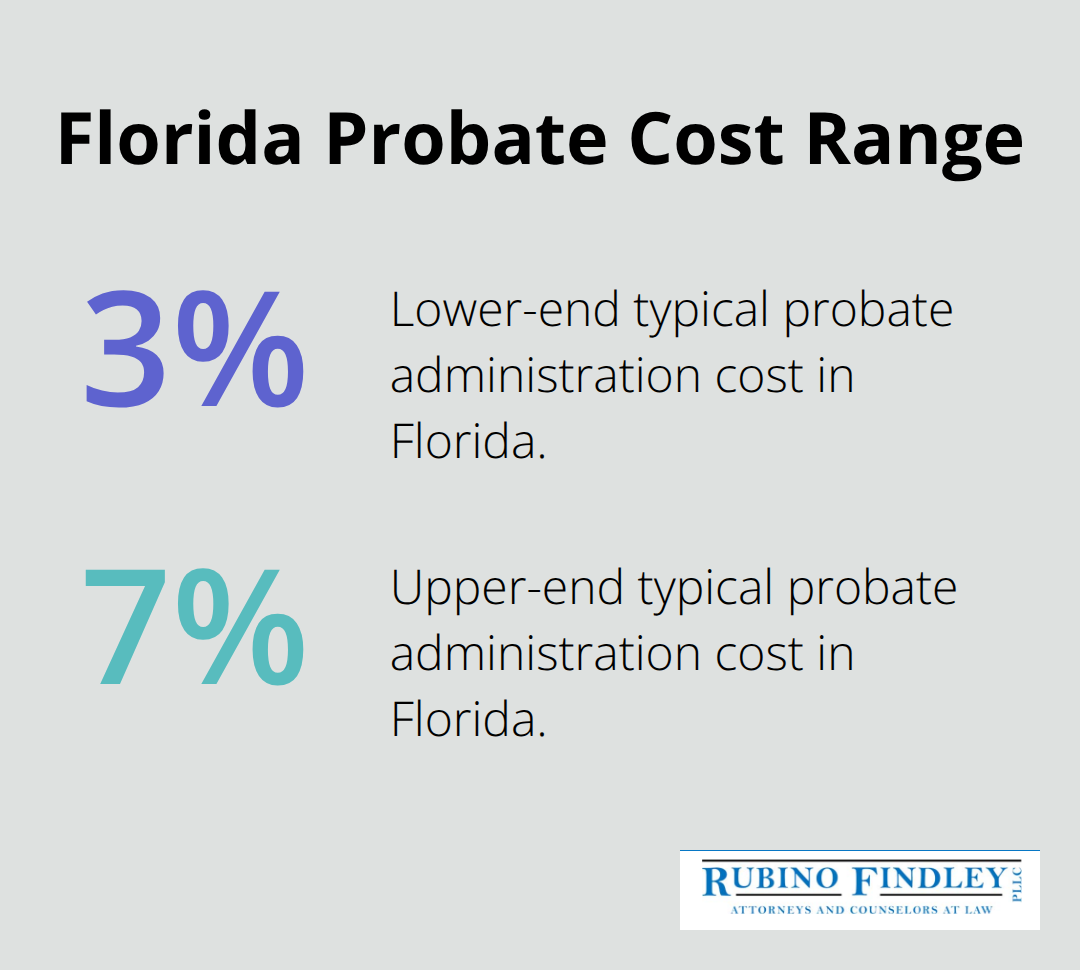
Probate in Florida costs between 3% and 7% of your estate’s value, according to typical probate administration fees. For a $500,000 estate, your family could spend $15,000 to $35,000 just moving assets through the court system. A trust eliminates this entirely.
When you fund a trust properly, assets pass directly to your beneficiaries without court involvement, without probate fees, and without the six-month to two-year timeline that probate typically requires.
The Privacy Advantage Matters More Than Most People Think
Probate becomes public record. Anyone can walk into the courthouse and see your will, your assets, your beneficiaries, and the exact dollar amounts involved. A trust keeps all of this information completely private. Your family’s financial details stay between you and your trustee, not broadcast in public court documents. This privacy also protects your beneficiaries from unwanted solicitation and potential legal claims. Testamentary trusts created through a will still go through probate and become public, which is why a revocable living trust funded during your lifetime offers the stronger choice for families who value discretion.
Control Comes Down to Specificity
You can control exactly how and when your beneficiaries receive their inheritance through a trust in ways a will simply cannot match. A will names who gets what; a trust lets you specify conditions. You can direct that a young adult beneficiary receives distributions at age 25, 30, and 35 rather than all at once. You can protect a beneficiary from their own poor financial decisions through spendthrift provisions that prevent creditors from seizing inherited funds. If you have a child with special needs, a special needs trust preserves their government benefits while providing financial support. These granular instructions stay private and take effect immediately upon your death without court approval, meaning your wishes execute exactly as you intended.
The right trust structure transforms how your estate transfers to the next generation. Understanding which type of trust fits your situation requires careful analysis of your assets, your family’s needs, and your long-term goals.
Which Trust Type Works Best for Your Situation in Boca Raton
Revocable Living Trusts: Flexibility When Life Changes
A revocable living trust gives you complete control during your lifetime and lets you change or cancel it whenever circumstances shift. You remain the trustee and manage all assets normally without any disruption to your financial life. The moment you become incapacitated or pass away, a successor trustee you named takes over without court involvement, and assets flow directly to beneficiaries according to your instructions.
This flexibility makes revocable trusts the right choice for most Florida families because life happens-marriages end, children are born, financial situations change, and tax laws shift. You can amend the trust to reflect new priorities or add assets you acquire years later. The trade-off is that a revocable trust does not reduce your federal estate taxes or shield assets from creditors during your lifetime, since you still own everything legally.
Irrevocable Trusts: Permanent Protection and Tax Savings
Irrevocable trusts work differently and demand a stronger commitment. Once you transfer assets into an irrevocable trust and sign it, you cannot change your mind, amend the terms, or reclaim the assets. This permanent decision creates powerful benefits that revocable trusts cannot match.
Assets inside an irrevocable trust stop counting toward your taxable estate, which means they avoid federal estate taxes when you die. For a married couple with a $3 million estate, this difference translates directly into tax savings. The Internal Revenue Service annual gift tax exclusion allows you to transfer $19,000 per person per year into an irrevocable trust without triggering gift taxes.
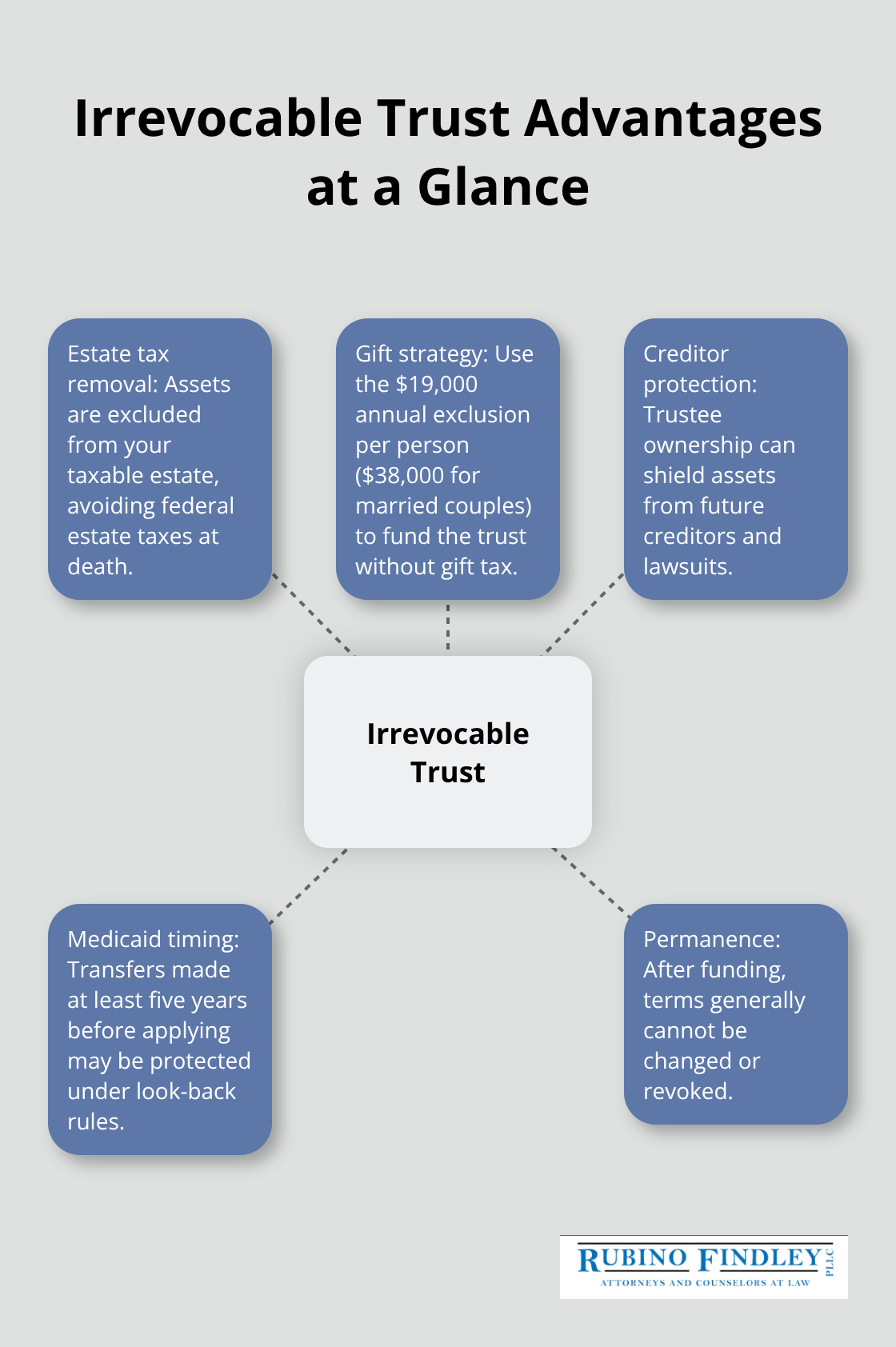
A married couple can move $38,000 annually to each beneficiary, and over ten years, that same couple could transfer roughly $3.8 million using only the annual exclusion, completely tax-free.
Asset Protection for High-Liability Professionals
Irrevocable trusts also shield assets from creditors because the trustee owns the assets legally, not you-a significant advantage for doctors, business owners, and other high-liability professionals. Medicaid planning often relies on irrevocable trusts too; funds transferred at least five years before applying for Medicaid can be sheltered from spend-downs, protecting wealth for your family while you receive long-term care coverage. The five-year look-back period is strict, so timing matters enormously.
Why Testamentary Trusts Fall Short
Testamentary trusts created through your will sound convenient, but they carry a major flaw: they only take effect after your death and require probate court approval. Your family faces exactly the delays, costs, and public exposure you wanted to avoid. Building the right trust structure requires understanding your specific assets, family situation, and goals-decisions that shape how your estate transfers to the next generation.
How to Build Your Trust Framework in Boca Raton
Start With a Complete Asset Inventory
Your trust framework begins with listing every asset you own: real estate, bank accounts, brokerage investments, business interests, vehicles, and valuable personal property. This inventory reveals which assets need to transfer into the trust and which ones stay outside it. Retirement accounts like IRAs and 401(k)s should keep beneficiary designations aligned with your trust plan rather than transfer into the trust itself, since that triggers unwanted tax consequences.
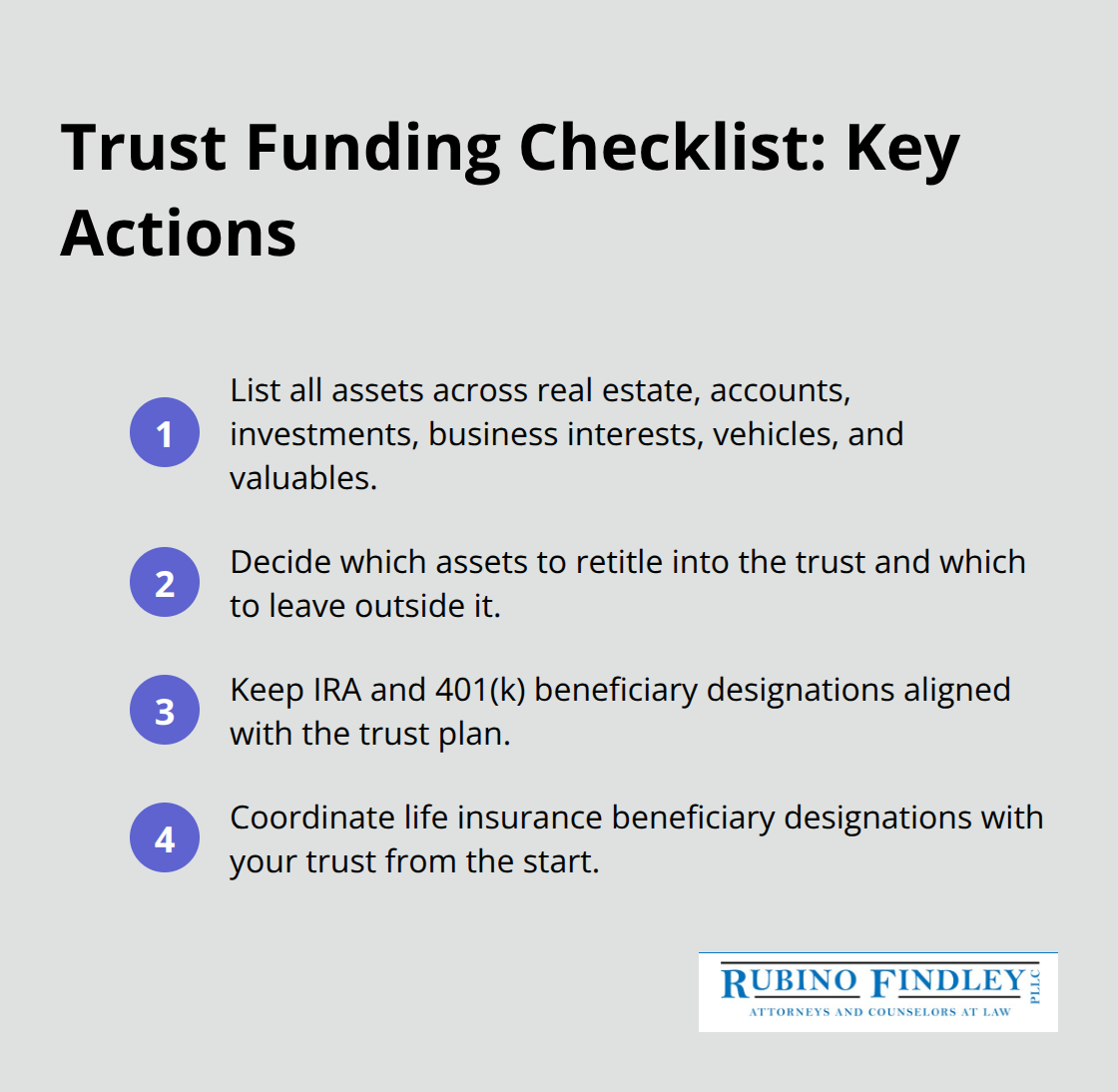
Life insurance policies work the same way-beneficiary designations control where the money goes, so coordinate those with your trust structure from the start.
Identify Your Beneficiaries and Their Actual Needs
Next, identify your beneficiaries and think about what they actually need. A young adult child might not be ready for a lump-sum inheritance at age 21, so conditional distributions at ages 25, 30, and 35 protect them from poor decisions. A spouse with a spending problem needs spendthrift protections built into their distributions. A child with special needs requires a special needs trust to preserve government benefits while providing support. These specifics transform a generic trust into a document that actually addresses your family’s reality.
Choose Between Revocable and Irrevocable Structures
Your choice between revocable and irrevocable trusts depends on whether you prioritize flexibility or permanent tax and creditor protection. Most Palm Beach County families start with a revocable living trust because it avoids probate, preserves privacy, and lets you change course as circumstances shift. If you have substantial assets or high liability exposure, an irrevocable trust locks in federal estate tax savings and shields assets from creditors permanently-but only if you transfer assets at least five years before needing Medicaid benefits, since the five-year look-back period is unforgiving.
Fund Your Trust Properly or Watch It Fail
Once you decide on structure, the critical step is funding the trust properly. This is where most plans fail. A trust document alone does nothing; you must retitle assets into the trust’s name. This means preparing new deeds for real estate, submitting transfer letters to banks and brokerages, and updating vehicle titles. Without proper funding, assets pass through probate anyway, defeating the entire purpose of creating the trust. An experienced estate planning attorney from Rubino Findley, PLLC can help you navigate this funding process so the plan actually works when it matters.
Final Thoughts
A solid trust framework protects your family from probate delays, keeps your financial details private, and ensures your wishes execute exactly as you intend. Florida trust planning offers real advantages that most families overlook until it’s too late. The difference between a revocable living trust that gives you flexibility and an irrevocable trust that locks in tax savings depends entirely on your assets, your family’s needs, and your long-term goals.
Florida has no state estate tax, and the federal estate tax exemption sits above $13 million per person, but without the right structure in place, your family still faces probate costs, delays, and public exposure. A funded trust eliminates all three problems. Whether you need a revocable living trust for flexibility, an irrevocable trust for tax and creditor protection, or a combination of both, the key is getting it done correctly and funding it completely.
Start with a free consultation to discuss your situation and learn which trust structure fits your family’s reality. Our team at Rubino Findley, PLLC handles wills, trusts, probate administration, and durable powers of attorney so your entire plan works together cohesively. The time to build your framework is now, not when a crisis forces your hand.