




Revocable Living Trust Florida: Leveraging Trusts in Florida Estate Planning
A revocable living trust Florida is one of the most effective tools for managing your estate while you’re alive and protecting your family after you’re gone. Many people in Palm Beach County assume they need a will, but a trust offers advantages that wills simply cannot provide.
At Rubino Findley, PLLC, we’ve seen how the right trust structure prevents probate delays, protects your privacy, and gives you complete control over your assets. This guide walks you through what revocable living trusts are, why they matter, and how to avoid costly mistakes.
What a Revocable Living Trust Actually Is
Understanding the Basics
A revocable living trust is a legal document where you transfer ownership of your assets to a trustee (often yourself) who holds them for your benefit during your lifetime and distributes them to your beneficiaries after your death. Unlike a will, which only takes effect after you die and must go through probate, a revocable living trust operates immediately and lets you maintain complete control over every asset while you’re alive. The word revocable means you can modify, amend, or dissolve the trust entirely at any time, as long as you remain mentally competent. This flexibility sets revocable trusts apart from irrevocable trusts, which you cannot change once established. In Florida, revocable living trusts fall under Chapter 736 of Florida Statutes, and they’ve become the most popular estate planning tool because they let you plan for both your lifetime and what happens after you’re gone without court involvement.
How You Fund Your Trust
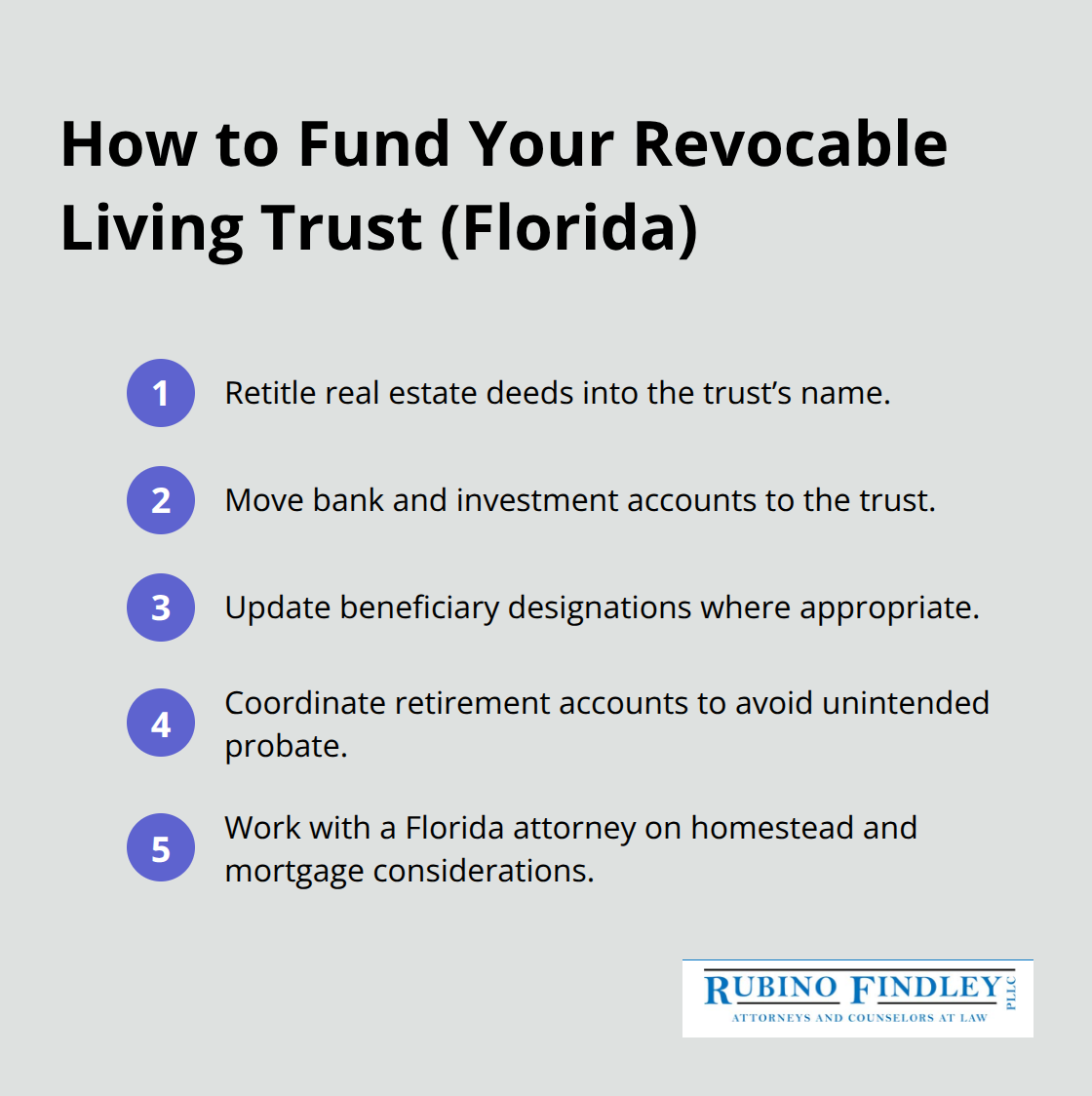
The real work happens when you fund the trust by transferring assets into it. This means retitling real estate deeds in the trust’s name, moving financial accounts to the trust, and updating beneficiary designations where applicable. Many people create a trust but fail to fund it properly, which defeats the entire purpose-assets not in the trust still go through probate. For real property in Palm Beach County, you’ll need an attorney to prepare new deeds that reflect the trust ownership, and you must pay attention to Florida’s homestead rules and any mortgages on the property.
Your Control During Your Lifetime
During your lifetime, you serve as trustee and manage all trust assets exactly as you would if the trust didn’t exist. If you become incapacitated, a successor trustee you named takes over immediately without court intervention. When you pass away, that successor trustee distributes your assets according to your written instructions, completely bypassing probate and its delays and public disclosure. An experienced estate planning attorney can help you draft and fund your trust properly so it actually works as intended for your family. The next section explores the specific advantages that revocable living trusts provide within Florida’s estate planning framework.
Why Revocable Living Trusts Bypass Probate and Protect Your Privacy
The True Cost of Florida Probate
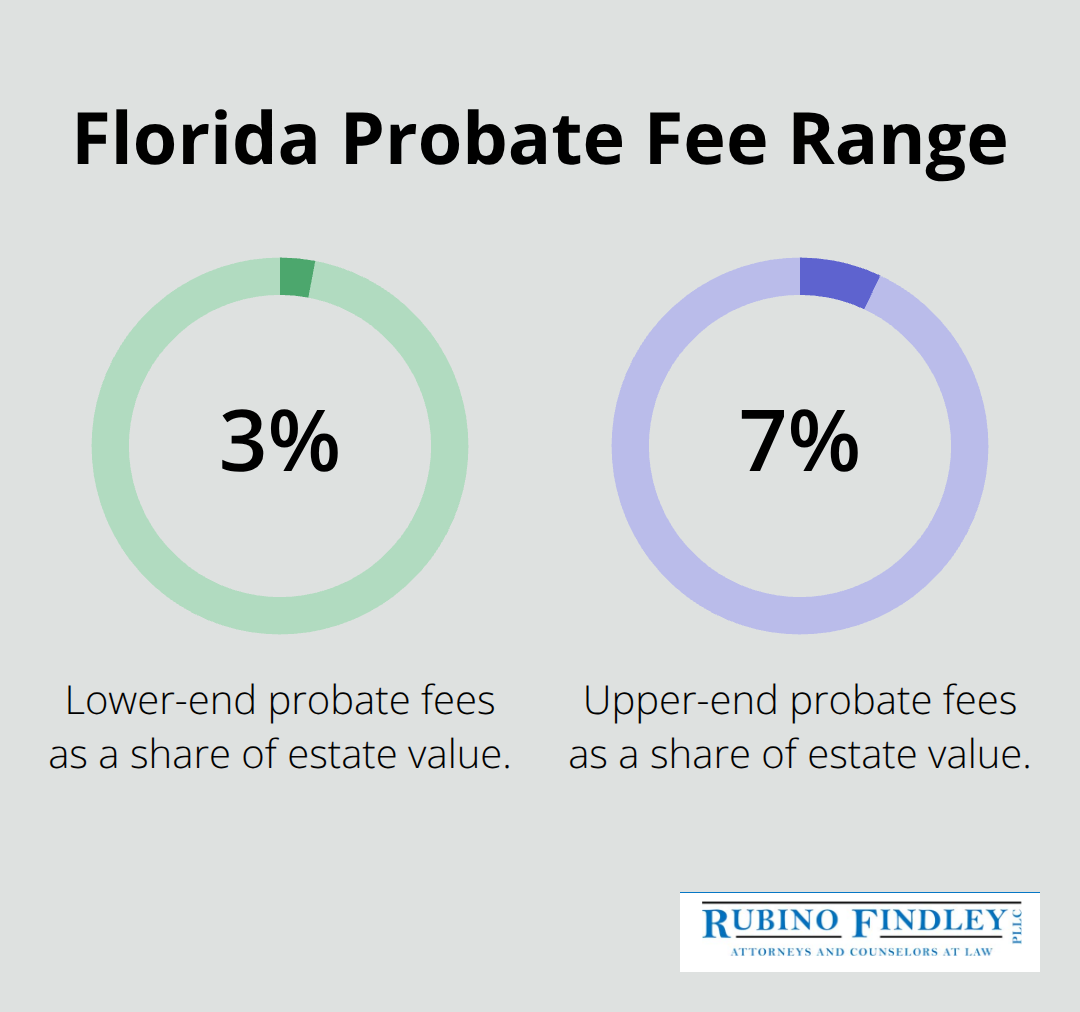
Florida probate is expensive and slow. When you die with assets titled in your name alone, those assets must go through probate court, a process that typically takes nine to twelve months and can stretch longer if anyone contests the will or complications arise. Court costs, attorney fees, and executor fees consume three to seven percent of your estate’s value.
A revocable living trust eliminates this entirely because assets held in the trust transfer directly to your beneficiaries outside the probate system.
How Your Successor Trustee Distributes Assets
The successor trustee you name distributes everything according to your written instructions without waiting for court approval, without filing court documents, and without paying probate fees. This matters most for people with real estate in Palm Beach County, retirement accounts, investment portfolios, or multiple properties because probate delays affect access to those assets during a vulnerable time when your family needs money for funeral expenses, medical bills, or immediate living costs. For families with homes worth over $500,000, the probate savings alone justify the upfront cost of establishing a trust.
Privacy Protection That Wills Cannot Offer
Privacy is another concrete advantage that many people overlook. When you die with a will, your entire estate goes into the public probate record, which means anyone can walk into a courthouse and see your asset list, beneficiary names, property locations, and the exact amounts each person receives. In Florida, these records stay public permanently. A revocable living trust keeps all of this information private because trust administration happens outside court. Your beneficiaries know what they inherit, but your neighbors, business competitors, and strangers cannot access that information.
Safeguarding Minor Children and Pets
This privacy protection becomes especially important if you have significant assets, own business interests, or want to keep family financial matters confidential. Additionally, a well-drafted trust provides concrete protection for minor children and pets (you name guardians and trustees who manage funds specifically designated for their care). If something happens to you, the people you trust make decisions about your children’s upbringing and your pets’ wellbeing rather than leaving those decisions to a court-appointed guardian who may not know your family at all.
Moving Forward With Your Trust Plan
The advantages of probate avoidance and privacy protection form a strong foundation for your estate plan, but they work best when your trust is properly funded and coordinated with other planning documents. Understanding which assets belong in your trust and how to structure them correctly requires professional guidance tailored to your specific situation in Palm Beach County.
Common Misconceptions About Revocable Living Trusts in Boca Raton
Trusts Are Only for the Wealthy
Many people in Palm Beach County believe revocable living trusts are only for millionaires or business owners with complex assets. This misconception costs families thousands of dollars in unnecessary probate fees and delays. The truth is simpler: if you own a home, have a bank account, or care about what happens to your assets after you die, a revocable living trust serves a real purpose regardless of your net worth. Someone with a $300,000 home and $150,000 in savings faces the same nine to twelve month probate timeline and the same three to seven percent in court costs as someone worth millions. For middle-class families in Boca Raton, that means $13,500 to $31,500 in probate expenses on a $500,000 estate, plus months of waiting before beneficiaries access funds. A revocable living trust costs between $1,500 and $3,000 to establish properly, making it a straightforward financial decision for anyone with meaningful assets. The wealthiest families use trusts as part of sophisticated tax planning, but the probate avoidance benefit applies equally to teachers, small business owners, and retirees who simply want their families to inherit smoothly.
A Will Alone Falls Short of Your Needs
The second major misconception is that a will handles everything you need. Wills are simpler and cheaper to create, which is why people assume they’re sufficient. However, a will only controls assets titled in your name alone and must go through probate to take effect. If you own real estate, hold investment accounts, or have retirement funds, those assets sit frozen during probate while your family waits for court approval to access them. A will also becomes a public document, exposing your beneficiaries, property details, and asset distribution to anyone curious enough to visit the courthouse. More critically, people often overlook how wills fail to address incapacity: if you suffer a stroke or develop dementia, a will does nothing. A revocable living trust immediately transfers control to your successor trustee without court involvement, allowing bills to be paid and assets to be managed while you’re still living but unable to act.
Revocable Trusts Do Not Provide Tax Savings
The third misconception involves taxes. Many people believe a revocable living trust saves them money on estate taxes or income taxes. It does not.
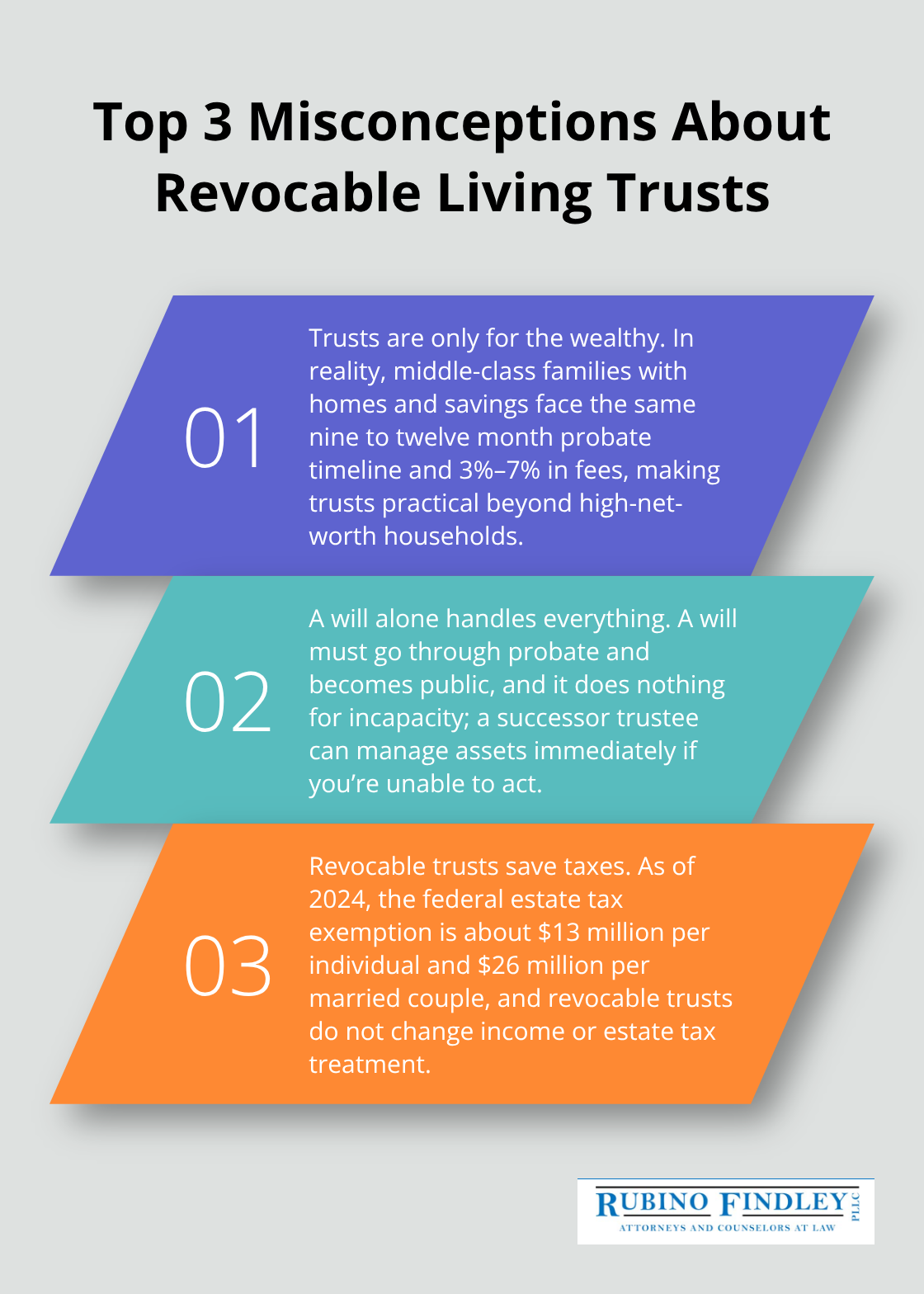
Federal estate taxes apply to revocable trust assets at your death just as they would to assets in your will. As of 2024, the federal exemption exceeds $13 million for individuals and $26 million for married couples, so most Palm Beach County families pay no federal estate tax regardless of whether they use a trust or will. Income taxes during your lifetime work identically whether assets are in a trust or held personally-the trust uses your Social Security number and you report income on your regular tax return. The real tax advantage comes from irrevocable trusts or sophisticated planning strategies that require professional guidance from an attorney experienced in Florida estate law, not from a revocable trust alone.
Final Thoughts on Revocable Living Trust Florida
Creating a revocable living trust in Florida requires more than downloading a template or using generic online forms. Florida’s trust laws contain specific requirements around funding, homestead property transfers, and coordination with other estate planning documents that vary significantly from other states, and when you miss these details, your trust fails to accomplish its primary goal of avoiding probate. A successor trustee cannot distribute assets that aren’t actually in the trust, which means those assets still require probate administration and leave your family facing the exact delays and expenses you tried to prevent.
Your revocable living trust must coordinate seamlessly with your will, durable power of attorney, and healthcare directives (if these documents conflict or fail to work together, your family faces confusion about which instructions to follow). Florida homestead laws add another layer of complexity because transferring your primary residence into a trust requires specific deed language and careful attention to how the transfer affects creditor protections and property tax exemptions. An attorney familiar with Palm Beach County property records and local requirements ensures your home transfers correctly without creating unintended tax consequences or title issues.
The most costly mistakes happen when people try to save money upfront by avoiding professional guidance, only to spend far more on probate, trust administration disputes, or correcting improperly funded trusts after death. We at Rubino Findley, PLLC help you establish wills, trusts, and durable powers of attorney that actually work when your family needs them. Schedule your free consultation to discuss whether a revocable living trust fits your situation and how to structure it correctly for your family’s protection.