



Florida Will Planning Guidelines: Crafting a Sound Plan
A will is one of the most important documents you’ll ever create, yet many people put it off or handle it incorrectly. At Rubino Findley, PLLC, we’ve seen firsthand how poor planning leads to family conflict and unnecessary expenses.
Florida will planning guidelines exist for a reason-they protect your wishes and your loved ones. This guide walks you through what you need to know to build a solid plan.
Understanding Florida’s Will Requirements
What Makes a Florida Will Actually Legal
Florida requires specific conditions for a will to hold up in court, and missing even one detail can invalidate the entire document. According to Florida Statute 732.502, your will must be in writing, signed by you, and witnessed by at least two people who are present at the same time. Those witnesses cannot be beneficiaries of your will or related to you by blood or marriage, which disqualifies family members and friends who stand to inherit. The witnesses must also understand that they’re signing a will, not just any document.
Many people handwrite wills without witnesses or use online templates filled out incorrectly, assuming these shortcuts work in Florida. They don’t. A will created without proper witnesses fails probate court scrutiny, forcing your family into intestate succession where Florida law decides who gets your assets instead of you. Families discover too late that a parent’s homemade will held no legal weight, leaving them to split an estate through expensive court proceedings that could have been avoided.
Why DIY Wills Create Real Problems
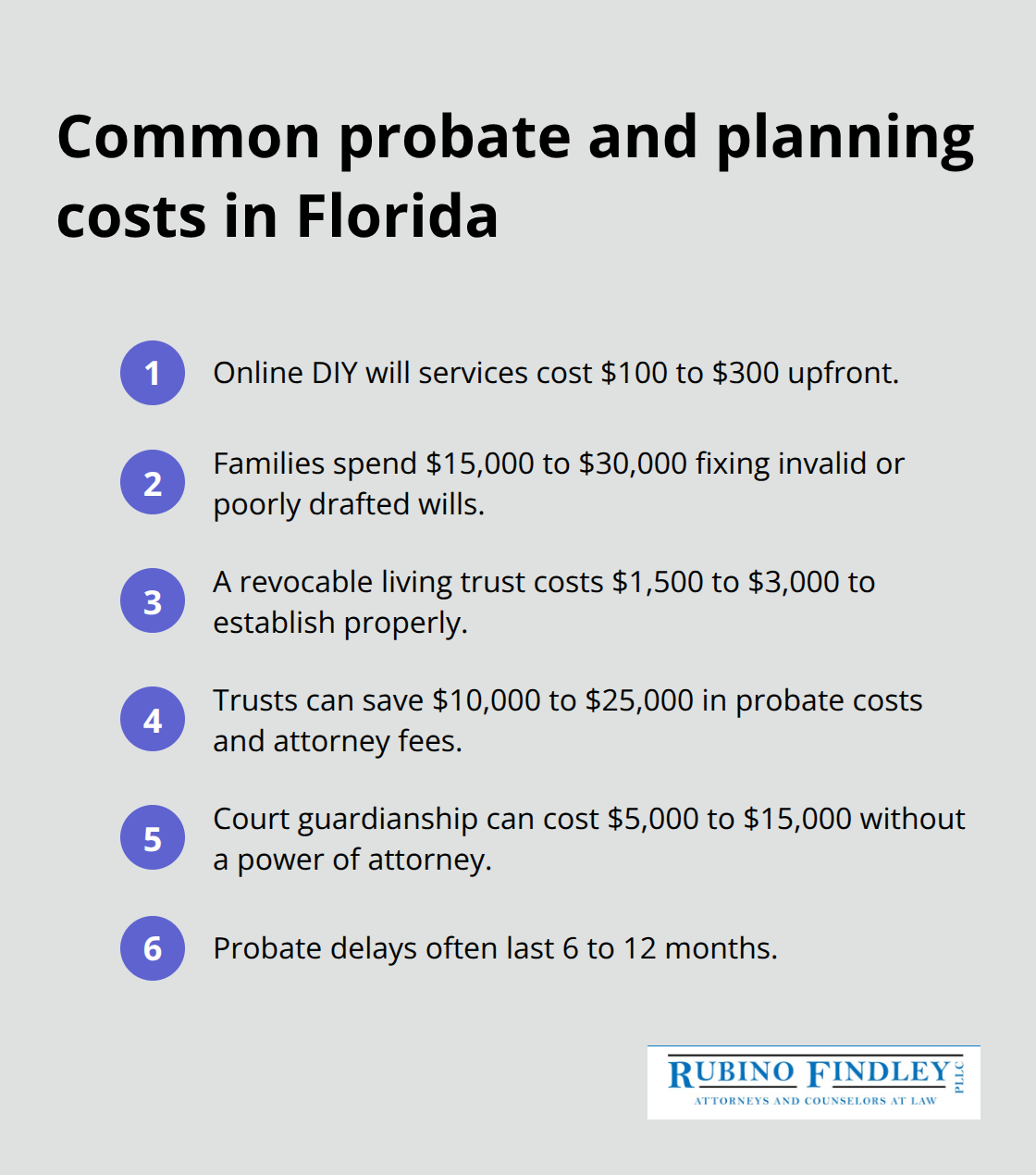
People often believe that downloading a will template from the internet saves money, but the false economy shows itself when probate begins. Online services charge between $100 and $300 upfront, yet a single mistake costs families thousands in court fees and attorney time to fix. Florida courts reject wills with ambiguous language, improper execution, or missing formalities. If your will is unclear about who receives what, the court interprets it according to state law, not your intentions.
Handwritten wills, called holographic wills, aren’t even recognized in Florida unless they’re completely in your handwriting and signed, making them risky for most people. Another common mistake involves naming the wrong executor or failing to name a backup executor if the first one becomes unavailable. Without clear instructions about guardianship for minor children, the court appoints a guardian you might not have chosen.
The Hidden Costs of Mistakes
The financial impact extends beyond probate costs. According to data from the American College of Trust and Estate Counsel, families dealing with invalid or poorly drafted wills spend an average of $15,000 to $30,000 in additional legal fees resolving disputes that proper planning would have prevented entirely.
These expenses drain resources that should go to your heirs instead of lawyers and court systems.
Ambiguous language in your will creates litigation between family members who interpret your wishes differently. A poorly named executor may lack the financial knowledge to manage your estate responsibly. Missing beneficiary designations on bank accounts and insurance policies (which pass outside your will) can contradict your stated intentions and cause confusion about your true wishes.
Moving Forward With Confidence
Understanding these pitfalls positions you to make better decisions about your will. The next section covers the key components that transform a basic document into an effective plan that actually protects your family and reflects your values.
Key Components of an Effective Will
Selecting Your Executor and Backup
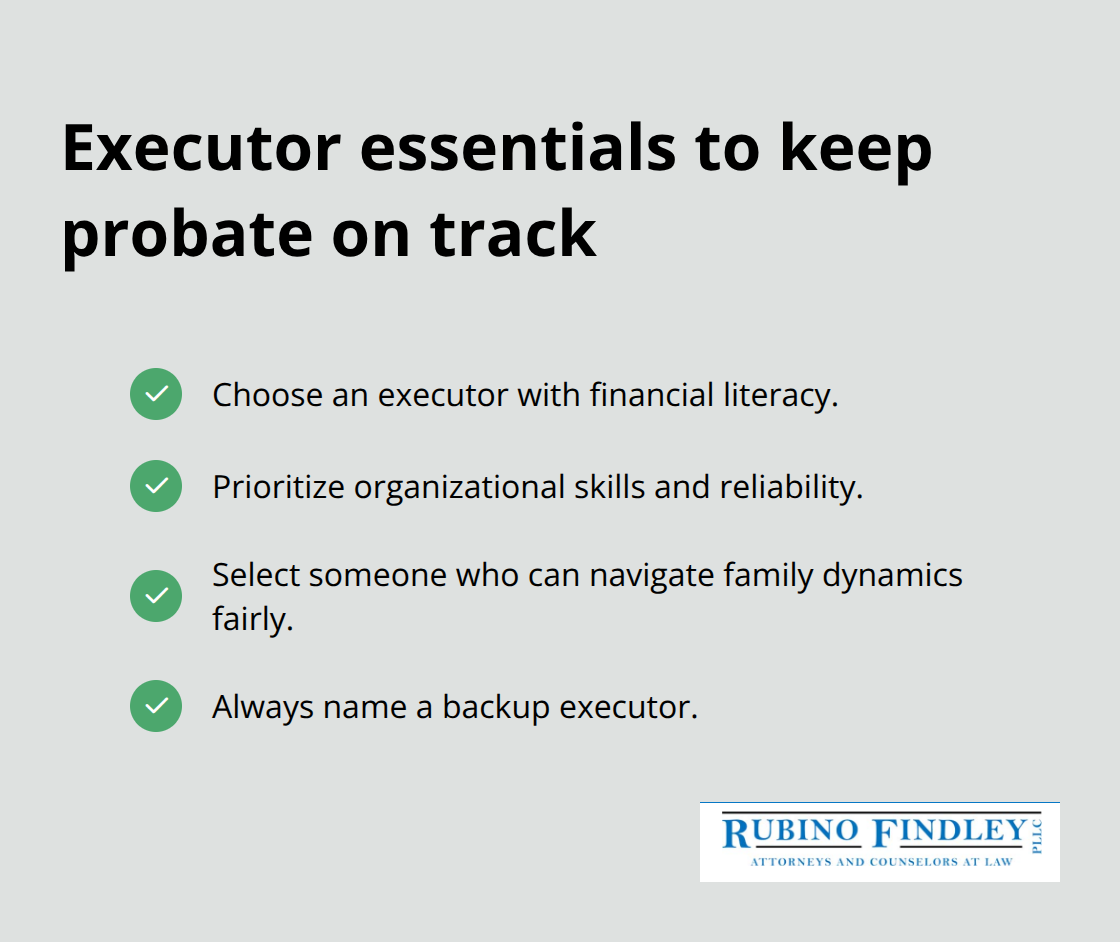
Your will only works when it contains specific, actionable decisions about who handles your estate and who receives your property. The executor you name carries enormous responsibility-this person manages your assets, pays debts and taxes, and distributes everything according to your wishes. Choosing the wrong person or failing to name a backup creates chaos when probate begins.
Your executor needs financial literacy, organizational skills, and the ability to handle family dynamics without playing favorites. Many people name a spouse or adult child out of obligation rather than capability, then watch that person struggle through months of complicated tasks. Always name a backup executor in case your first choice becomes unavailable or unwilling to serve.
Naming a Guardian for Minor Children
If you have minor children, naming a guardian ranks equally with selecting an executor because the court won’t automatically appoint the person you would have chosen. Without this designation in your will, Florida judges decide guardianship based on what they believe serves the children’s interests, which might conflict with your family values or your children’s preferences. This single decision shapes your children’s upbringing if something happens to you.
Creating Your Asset Distribution Plan
The distribution plan itself requires clarity about percentages, timing, and conditions. Vague language like leaving assets to your children equally creates litigation when one child interprets this differently than another. You need explicit percentages, dollar amounts, or descriptions of specific property for each person.
Asset distribution becomes complicated when you own property in multiple states, have a blended family, or want to incentivize certain behaviors in your heirs. Some clients use conditional bequests, such as leaving funds to a grandchild only after they graduate from college, which requires careful legal language to avoid creating unintended tax consequences.
Specific Bequests and Charitable Gifts
Specific bequests-leaving your grandmother’s jewelry to your daughter or your book collection to your son-prevent disputes and honor meaningful relationships. Charitable donations in your will reduce your taxable estate while supporting causes you care about, and Florida allows these gifts to pass outside probate in certain structures.
Coordinating Beneficiary Designations
Life insurance beneficiary designations and retirement account designations override your will entirely and pass directly to named recipients, so these must align with your overall estate plan or you’ll accidentally contradict your stated wishes. The same applies to bank accounts with payable-on-death provisions and investment accounts with transfer-on-death options. These accounts represent significant assets that bypass your will’s instructions entirely, making it vital to review and update them when your circumstances change. A will without coordinated beneficiary designations becomes a document at odds with itself, leaving your family confused about your true intentions.
When these core elements work together-a capable executor, clear guardianship decisions, explicit asset distribution, and aligned beneficiary designations-your will transforms from a generic document into a precise roadmap for your family’s financial future. The next section explores how trusts and other planning tools can strengthen this foundation even further.
Estate Planning Beyond Wills in Boca Raton
How Trusts Fill the Gaps Your Will Cannot Cover
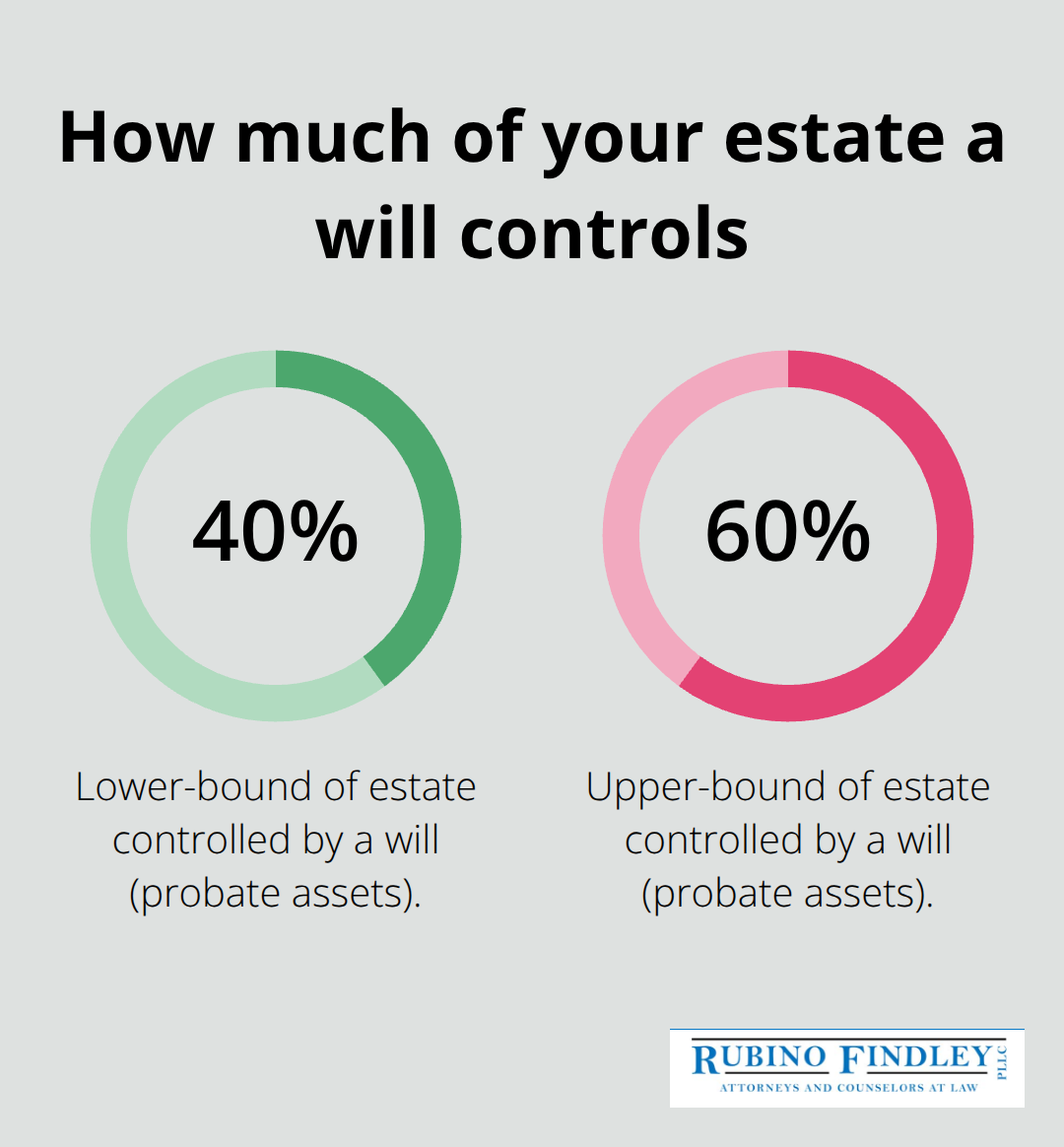
A will handles only what goes through probate, which means it controls roughly 40-60% of most estates while the remaining assets pass outside your will entirely through beneficiary designations, joint ownership, and other mechanisms. This gap between what your will covers and what actually comprises your estate creates serious planning problems that wills alone cannot solve. Trusts offer a fundamentally different approach by holding title to your assets during your lifetime and transferring them directly to beneficiaries after your death without probate involvement.
A revocable living trust in Florida costs between $1,500 and $3,000 to establish properly, yet it saves families $10,000 to $25,000 in probate costs and attorney fees while keeping your estate private and avoiding court delays that typically last 6-12 months. Unlike wills, trusts also provide management continuity if you become incapacitated-your successor trustee steps in immediately to handle your financial affairs without court intervention. Trusts work particularly well for clients with property in multiple states, those wanting to control asset distribution over time, and anyone who values privacy and speed in the transfer process.
Powers of Attorney and Healthcare Directives
Your will and trust must coordinate with two other critical documents that most people overlook: a durable power of attorney and a healthcare directive. A durable power of attorney names someone to manage your finances and legal affairs if you become unable to do so yourself, and this document takes effect immediately upon signing rather than waiting for probate or court involvement. Without this document, your family must petition the court to establish a guardianship, a process costing $5,000 to $15,000 and taking several months while your bills go unpaid and accounts remain frozen.
A healthcare directive, also called a living will in Florida, specifies what medical treatment you want if you cannot communicate your wishes, and it names someone to make healthcare decisions on your behalf. These documents work alongside your will and trust to create a complete plan addressing what happens while you’re alive but incapacitated, not just what occurs after death.
Aligning Beneficiary Designations With Your Overall Plan
Beneficiary designations on retirement accounts, life insurance policies, and bank accounts represent another planning layer that overrides your will entirely-your 401k passes to whoever you named as beneficiary regardless of what your will states, making it vital to review these designations every 3-5 years or whenever major life changes occur. Many clients discover that outdated beneficiary designations contradict their current wishes, leaving ex-spouses named or leaving assets to people who have passed away themselves, creating unexpected complications and legal disputes that proper coordination would have prevented.
Final Thoughts
Building a solid will and estate plan requires more than downloading a template and hoping for the best. The Florida will planning guidelines we’ve covered throughout this post form the foundation of a plan that actually protects your family and reflects your values. A valid will with proper witnesses, a named executor, clear guardianship decisions, and coordinated beneficiary designations prevents the costly mistakes that plague families every day.
Working with an attorney transforms estate planning from a confusing checklist into a cohesive strategy tailored to your specific situation. An attorney catches the ambiguous language that creates litigation, identifies tax consequences you might miss, and ensures your documents work together rather than contradicting each other. The cost of proper planning-typically $1,500 to $3,000 for a comprehensive package-pales against the $15,000 to $30,000 families spend fixing mistakes or navigating probate without clear instructions.
At Rubino Findley, PLLC, we help clients throughout Palm Beach County establish wills, trusts, powers of attorney, and healthcare directives that actually work. Schedule a consultation to discuss your specific circumstances and begin building a plan that protects what matters most. The sooner you act, the sooner your family gains the security and clarity that comes from knowing your wishes are documented and legally sound.