




Probate Steps Florida: A Practical Guide to Administration
When someone passes away in Florida, their estate typically goes through probate-a legal process that can feel overwhelming without proper guidance. Understanding the probate steps in Florida helps families avoid costly mistakes and protects their loved ones during an already difficult time.
At Rubino Findley, PLLC, we’ve guided countless families through this process in Boca Raton and throughout Palm Beach County. This guide breaks down what you need to know to navigate probate with confidence.
What Probate Actually Is in Boca Raton
Understanding the Probate Process
Probate is a court-supervised process that transfers a deceased person’s assets to their heirs and pays off debts and taxes. In Florida, probate applies to most assets that lack a named beneficiary or survivorship rights, even when a will exists. The process begins when someone files a petition with the probate court and typically involves appointing a personal representative (also called an executor) who inventories assets, notifies creditors, handles claims, and distributes remaining funds to beneficiaries. As of July 1, 2026, Florida offers a faster option called summary administration for estates with non-exempt assets under $150,000, or for any estate where the person died more than two years ago. This streamlined path takes 30 to 60 days instead of the 6 to 12 months formal probate commonly requires.
What the Personal Representative Actually Does
The personal representative carries extensive responsibilities throughout the process. They file notices with the court, safeguard property, notify known creditors, handle estate taxes, litigate on behalf of the estate if needed, and close the case once distributions are complete. These duties demand attention to detail and strict adherence to Florida law, which is why many families benefit from professional guidance during this phase.
Common Myths About Probate and Wills
Many people mistakenly believe that having a will avoids probate, but in Florida a will actually triggers probate rather than preventing it. What actually bypasses probate are assets with named beneficiaries (like retirement accounts and life insurance), pay-on-death bank accounts, real estate held with survivorship rights, and property transferred through a trust before death. Understanding this distinction shapes how you structure your estate plan.
The Real Cost and Timeline Impact
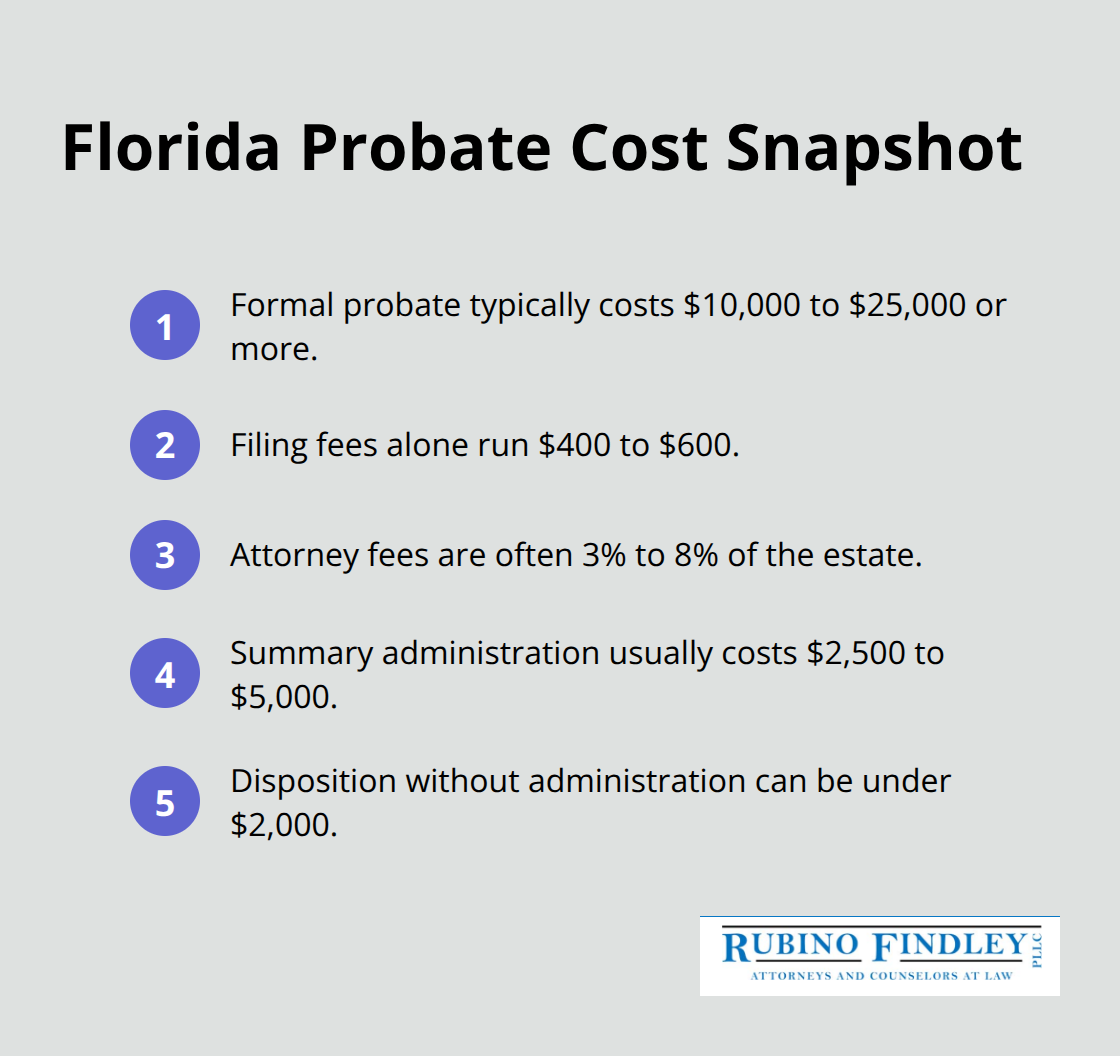
Formal probate in Florida typically costs $10,000 to $25,000 or more when you factor in filing fees of $400 to $600, attorney fees of 3 to 8 percent of the estate, and court costs. Summary administration runs roughly $2,500 to $5,000, while the most streamlined option, disposition without administration for very small estates, can be under $2,000. During probate, creditors have a 90-day notice period plus an additional 30 days for known creditors to file claims, which delays distributions to your family.
Asset Protection Under Florida Law
Florida law protects certain assets from creditors, including your homestead property (up to half an acre inside city limits or 160 acres outside), two vehicles, household furnishings, and up to $1,000 of personal property. A surviving spouse also receives strong protections: a 30 percent elective share of the estate and automatic survivorship rights if assets are held as tenants by the entirety. These protections matter significantly when creditors attempt to claim estate funds.
The costs and timelines of probate directly affect what your family receives. Probate planning is not optional if you want your family to avoid unnecessary expense and delay. The next section explores practical strategies that keep assets out of probate entirely, allowing your loved ones to access their inheritance faster and with far fewer legal complications.
Steps in Florida Probate Administration
Filing Your Petition and Opening the Estate
Opening a probate case in Florida requires filing a petition with the circuit court in the county where the deceased lived, along with the original will if one exists, a certified death certificate, and a detailed inventory of assets with their fair market values. The court appoints a personal representative within 4 to 6 weeks in most cases, and this individual becomes the legal authority to manage the estate. If the estate qualifies for summary administration (under $150,000 in non-exempt assets or if the person died more than two years ago), the filing process moves faster and skips many formal steps, though the personal representative still must provide proper notice to beneficiaries and known creditors. The petition itself costs $400 to $600 in filing fees alone, which is why understanding whether your estate qualifies for the streamlined path matters significantly before spending money on formal probate.
Managing the Creditor Notice Period
Once appointed, the personal representative faces a strict timeline that directly impacts when your family receives their inheritance. Florida law requires a 90-day notice period to all creditors, followed by an additional 30 days for known creditors to submit claims, meaning distributions cannot happen for at least 120 days from the date notice appears in a newspaper. During this waiting period, the personal representative must inventory all estate property, obtain appraisals for real estate and other valuable items, file an accounting with the court, handle any estate taxes owed, and resolve creditor claims that arrive.
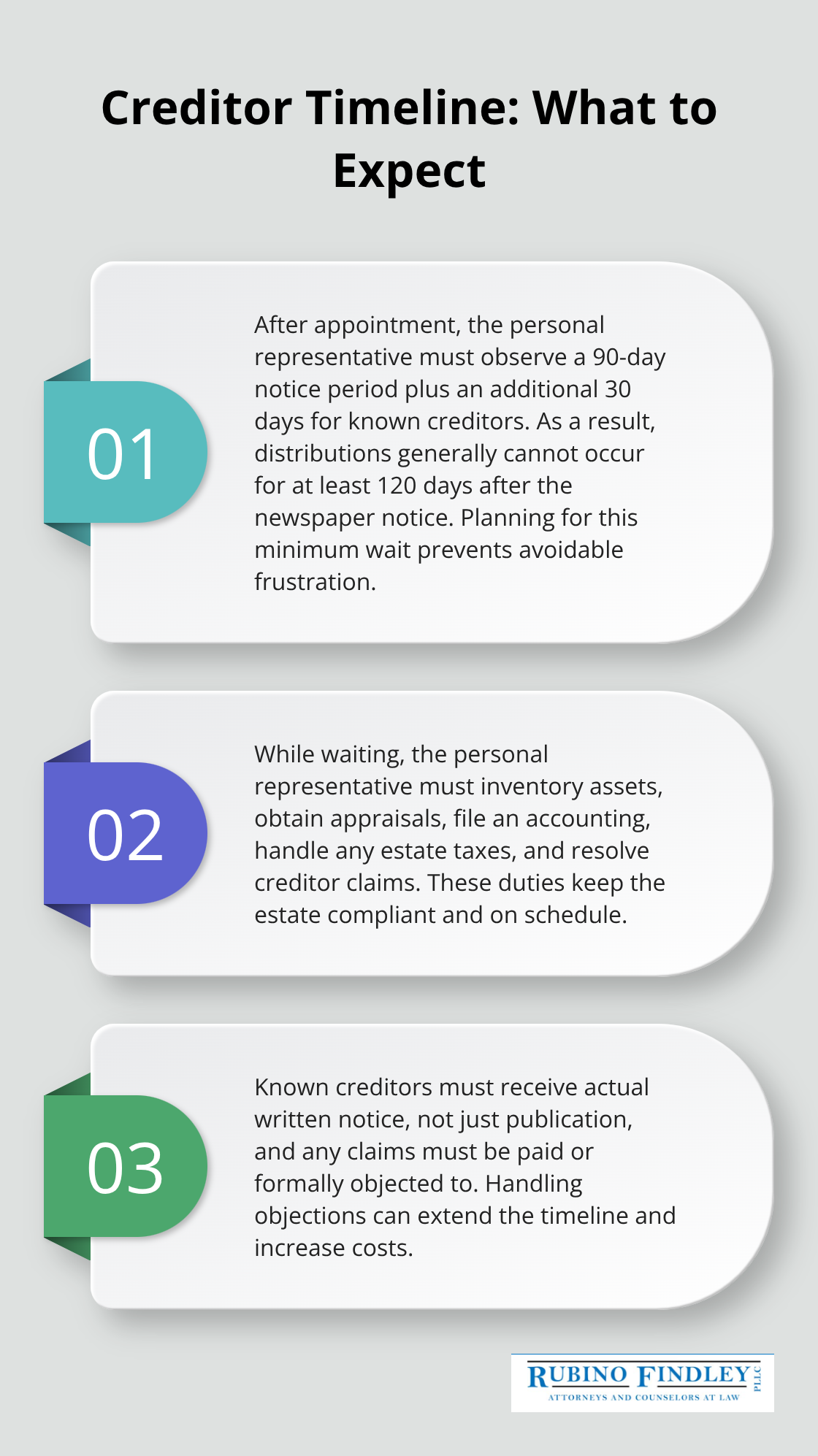
The personal representative cannot simply hand assets to beneficiaries; every distribution must be documented and approved by the court in formal probate, or at minimum properly accounted for in summary administration. Known creditors must receive actual written notice, not just the newspaper publication, so the personal representative needs a complete list of creditors before the 90-day period starts. If creditors file claims, the personal representative must either pay them from estate funds or object to invalid claims in writing, which adds more time and potentially more legal costs.
Distributing Assets and Closing the Estate
Once all creditor deadlines pass and claims are resolved, the personal representative can finally distribute remaining assets to beneficiaries according to the will or, if no will exists, according to Florida intestacy law. This final step requires filing a closing statement with the court showing how all money was spent and distributed, and in formal probate the judge must approve it before the case officially closes. Summary administration skips the creditor notice period entirely if the estate is small enough, allowing distributions in 30 to 60 days instead, which is why many families with estates under $150,000 save thousands in costs and months in waiting time by choosing this route. The choice between formal probate and summary administration shapes not only how long your family waits but also how much they ultimately pay in legal and court costs. Understanding which path your estate qualifies for determines whether your loved ones access their inheritance in weeks or months.
How to Keep Your Estate Out of Probate in Boca Raton
Pay-on-Death Designations and Beneficiary Accounts
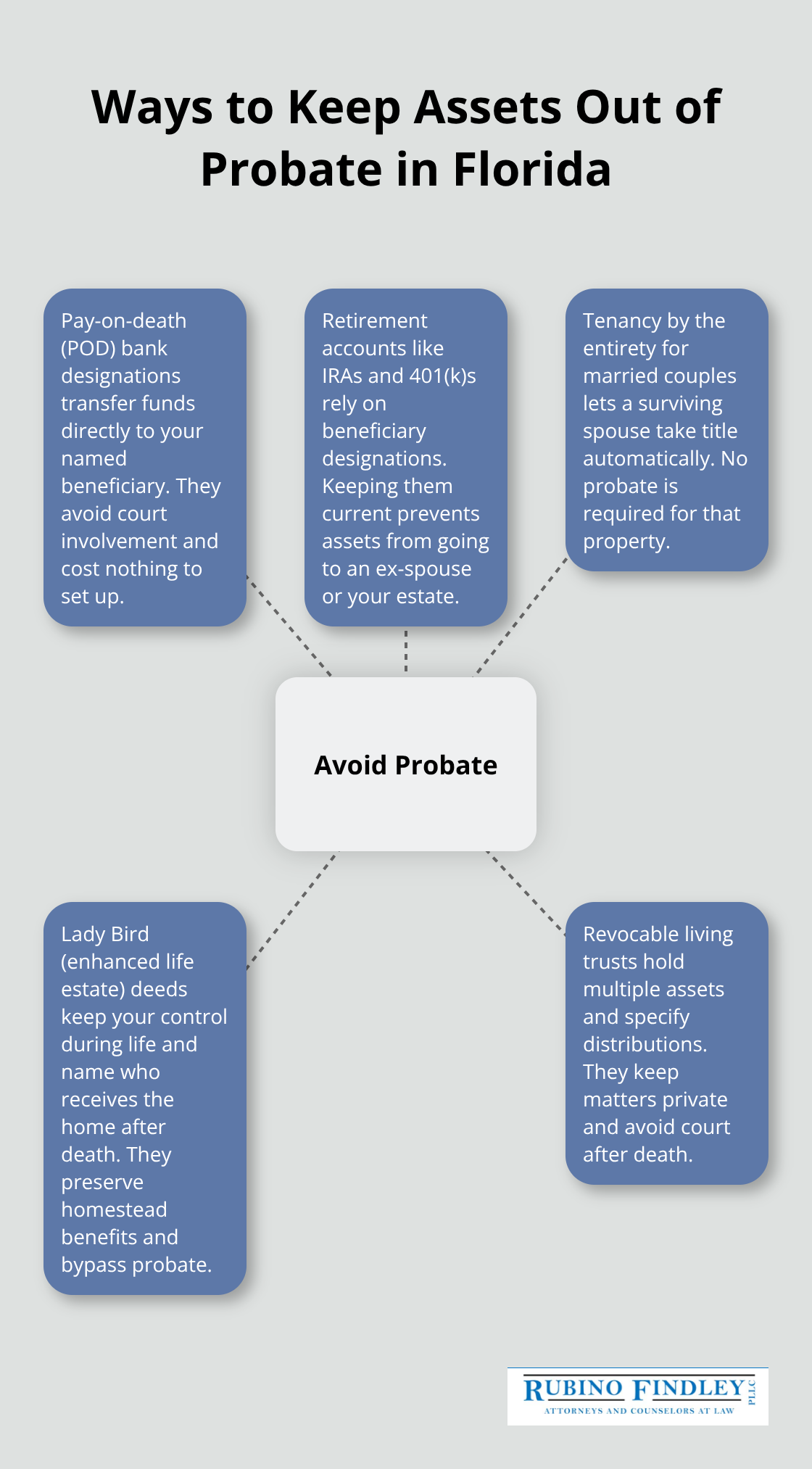
The fastest way to protect your family from probate delays is to structure your assets so they pass outside the probate system entirely. Florida law allows several practical methods that transfer ownership automatically at death without court involvement. Pay-on-death designations on bank accounts bypass probate completely and cost nothing to set up-you simply contact your bank and name a beneficiary on the account, and those funds go directly to that person when you die. Retirement accounts like IRAs and 401(k)s already have beneficiary designations built in, so verify yours are current and name the right people; outdated designations cause assets to go to ex-spouses or estates instead of your intended heirs.
Joint Ownership and Survivorship Rights
Real estate held as tenants by the entirety (a form of joint ownership available to married couples in Florida) automatically transfers to the surviving spouse at death with no probate required. This method works seamlessly for primary residences and other property because the surviving spouse’s ownership rights activate immediately upon death. Married couples who hold property this way avoid the entire probate process for that asset, which saves months of waiting and thousands in court costs.
Lady Bird Deeds for Real Estate Control
Enhanced life estate deeds, commonly called Lady Bird deeds, let you keep full control of your home during your lifetime while naming who receives it after you die. These deeds avoid probate while preserving your homestead tax exemption and protecting the property from creditors. What makes Lady Bird deeds particularly valuable is that you can sell the property or refinance without getting permission from your named beneficiary, giving you complete flexibility that other probate-avoidance methods don’t provide.
Revocable Living Trusts for Comprehensive Planning
A revocable living trust offers broader control than individual beneficiary designations because it holds multiple assets under one document and lets you specify exactly how and when distributions happen to each beneficiary. You fund the trust during your lifetime by transferring property titles and account ownership into the trust’s name, and then name a successor trustee to manage everything after you die-no court involvement needed. The trust remains private (unlike a will, which becomes public record), and it continues operating if you become incapacitated, handling your finances without requiring a separate power of attorney or guardianship proceeding.
Combining Strategies for Maximum Protection
Trusts cost more upfront than simple designations (expect $1,500 to $3,000 or more depending on complexity), but they eliminate probate costs entirely, which typically run $10,000 to $25,000 for estates over $150,000. The two-year rule in Florida means any estate qualifies for streamlined summary administration if the person died more than two years ago regardless of size, but that still requires court filing and creditor notice periods. Combining strategies works best: use pay-on-death designations for bank accounts, keep retirement accounts with current beneficiaries, title your home with a Lady Bird deed, and place other significant assets into a trust. An experienced estate planning attorney can help you implement these strategies so you understand which approach fits your specific situation and protects your family’s financial future.
Wrapping Up Probate Steps in Florida
Navigating probate steps in Florida without professional guidance often leads to expensive mistakes that drain your estate and delay distributions to your family. The rules are strict, the timelines are inflexible, and missing a single deadline can cost thousands in additional legal fees or result in assets being distributed incorrectly. A personal representative who mishandles the inventory process, fails to notify a known creditor properly, or files documents incorrectly faces personal liability and court sanctions.
We at Rubino Findley, PLLC have seen families lose tens of thousands of dollars because they tried to save money by skipping professional help during probate administration. One missed creditor notice deadline extends the entire process by months, an incorrect asset valuation triggers an IRS audit, and a beneficiary dispute that proper communication could have prevented turns into costly litigation. The personal representative bears the legal responsibility for these outcomes, not the beneficiaries, which means the person managing your estate faces real financial and legal consequences if something goes wrong.
Working with an attorney helps you avoid probate entirely through proper estate planning before a death occurs. We help clients establish wills, trusts, powers of attorney, and other documents that protect their families and honor their wishes. Reach out to Rubino Findley, PLLC for a free consultation to discuss your specific circumstances and learn which approach protects your family best.