




Estate Planning Blended Families: Crafting Fair Solutions for Complex Inheritances
Blended families face unique hurdles when planning their estates. Stepchildren, biological children, and assets from multiple marriages create layers of complexity that standard estate planning often overlooks.
At Rubino Findley, PLLC, we’ve seen how poor planning leaves blended families vulnerable to conflict and unintended outcomes. The good news: with the right tools and strategy, you can protect everyone’s interests and preserve family harmony.
Why Blended Families Face Steeper Inheritance Obstacles
Stepchildren Have No Automatic Legal Rights in Florida
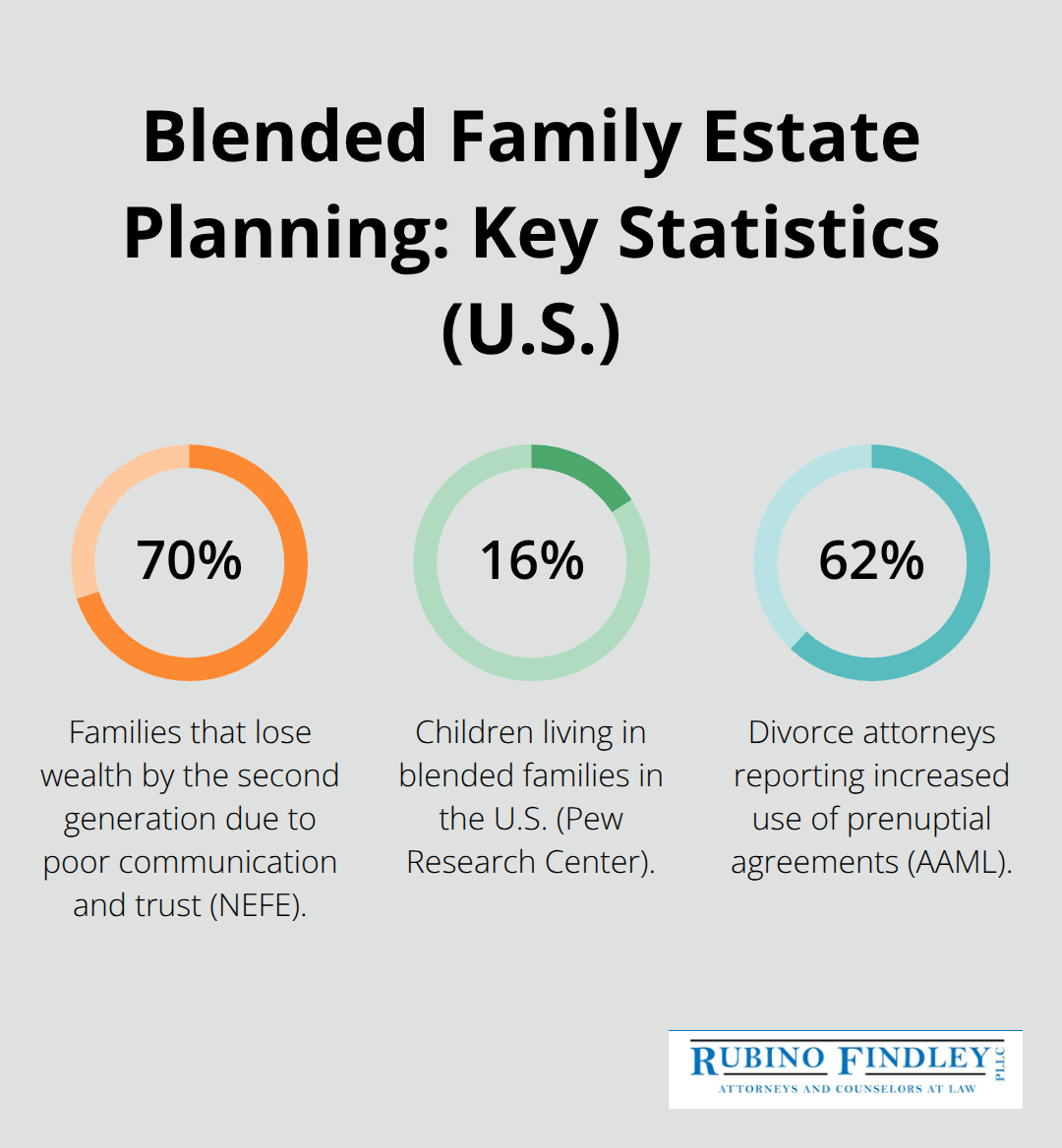
Blended families inherit a financial minefield that traditional estate planning rarely addresses. In Florida, stepchildren have zero legal claim to a parent’s estate unless you explicitly name them in a will or trust. This legal reality creates genuine tension between protecting a surviving spouse and honoring commitments to biological children. A biological child from a prior marriage could be completely shut out if the current spouse controls the estate plan. According to the National Endowment for Financial Education, 70% of families lose wealth by the second generation due to lack of communication and trust, and blended families face this risk at an accelerated pace. The Pew Research Center reports that about 16% of children live in blended families, making this problem far more common than most people realize.
Without explicit planning, state intestacy laws don’t account for stepfamily dynamics, leaving assets distributed to relatives you may not have chosen.
Multiple Assets Demand Surgical Precision
Managing assets accumulated across multiple marriages requires careful attention in your documents. A house purchased with a first spouse, retirement accounts from a second marriage, and investment property from before either relationship all need separate treatment to avoid unintended outcomes. Many people fail to update beneficiary designations on life insurance or retirement accounts after remarriage-a catastrophic mistake because these designations override whatever your will says. Courts won’t fix this for you. Additionally, if you own real estate with a former spouse or have ongoing financial obligations to an ex-partner, these entanglements muddy the waters significantly. The American Academy of Matrimonial Lawyers reports that 62% of divorce attorneys have seen increased use of prenuptial agreements in recent years, reflecting the growing recognition that blended families need contractual clarity from the start.
Family Conflict Drains Resources and Relationships
Family conflict becomes inevitable when one child feels the surviving stepparent is depleting assets that should pass to them, or when a spouse feels unsupported while biological children circle the estate. These disputes drain thousands in legal fees and destroy relationships that might otherwise survive the transition. Clear, detailed planning prevents speculation and resentment from taking root. The right tools and strategies address these tensions head-on, which is why understanding your options matters before conflict erupts.
Tools That Actually Protect Blended Family Interests
Prenuptial and Postnuptial Agreements Create Contractual Clarity
Prenuptial and postnuptial agreements function as the foundation for clarity in blended families. A prenup signed before remarriage explicitly states which assets belong to each spouse and what happens to them if the marriage ends or death occurs. The American Academy of Matrimonial Lawyers reports that 62% of divorce attorneys have seen increased use of prenuptial agreements in recent years, signaling that families now recognize their value. A postnup serves the same purpose after you’ve already married, though it requires both spouses’ genuine consent and shouldn’t feel coercive. These agreements prevent the surviving spouse from claiming a larger share of assets than you intended, protecting both your biological children’s inheritance and your current spouse’s security. Without one, Florida’s elective share law can guarantee a surviving spouse a portion of your estate regardless of what your will says, potentially starving your children’s inheritance. The key is transparency: discuss the agreement openly with your spouse and document your reasoning. Courts scrutinize postnups more carefully than prenups, so having an attorney draft both ensures enforceability.
Revocable Living Trusts Avoid Probate and Maintain Control
Trusts outperform wills in blended family situations because they avoid probate, maintain privacy, and allow you to control asset distribution with surgical precision. A revocable living trust lets you manage your assets during life, then automatically transfers them according to your instructions after death without court involvement. This matters because probate can cost up to 5% of an estate’s value according to AARP, and delays often stretch months or years. For blended families, a QTIP trust provides for a surviving spouse during their lifetime while guaranteeing that remaining assets eventually pass to your biological children, eliminating the fear that your spouse will redirect everything to their own heirs.
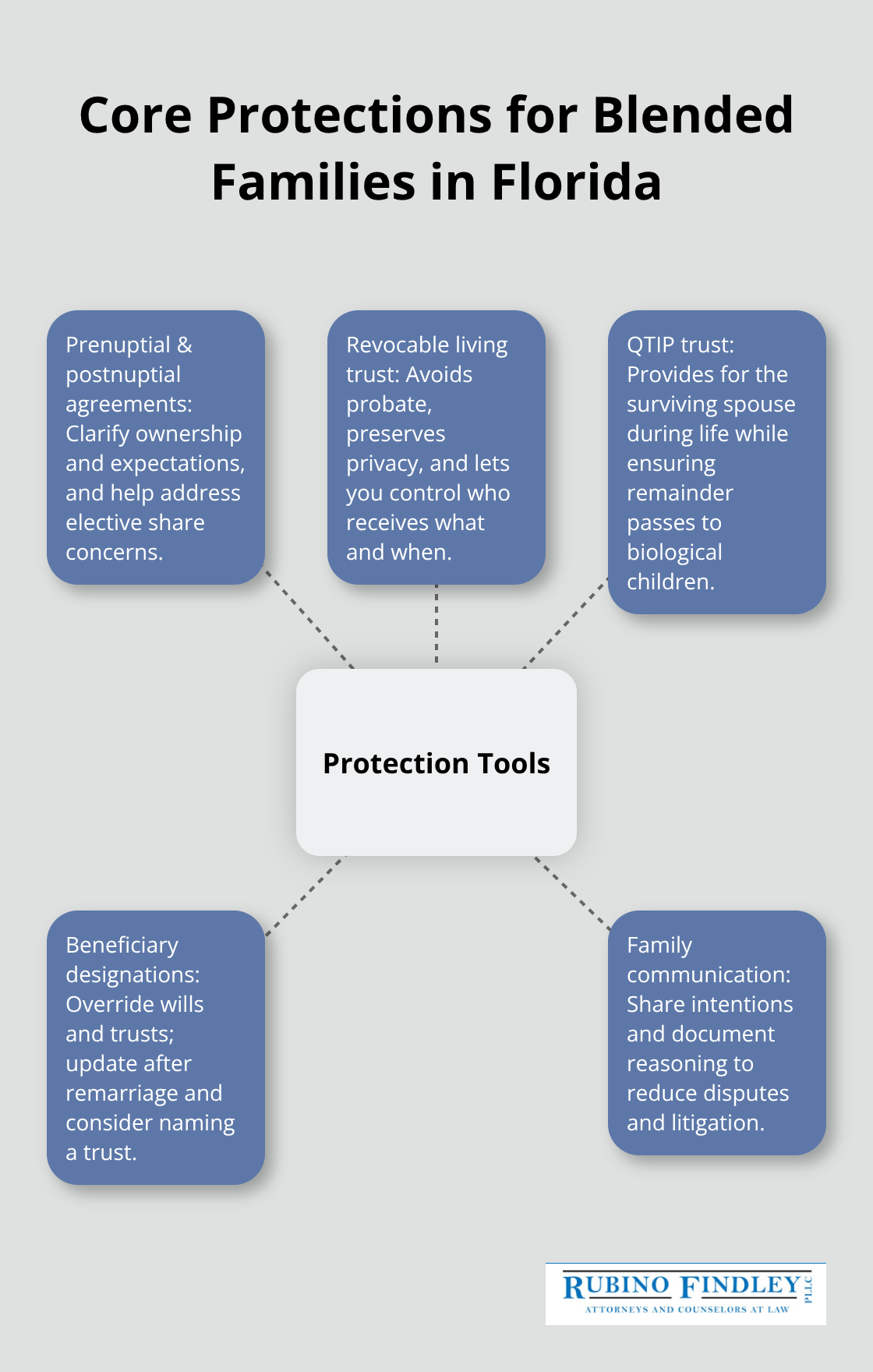
Separate trusts for different branches of your family-one for your current spouse, another for biological children-ensure assets reach intended beneficiaries regardless of changing family dynamics.
Beneficiary Designations Override Everything Else
Beneficiary designations on retirement accounts and life insurance policies override whatever your will or trust says, making them the single most important documents many people overlook. After remarriage, update these designations immediately; naming your estate as beneficiary defeats the purpose of having life insurance. Instead, designate a trust as the beneficiary for life insurance and retirement accounts so distributions flow to blended family children rather than a surviving spouse who might not honor your intentions. This step alone prevents countless disputes and ensures your life insurance actually protects the people you want protected.
Common Mistakes Blended Families Make When Planning Their Estates
Outdated Beneficiary Designations Create Unintended Outcomes
Remarriage triggers a cascade of document updates that most people postpone indefinitely. Your will names your first spouse as executor. Your life insurance still lists your ex-partner as beneficiary. Your retirement accounts default to whoever you named fifteen years ago. These oversights aren’t harmless-they’re the primary reason estates explode into litigation. After remarriage, Florida law doesn’t automatically fix these designations for you, and courts won’t override explicit beneficiary names on retirement accounts or insurance policies even if they contradict your will. Contact every institution holding your assets and request current beneficiary designations. Life insurance, 401(k) plans, IRAs, investment accounts, and transfer-on-death deeds all need review. If you remarried without updating these documents, your new spouse could be completely excluded from assets you intended to leave them, while your ex receives funds you meant for your children.
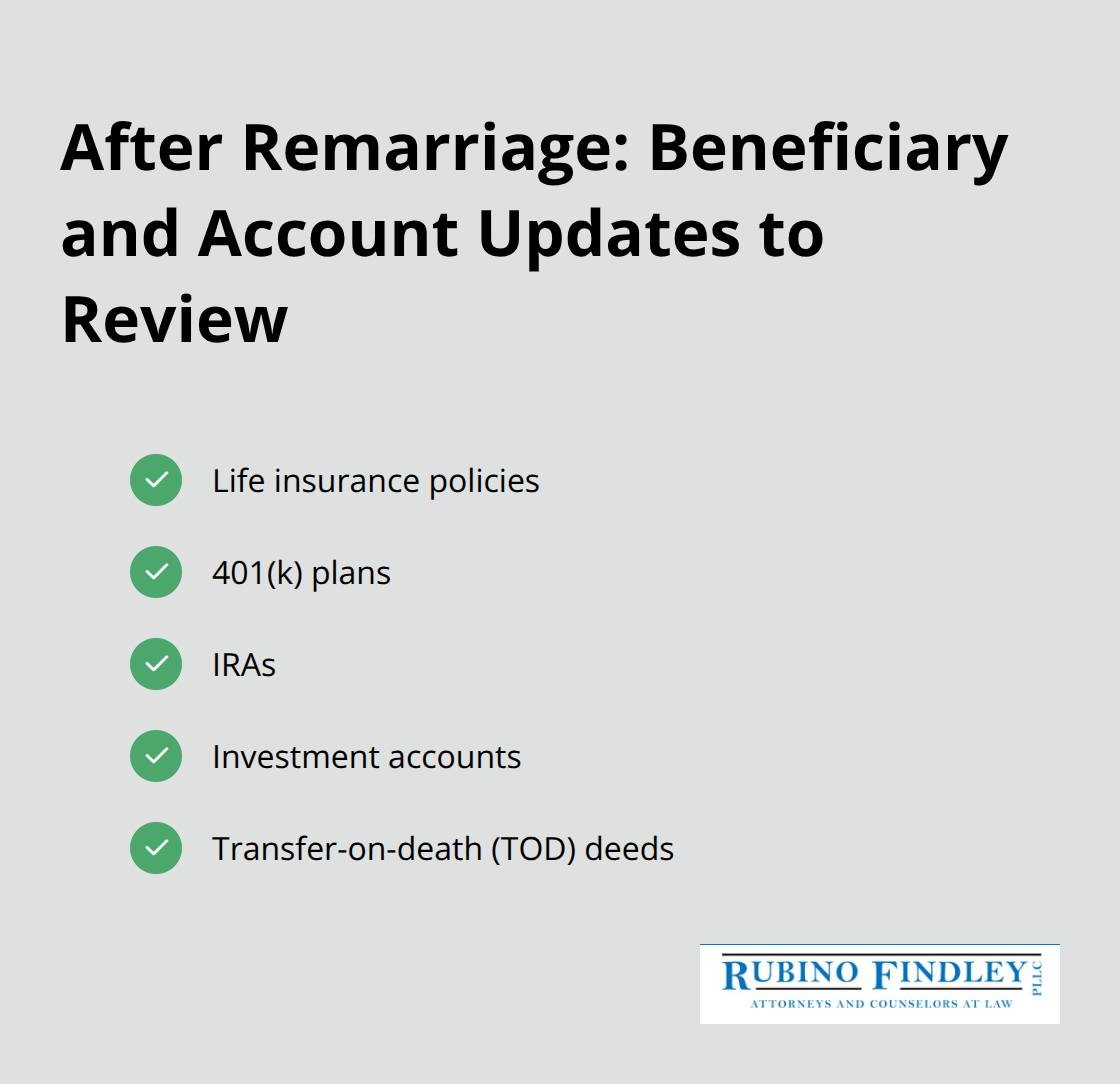
This single mistake-failing to align your designations with your current family structure-generates more blended family disputes than almost anything else.
Misunderstanding Florida’s Intestacy Laws Leaves Stepchildren Unprotected
The second devastating error is assuming Florida law automatically protects stepchildren or provides for surviving spouses in the way you imagine. Florida’s intestacy laws prioritize biological children and surviving spouses, but stepchildren receive nothing unless you explicitly name them. If you die without a will or trust, state law determines distribution, and the results often contradict what blended families actually want. A surviving spouse might receive only one-third of your estate while your biological children from a prior marriage claim two-thirds, leaving your current partner financially vulnerable. Conversely, if your will isn’t clear about which assets go where, your biological children could be disinherited entirely if a surviving spouse contests the document.
Family Communication Prevents Costly Disputes
Transparency with family members prevents these catastrophes. Open conversations about your intentions-held before crisis strikes-reduce the resentment and suspicion that fuel litigation. Discuss which assets go to which family members, explain your reasoning, and document these conversations. When all parties understand your plan and the logic behind it, they’re far less likely to challenge it in court. Without these conversations, your estate plan becomes a breeding ground for conflict, regardless of how well it’s drafted.
Final Thoughts
Estate planning for blended families demands more than a standard will. Prenuptial agreements, revocable living trusts, and updated beneficiary designations form the backbone of protection for your biological children, current spouse, and assets accumulated across multiple relationships. Without these tools, Florida’s intestacy laws and outdated documents will dictate outcomes you never intended, leaving your family vulnerable to conflict and financial loss.
The cost of inaction far exceeds the cost of planning. Family disputes over inheritance drain thousands in legal fees and destroy relationships that might otherwise survive the transition. Clear, detailed planning prevents speculation and resentment from taking root before they become irreversible. We at Rubino Findley, PLLC understand the complexities that estate planning for blended families presents, and our team has helped clients throughout Palm Beach County establish wills, trusts, and durable powers of attorney that reflect their true intentions.
Schedule a free consultation with our team at https://rubinofindley.com to discuss your family’s needs. Bring a list of your assets, current beneficiary designations, and any existing estate documents so we can identify which protections fit your situation best. Don’t leave your family’s financial future to chance or state law.