




Business Owners Estate Planning: Protect Your Company and Heirs
Most business owners focus on growing their company but overlook what happens to it when they’re gone. Without business owners estate planning, the IRS can claim a substantial portion of your business value, and your family may face costly disputes over control and ownership.
At Rubino Findley, PLLC, we help business owners in Boca Raton create a clear succession strategy that protects both their company and their heirs. The right plan keeps your business running smoothly and ensures your legacy transfers exactly as you intend.
Why Business Owners Need Estate Planning
Operational Chaos When Planning Fails
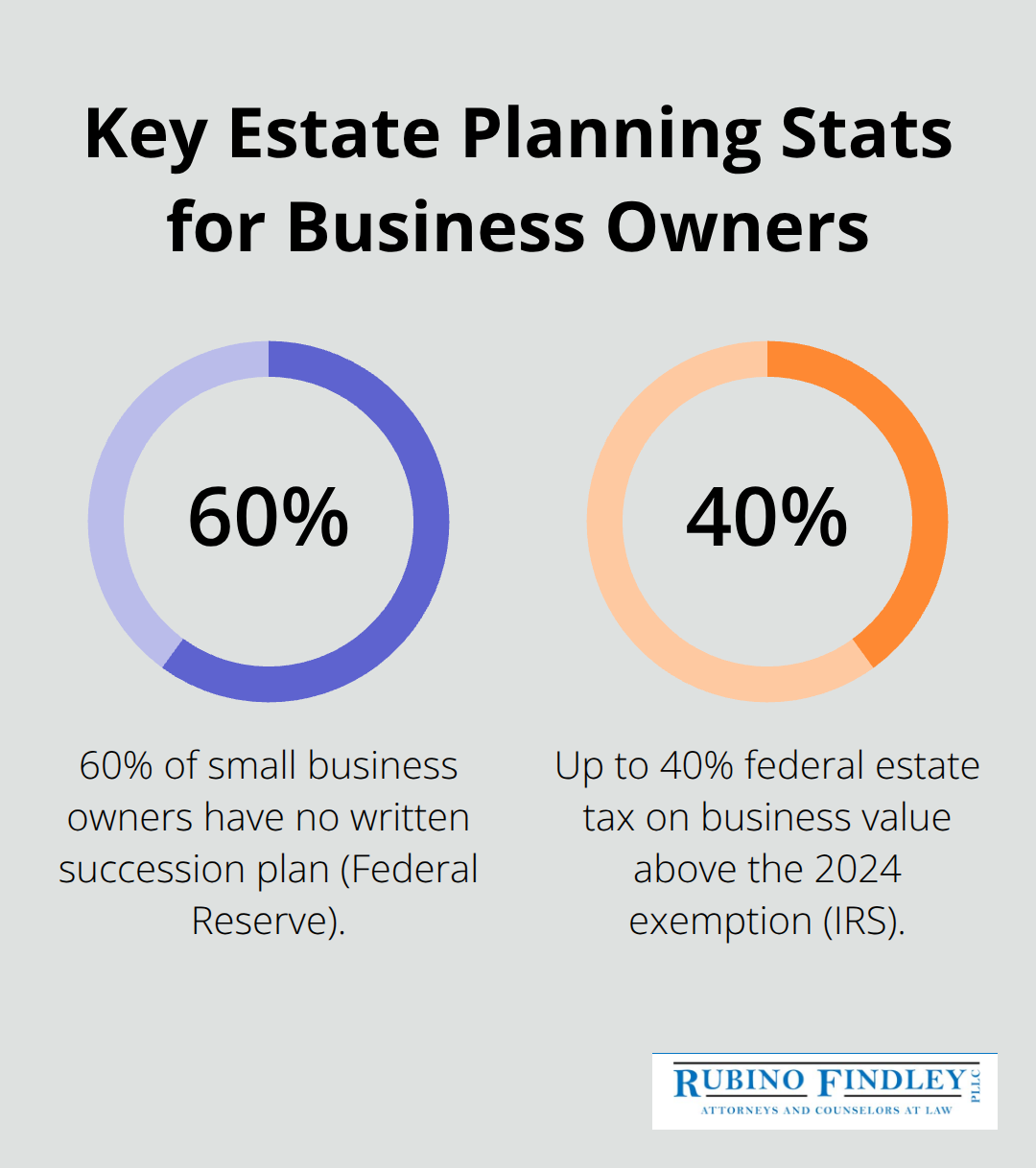
Unexpected death or incapacity hits business owners harder than most people realize. When a business owner dies without a succession plan, the company faces immediate operational chaos. Employees don’t know who’s in charge, clients question continuity, and financial obligations pile up while the business sits in limbo. The Federal Reserve reported that about 60% of small business owners have no written succession plan, leaving their companies vulnerable to collapse within months of their death.
Tax Consequences That Devastate Heirs
The tax consequences of poor planning are severe. Federal estate taxes can claim up to 40% of your business value if your estate exceeds $13.61 million in 2024, according to the IRS. For many business owners in Palm Beach County, this means heirs inherit a business burdened with massive tax bills they cannot afford to pay. Most heirs must sell the company just to cover taxes, dismantling your life’s work rather than preserving it.
Family Disputes Over Control and Ownership
Family disputes over business control represent another critical threat that estate planning directly prevents. When no clear documentation exists about who inherits the business or what role each family member plays, siblings clash over leadership, compensation, and decision-making authority. These disputes frequently destroy both the business and family relationships. A clear succession strategy with documented roles, buy-sell agreements, and trust structures eliminates ambiguity about ownership transfer and management responsibilities. This clarity prevents costly litigation and keeps your business functioning through the transition period.
The right structure protects your company’s future and your family’s harmony. Understanding how to organize your business for succession determines whether your heirs inherit a thriving operation or a legal battlefield.
How to Structure Your Business for Succession
Buy-Sell Agreements Protect Against Unwanted Ownership
Buy-sell agreements form the backbone of any business succession plan, yet most owners in Palm Beach County operate without one. These agreements specify exactly who can buy the business if you die or become incapacitated, and at what price. Without this document, your heirs may face forced sales to whoever offers the most money, or your business partners could claim ownership rights you never intended them to have.
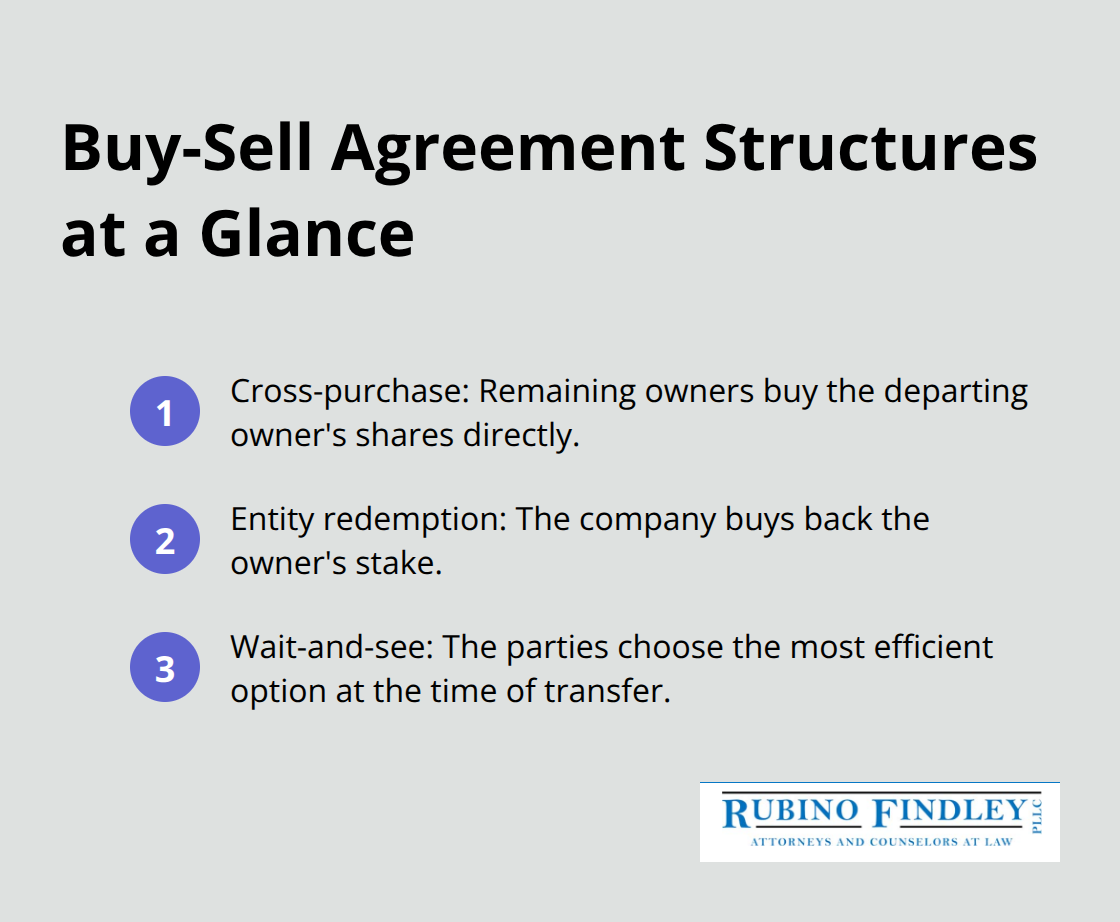
Three structures address different situations. Cross-purchase agreements allow remaining owners to buy your share directly. Entity redemption agreements let the business itself buy back your stake. Wait-and-see agreements provide flexibility when circumstances remain uncertain.
Each structure carries different tax implications, so the specifics matter tremendously.
Trusts Hold Business Interests Outside Probate
Trusts offer another critical layer of protection by holding your business interests separately from your personal assets. When a trust owns your business shares, the transfer to your heirs happens outside probate court, avoiding delays that can paralyze operations for months. Trusts also provide tax efficiency since they can be structured to minimize estate taxes and allow you to control how and when heirs receive business ownership.
Some owners establish grantor retained annuity trusts or intentionally defective grantor trusts to transfer business value to the next generation at reduced tax cost. The key difference between wills and trusts is timing: a will only takes effect after probate concludes, while a trust transfers ownership immediately upon your death.
Clear Roles Prevent Operational Chaos During Transitions
Establishing clear roles and responsibilities within your succession structure prevents the operational chaos that destroys most businesses during transitions. Document who handles daily operations, who makes major financial decisions, who manages client relationships, and who serves as final decision-maker if disagreements arise. This documentation should specify which heirs have management experience and which should receive dividends without operational control.
Many business owners make the mistake of dividing their company equally among all children regardless of their involvement or capability, creating immediate conflict. Matching your structure to both tax goals and family dynamics (rather than treating all heirs identically) determines whether your business survives the transition. Your heirs need to understand their roles before you’re gone, not after probate begins.
Essential Documents That Protect Your Business and Family
Your succession plan only works if you document it properly, and most business owners in Palm Beach County skip this step entirely. A will alone cannot protect a business through transition because it enters probate court, freezing your company’s operations for months while lawyers handle paperwork. This delay costs money, damages client relationships, and forces your heirs to make critical business decisions without legal authority.
Three Documents Work Together for Smooth Transitions
You need three coordinated documents that work together to transfer ownership smoothly and keep your business functioning. A durable power of attorney designates someone to manage business decisions immediately if you become incapacitated, preventing operational paralysis before death even occurs. This document should specify exactly which business decisions your designated agent can make-whether they can sell the company, refinance debt, or only handle routine operations.
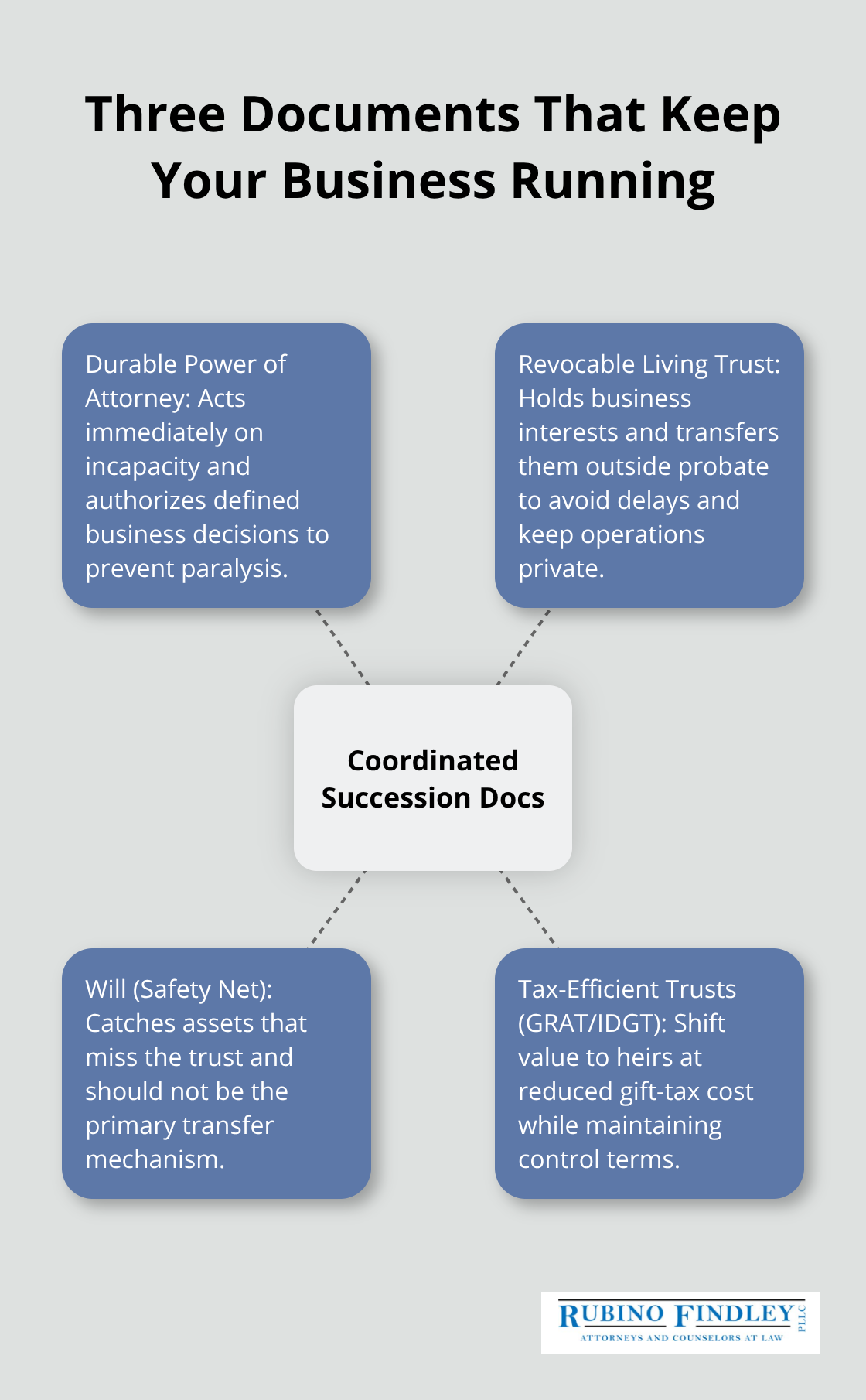
Without this clarity, banks and clients may refuse to work with your agent because they cannot verify their authority. A revocable living trust holds your business interests and transfers them to your heirs outside probate entirely, eliminating court delays and keeping your succession strategy private.
Tax-Efficient Transfer Strategies Reduce What Heirs Owe
The IRS allows business owners to transfer company value to trusts at reduced or eliminated gift tax cost through strategies like grantor retained annuity trusts. This means your heirs receive ownership with minimal tax consequences. Your will still matters, but its only job should be catching assets that somehow escaped your trust structure, functioning as a safety net rather than your primary transfer document.
Durable Power of Attorney Prevents Immediate Paralysis
A durable power of attorney acts immediately when you become incapacitated, unlike a will that only takes effect after death. Your designated agent can sign contracts, access bank accounts, and make payroll decisions while you recover or while your heirs prepare to take over. Without this document, your business stops functioning the moment you cannot work, and no one has legal authority to act on your behalf.
Living Trusts Keep Operations Private and Fast
A revocable living trust transfers your business outside probate court, which means your heirs gain control within days rather than months. Probate court proceedings become public record, exposing your business finances and family disputes to anyone who looks at court documents. A trust keeps these matters private and allows your heirs to operate the business without court supervision or approval for routine decisions.
Final Thoughts on Protecting Your Business Legacy in Boca Raton
Your business represents years of hard work and financial security for your family. Without a documented succession strategy, that legacy vanishes the moment something happens to you. Business owners estate planning isn’t about preparing for the worst-it’s about making your company survive and thrive under the next generation’s leadership.
The documents and structures we’ve covered only work when you coordinate them as a complete system. Your buy-sell agreement, trust, power of attorney, and will must align with each other and reflect your actual business goals (many owners create these documents separately over years, resulting in conflicting instructions that create chaos during transitions). Your heirs need to understand their roles, responsibilities, and the business operations before they inherit ownership, not after probate begins.
As your business grows, your tax situation changes, or your family circumstances shift, your succession plan needs updating. We at Rubino Findley, PLLC help business owners in Boca Raton coordinate all aspects of their estate planning, making business assets and personal assets work together under one coherent strategy. Schedule your free consultation with Rubino Findley, PLLC to review your current plan and identify gaps that could damage your business or burden your heirs with unnecessary taxes and legal complications.