




Guardianship Planning Florida: Securing Loved Ones’ Futures
Guardianship planning in Florida protects your loved ones when they can’t make decisions for themselves. Without a clear plan, families face court delays, high costs, and uncertainty about who controls important choices.
At Rubino Findley, PLLC, we help families navigate guardianship options and establish protections that work for their situation. This guide walks you through what guardianship means, the types available, and how to set one up in Boca Raton.
What Guardianship Actually Means
Guardianship is a legal relationship where a court appoints one person to make decisions for another person who cannot make those decisions themselves. The person appointed is called the guardian, and the person they care for is called the ward. In Florida, guardianship transfers significant legal authority, including decisions about medical treatment, living arrangements, education, and finances. This isn’t a casual arrangement or a power of attorney-it’s a formal court order that gives the guardian legal standing to act on behalf of the ward in all major life decisions. Florida Statutes Section 744.331 defines guardianship as the legal relationship between a guardian and a ward, and it only exists when the court has determined that a person lacks the capacity to manage their affairs. The guardian has a fiduciary duty, meaning they must act in the ward’s best interest, not their own, and courts monitor guardianships to verify compliance with this obligation.
When Guardianship Becomes Necessary
Guardianship applies to two main groups in Florida. Minors need guardianship when their parents die, become incapacitated, or cannot care for them-approximately 2.7 million children in the United States live in kinship care situations according to the U.S. Census Bureau, and many of these arrangements lack legal guardianship protections. Adults need guardianship when they suffer from conditions like advanced Alzheimer’s disease, severe brain injury, intellectual disabilities, or mental illness that prevents them from understanding their medical and financial affairs. Florida’s courts see thousands of guardianship cases annually, with many involving elderly adults whose cognitive decline makes independent decision-making impossible. The key factor is incapacity-the person must lack the mental ability to understand the nature and consequences of their decisions, not simply make poor choices. Without guardianship, hospitals may refuse to discuss medical information with family members, banks may freeze accounts, and no one has clear legal authority to act on the person’s behalf.
The Real Cost of Inaction
Families who don’t establish guardianship before it’s needed face severe complications. When someone becomes incapacitated without a guardianship plan, the family must file an emergency petition with Florida courts, which costs $500 to $2,000 in filing fees alone, plus attorney fees typically ranging from $1,500 to $5,000 for contested cases. The process takes 4 to 8 weeks minimum, during which critical medical and financial decisions cannot be made legally. Hospital staff cannot discuss care with family members, bills go unpaid because no one can authorize payments, and property deteriorates without proper management. In worst-case scenarios, the state may intervene and appoint a public guardian, removing family control entirely.
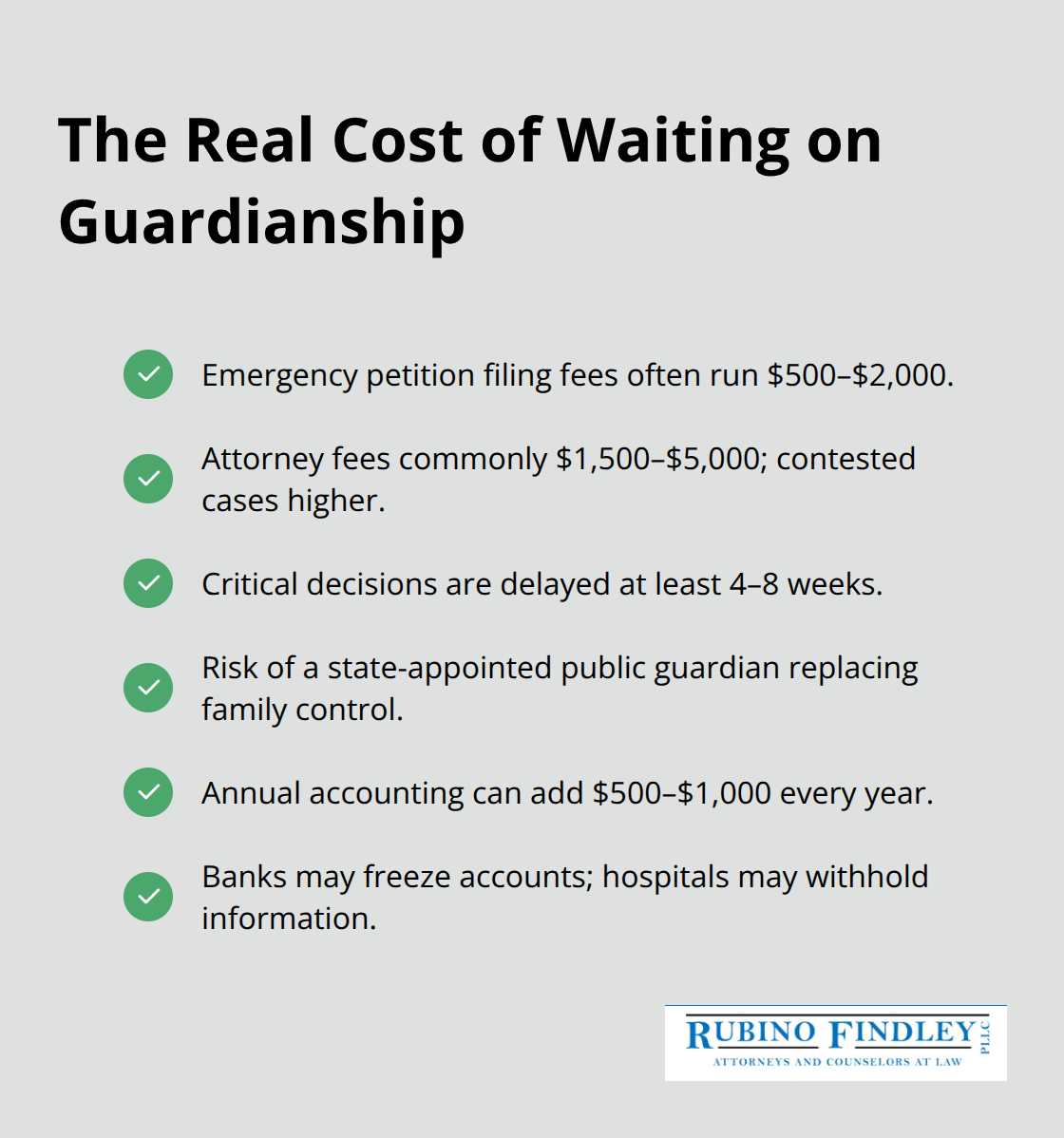
Florida had over 35,000 active guardianships as of recent court statistics, and a significant portion involved families who wished they had planned ahead. The financial burden extends beyond legal fees-guardianships require annual accounting to the court, sometimes costing $500 to $1,000 yearly, plus bond premiums if the guardian must post a surety bond to protect the ward’s assets.
Why Professional Guidance Matters
The complexity of guardianship law makes professional guidance essential. Courts require specific documentation, proper notice to interested parties, and proof of incapacity before they approve any guardianship petition. Mistakes in paperwork or procedure can delay the process for months, leaving your loved one without legal protection during a vulnerable time. An experienced estate planning attorney can help you understand whether guardianship is the right tool for your situation or if alternatives like a durable power of attorney might work better. The team at Rubino Findley, PLLC in Boca Raton helps families throughout Palm Beach County navigate these decisions and establish protections that fit their circumstances. Understanding these options now positions you to act quickly if circumstances change.
Types of Guardianship Available in Florida
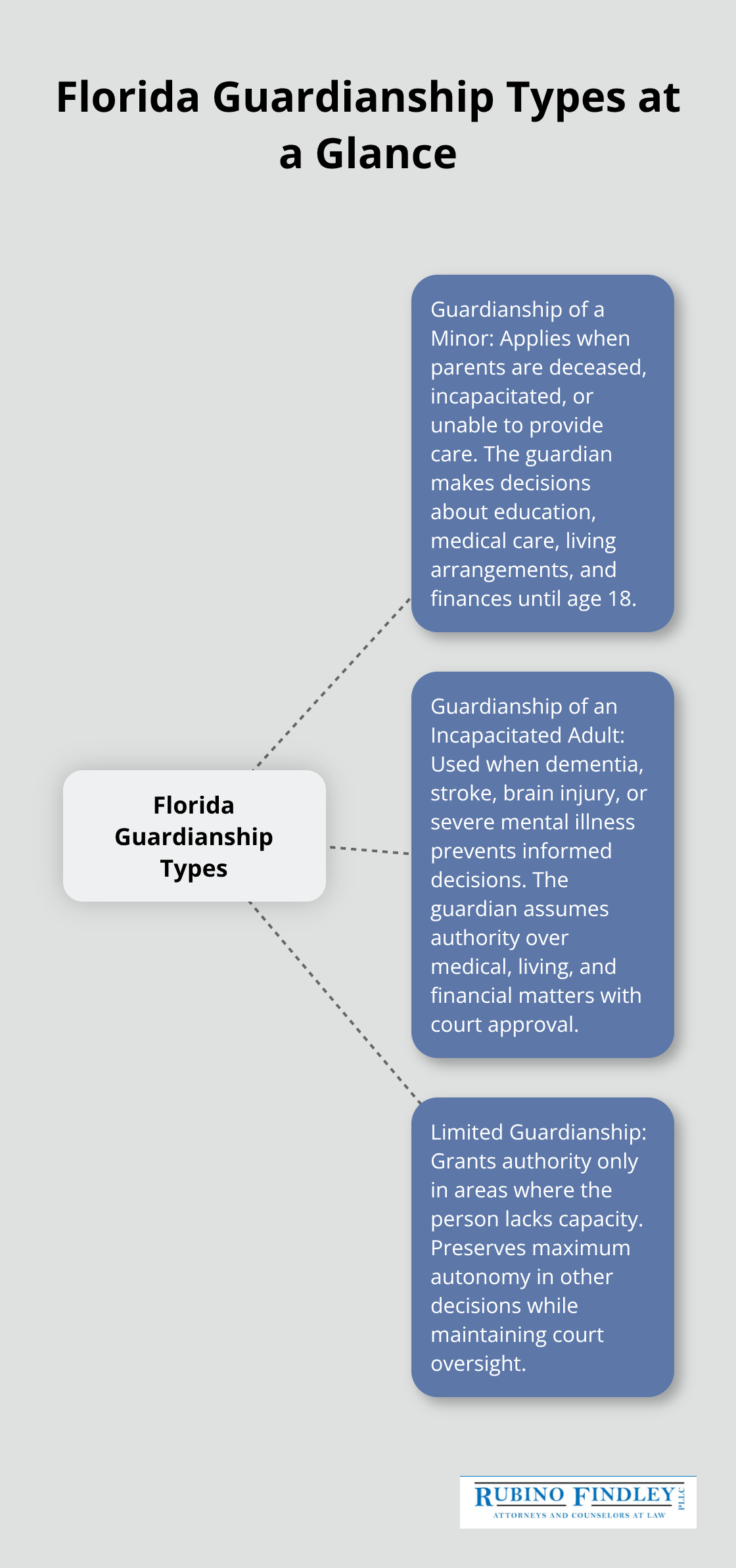
Florida recognizes three distinct guardianship types, and the right choice depends entirely on who needs protection and what decisions they cannot make. Each type carries different legal implications, reporting requirements, and effects on the ward’s remaining autonomy.
Guardianship of a Minor
Guardianship of a minor applies when a child’s parents are deceased, incapacitated, or unable to provide care. This type grants the guardian full authority over the child’s education, medical decisions, living arrangements, and financial matters until the child turns 18. Florida courts prioritize appointing a family member as guardian for minors, but if no suitable relative exists, the state will assign a guardian ad litem to represent the child’s interests.
The process requires filing a petition with the court, providing proof of the parents’ death or incapacity, and demonstrating that guardianship serves the child’s best interests. According to the U.S. Census Bureau, approximately 2.7 million children live in kinship care arrangements, yet many lack formal legal guardianship protections. Without guardianship, relatives cannot enroll the child in school, authorize medical treatment, or access Social Security benefits on the child’s behalf.
Guardianship of an Incapacitated Adult
Guardianship of an incapacitated adult applies when someone lacks mental capacity due to dementia, stroke, traumatic brain injury, or severe mental illness. This guardianship transfers decision-making authority over medical care, living arrangements, and finances to the appointed guardian. Florida courts require clear and convincing evidence of incapacity before approving this guardianship type, which means medical documentation and often testimony from physicians.
The guardian must file annual accountings with the court showing how they spent the ward’s money and what decisions they made on their behalf. Florida’s Department of Elderly Affairs reported that guardianship cases involving elderly adults comprise the largest segment of active guardianships in the state, reflecting the aging population’s growing need for these protections.
Limited Guardianship as a Middle Ground
Limited guardianship offers a middle ground when someone retains capacity in some areas but not others. An elderly person might understand medical decisions but lack ability to manage finances, or vice versa. This guardianship type restricts the guardian’s authority only to specific areas where the person cannot decide independently, leaving them with maximum autonomy in other matters.
Limited guardianship requires more detailed court documentation and judicial determination of exactly which rights the person retains, making it more complex than full guardianship but far preferable when someone maintains partial capacity. Florida courts increasingly favor limited guardianship because it respects the person’s remaining independence and dignity. The annual reporting requirements remain identical to full guardianship, and the guardian still has fiduciary obligations to act in the ward’s best interests.
Matching the Right Type to Your Situation
Choosing between these three types requires honest assessment of the person’s actual incapacity and what decisions they truly cannot make themselves. A guardianship that’s too broad strips away unnecessary rights, while one that’s too narrow leaves critical decisions unprotected. This distinction matters tremendously because it affects the person’s quality of life and their remaining control over their own affairs. Once you understand which guardianship type fits your loved one’s needs, the next step involves navigating Florida’s court system and understanding exactly what paperwork and procedures the state requires.
Getting Guardianship Approved in Boca Raton
Filing Your Guardianship Petition
Filing for guardianship in Florida requires navigating a specific court process that varies depending on whether you seek guardianship of a minor or an incapacitated adult. The petition must be filed in the probate division of the circuit court in the county where the proposed ward resides-for Palm Beach County, this means the Fifteenth Judicial Circuit has jurisdiction. You’ll complete a Petition for Guardianship form that the Florida court system provides, along with supporting documentation proving the person lacks capacity to manage their affairs. For minors, you’ll submit certified copies of the parents’ death certificates or medical documentation showing incapacity. For adults, you’ll submit medical evaluations from licensed physicians confirming the person cannot understand the nature and consequences of their decisions. Florida Statutes Section 744.331 requires that the court receive clear and convincing evidence of incapacity before approving any guardianship petition.
Courts reject petitions with missing forms or incomplete information, forcing families to refile and wait additional weeks. Once you file, the court clerk assigns a case number and schedules a hearing, typically 4 to 8 weeks after filing, though complex cases involving disputes over guardianship take considerably longer.
Documentation and Notice Requirements
The documentation requirements extend beyond medical records and include notice to interested parties, which Florida law defines as the proposed ward’s spouse, adult children, parents, and any other person named in the proposed ward’s will or power of attorney document. You must serve these parties with copies of the petition at least 7 days before the hearing-failure to properly serve interested parties gives them grounds to challenge the guardianship. Court filing fees in Florida guardianship cases range from $500 to $2,000 depending on the county and case complexity. Most families spend $1,500 to $5,000 in attorney fees for uncontested guardianships where all interested parties agree the guardianship is necessary. Contested cases where family members dispute whether guardianship should be granted cost substantially more, sometimes exceeding $10,000 in legal fees.
Ongoing Financial Obligations
After the court approves the guardianship, financial obligations continue. Florida requires guardians to file annual accountings with the court detailing how they spent the ward’s money and what decisions they made, which costs $500 to $1,000 annually depending on the complexity of the ward’s finances. If the ward has substantial assets, the court may require the guardian to post a surety bond (approximately 1 to 3 percent of the ward’s estate value annually) as insurance protecting the ward against mismanagement or theft by the guardian.
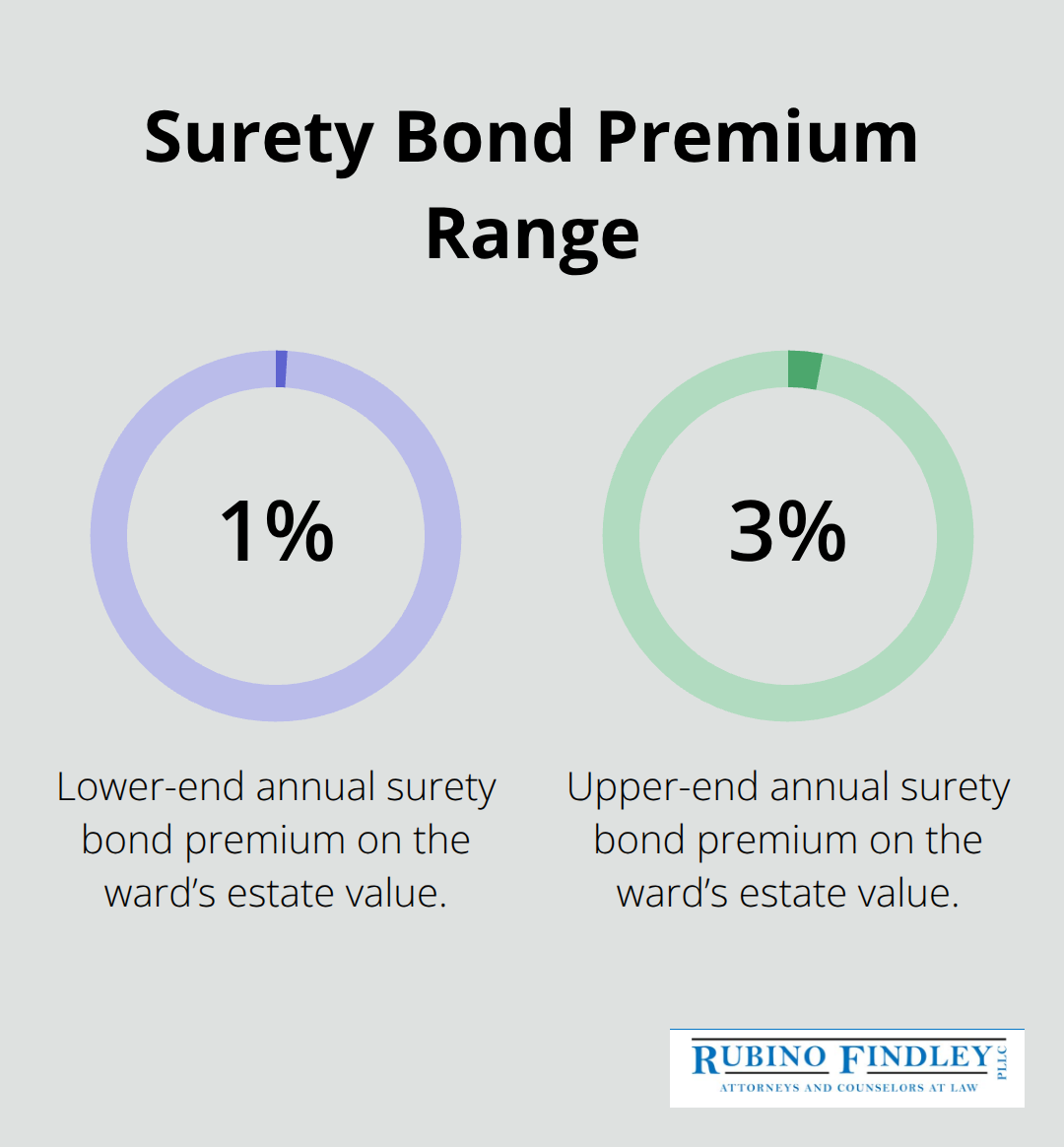
These ongoing costs represent a significant commitment beyond the initial filing and hearing expenses, so families should budget for these recurring obligations when planning for guardianship.
Final Thoughts
Guardianship planning Florida protects your loved ones before crisis forces your hand into emergency filings and higher costs. The families who navigate this process smoothly understand their options, gather proper documentation, and work with someone who knows Florida’s court requirements. Waiting until someone becomes incapacitated leaves you scrambling through weeks of uncertainty while critical decisions hang unresolved.
The three guardianship types available in Florida each serve different situations, and selecting the right one protects your loved one’s remaining autonomy while securing the decisions they cannot make themselves. Courts reject incomplete petitions, interested parties can challenge guardianships that lack proper notice, and mistakes in documentation delay protection for weeks or months. Professional guidance matters because the complexity of guardianship law demands precision in paperwork, proper notice to interested parties, and clear evidence of incapacity.
We at Rubino Findley, PLLC help families throughout Palm Beach County establish guardianships that fit their circumstances and comply with Florida law (and we also work with families on wills, trusts, durable powers of attorney, and complete estate planning to prevent guardianship from becoming necessary in the first place). Contact our team at Rubino Findley, PLLC in Boca Raton to clarify whether guardianship is the right tool for your situation and what steps protect your loved ones today.