



Probate Notice Requirements: How to Formally Notify Beneficiaries
Notifying beneficiaries is one of the most critical steps in probate, yet many executors and administrators get it wrong. Probate notice requirements exist to protect heirs and creditors while keeping the process transparent and legally sound.
At Rubino Findley, PLLC, we’ve seen how a single missed deadline or incomplete notice can derail an entire estate settlement. This guide walks you through exactly what Florida law requires and how to avoid costly mistakes.
What Probate Notice Actually Means in Boca Raton
A probate notice is a formal legal document that informs beneficiaries, heirs, and creditors that an estate has entered the probate process. Florida Statutes Section 731.2105 requires personal representatives to provide notice within 30 days of their appointment, with specific formatting that includes the estate name, case number, court location, and personal representative contact information. This notice serves as the official announcement that the probate case exists and gives interested parties a deadline to file claims or objections. The notice is not optional-it is a mandatory procedural requirement that protects everyone involved by creating a documented record of who received information and when. Without proper notice, beneficiaries may miss critical deadlines for claiming inheritance, and creditors lose their window to assert claims against the estate.
Why Florida Courts Take Notice Requirements Seriously
Florida courts do not view probate notice as a technicality. Failure to properly serve notice can result in the probate case being reopened years after it closes, invalidating distributions and creating significant financial and emotional consequences for beneficiaries. Courts have reopened estates when notice failures surface during later disputes, and the liability falls on the personal representative and potentially their attorney if negligence is involved. The court system treats these violations seriously because they undermine the legal protection that notice is designed to provide. If a beneficiary can demonstrate they never received proper notice, they have grounds to challenge distributions and potentially recover assets. Florida courts regularly apply strict compliance standards to notice requirements rather than substantial compliance standards, meaning technical errors often result in the same consequences as complete failures.
Three Immediate Problems That Arise From Notice Failures
Missing probate notice deadlines or serving incomplete notices creates three immediate problems. First, beneficiaries may file claims against the estate after distributions occur, forcing the personal representative to recover funds they have already distributed.
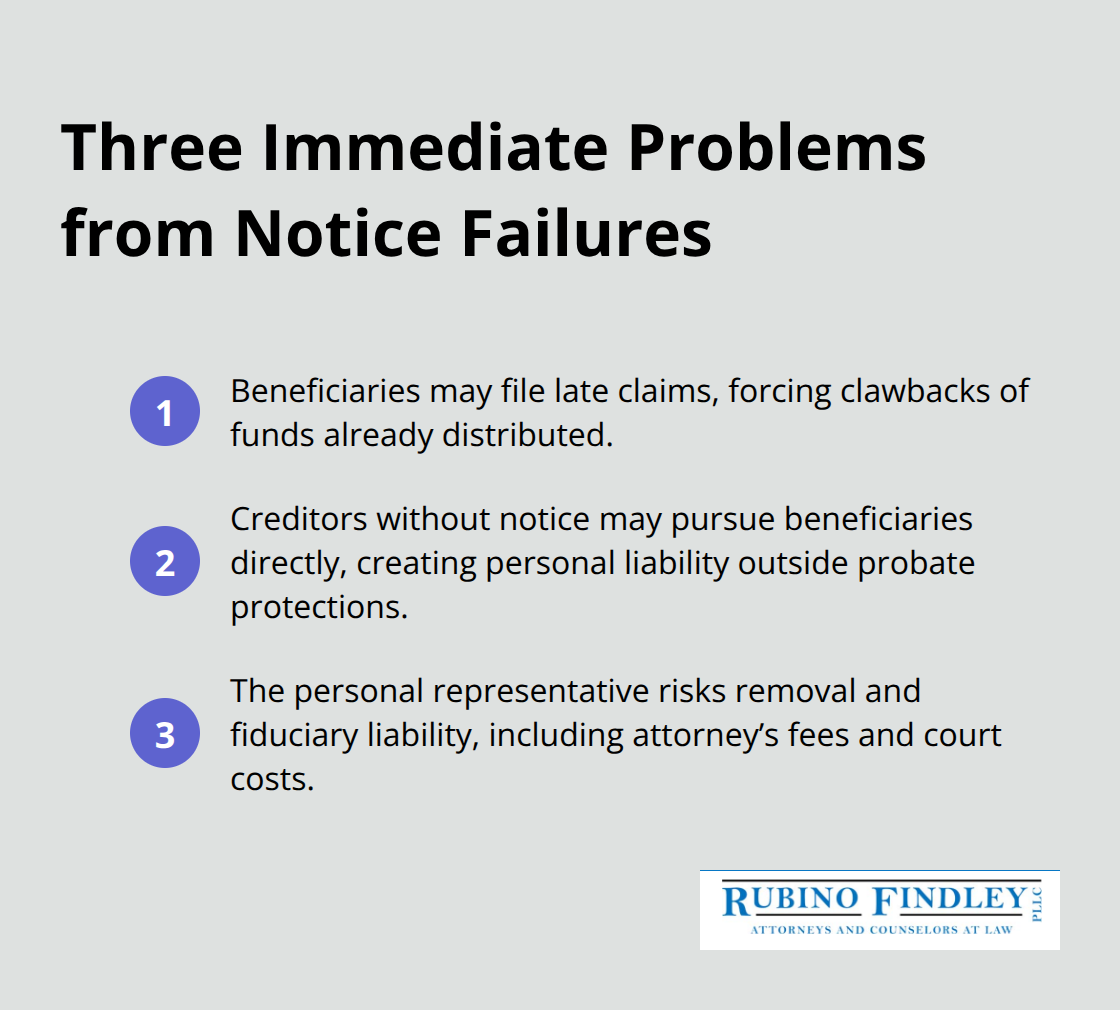
Second, creditors who do not receive notice may pursue claims directly against beneficiaries who received distributions, creating personal liability outside the estate protection that probate provides. Third, the personal representative faces potential removal from their position and liability for breach of fiduciary duty, which can include attorney’s fees and court costs. The financial impact typically ranges from thousands to hundreds of thousands of dollars depending on estate size and the number of overlooked parties. These consequences extend far beyond the probate courtroom and affect beneficiaries’ personal finances and family relationships for years afterward.
How Notice Failures Lead to Estate Reopenings
When a personal representative fails to serve proper notice, the estate remains vulnerable to challenge long after distributions occur. A beneficiary or creditor who discovers they never received notice can petition the court to reopen the probate case, even if years have passed. The court will then require the personal representative to account for all distributions and potentially recover assets from beneficiaries who received them. This process is expensive, time-consuming, and often damages family relationships irreparably. The personal representative bears the burden of proving they complied with notice requirements, and incomplete documentation makes this defense nearly impossible. Understanding the specific notice methods required in Palm Beach County-and following them precisely-is the only way to avoid this outcome.
Methods and Timeline for Serving Probate Notices in Florida
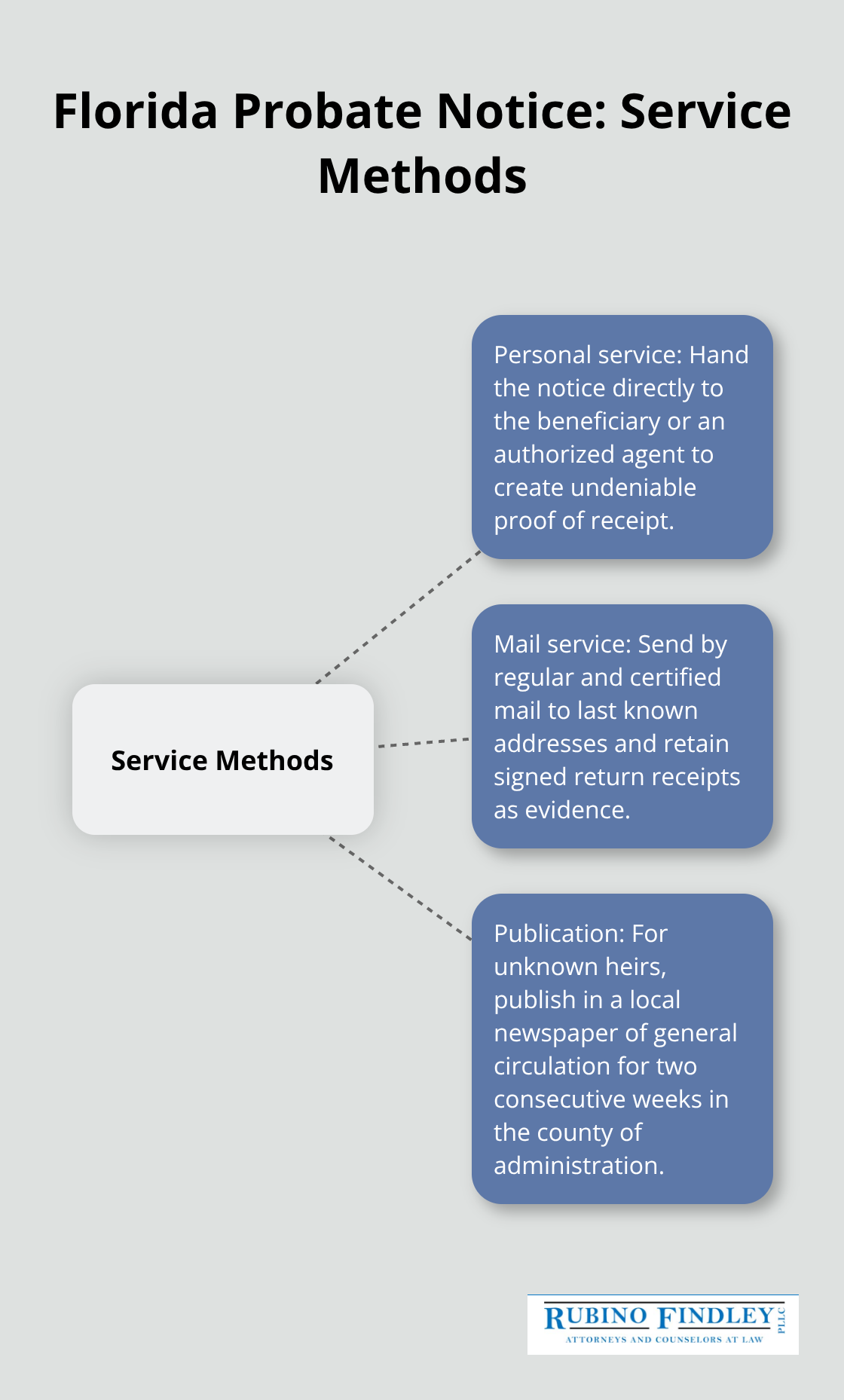
Florida law requires personal representatives to serve probate notices using one of three specific methods, and selecting the wrong approach wastes time and creates legal exposure. Personal service means handing the notice directly to the beneficiary or an authorized agent, and this method satisfies Florida’s strictest compliance standards because it creates undeniable proof of receipt. Mail service works when you send the notice by regular mail and certified mail to the last known address of each beneficiary, and you must retain the signed return receipts as evidence. For unknown heirs or beneficiaries with no identifiable address, Florida Statutes Section 733.212 requires publication in a newspaper of general circulation in the county where the estate is being administered, typically for two consecutive weeks.
Publication Requirements in Palm Beach County
In Palm Beach County, publication means placing the notice in a major local paper and filing an affidavit with the probate court confirming the publication dates. The court accepts this method as valid service for parties you cannot locate through reasonable effort. You must publish the notice for the full two-week period and retain copies of each publication as proof. The affidavit you file becomes part of the permanent court record and protects you from later claims that unknown heirs received no notice.
The 30-Day Deadline That Personal Representatives Miscount
The 30-day notice deadline established in Florida Statutes Section 731.2105 begins from your appointment as personal representative, not from the date the will is filed or the death occurs. Many personal representatives waste critical time by miscounting this window, which creates immediate pressure to serve notice correctly. You must also file proof of service with the court within a specific timeframe, and incomplete documentation at this stage invites challenges years later when beneficiaries claim they never received notice.
Common Service Failures That Delay Probate
The most common mistake involves incomplete address information that leads to returned mail and failed service attempts. When mail returns as undeliverable, you cannot simply move forward with the probate process-you must attempt alternative service methods or publication, and this delay costs weeks. Palm Beach County’s probate court requires you to file the original proof of service document with the court clerk, not just retain a copy for your records, and many personal representatives miss this filing requirement entirely.
Documentation That Protects You From Future Challenges
If you use certified mail, keep both the green return receipt and the postal tracking records because either one might be challenged by a beneficiary claiming non-receipt. Some personal representatives attempt to cut corners by using email or text message notification, but Florida courts do not recognize these methods as valid service, and doing so restarts your vulnerability to estate reopening. The safest approach combines multiple service methods when possible-sending certified mail to known addresses while simultaneously publishing notice for unknown parties-because redundancy eliminates ambiguity about who received what information and when.
With proper service methods documented and filed, your next responsibility involves identifying and addressing the mistakes that most commonly derail beneficiary notification.
Common Mistakes When Notifying Beneficiaries in Boca Raton
Incomplete or Incorrect Beneficiary Information
The most expensive mistakes in probate notification stem from incomplete or outdated beneficiary information that personal representatives fail to verify before serving notice. Many executors rely on the will or trust document as their sole source for beneficiary addresses, but these documents frequently contain outdated information that hasn’t been updated in years. Florida probate courts expect personal representatives to make reasonable efforts to locate current addresses through phone calls, online searches, or family contact, and failing to do so creates a documented trail of negligence.
When certified mail returns as undeliverable, you cannot simply assume the beneficiary received notice through some other method-the court requires you to document your follow-up attempts and adjust your service strategy accordingly. Some personal representatives discover mid-probate that beneficiaries have moved, married, or changed their names, but they continue serving notice at old addresses anyway because correcting the information feels too time-consuming. This approach backfires when a beneficiary surfaces years later claiming they never received proper notice, and your file contains no evidence that you attempted to locate their current whereabouts.
The practical solution involves conducting a beneficiary verification process before the 30-day deadline expires: cross-reference addresses against recent tax documents, contact the beneficiary’s last known employer, search public records for address changes, and reach out to family members who might know current contact information. A single missed or incorrect address can trigger estate reopenings that cost beneficiaries tens of thousands in legal fees and delay distributions by years.
Miscalculated Service Deadlines and Overlapping Timelines
The second major error involves personal representatives who miscalculate service deadlines or confuse multiple overlapping timelines into a single missed window. Florida Statutes Section 731.2105 requires notice within 30 days of appointment, but this deadline exists independently from the deadline to file proof of service with the court, and mixing up these two requirements causes both to slip. Some personal representatives serve notice on day 29 of the 30-day window but then delay filing proof of service with the court clerk for weeks, creating a record showing late compliance even though the actual notice was timely.
Palm Beach County’s probate court maintains strict filing requirements, and the court clerk will not overlook late proof-of-service filings even if the underlying notice was served correctly. Documentation failures compound these deadline problems because many personal representatives retain green return receipts or postal tracking records but fail to file the required affidavit of service with the court, leaving no official record that service occurred. The court expects a completed proof-of-service form filed with supporting documentation attached, and anything less creates a gap in your protection against future challenges.
Protecting Yourself Through Proper Documentation and Timeline Management
Your calendar system should include separate reminders for the 30-day notice deadline and the filing deadline for proof of service, with a buffer of at least five business days to account for mail delays or unexpected issues. Electronic filing systems used in Palm Beach County require specific formatting and document naming conventions, and uploading the wrong file format or incomplete documentation causes rejection and restarts your timeline.
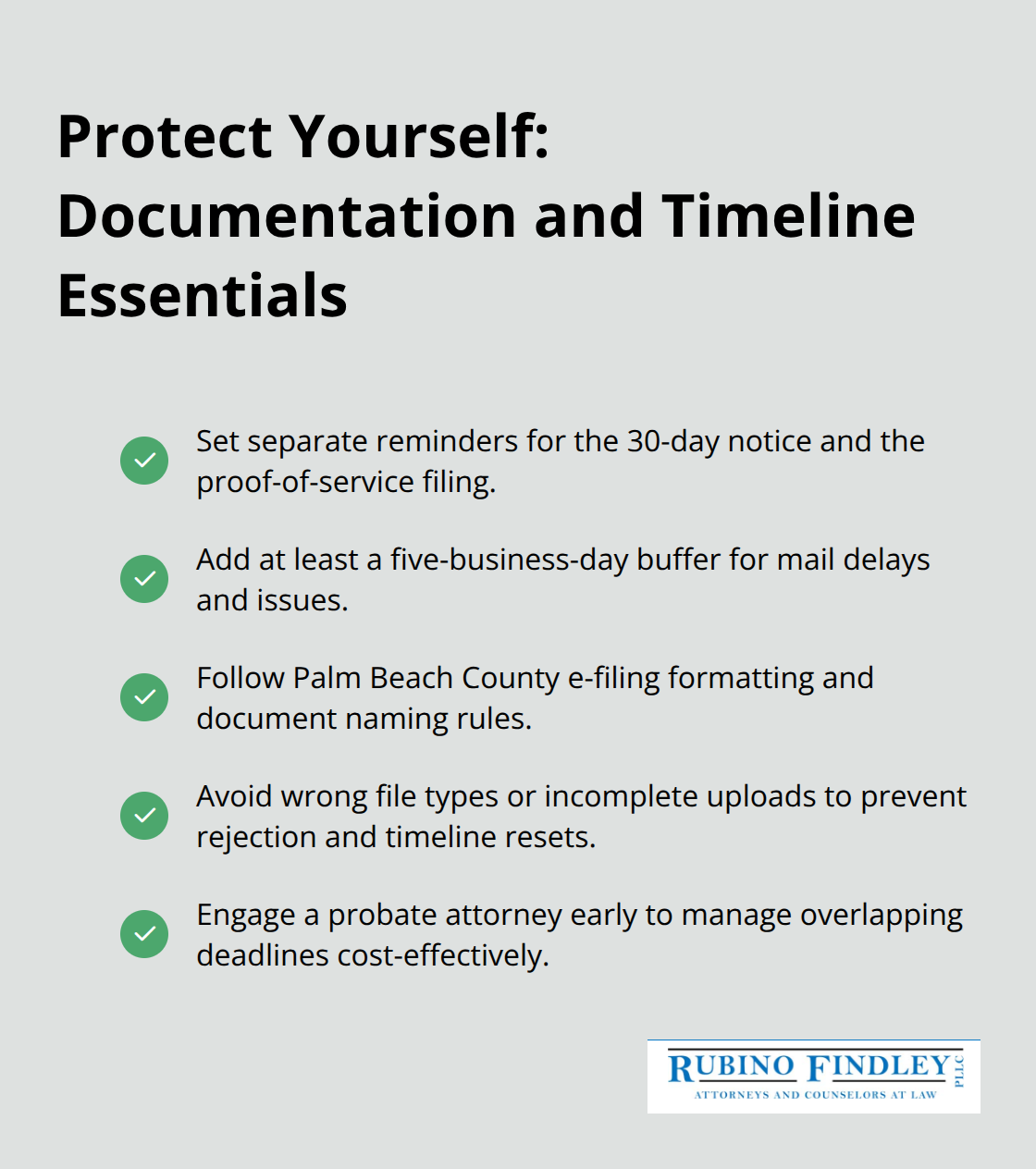
The safest approach involves engaging a probate attorney early to manage these overlapping deadlines because the cost of attorney coordination is negligible compared to the expense of reopening an estate years later.
Final Thoughts
Probate notice requirements in Florida protect beneficiaries, creditors, and personal representatives from costly disputes that surface years after an estate closes. The three core takeaways remain straightforward: serve notice within 30 days of your appointment using approved methods, document every step of the service process, and file proof of service with the Palm Beach County probate court. Missing any of these elements creates vulnerability to estate reopenings that drain resources and damage family relationships irreparably.
Personal representatives who attempt to navigate these requirements alone frequently discover too late that their approach created legal exposure. The mistakes outlined throughout this guide-incomplete beneficiary information, miscalculated deadlines, and inadequate documentation-are entirely preventable with proper planning and attention to detail. The cost of correcting notice failures after the fact far exceeds the cost of getting it right from the beginning.
Contact Rubino Findley, PLLC to discuss your probate administration needs and eliminate guesswork from the notification process. We at Rubino Findley, PLLC handle probate administration and probate litigation for clients throughout Palm Beach County and Florida, managing your deadlines, verifying beneficiary information, selecting appropriate service methods, and filing all required documentation with the court on your behalf. A consultation with our probate team will clarify exactly what your situation requires and establish a timeline that keeps your estate moving forward without legal complications.