




Florida Guardianship Alternatives: Finding Safer Paths for Loved Ones
Guardianship strips away a person’s rights and independence. At Rubino Findley, PLLC, we’ve seen families pursue this path without realizing there are better options available.
Florida guardianship alternatives exist that give your loved ones protection while preserving their dignity and autonomy. This guide walks you through each option so you can choose what actually fits your family’s situation.
Understanding Guardianship and Its Limitations
What Guardianship Actually Means in Florida
Florida guardianship under Chapter 744 of the Florida Statutes gives a court-appointed person the power to make personal and financial decisions for someone deemed unable to do so. When a guardianship is filed, the court investigates the case and often appoints a guardian ad litem to report on the person’s best interests before any decision is made. The process typically takes several weeks to months depending on complexity, and it requires medical evidence presented at a court hearing. Once appointed, a guardian faces ongoing court oversight, regular accounting requirements, and continuous documentation obligations.
The Real Cost of Guardianship
Court fees, attorney fees, and record-keeping costs accumulate year after year for families pursuing guardianship. The American Bar Association notes that these expenses can strain family finances significantly compared to planning done in advance. Many families do not realize that early planning with durable powers of attorney, healthcare directives, and trusts can eliminate these costs entirely.
Why Families Turn to Guardianship
Families typically consider guardianship when cognitive decline, illness, or injury makes someone unable to manage finances or healthcare decisions. A stroke, dementia diagnosis, or serious accident can trigger the urgent belief that guardianship is the only option. However, guardianship is the most restrictive tool available and strips away fundamental rights and autonomy.
What Guardianship Takes Away
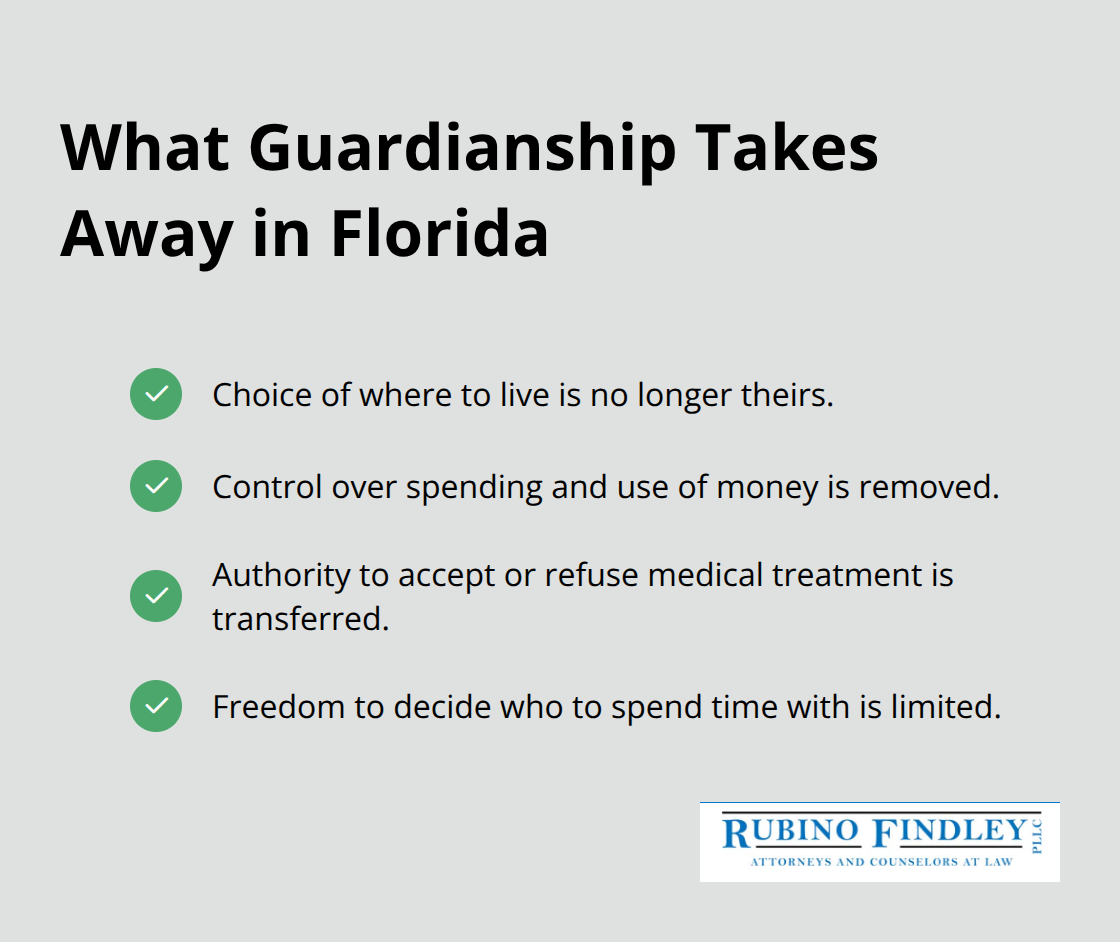
The person under guardianship loses the ability to make their own choices about where they live, how they spend money, what medical treatment they receive, and who they spend time with. Florida courts are directed to consider the least restrictive alternatives first, yet many families default to guardianship without exploring better paths. Limited guardianship exists in Florida to restrict only certain decisions while preserving autonomy in other areas, but even this option subjects someone to court control.
A Better Path Forward
The National Academy of Elder Law Attorneys emphasizes that early planning with durable powers of attorney, healthcare directives, and trusts can protect your loved one without the loss of independence that guardianship demands. These alternatives give your family control over decisions while keeping your loved one’s dignity intact. The next section explores how durable powers of attorney and healthcare directives work to provide this protection.
Power of Attorney and Healthcare Directives
How Durable Powers of Attorney Work
A durable power of attorney for finances lets you name someone to manage your money, accounts, and property if you cannot do so yourself. This document takes effect immediately when signed or only if you become incapacitated, depending on how you structure it. The person you appoint, called your agent, can pay bills, manage investments, sell property, and handle banking without court involvement or ongoing oversight.
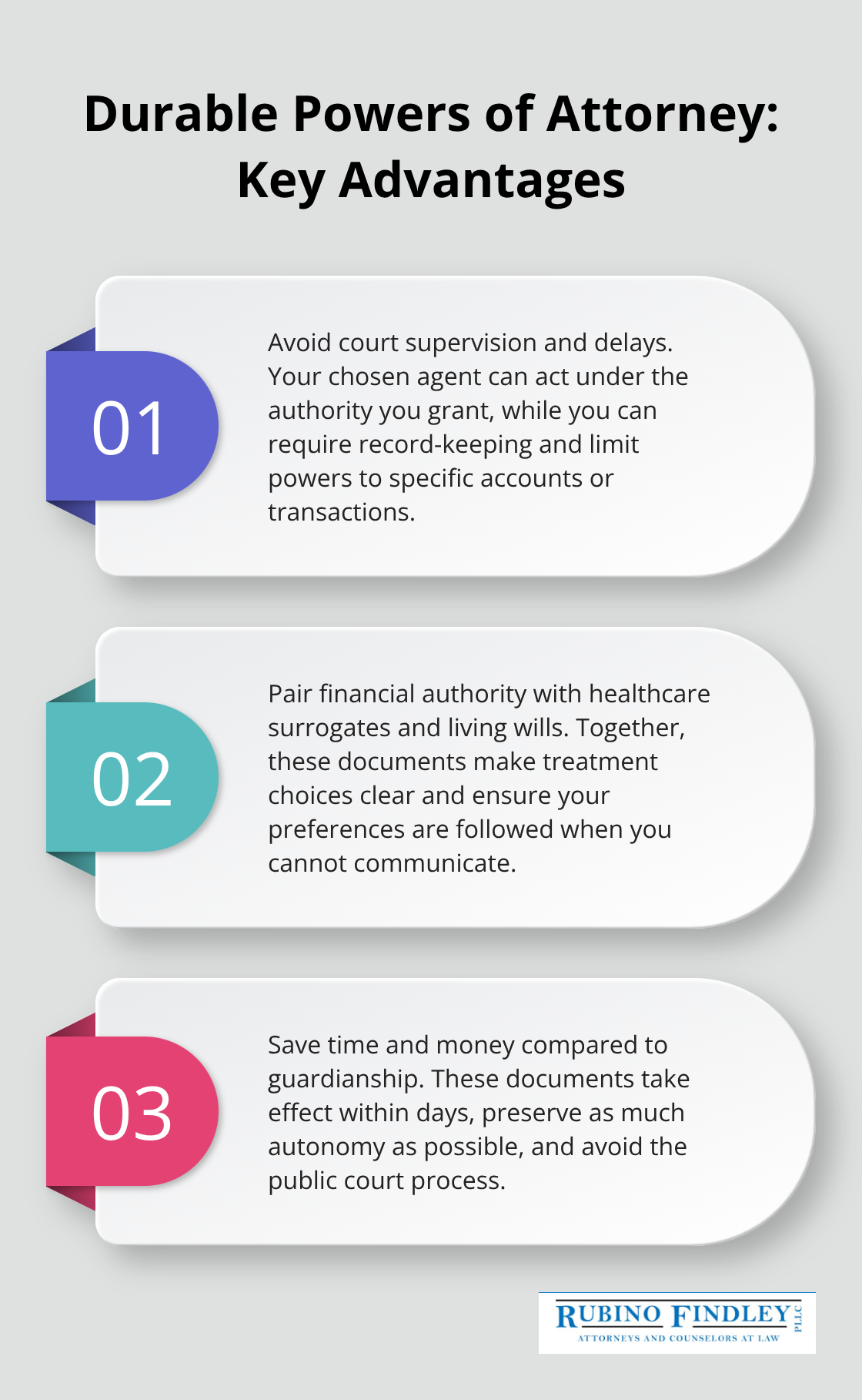
Unlike guardianship, which requires a judge to approve every financial decision, your agent acts directly based on the authority you grant in the document. The American Bar Association confirms that durable powers of attorney avoid court supervision entirely, though you should include safeguards against misuse by requiring your agent to maintain records and limiting their powers to specific accounts or transactions if needed.
Healthcare Surrogates and Living Wills
A healthcare surrogate designation works similarly but for medical decisions. You name someone to make treatment choices, approve surgeries, and direct end-of-life care if you cannot communicate your wishes. Florida law allows you to combine these documents with a living will that spells out your exact preferences for life-sustaining treatment, resuscitation, and organ donation.
The Mayo Clinic and American Medical Association recommend discussing these preferences with your physicians before crisis strikes so your surrogate knows what you actually want. These three documents together create a complete decision-making framework without stripping away the person’s rights or dignity.
Speed and Cost Advantages Over Guardianship
Creating a durable power of attorney and healthcare directive costs far less than guardianship proceedings, which include court fees, attorney fees, and ongoing accounting expenses year after year. The documents take effect within days of signing rather than weeks or months of court proceedings. Your loved one retains control and decision-making authority in areas where they remain capable, and you avoid the public court process that guardianship requires.
Florida courts are directed to consider least restrictive alternatives before appointing a guardian, yet families often skip directly to guardianship without exploring these simpler tools. Start these conversations and documents now, before any crisis occurs. Waiting until incapacity strikes forces your family into expensive, time-consuming guardianship proceedings that could have been entirely avoided.
Planning Ahead Protects Your Family
Early planning with durable powers of attorney, healthcare directives, and trusts protects your loved ones without the loss of independence that guardianship demands. These alternatives give your family control over decisions while keeping your loved one’s dignity intact. The next section explores how trusts and other legal tools provide additional protection for your assets and your family’s future.
Trusts, Conservatorships, and Benefit Programs for Asset Protection
How Revocable Living Trusts Protect Your Assets
Revocable living trusts offer a powerful alternative to guardianship for managing assets without court involvement. When you create a revocable living trust in Florida, you transfer property into the trust during your lifetime, and a successor trustee you name takes over if you become incapacitated. The trustee manages the property for your benefit without needing guardianship approval, court hearings, or public disclosure of your financial details. Unlike a durable power of attorney, which relies on one person’s authority, a trust creates a separate legal entity that holds your assets and operates continuously. If your successor trustee mishandles funds, you have legal recourse through trust law rather than hoping court oversight catches problems.
The National Academy of Elder Law Attorneys recommends trusts as part of a comprehensive plan because they avoid probate entirely when you pass away, saving your family months of court proceedings and thousands in legal fees. A revocable living trust costs between $1,000 and $3,000 to establish with an attorney, but it eliminates the ongoing guardianship costs that accumulate year after year. This tool works particularly well for families with significant assets, real estate, or complex financial situations where a power of attorney alone feels insufficient.
Conservatorship as a Focused Financial Tool
Conservatorship in Florida addresses financial decision-making separately from personal guardianship, giving you the flexibility to restrict court involvement to money matters only. If your loved one can still make medical and personal decisions but struggles with finances, a conservatorship protects assets without stripping away all independence. This targeted approach preserves autonomy in areas where your loved one remains capable while providing necessary financial oversight.
Representative Payee Programs for Social Security Benefits
Representative payee programs through the Social Security Administration offer another practical option for managing benefits without any court process. If your loved one receives Social Security, you can apply to become the representative payee by contacting your local Social Security office, which lets you receive and manage those benefit payments directly. This approach works well for people on fixed incomes who need financial oversight but have capacity in other areas (such as healthcare decisions or personal relationships). The process moves quickly and costs nothing, making it an accessible first step for families managing limited financial situations.
Building Your Asset Protection Strategy
Combining these tools creates a comprehensive protection plan tailored to your family’s needs. A revocable living trust handles real estate and significant assets, a conservatorship addresses ongoing financial management if needed, and representative payee programs cover government benefits. Each tool operates independently, so you can select only what your situation requires rather than accepting the all-or-nothing approach that guardianship demands.
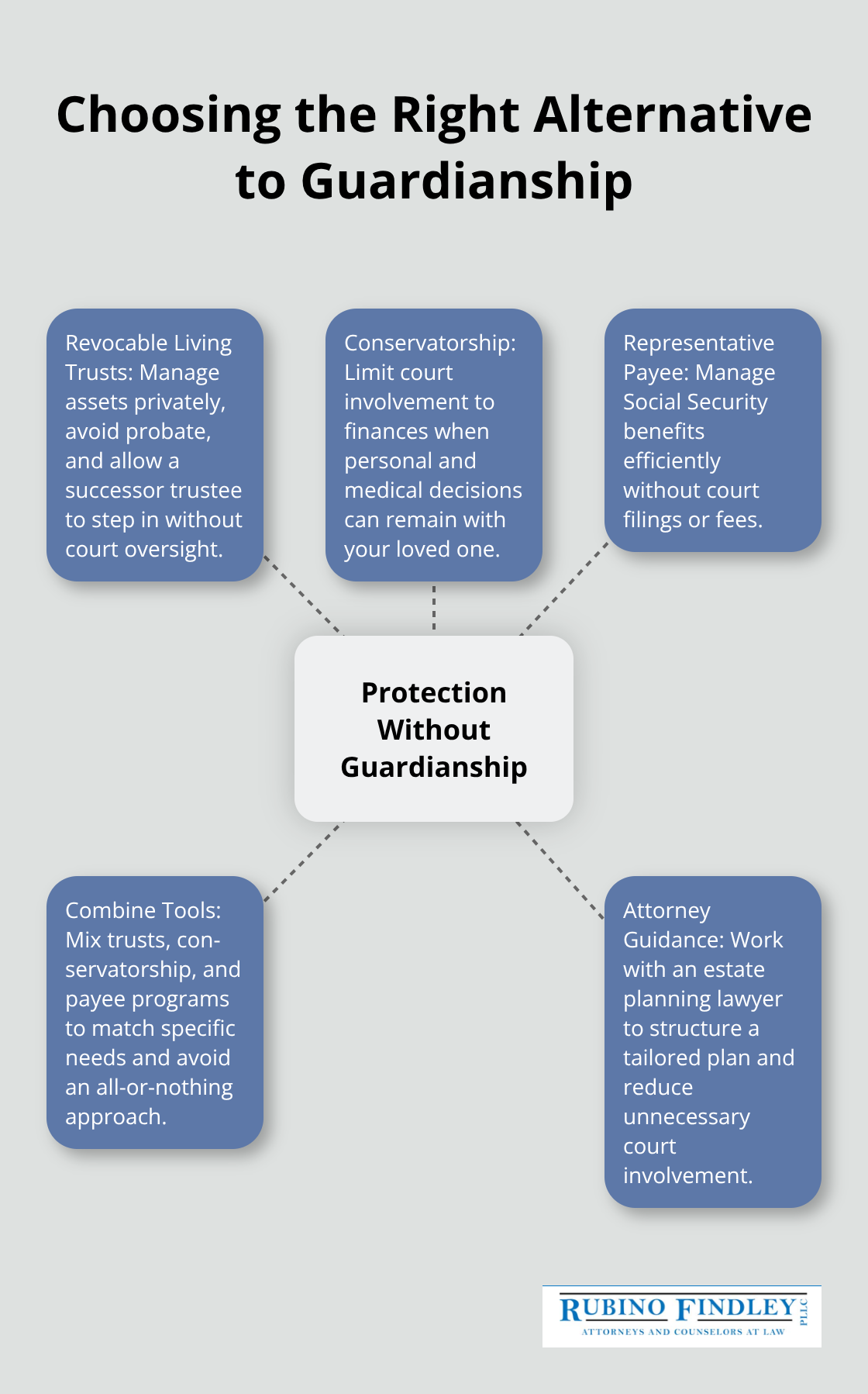
An experienced estate planning attorney can help you structure the right combination of tools for your specific situation, ensuring protection without unnecessary court involvement.
Final Thoughts
Florida guardianship alternatives offer your family real protection without unnecessary court involvement or loss of independence. Durable powers of attorney, healthcare directives, revocable living trusts, and conservatorships each address different needs, and the right choice depends on your family’s specific situation. Start by identifying which decisions your loved one struggles with most-finances, medical choices, or asset management-then select the tools that match those concerns.
Timing matters far more than most families realize. Waiting until a stroke, accident, or dementia diagnosis strikes forces you into expensive guardianship proceedings that could have been entirely prevented with early planning. Starting now, while your loved one has full capacity, lets you document their actual wishes and preferences rather than having a court guess what they would have wanted.
We at Rubino Findley, PLLC help families in Palm Beach County and throughout the region establish the right combination of estate planning documents to protect their loved ones without guardianship. Whether you need a durable power of attorney, healthcare directive, trust, or multiple tools working together, our team can structure your plan to fit your family’s specific needs. Contact us to schedule your free consultation and start protecting your loved ones today.