




Probate Steps Boca Raton: From Filing to Distribution
Losing a loved one is difficult enough without navigating the legal complexities that follow. Probate steps in Boca Raton can feel overwhelming, but understanding the process makes it manageable.
We at Rubino Findley, PLLC help families move through probate with clarity and confidence. This guide walks you through filing, administration, and asset distribution under Florida law.
Understanding Probate in Boca Raton
What Probate Actually Means in Florida
Probate is the legal process that transfers property from a deceased person to their heirs and beneficiaries. In Florida, probate happens through the court system and involves validating a will, paying debts, and distributing assets according to state law or the deceased’s wishes. Many people think probate only matters if someone had significant wealth, but that’s incorrect. Florida requires probate for most estates that include real property or assets exceeding certain thresholds, regardless of net worth. The Florida Supreme Court reports that probate cases in the state increase by roughly 3-5% annually as the population ages, making it one of the most common legal processes families encounter in Palm Beach County and throughout the state.
Why Probate Exists and What It Protects
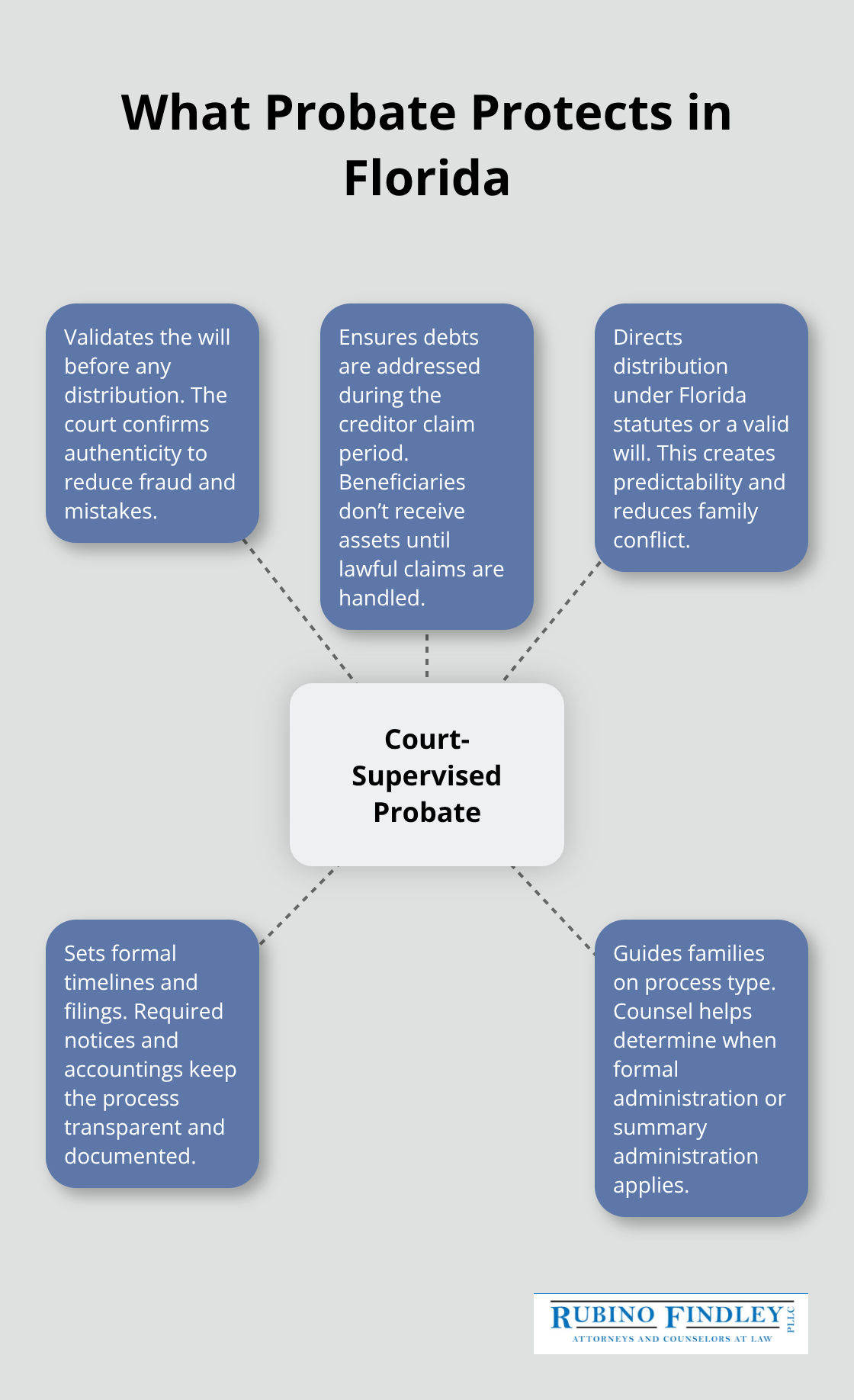
Probate serves a specific purpose: it creates a formal, court-supervised system to verify that a will is legitimate and that debts get paid before beneficiaries receive anything. Without probate, disputes over authenticity become messy and expensive. Florida law requires probate when a deceased person left real estate, had debts, or owned accounts that don’t automatically transfer through beneficiary designations. The process protects creditors by giving them a deadline to claim money owed, which typically falls between three and four months from the date the estate opens. This deadline, called the creditor claim period, prevents creditors from pursuing beneficiaries years after distribution occurs. An experienced estate planning attorney can help families understand whether their situation requires formal probate or if simpler alternatives like summary administration apply.
Timeline and Cost Realities in Palm Beach County
Florida probate typically takes between six months and two years, depending on estate complexity and whether disputes arise. Simple estates with few beneficiaries and no contested claims move faster, often completing in six to nine months. Complicated estates involving multiple properties, business interests, or family disagreements regularly extend beyond two years. Court filing fees in Florida range from $200 to $500 depending on estate size, but attorney fees represent the largest expense. The Florida Bar reports that probate administration costs average between 3-7% of the total estate value, though this varies widely. An estate worth $500,000 typically costs $15,000-$35,000 in legal and administrative fees. These costs exist because probate requires formal court filings, asset valuations, creditor notifications, tax returns, and accountings that demand professional attention.
Moving Forward With Your Estate
Understanding these probate fundamentals (timeline, costs, and legal requirements) prepares you for the filing and administration phase that comes next. The initial steps you take when opening an estate set the tone for the entire process and affect how smoothly assets reach your beneficiaries.
Filing and Opening Your Estate
Starting the Probate Process in Palm Beach County
Starting probate in Florida requires filing a petition with the circuit court in the county where the deceased lived. For Palm Beach County residents, this means filing in the Palm Beach County Court system. The petition must include the original will if one exists, a death certificate, and information about all known heirs and beneficiaries. Florida Statutes Section 731.201 requires the personal representative (executor) to file this petition within a specific timeframe, though Florida law is relatively flexible compared to other states.
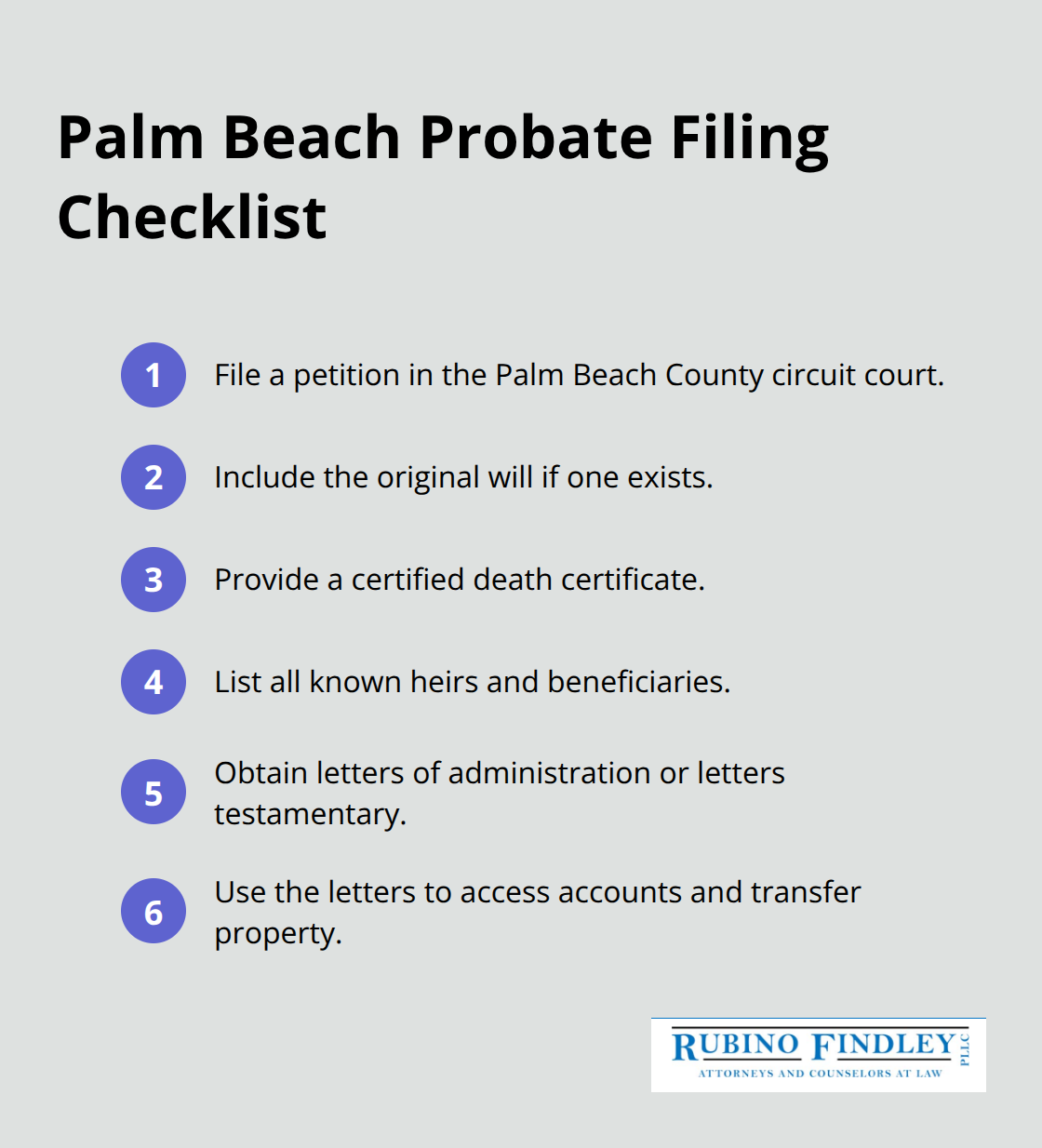
Once filed, the court issues letters of administration or letters testamentary, which give the personal representative legal authority to act on behalf of the estate. This document is essential because banks, investment firms, and title companies require it before releasing funds or transferring property.
Understanding Filing Fees and Initial Costs
The filing fee in Palm Beach County typically runs $200-$500 depending on estate size, but this represents only the beginning of your expenses. Many families underestimate the administrative burden that follows, thinking the hard part ends once the petition is filed. The reality is that opening an estate represents only the first 5-10% of the total probate workload, with substantial work remaining before assets reach beneficiaries.
Notifying Creditors and Managing the Claim Period
Within 30 days of opening the estate, Florida law requires the personal representative to notify all known creditors and publish a notice in the newspaper where the deceased lived. This action initiates the creditor claim period mentioned earlier, which typically lasts three to four months. The personal representative must also file a federal estate tax return (Form 1041) if the estate exceeds $13.61 million in 2024, and a final income tax return for the deceased. Florida has no state estate or inheritance tax, which simplifies matters compared to northern states, but federal obligations remain substantial.
Maintaining Property and Paying Ongoing Obligations
Property taxes on real estate must continue being paid during probate to prevent liens or foreclosure. Mortgage payments, utility bills, and insurance premiums on estate property must be maintained throughout the probate period, sometimes lasting 18 months or longer. Failing to pay these obligations can destroy asset value and create liability for the personal representative personally. The personal representative shoulders responsibility for these payments from estate funds, which means understanding cash flow becomes critical early in the process.
Moving Toward Asset Distribution
Once the personal representative has filed the petition, notified creditors, and established systems for paying ongoing obligations, the estate transitions toward the distribution phase. The next section covers how Florida law determines which beneficiaries receive assets and how disputes among heirs are resolved when conflicts arise.
Distribution of Assets to Beneficiaries
How Florida Law Determines Who Receives What
Florida law distributes estate assets based on a clear hierarchy that removes guesswork from the process. If the deceased left a valid will, assets flow to whoever the will names, after debts and taxes are paid. If no will exists, Florida Statute 732.102 dictates distribution: the surviving spouse receives the entire estate if there are no children, but if children exist, the spouse receives one-third to one-half depending on whether all children share both parents. Children receive equal shares of what remains. This statutory order prevents endless family arguments about who deserves what, though it frequently produces outcomes the deceased would have rejected.
Many families discover during probate that intestate succession (distribution without a will) contradicts what they assumed the deceased wanted. The personal representative must follow this legal hierarchy regardless of personal opinions, and any beneficiary unhappy with the distribution has limited recourse unless the will itself is invalid.
Managing the Mechanics of Asset Transfer
Real property transfers require a new deed filed with the county clerk, bank accounts need authorization letters from the court, and investment accounts require specific transfer forms from financial institutions. Each asset type follows different transfer procedures, which is why probate administration takes months even after creditors are paid and taxes are filed. The personal representative coordinates these transfers across multiple institutions while maintaining detailed records of every transaction.
Handling Disputes When Heirs Disagree
Disputes among heirs arise in roughly 15-20% of probate cases according to probate court statistics, and most conflicts stem from beneficiaries questioning the personal representative’s decisions or believing the will is invalid. Challenging a will requires proving undue influence, fraud, or lack of testamentary capacity-standards that courts interpret strictly. A beneficiary who believes the personal representative mishandled funds or distributed assets improperly must file a formal objection with the probate court, a process that typically extends probate by 6-12 months and costs $5,000-$15,000 in additional legal fees.
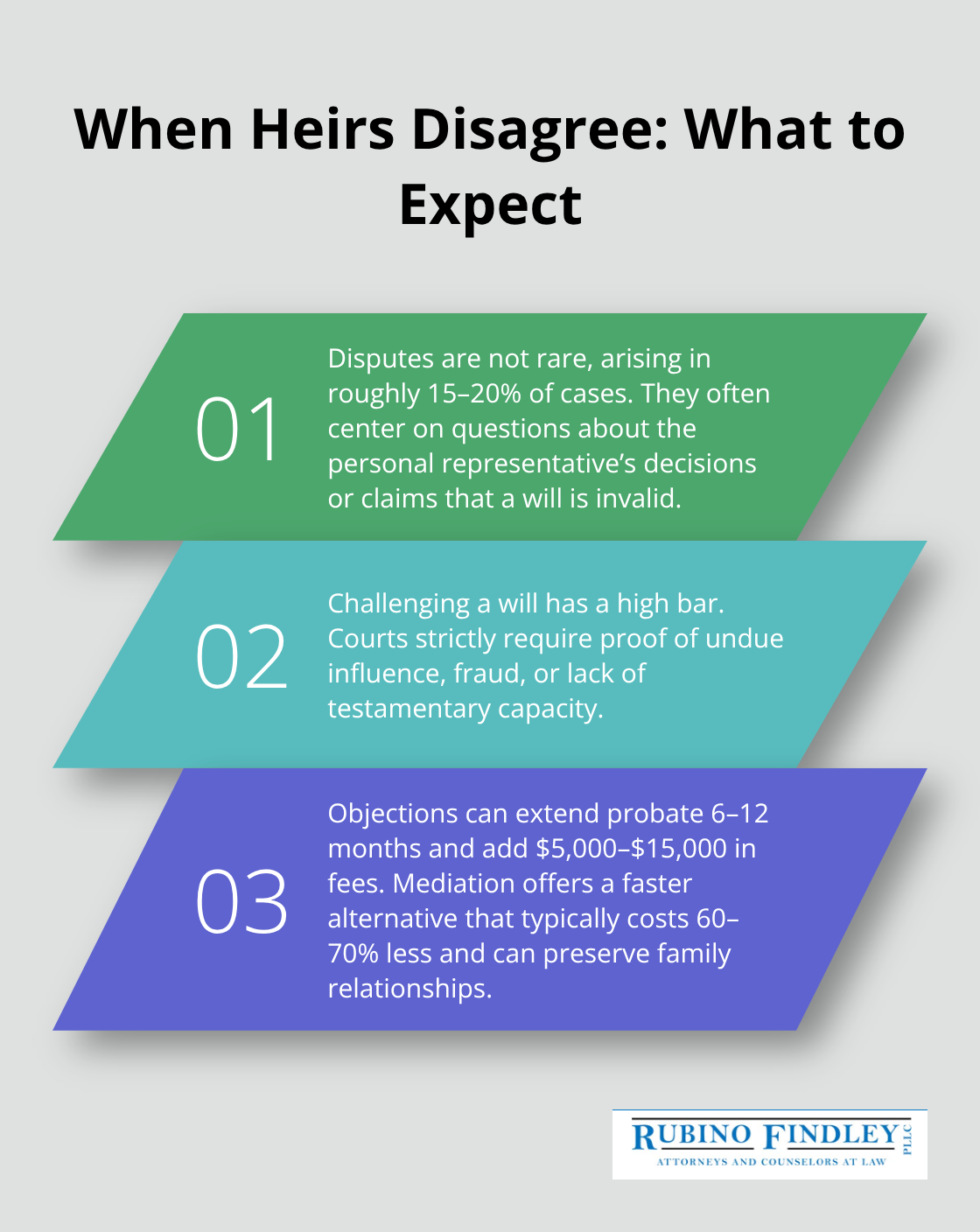
Before resorting to litigation, mediation offers a faster alternative that costs 60-70% less and preserves family relationships. Florida probate courts encourage mediation and often order it when disputes emerge.
Closing the Estate Through Final Accounting
The final accounting represents the personal representative’s detailed report of all estate income, expenses, asset valuations, and distributions, which beneficiaries have the right to review and challenge. Once the court approves the final accounting and confirms all assets were distributed correctly, the personal representative files a petition to close the estate, ending their legal obligations and liability. This closure typically occurs 6-24 months after the initial filing, though contested estates extend significantly longer.
Final Thoughts
Probate steps in Boca Raton follow a predictable path, but the journey demands attention to detail and strict adherence to Florida law. From filing your initial petition through final asset distribution, each phase carries legal requirements that affect your family’s timeline and costs. Understanding these phases beforehand removes surprises and helps you prepare mentally and financially for what lies ahead.
The probate process protects creditors, validates wills, and ensures assets reach the right people through a court-supervised system. This protection comes at a price in time and money, typically ranging from six months to two years and costing 3-7% of estate value. Disputes among heirs, missing documents, or complex asset structures extend both timelines and expenses significantly.
Your situation may not require full probate at all-summary administration, transfer-on-death deeds, and beneficiary designations offer faster alternatives for smaller estates or specific asset types. An attorney can evaluate your circumstances and recommend the most efficient path forward, potentially saving your family thousands of dollars and months of court involvement. Contact Rubino Findley, PLLC to schedule a free consultation and discuss whether probate planning or broader estate planning serves your family’s needs.