




Probate accounting Florida: How to Manage Estate Finances Transparently
Managing an estate after someone passes away involves far more than settling debts and distributing assets. Probate accounting in Florida requires meticulous financial tracking, court compliance, and transparent communication with beneficiaries.
At Rubino Findley, PLLC, we help fiduciaries navigate these responsibilities with confidence. This guide walks you through the financial tasks, documentation standards, and professional support that make estate administration clear and defensible.
Understanding Probate Accounting in Florida
Probate accounting involves the systematic recording, tracking, and reporting of all financial transactions that occur during the settlement of an estate. In Florida, this isn’t optional paperwork-it’s a legal mandate that protects everyone involved. The Florida Probate Code requires personal representatives to maintain detailed records of every dollar received, spent, or distributed from the estate. This level of transparency prevents disputes, reduces the risk of challenges from beneficiaries, and demonstrates compliance with state law. Without proper accounting, even well-intentioned fiduciaries face accusations of mismanagement, which can lead to costly litigation and delays in distributing assets to heirs.
Why Florida Law Demands Transparent Financial Records
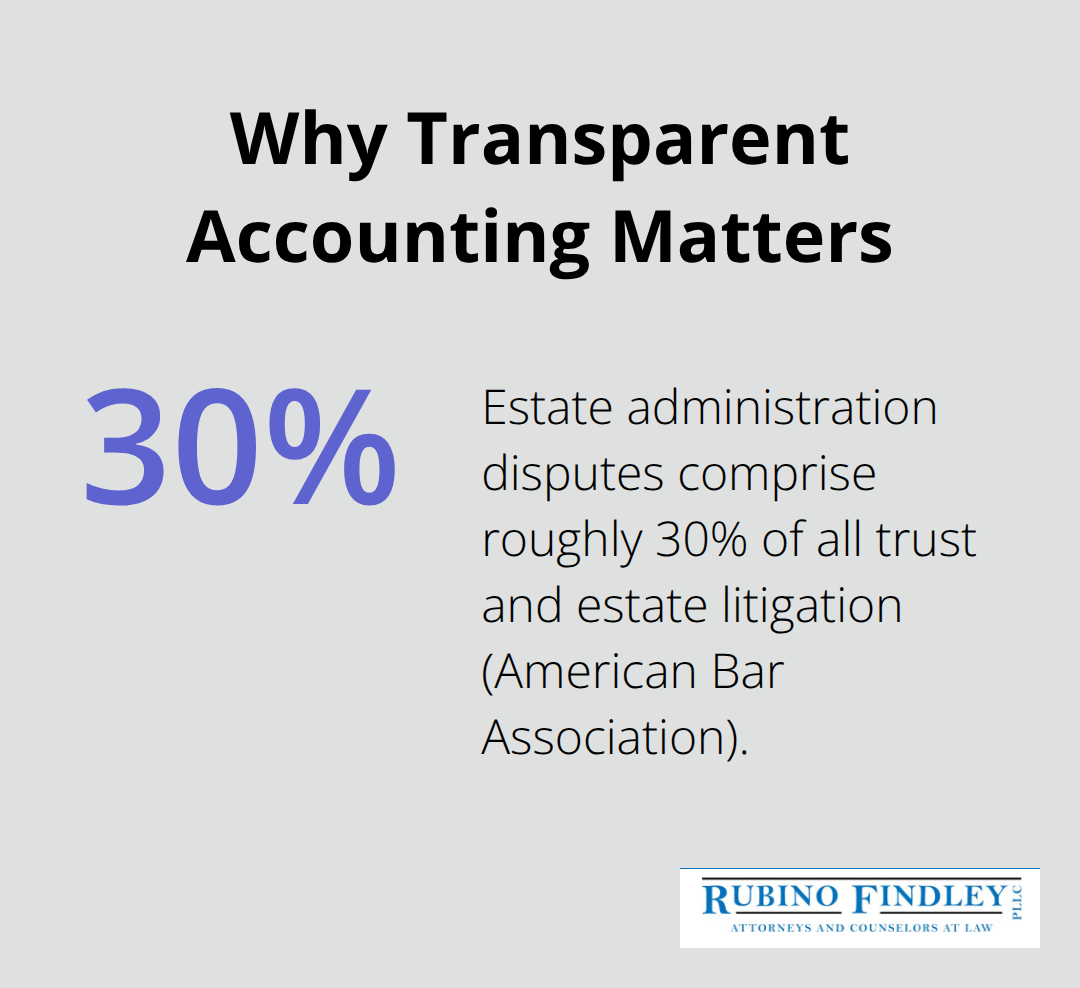
Florida courts take probate accounting seriously. Personal representatives must file accountings with the court and provide copies to all beneficiaries, typically at least once per year or when the estate closes. The state requires that these accountings show opening balances, all receipts and disbursements, and closing balances for each asset category. This isn’t bureaucratic busywork-it’s protection. According to the American Bar Association, disputes over estate administration account for roughly 30 percent of all trust and estate litigation. Transparent accounting dramatically reduces this risk because beneficiaries can see exactly where money went. In Palm Beach County and Boca Raton, where estates often involve significant assets and multiple beneficiaries, this documentation becomes even more critical.
How Proper Accounting Shields Everyone Involved
Personal representatives who maintain meticulous probate accounting records protect themselves from personal liability. Florida law holds fiduciaries accountable for losses caused by negligence or misconduct, and solid documentation serves as your defense against unfounded accusations. Beneficiaries gain protection because they can verify that distributions are accurate and that their inheritance wasn’t diminished by hidden fees or mismanagement. Creditors benefit because they can see that legitimate claims received payment in the correct order. The cost of maintaining detailed records upfront is far less than the cost of defending against probate litigation after the fact.
What Fiduciaries Must Track and Report
Personal representatives need to document several key categories throughout probate administration. They track all estate assets (real property, bank accounts, investments), record every expense paid from estate funds, and monitor distributions to beneficiaries. Each transaction requires supporting documentation-receipts, invoices, bank statements, and court orders. Florida courts expect these records to paint a complete financial picture of the estate from opening to closing. Fiduciaries who organize this information from the start avoid scrambling to reconstruct transactions months later, when memories fade and documents go missing.
Moving Forward With Professional Support
The financial complexity of probate administration in Palm Beach County and throughout Florida makes professional guidance valuable. Accountants and attorneys help fiduciaries establish proper systems, file required court documents, and communicate clearly with beneficiaries about estate finances. With these foundations in place, you’re ready to examine the specific financial tasks that form the backbone of estate administration.
The Financial Foundation of Estate Administration
Identifying and Valuing Estate Assets
Probate administration begins with three interconnected financial tasks that demand precision and documentation. The first step requires you to identify every asset the estate owns-from real property in Palm Beach County to bank accounts, investments, and personal property-then assign each a fair market value as of the date of death.
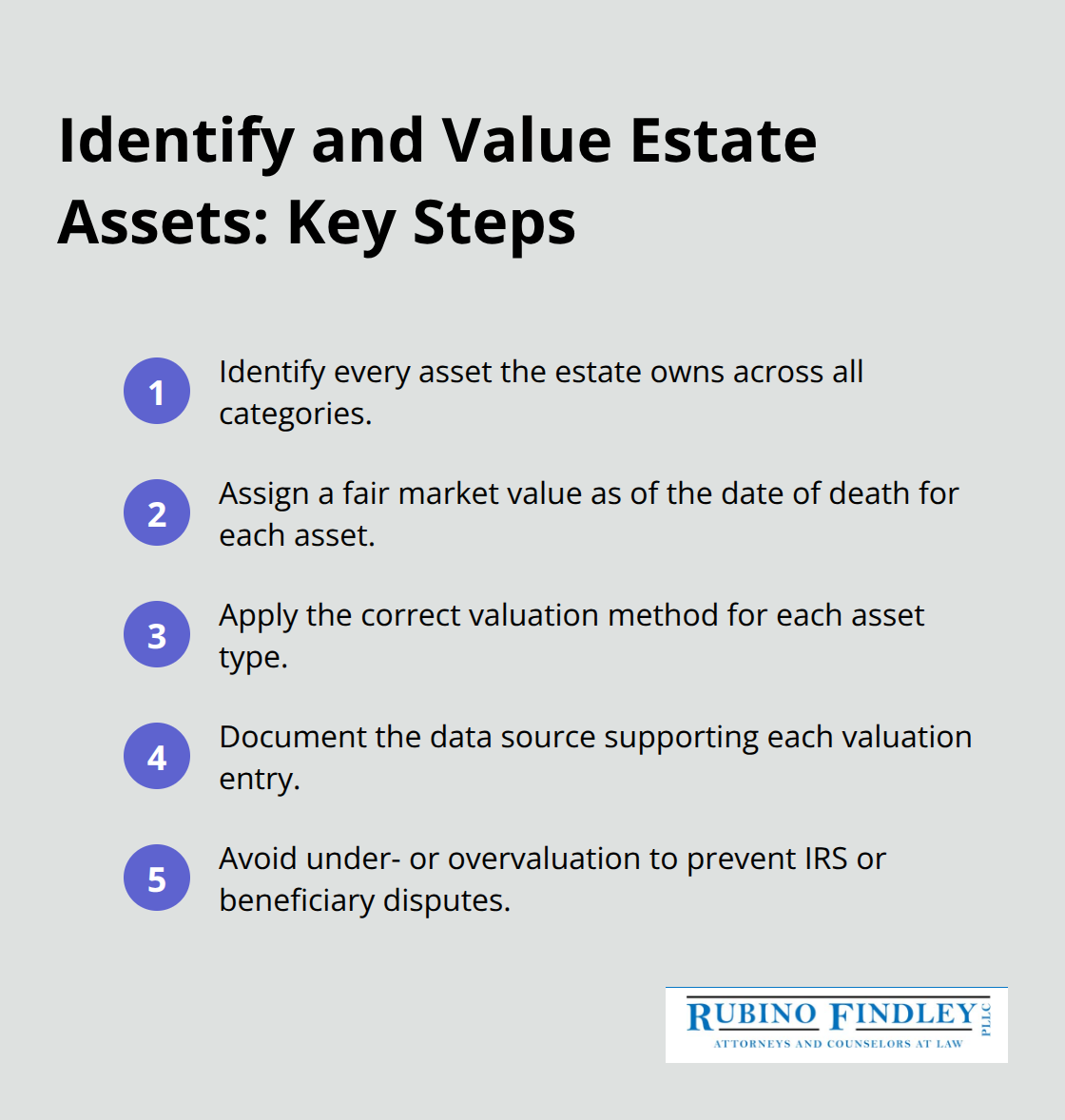
This valuation isn’t arbitrary. Florida courts require specific valuation methods depending on asset type, and undervaluing or overvaluing assets can trigger IRS scrutiny or beneficiary disputes. Real estate typically uses an appraisal from a certified appraiser, bank accounts show their exact balance on the death date, and publicly traded securities use the closing price from that specific day.
Managing Expenses and Debts
Once you’ve inventoried everything, the financial work accelerates because you simultaneously manage expenses and debts while tracking every transaction. Estate administration typically costs between 3 to 7 percent of the estate’s total value according to data from the American College of Trust and Estate Counsel, and these costs include court filing fees, attorney fees, accounting fees, and appraisal expenses that must be paid from estate funds before distributions reach beneficiaries. You’ll also identify and pay valid creditor claims, funeral expenses, and taxes-and the order matters significantly under Florida law.
Building Your Documentation System From Day One
The documentation piece ties everything together and determines whether your administration proceeds smoothly or gets challenged. Create a master accounting system from day one that records the opening balance of each asset, every deposit or receipt, every payment or distribution, and the closing balance. Many fiduciaries mistakenly treat probate accounting as something to organize at the end, then scramble when they can’t locate receipts from six months earlier or reconstruct which estate funds paid which bills.
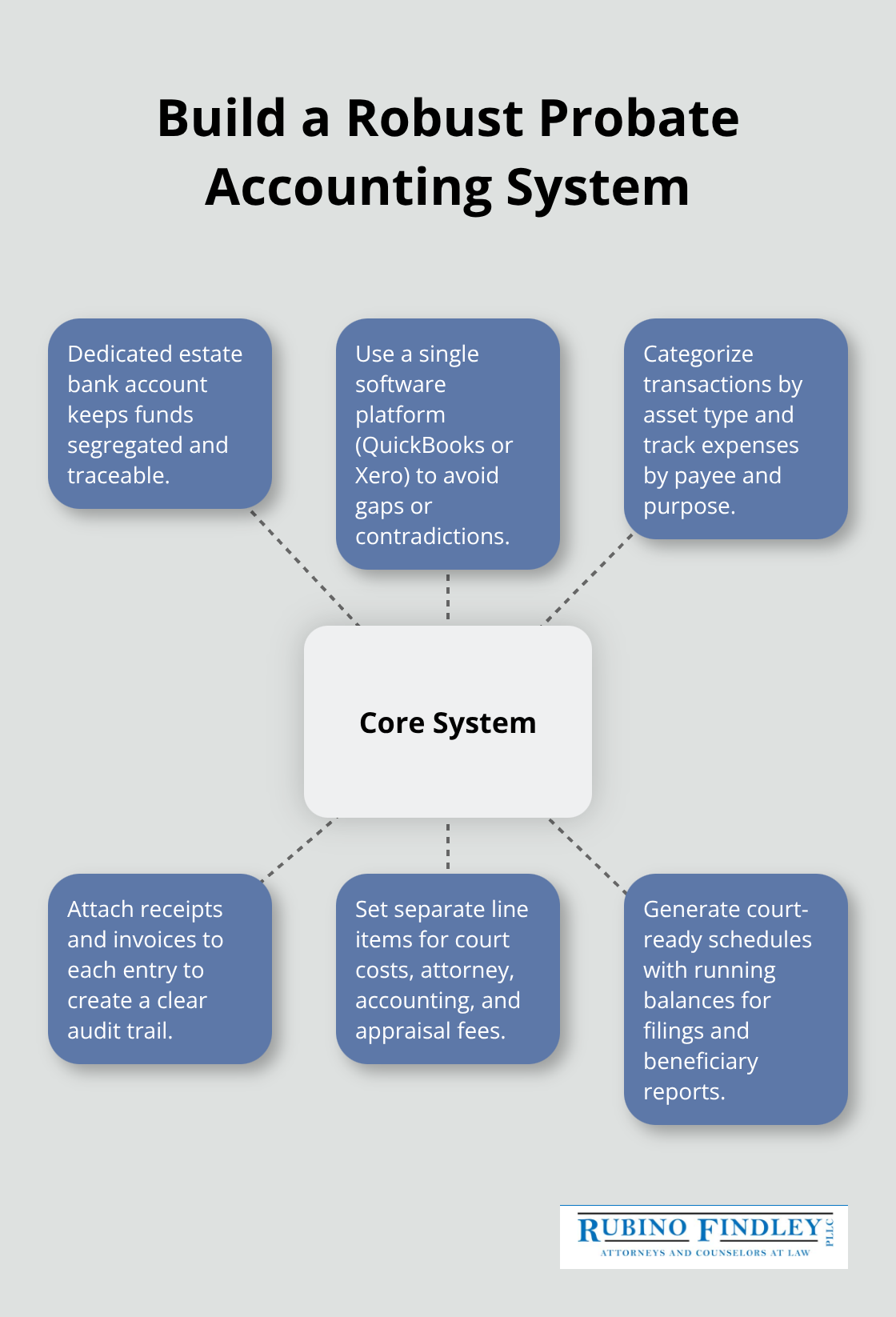
Establish a dedicated bank account for the estate, use accounting software like QuickBooks or Xero to categorize transactions in real time, and maintain physical files organized by transaction type. When you file accountings with the Florida court, you’ll attach schedules showing these details for every asset and liability, and beneficiaries receive copies so they can verify accuracy. This systematic approach prevents the common scenario where beneficiaries question whether distributions were calculated correctly or whether hidden fees reduced their inheritance-and it protects you from personal liability if administration is later challenged.
Preparing for Court Filings and Beneficiary Communication
The records you maintain now become the foundation for every court filing and beneficiary report you submit throughout probate. Florida courts expect these accountings to show opening balances, all receipts and disbursements, and closing balances for each asset category. Beneficiaries gain confidence when they can see exactly where money went and verify that their inheritance wasn’t diminished by unexplained expenses. With your financial systems in place, you’re ready to examine how to report these transactions clearly to the court and beneficiaries.
How to Document and Report Estate Finances Correctly
Select One Accounting System and Maintain It Throughout
Proper documentation starts with selecting the right tools and maintaining them throughout probate administration. Many fiduciaries make the mistake of using multiple systems-a spreadsheet here, handwritten notes there, bank statements scattered across folders-which creates gaps and contradictions when court filings arrive. Instead, select one accounting software platform and use it exclusively from day one. QuickBooks Online or Xero both allow you to categorize transactions by asset type, track expenses by payee and purpose, and generate reports that match court filing requirements. Set up separate line items for court costs, attorney fees, accounting fees, and appraisal expenses so you can document exactly how estate administration costs consume 3 to 7 percent of the estate’s total value according to the American College of Trust and Estate Counsel.
Create an Audit Trail With Every Receipt and Invoice
Every receipt, invoice, and bank statement should be uploaded or scanned into your system with a clear date and description. When you receive a check for estate assets, photograph it before depositing it into the estate account. When you pay a bill, attach the vendor invoice to your transaction record. This creates an audit trail that makes court filings straightforward and prevents beneficiaries from questioning whether funds were properly accounted for.
Report to Beneficiaries With Quarterly Summaries
Reporting to beneficiaries and the court requires different approaches, but both demand the same underlying accuracy. Florida law requires personal representatives to provide beneficiaries with accountings at least annually and at estate closing, showing opening balances, all receipts and disbursements, and closing balances for each asset category. Send beneficiaries a simplified summary statement every quarter that shows which assets remain, what expenses have been paid, and the current distribution timeline. This transparency prevents the common scenario where beneficiaries feel left in the dark and later challenge the administration.
File Court Accountings With Detailed Schedules
Courts expect accountings to be filed as formal pleadings with supporting schedules that document every transaction. When you file with the court, include detailed schedules organized by asset class, with running balances that prove the math. An accountant who understands Florida probate requirements prevents costly errors on court filings and reviews your documentation system for completeness, identifies expenses you might have overlooked, and prepares accountings that satisfy both beneficiary questions and court standards.
Coordinate Financial Records With Legal Filings
Coordination between your accounting and legal filings prevents the scenario where accounting shows one number and legal documents show another, which immediately triggers scrutiny from the court or beneficiaries. Working with professionals throughout administration (an accountant and an attorney) ensures that financial records support every court filing and beneficiary communication.
Final Thoughts
Probate accounting in Florida demands precision, documentation, and professional coordination from start to finish. The financial systems you establish early in estate administration determine whether the process moves smoothly or gets derailed by beneficiary questions, court scrutiny, or missing records. Personal representatives who maintain detailed accounting records, report transparently to beneficiaries and the court, and work with qualified professionals avoid costly disputes and protect themselves from personal liability.
We at Rubino Findley, PLLC understand the complexity of managing estate finances during probate administration. Our team helps fiduciaries in Palm Beach County and throughout Florida establish proper accounting systems, prepare court filings that satisfy state requirements, and communicate clearly with beneficiaries about how estate assets are being managed. We work alongside accountants to verify that your financial records support every legal document and every beneficiary communication, preventing the gaps that trigger litigation.
If you’re currently serving as a personal representative or anticipating this responsibility, contact Rubino Findley, PLLC in Boca Raton to discuss how we support estate fiduciaries through probate accounting in Florida. Our team can review your current accounting approach, identify gaps in documentation, and guide you through the remaining steps of estate settlement.