




Trust Litigation Florida: Protecting Your Beneficiaries and Interests
Trust disputes can tear families apart and drain resources quickly. When beneficiaries clash over distributions or trustees act improperly, trust litigation in Florida becomes necessary to protect what matters most.
At Rubino Findley, PLLC, we help families navigate these conflicts and recover what they’re rightfully owed. This guide walks you through the process and your options.
When Trust Disputes Arise in Florida
Common Reasons Trusts Are Challenged
Trust disputes in Florida stem from a handful of concrete problems that repeat across families year after year. Unclear trust language tops the list-when a trustee interprets distribution instructions differently than beneficiaries expect, conflict erupts fast. Florida courts see this constantly because many trusts written decades ago use vague phrasing that leaves room for argument.
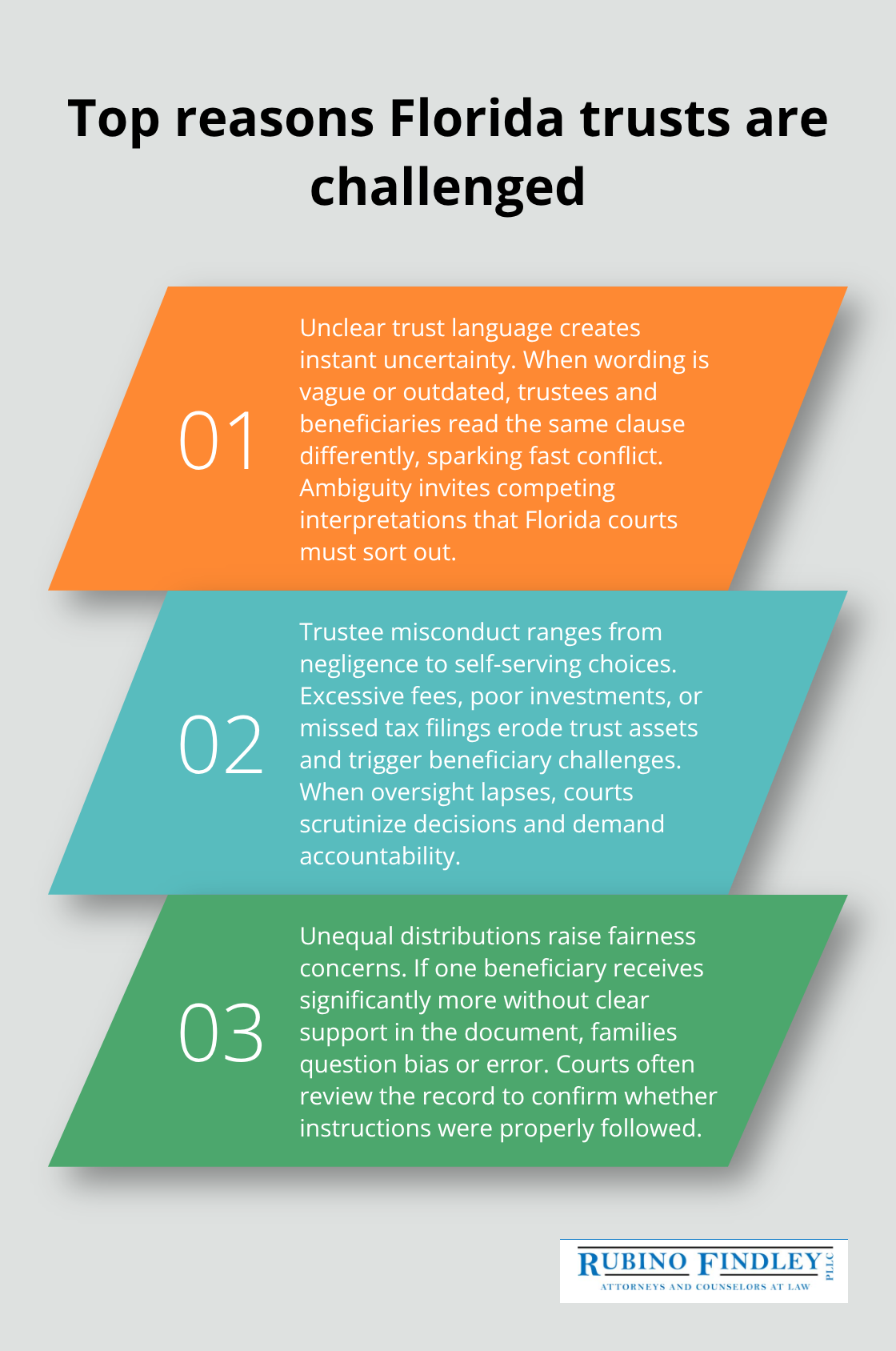
Trustee misconduct ranks second, ranging from outright theft to simple negligence in managing assets. The American College of Trust and Estate Counsel reports that beneficiaries file challenges when they suspect trustees take excessive fees, make poor investment decisions, or fail to file required tax returns on time. Unequal distributions create the third major trigger-when one beneficiary receives significantly more than others, remaining family members question whether the trustee followed the trust document or acted on personal bias.
How Beneficiary Conflicts Surface
Beneficiary conflicts typically surface when communication breaks down between the trustee and beneficiaries. Some trustees refuse to provide accounting statements or explain their decisions, which immediately raises red flags. Others make distributions without consulting beneficiaries about timing or amounts, leading to shock and resentment.
Family dynamics amplify these tensions-when multiple beneficiaries have competing interests or when one beneficiary holds trustee power over others, disputes become almost inevitable. The warning signs appear early if you know what to watch for: delayed distributions without explanation, trustee reluctance to answer financial questions, sudden changes in how trust assets are managed, or a trustee spending trust money on personal expenses under vague justifications.
Taking Action Before Disputes Escalate
Beneficiaries should request formal accountings at least annually and document every communication with the trustee. If a trustee ignores requests for information or becomes defensive when questioned, that’s your cue to seek legal guidance before frustration turns into full litigation. These early interventions (whether through direct communication or legal consultation) often prevent costly court battles and preserve family relationships.
The specific type of conflict you face determines which legal remedies apply to your situation. Understanding these distinctions helps you prepare for the next phase of addressing trust problems.
How Legal Tools Stop Trustee Abuse and Recover Lost Assets
Compelling Accountings and Forcing Transparency
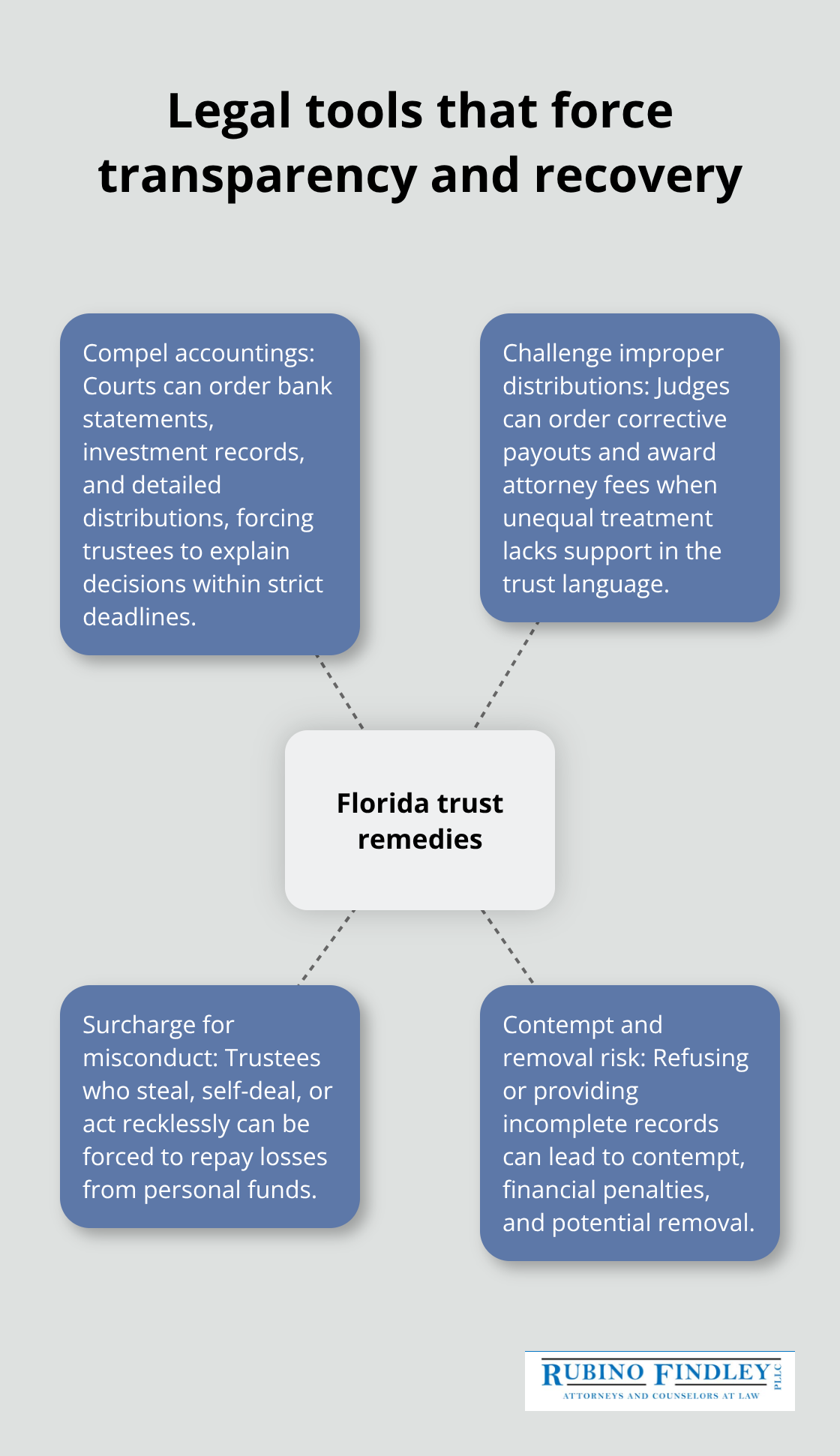
Trust litigation gives beneficiaries concrete remedies when trustees cross the line. Florida law provides multiple pathways to challenge improper actions, and the specific tool you need depends on what the trustee actually did. When a trustee mismanages trust administration, beneficiaries can petition the court to compel detailed accountings and force the trustee to explain every decision. This isn’t theoretical-Florida courts regularly order trustees to produce bank statements, investment records, and documentation of all distributions within 30 days of a petition filing. If the trustee refuses or provides incomplete records, the court can hold them in contempt, which carries financial penalties and potential removal from their position.
Challenging Improper Distributions
Challenging improper distributions works differently because you attack the legitimacy of payments themselves. A beneficiary who receives less than the trust document specifies can sue to recover the difference, and a beneficiary who suspects the trustee favored one family member over another can force a judicial review of the distribution decisions. Florida courts take this seriously-when evidence shows unequal treatment without legitimate justification under the trust language, judges routinely order corrective distributions and award attorney fees to the prevailing beneficiary.
Addressing Trustee Misconduct Claims
Trustee misconduct claims represent the strongest legal position because they address intentional or reckless behavior. Theft, self-dealing (using trust assets for personal benefit), excessive fee-taking, and negligent investment decisions all constitute misconduct that Florida courts will punish through surcharge orders, which force the trustee to repay losses from personal funds.
Understanding Recovery Timelines and Proof Requirements
The key practical difference between these remedies lies in burden of proof and recovery timeline. Demanding an accounting takes weeks and costs relatively little in legal fees. Challenging distributions requires moderate evidence gathering but produces faster results if the trust document clearly shows what you should have received. Misconduct claims demand the most thorough investigation because you need documentation proving the trustee acted improperly-bank records showing unauthorized personal transactions, investment statements revealing reckless decisions, or fee schedules exceeding Florida’s statutory limits.
The misconduct path also offers the most significant financial recovery because courts award surcharges plus interest dating back to when the violation occurred, sometimes totaling tens of thousands of dollars for families who act promptly. Once you understand which remedy fits your situation, the next step involves navigating Florida’s specific procedural requirements for filing your claim and gathering the evidence that courts will actually consider.
The Trust Litigation Process in Florida
Filing Your Claim and Meeting Critical Deadlines
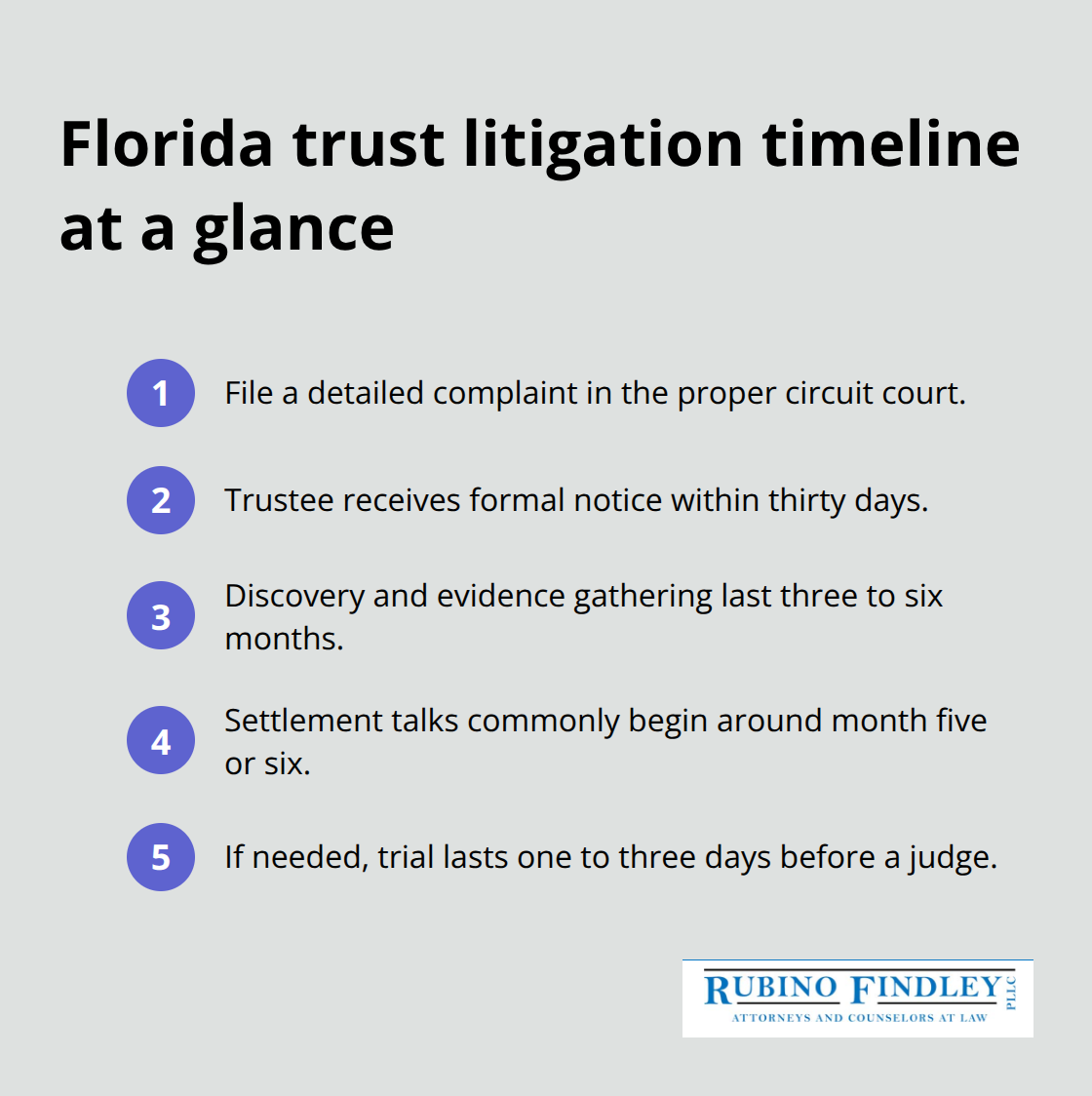
Trust litigation claims in Florida operate under strict procedural deadlines that most beneficiaries miss until it’s too late. You have four years from the date you discover trustee misconduct to file suit, but that clock starts ticking the moment you should have known about the problem, not when you actually found out. Waiting around hoping the trustee will fix things on their own can cost you your legal right to recover losses. When you file, you submit a complaint in the circuit court in the county where the trust is administered-in Palm Beach County, that means the Palm Beach County Circuit Court. Your complaint must clearly identify the trustee’s specific actions that violated Florida law or the trust document, not vague accusations. Courts reject complaints that say the trustee acted improperly without explaining exactly what they did, when they did it, and how it harmed you financially. After filing, the court assigns a case number and the trustee receives formal notice within thirty days. Most beneficiaries expect immediate action, but Florida courts move slowly during this initial phase while both sides prepare for the real work ahead.
Gathering Evidence Through Discovery
Discovery and evidence gathering consume three to six months in most trust cases and determine whether you win or lose. You request the trustee’s bank statements, investment records, fee schedules, and all communications with beneficiaries through formal discovery demands that the trustee must answer under oath. The trustee’s accountant or financial advisor often becomes your best source of evidence because they can explain whether investment decisions were reasonable or reckless.
Depositions allow you to question the trustee face-to-face with a court reporter recording every answer, which frequently reveals inconsistencies or admissions that strengthen your position.
Pursuing Settlement or Trial
Settlement negotiations typically begin once both sides understand the evidence, which is why cases that settle do so around month five or six of litigation. Courts encourage settlement through mediation, where a neutral third party helps both sides negotiate without a judge deciding the outcome. Many beneficiaries reject early settlement offers out of anger, but settlement guarantees you recover something within months rather than waiting two years for trial. If settlement fails, trial occurs before a judge who decides whether the trustee violated duties and what financial remedy you deserve. Trials in trust cases last one to three days because the evidence is usually documentary rather than requiring extensive witness testimony.
Conclusion
Trust disputes drain families emotionally and financially, but you don’t have to navigate them alone. The path forward depends on understanding your specific situation-whether you need a trustee to produce missing accountings, you’ve received unequal distributions, or you suspect outright misconduct. Each scenario demands different evidence and follows different timelines, which is why acting quickly matters.
Waiting months or years before addressing trust problems costs you money through lost interest, compounds family tension, and can push you past Florida’s four-year deadline for filing misconduct claims. Trust litigation Florida protects your interests by giving you concrete legal tools to force transparency, recover improper distributions, and hold trustees accountable. Settlement often arrives faster than trial, and many families preserve relationships by negotiating rather than fighting in court.
Contact Rubino Findley, PLLC in Boca Raton to discuss your situation and protect your interests. We help families throughout Palm Beach County address trust administration problems and recover what they’re rightfully owed. Your first consultation is free, and we can explain which legal remedies apply to your specific circumstances and what timeline you’re working with.