



Broward Probate Attorney: Guiding You Through Probate Proceedings
Probate can feel overwhelming when you’re grieving the loss of a loved one. The legal process involves multiple court filings, asset valuations, and debt settlements that most people have never navigated before.
A Broward probate attorney helps you understand each step and protects your family’s interests throughout the proceedings. At Rubino Findley, PLLC, we guide clients through probate with clarity and confidence.
What Probate Actually Means
Probate is the court-supervised process of administering a deceased person’s estate. It involves identifying assets, paying debts and taxes, and distributing what remains to beneficiaries. In Florida, the personal representative (often called an executor) manages this process with court oversight. The timeline varies significantly depending on the estate’s complexity. Summary administration typically finishes in two to three months for smaller estates valued at $75,000 or less. Formal administration for larger or more complicated estates usually takes six to twelve months, though complex cases can extend longer.
How Creditor Claims Work
According to The Complete Guide to Florida Probate, the personal representative must publish a Notice to Creditors, which gives creditors ninety days to file claims in formal administration. Known creditors receive actual notice with a thirty-day deadline. These creditor claim periods exist for a reason: they protect the estate from surprise claims after distribution. The court requires all claims to be resolved before the estate closes, preventing beneficiaries from facing unexpected liability after they receive their inheritance.
Which Assets Actually Require Probate
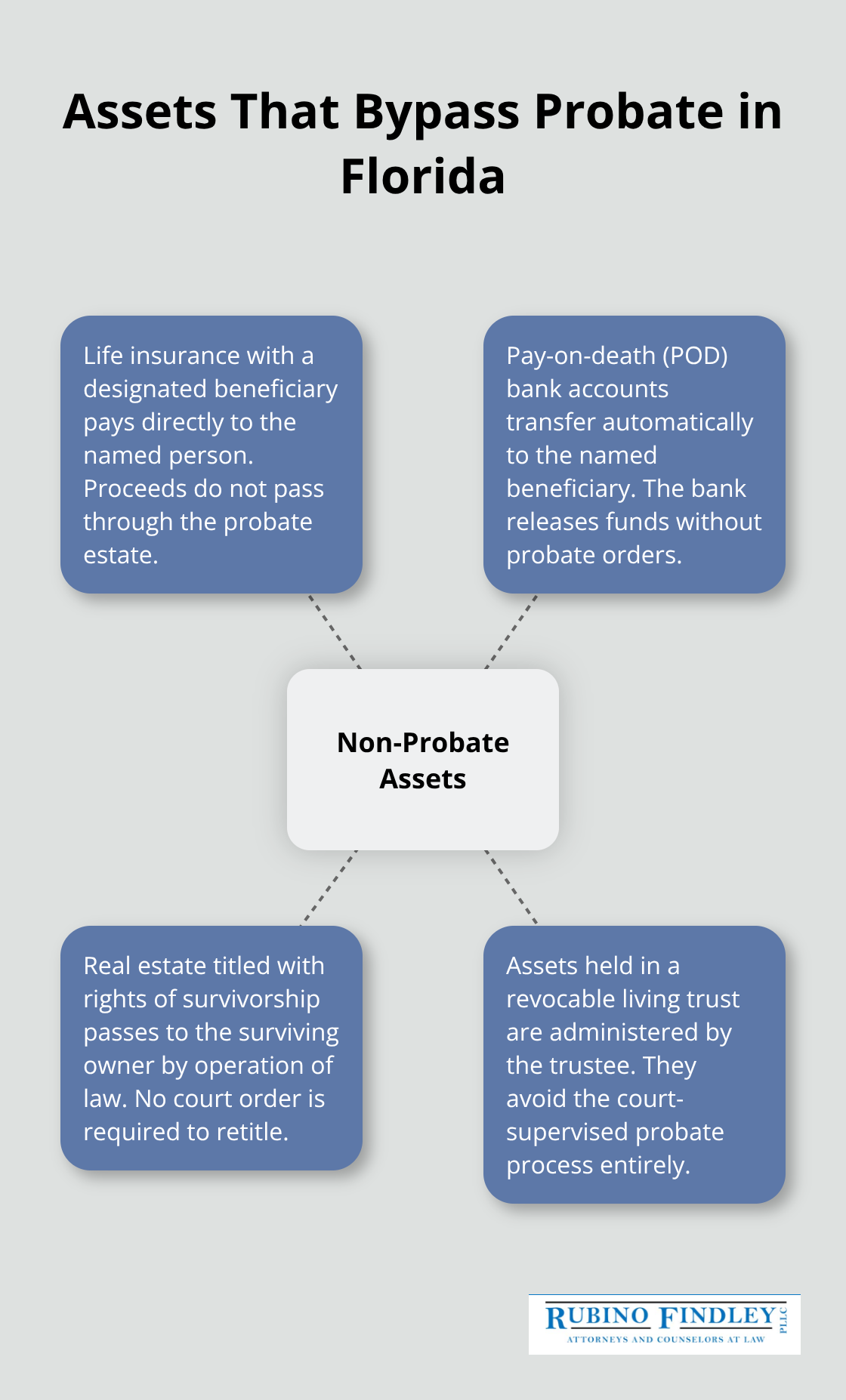
Most people misunderstand what assets actually require probate. Nearly all assets owned solely by the decedent go through probate unless they have a named beneficiary or automatic transfer rights. However, life insurance with a designated beneficiary, pay-on-death bank accounts, real estate with rights of survivorship, and assets held in a revocable living trust bypass probate entirely. This distinction matters because it directly affects which assets your family can access quickly and which ones get tied up in court proceedings.
Why You Cannot Handle Probate Alone
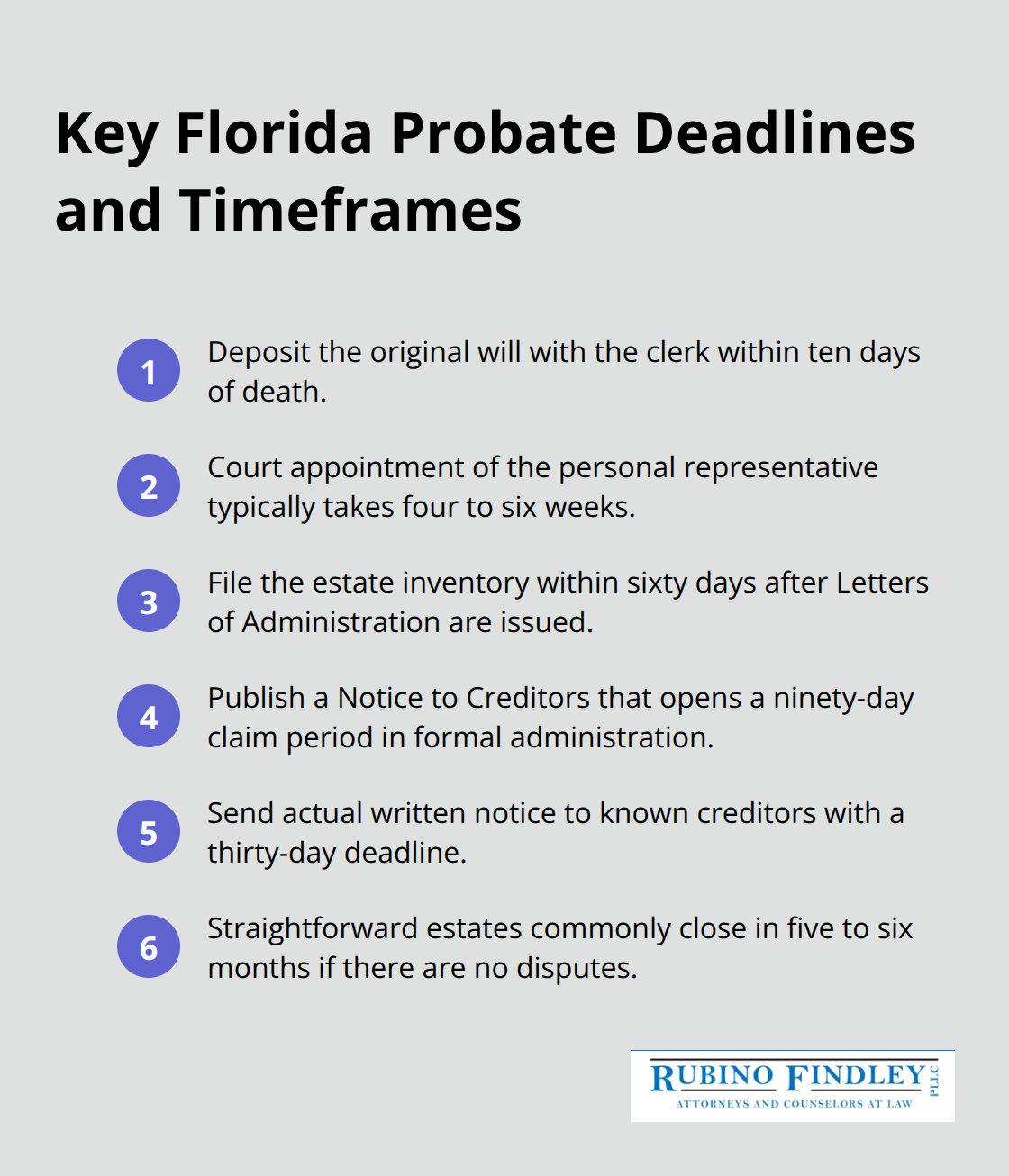
The probate process demands precise compliance with Florida Statute 732.901 and other statutes. The will must be deposited with the clerk within ten days of death. Court filings require specific formatting and must be submitted through the Fifteenth Judicial Circuit’s Online Scheduling System for proposed orders. Missing deadlines or filing documents incorrectly can delay distributions by months and cost thousands in additional legal fees.
The personal representative faces fiduciary duties that carry personal liability if violated. These duties include prudent asset management, timely debt payment, accurate tax filing, and adherence to the will’s terms. A personal representative who mishandles estate funds or fails to notify creditors properly can be personally sued by beneficiaries.
The inventory and appraisal process alone requires you to identify every asset, obtain valuations, and file detailed accountings with the court. Real property must be professionally appraised. Bank accounts and investment accounts require current statements. Personal property values must be documented. This paperwork is substantial and overwhelming for grieving families managing it without guidance. The complexity of these requirements means that understanding the next steps in the probate process becomes essential to protecting your family’s interests.
Steps in the Probate Process in Florida
Filing the Petition and Obtaining Letters of Administration
Opening a probate case in Florida starts with filing a Petition for Administration with the circuit court in the county where the decedent lived. This petition names the proposed personal representative, typically the individual named in the will or, if there is no will, the person with priority under Florida Statute 733.301. The court reviews the petition and issues Letters of Administration, which authorize the personal representative to act on behalf of the estate. According to The Complete Guide to Florida Probate, the appointment process typically takes four to six weeks. During this time, the personal representative must locate the original will (which must be deposited with the clerk within ten days of death under Florida Statute 732.901) and begin the critical work of asset identification and property protection.
Inventory, Appraisal, and Asset Documentation
The personal representative must prepare an inventory listing every asset the estate owns and file it with the court within sixty days of Letters being issued. Real property requires a professional appraisal. Bank accounts and investment accounts need current statements showing values as of the date of death. Personal property like vehicles, jewelry, and household items must be documented with reasonable valuations. This inventory process demands meticulous attention to detail and substantial paperwork that most families cannot manage alone.
Notifying Creditors and Managing Claims
The personal representative publishes a Notice to Creditors in a newspaper of general circulation, which gives creditors ninety days to file claims in formal administration. Known creditors receive actual written notice with a thirty-day deadline. Missing the publication requirement or failing to notify known creditors creates serious problems later, as creditors can claim against the estate even after this period if proper notification did not occur. These creditor claim periods protect the estate from surprise claims after distribution and prevent beneficiaries from facing unexpected liability.
Paying Debts, Taxes, and Preparing Final Distributions
After the inventory is complete and the creditor claim period is well underway, the personal representative pays valid debts, taxes, and administration expenses from estate funds. The estate must file a final Form 1040 for the decedent, Form 1041 for the estate itself, and potentially Form 706 for federal estate tax if the gross estate exceeds the federal exemption threshold. Florida has no state estate tax, but federal liability still applies. All debts and taxes must be paid before distributions go to beneficiaries. Once creditor claims are resolved and taxes are filed, the personal representative prepares a final accounting showing all receipts and distributions. The court reviews this accounting, and if no one objects, the judge enters an order closing the estate and discharging the personal representative from further duty.
Timeline and Staying on Schedule
The entire process from filing to closing typically takes five to six months for straightforward estates with no disputes, though larger or more complicated estates frequently extend to twelve months or longer. The key to staying on schedule is meeting every filing deadline, maintaining detailed records of all transactions, and communicating regularly with creditors and beneficiaries about the timeline. Even minor delays in asset appraisals or tax filings can push the entire estate closure back by weeks. This is where the complexity of probate becomes apparent-one missed deadline or incomplete document can derail months of progress. Understanding what challenges commonly arise during probate helps families prepare for potential obstacles before they occur.
Common Probate Challenges and How to Avoid Them
Will Contests and Invalid Documents
Will contests represent one of the most destructive probate complications, yet proper planning prevents them. When a beneficiary or interested party believes the will is invalid, forged, or executed under undue influence, they can file a caveat or contest before or during probate. According to The Complete Guide to Florida Probate, a caveat filed under Florida Statute 731.110 by a creditor or interested party ensures they receive notice of any administration. These challenges halt the entire estate administration process, consuming months or years in litigation and draining assets with attorney fees that could otherwise go to beneficiaries.
The Florida Probate Code requires that a valid will be signed by the testator and two witnesses. Notarization under Florida Statute 732.502 creates a self-proved will that withstands most challenges. Families who fail to have wills properly executed or who create handwritten wills without witnesses invite contests from disgruntled relatives claiming the document isn’t legitimate. An attorney drafts your will to meet all statutory requirements and includes language that deters frivolous contests.
Multi-State Properties and Ancillary Administration
Real estate titles compound probate problems when multiple properties exist across different states. Ancillary administration under Florida Statute 734.102 becomes necessary when the decedent owned Florida real property but lived elsewhere, requiring a separate probate proceeding in Florida solely to transfer that property. Managing assets in multiple states means filing documents in multiple courts, coordinating with multiple judges, and paying multiple filing fees and attorney fees in each jurisdiction.
A decedent who owned a vacation home in Florida and a primary residence in New York creates administrative nightmares that extend timelines to eighteen months or beyond. Properties titled with rights of survivorship or held in a revocable living trust bypass probate entirely, but properties titled solely in the decedent’s name trigger ancillary proceedings. Families facing multi-state estates should immediately identify which states require probate and file ancillary petitions in each jurisdiction to avoid property transfer delays.
Blended Families and Competing Claims
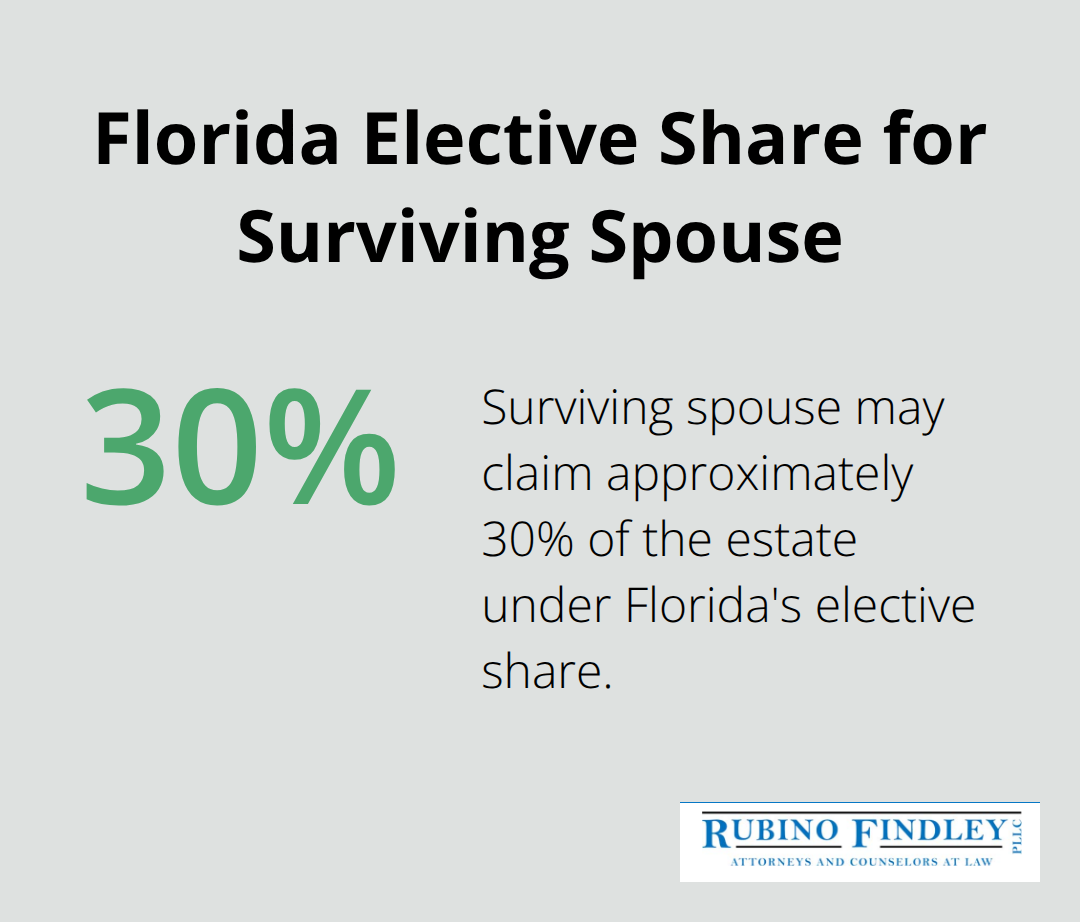
Complex family dynamics create the most unpredictable probate obstacles. A second marriage, adult children from a prior relationship, and a surviving spouse all have competing claims under Florida’s elective share statute. The surviving spouse can claim approximately thirty percent of the estate even if the will leaves everything to adult children, creating forced distributions that conflict with the decedent’s stated wishes.
Blended families frequently generate disputes over what constitutes fair distribution, leading beneficiaries to challenge the personal representative’s accounting or claim the estate’s assets weren’t properly managed. A personal representative facing hostile beneficiaries may spend thousands defending against unfounded accusations of mismanagement or self-dealing. The personal representative’s fiduciary duties under Florida law require prudent asset management and timely debt payment, but beneficiaries often misunderstand what constitutes proper conduct.
Preventing Family Disputes Through Transparency
Establishing clear communication channels early in the probate process prevents misunderstandings from escalating into formal disputes. The personal representative should send monthly updates to all beneficiaries detailing asset valuations, creditor payments, and distribution timelines. Transparency eliminates the suspicion that fuels litigation among family members. Documentation of every transaction protects the personal representative from later accusations and demonstrates compliance with fiduciary duties to the court.
Final Thoughts
Probate in Broward County demands precision and attention to detail, but a Broward probate attorney handles these technical requirements so your family can focus on healing. We at Rubino Findley, PLLC guide clients through every stage of probate administration, from filing the initial petition through final estate closure, managing creditor notifications, asset inventories, tax filings, and court communications to ensure compliance with Florida Statute 732.901 and all applicable requirements. Our team identifies potential disputes before they escalate into costly litigation and implements transparency measures that prevent family conflicts.
The most important step you can take right now is planning to avoid probate altogether. Establishing a revocable living trust, designating beneficiaries on bank accounts and life insurance, and titling real property with rights of survivorship keep assets out of court entirely, providing privacy, faster distribution to your family, and significantly lower costs. If you haven’t created an estate plan, the time to act is now, not after a crisis occurs.
Contact Rubino Findley, PLLC in Boca Raton to discuss your probate situation or begin estate planning. We serve Palm Beach County and Broward County with experience helping families establish wills, trusts, and comprehensive estate plans. Your first consultation is free, and our team will answer your questions about probate timelines, asset protection, and strategies to protect your family’s future.