




Estate Administration and Probate Guide
Losing a loved one is difficult enough without navigating the complexities of estate administration and probate. Many families in Palm Beach County face confusion about what happens to assets, how long the process takes, and what costs they’ll encounter.
At Rubino Findley, PLLC, we help families understand these processes and move through them with clarity. This guide breaks down probate basics, common obstacles, and practical steps to streamline your estate planning.
What Probate and Estate Administration Actually Do
[TASK_CLASS=ACTIVE]
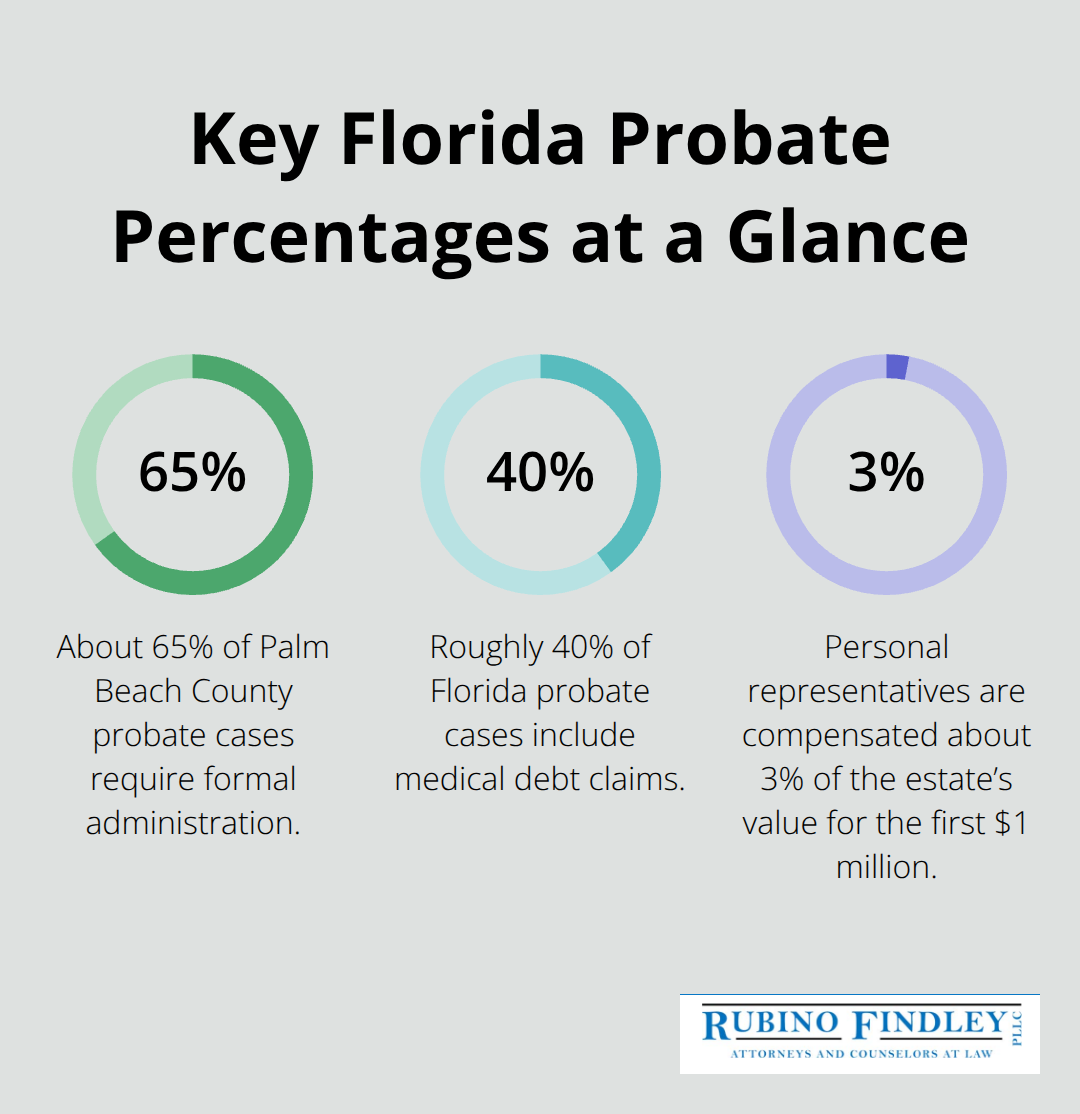
Probate is the legal process that recognizes a will, appoints an executor or personal representative, and distributes assets according to the deceased’s wishes or Florida law. In Palm Beach County, probate serves a specific function: it provides court supervision to verify that assets are properly inventoried, debts are paid, taxes are filed, and remaining property reaches the intended beneficiaries. The Florida Statutes Chapter 733 governs this process, and the 15th Judicial Circuit handles roughly 8,000 probate cases annually, with about 65% requiring formal administration. Many people believe probate is always lengthy and expensive, but that assumption often stems from marketing by trust vendors. The reality is more nuanced.
For estates under $75,000, Summary Administration applies and typically costs between $1,500 and $3,500, taking three to six months. For larger estates requiring formal administration, the timeline stretches to six to 18 months on average, though court backlogs can extend this further.
Understanding Which Assets Actually Enter Probate
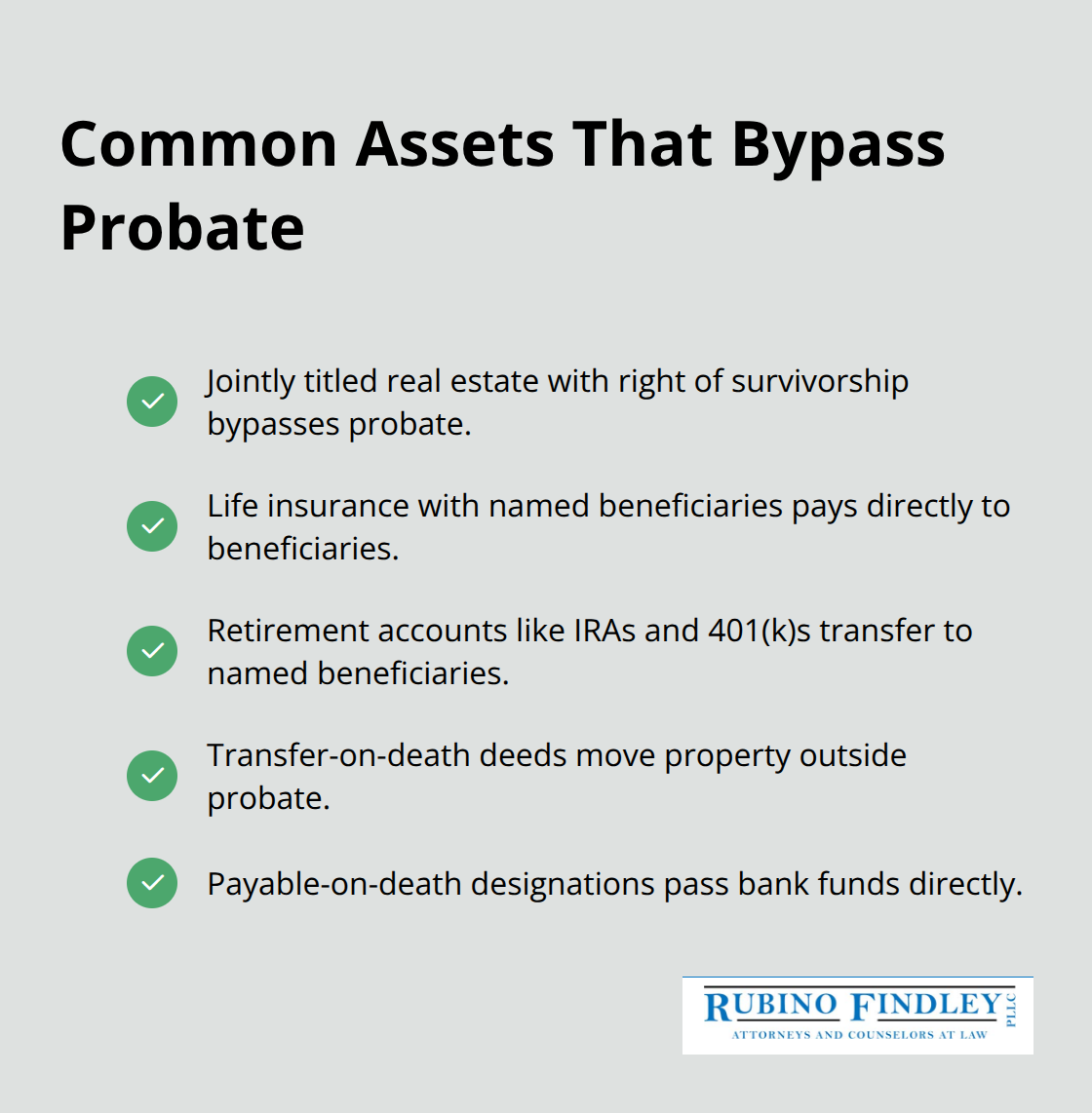
Not all assets pass through probate, and this distinction matters enormously for your planning. Assets owned solely in the deceased’s name-such as a house titled only to them, bank accounts without a payable-on-death designation, or investment accounts without beneficiary designations-must enter probate. Conversely, jointly titled real estate with right of survivorship, life insurance proceeds with named beneficiaries, retirement accounts like IRAs and 401(k)s, and transfer-on-death deeds bypass probate entirely and pass directly to the named parties. This is why the Florida $75,000 threshold, unchanged since 2001, applies only to probate assets combined, not to each item separately.
A household might have $200,000 in total assets but owe nothing to probate if most assets are structured with beneficiary designations or joint ownership. The implication is clear: how you title your property during life determines whether your family faces formal probate or not.
Real Costs and Timeline Expectations for Palm Beach County
Filing a probate petition in Palm Beach County requires the original will, a certified death certificate, and a $401 filing fee, filed within 10 days of death notification. Initial hearings typically occur within 30 to 45 days, though busy periods can push to 60 days. Once the court appoints a personal representative, you have 60 days to file an asset inventory with professional appraisals costing roughly $300 to $800 per property. Creditors must receive notification within three months via certified letters and newspaper publication, costing approximately $200 to $400.
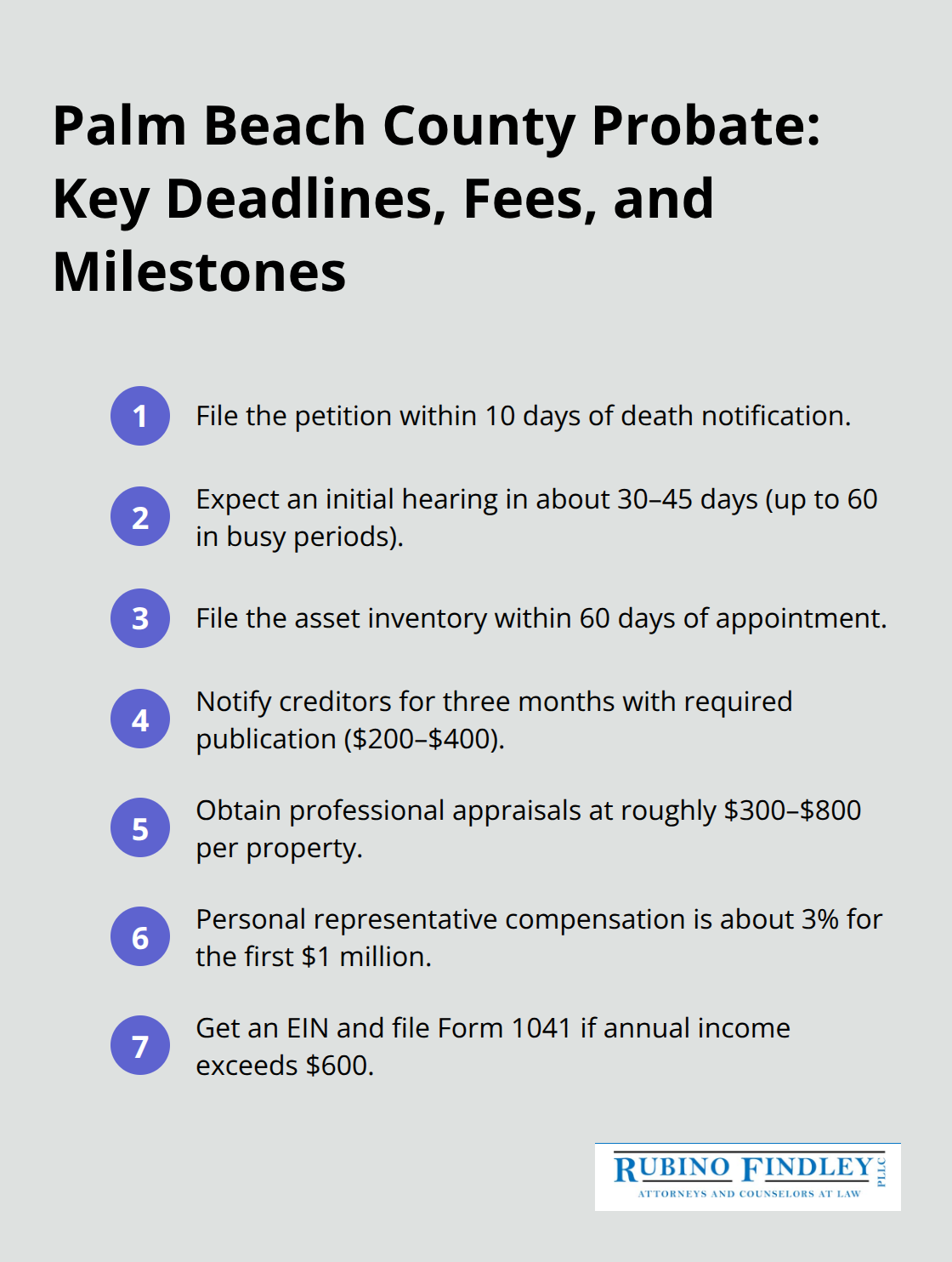
Personal representatives receive compensation of roughly 3% of the estate’s value for the first $1 million under Florida law. Beyond court and administration fees, the estate must obtain a federal tax identification number and file income tax returns if assets generate more than $600 annually. Medical debt claims appear in about 40% of Florida probate cases, further extending timelines. These concrete figures help families budget realistically rather than fear the unknown.
What Happens When Disputes Arise
Even straightforward probate cases can encounter obstacles when heirs disagree about asset distribution or question the will’s validity. Court procedures require formal notice to all interested parties, and contested matters demand additional hearings and documentation. Understanding these potential complications upfront allows you to prepare for them rather than face surprises later.
What Makes Probate Cases Stall and Cost More in Boca Raton
Probate cases rarely follow a straight path from filing to distribution. Real obstacles emerge during the process that extend timelines and inflate costs well beyond initial estimates.
Disputes Over Assets and Inheritance
Heirs frequently dispute how assets should be divided, especially when a will is unclear or when family dynamics create tension around inheritance. These disputes force the court to hold additional hearings, which means waiting 30 to 60 days between each scheduled hearing in Palm Beach County. When heirs question whether debts are legitimate, the personal representative must gather documentation, respond to objections, and potentially litigate the matter. Family disputes over asset distribution are particularly common when ownership is unclear or when multiple parties claim interest in a property.
Medical Debt and Creditor Claims
About 40% of Florida probate cases involve medical debt claims that must be verified and paid before any distributions occur, adding months to the timeline. When creditors challenge the estate’s ability to pay claims, the personal representative must investigate each claim thoroughly. These complications transform what should be a six to 18-month process into a two or three-year ordeal, during which assets remain frozen and family members grow frustrated waiting for their inheritance.
Mandatory Court Procedures and Timelines
Court procedures themselves create mandatory delays that no one can circumvent. The three-month creditor notification period cannot be shortened, and the 60-day inventory filing deadline is fixed by Florida law. Initial hearings typically occur within 30 to 45 days of filing, though busy periods can push to 60 days. These procedural requirements exist to protect all parties, but they also mean that even simple estates face unavoidable waiting periods.
Tax Obligations That Complicate Administration
Tax obligations compound these challenges significantly. The estate must file a federal tax identification number application, then file Form 1041 if the estate generates more than $600 in annual income. If the decedent had unreported income from prior years, the personal representative must file amended returns using Form 1040-X, which the IRS processes slowly. These tax filings add complexity and extend the overall timeline considerably.
How Professional Guidance Prevents Costly Delays
Understanding these potential complications upfront allows you to prepare for them rather than face surprises later. A legal team familiar with Palm Beach County court procedures can anticipate problems before they derail your administration and help you navigate each obstacle efficiently. The right guidance transforms a frustrating multi-year ordeal into a manageable process with clear expectations and realistic timelines.
How to Stop Probate Before It Starts in Boca Raton
The most effective way to reduce probate delays and costs is to avoid probate altogether. This requires intentional planning during your lifetime, not reactive decisions after death. Florida Statutes Chapter 733 governs probate, but the statute itself shows that many assets never need court involvement if structured correctly. A revocable living trust funded with your primary assets avoids probate entirely, and the trustee files a Notice of Trust with the court within three months of your death instead of opening a formal probate case. This approach eliminates the mandatory 60-day inventory filing deadline, the three-month creditor notification period, and the need for court hearings. Transfer-on-death deeds for real estate, payable-on-death designations for bank accounts, and beneficiary designations on investments accomplish the same result for specific assets without any trust setup.
Act Now to Avoid Probate Later
The key is recognizing that probate avoidance requires action now, not planning after someone dies. If you own real estate titled solely in your name, that property will enter probate unless you transfer it to a trust or use a transfer-on-death deed. A house worth $300,000 that could pass directly to heirs outside probate instead becomes a $1,500 to $3,500 court case lasting three to six months if left untitled. The 15th Judicial Circuit in Palm Beach County processes roughly 8,000 probate cases annually, and many of those cases could have been avoided with basic planning.
Understand Personal Representative Requirements
When probate becomes necessary despite planning efforts, the personal representative appointment follows a strict priority order under Florida law: surviving spouse first, then adult children, then parents and siblings. The appointee must be a Florida resident or closely related and free of felony disqualifications. Initial hearings typically occur within 30 to 45 days of filing, and an attorney familiar with Palm Beach County procedures prepares you for what to expect at each stage rather than leaving you surprised by procedural requirements.
Organize Your Financial Records Before Probate Begins
Organizing financial records and asset documentation before probate begins accelerates the entire process significantly. The personal representative must file an asset inventory within 60 days, and having bank statements, investment account statements, property deeds, and insurance policies already compiled means appraisers can value assets immediately rather than spending weeks tracking down documentation. Professional appraisals cost roughly $300 to $800 per property, but having clear title documentation and complete financial records prevents delays that force appraisers to return for missing information.
Work With an Experienced Estate Planning Attorney
An attorney who understands Palm Beach County procedures transforms the probate experience when it becomes necessary. We at Rubino Findley, PLLC help families structure their estates to minimize probate involvement and, when probate is unavoidable, navigate the process with clarity about costs, timelines, and what happens at each stage. Our team can help you establish wills, trusts, and durable powers of attorney to protect your wishes and your family’s future.
Final Thoughts on Estate Administration and Probate in Boca Raton
Probate and estate administration become manageable when you understand what happens to your assets, what costs to expect, and which obstacles commonly arise. For estates under $75,000, Summary Administration offers a streamlined path costing $1,500 to $3,500 and lasting three to six months, while larger estates requiring formal administration typically take six to 18 months (though court backlogs can extend timelines further). The real insight is that many families face probate unnecessarily because assets weren’t structured correctly during life.
A revocable living trust, transfer-on-death deeds, and beneficiary designations eliminate probate entirely for most assets, allowing your family to inherit without court involvement. Professional legal guidance transforms how you approach estate planning and administration by helping you avoid probate before it starts. An attorney familiar with Palm Beach County procedures establishes wills, trusts, and durable powers of attorney tailored to your situation and prevents costly delays when probate becomes necessary.
The time to act is now, not after someone passes away. Contact Rubino Findley, PLLC to schedule your free consultation and begin building an estate plan that works for your family.