




Estate Planning for Families: Securing Your Legacy and Peace of Mind
Estate planning for families isn’t something you can put off. Without a clear plan, your loved ones face confusion, delays, and unnecessary expenses when they need stability most.
At Rubino Findley, PLLC, we’ve seen firsthand how families in Boca Raton and Palm Beach County benefit from taking action now. This guide walks you through what matters, what mistakes to avoid, and how to get started.
Why Estate Planning Matters for Boca Raton Families
The Cost of Inaction
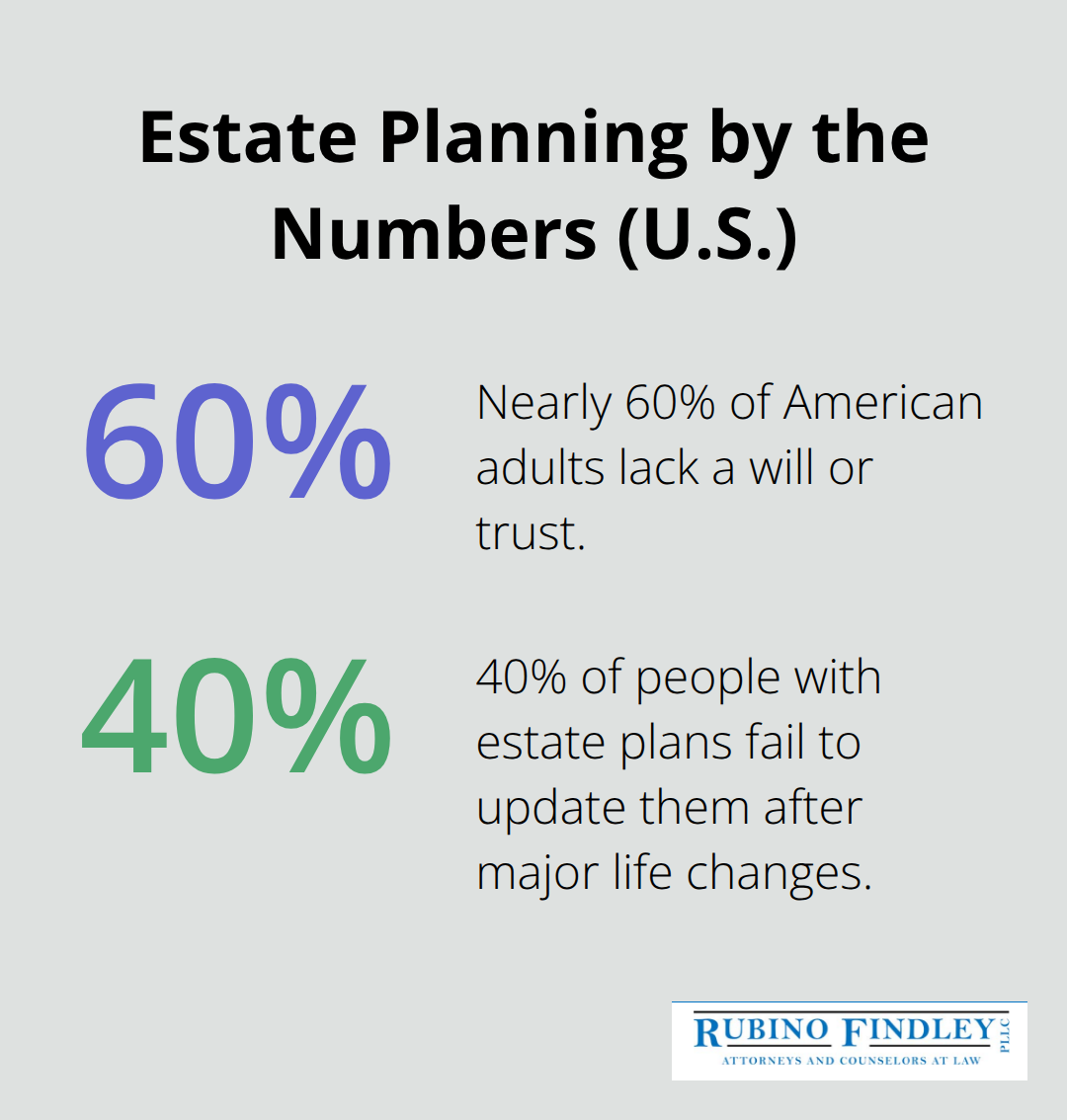
Without an estate plan, your family faces a harsh reality. According to the American Academy of Estate Planners and Councils, nearly 60% of American adults lack a will or trust. When you pass away without clear documents, Florida law decides who receives your assets, who raises your minor children, and who manages your accounts. This process, called probate, takes 6 to 12 months or longer and costs thousands in legal fees and court expenses. Your family gets stuck in a waiting game while your assets sit frozen, unable to pay bills or support daily needs.
Taking Control of Your Legacy
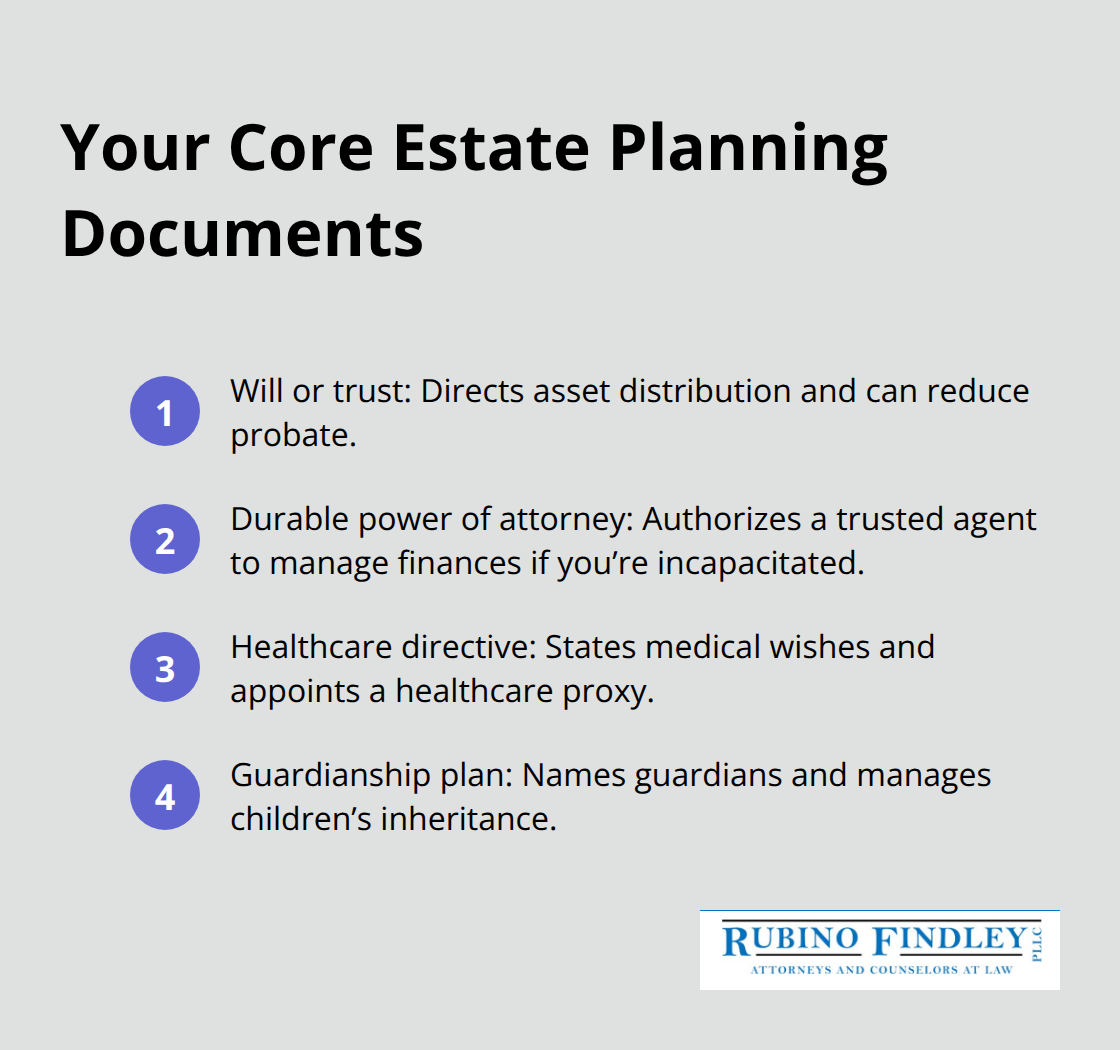
Your financial future depends on decisions you make today, not decisions a judge makes later. A will or trust puts you in control-you decide exactly where your money, property, and investments go. You name the guardians for your minor children and pets rather than leaving that choice to the court system. You also designate who manages your accounts if you become unable to make decisions yourself through a durable power of attorney.
How Documents Work Together
These documents function as your safety net (wills, trusts, and powers of attorney work in tandem to cover different scenarios). A proper estate plan reduces or eliminates the probate process, which means your family receives their inheritance faster and with fewer expenses eating into what you worked hard to build. Without these documents, your family inherits stress, legal complications, and financial uncertainty during their most vulnerable time.
Why This Matters Now
Starting an estate plan isn’t about being morbid or pessimistic-it’s about being responsible with the people and assets you care about most. Families in Boca Raton and Palm Beach County who take action now avoid the painful situations that arise when no plan exists. The next section covers the specific documents your family needs to protect itself.
Key Documents Every Family Needs
Wills and Trusts: Understanding the Difference
A will and trust form the backbone of any solid estate plan, but they serve different purposes and work best when you understand which one fits your situation. A will takes effect only after you pass away and goes through probate, which means a court validates it, pays debts and taxes, and distributes assets according to your instructions. This process typically costs between $3,000 and $7,000 in Florida legal fees alone, according to data from the American Academy of Estate Planners and Councils.
A trust avoids probate entirely because assets transfer directly to your beneficiaries outside the court system. Many families in Boca Raton benefit from a revocable living trust, which you control during your lifetime and can modify whenever circumstances change, then becomes irrevocable after your death to protect assets and minimize taxes.
Naming Guardians for Your Children
If you have minor children, a will is non-negotiable because it’s the only document that lets you name guardians. Without one, the court appoints a guardian based on what a judge thinks is best, not what you want. This decision is too important to leave to chance.
Managing Decisions When You Can’t
A durable power of attorney handles a different but equally critical scenario: what happens if you’re alive but unable to make decisions due to illness or injury. This document names someone you trust to manage your bank accounts, pay bills, and handle financial decisions if you become incapacitated. Studies from the U.S. Census Bureau show that one in four Americans aged 20 and older will experience some form of disability lasting 90 days or more during their working years. Without this document in place, your family may need court intervention and guardianship proceedings, which cost thousands of dollars and take months to complete.
Healthcare Decisions and Your Children’s Future
A healthcare directive, also called a living will, tells doctors what medical treatment you want if you can’t communicate your wishes, and it names a healthcare proxy to make decisions on your behalf. Florida law requires this document to be notarized and witnessed by two people who aren’t related to you.
A separate guardianship plan designates who should raise your minor children and manages their inheritance if both parents pass away. Without a guardianship plan, the court decides based on whoever petitions first, which might not align with your values or preferences.
How These Documents Work Together
When these four documents work in coordination-your will or trust, durable power of attorney, healthcare directive, and guardianship plan-they cover every scenario your family might face, whether you’re temporarily unable to make decisions, permanently incapacitated, or have passed away. The next section reveals the mistakes families make when assembling these documents, and how to avoid them.
Common Estate Planning Mistakes Families Make
Outdated Documents That No Longer Fit Your Life
Families in Boca Raton and Palm Beach County often create estate plans with genuine intention, then watch those plans lose effectiveness over time. The most common culprit is outdated documents that no longer reflect your actual life. After a divorce, remarriage, birth of children, significant inheritance, or substantial increase in assets, your old will or trust becomes dangerously misaligned with your wishes. The American Academy of Estate Planners and Councils reports that 40% of people with estate plans fail to update them after major life changes.
If you divorce but never update your will, your ex-spouse may still inherit assets or retain decision-making power. If you have another child but don’t add them to your trust, that child could receive nothing while siblings inherit substantially. These gaps aren’t minor oversights-they create legal nightmares your family must untangle after you’re gone, often spending thousands in court costs to correct what you didn’t update.
Assets Without Clear Ownership Instructions
Another devastating mistake is leaving assets without clear ownership instructions. Many families in this area hold property jointly, maintain bank accounts without named beneficiaries, or keep investment accounts with outdated beneficiary designations from years ago. When you pass away without naming a beneficiary on a retirement account or life insurance policy, that money goes through probate instead of transferring directly to your intended recipient, adding months and thousands in expenses.
Missing Guardianship Decisions for Minor Children
Equally critical is failing to name guardians for minor children in your will-this forces the court to appoint someone based on petitions filed after your death, potentially selecting someone misaligned with your values or parenting philosophy. This decision is too important to leave to chance or court discretion.
How to Stay Current With Your Plan
Review your entire estate plan every three to five years and immediately after major life events like marriage, divorce, the birth of children, or acquiring significant assets. This simple discipline prevents the costly corrections that plague families who neglect these essential updates. Work with an experienced estate planning attorney from Rubino Findley, PLLC in Boca Raton to ensure your documents reflect your current circumstances and intentions.
Taking Action Today
The path forward starts with a single conversation. Families in Boca Raton and Palm Beach County often delay estate planning because they’re unsure where to begin, but the process moves faster than most people expect. Most people complete their core documents within two to four weeks once they’ve gathered their financial information and met with an attorney.
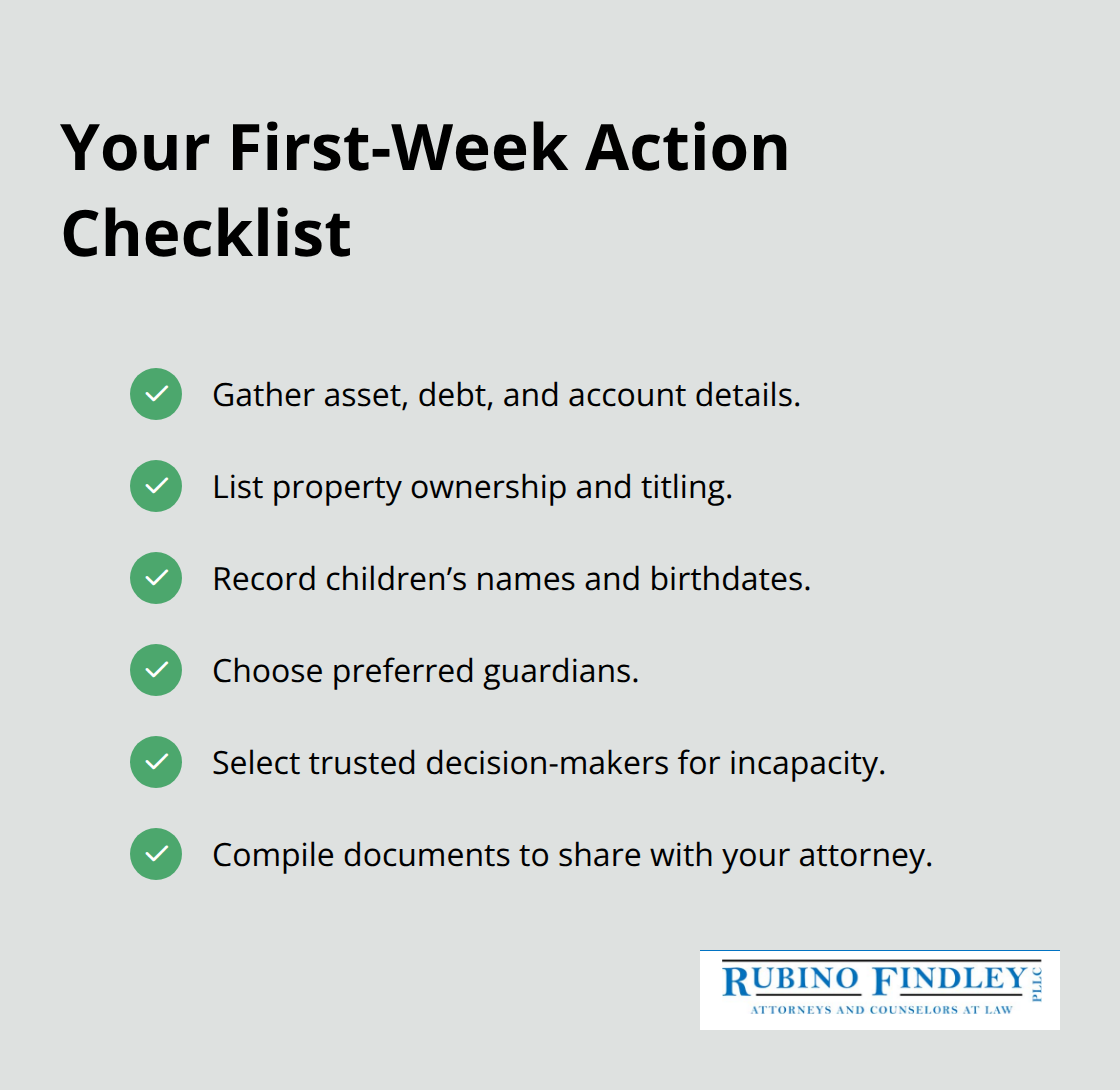
Start by collecting basic details about your assets, debts, bank accounts, investment accounts, and property ownership. Write down the names and birthdates of your children, identify who you’d want as guardians, and think about who you trust to manage decisions if you become unable to make them yourself. This groundwork takes a few hours but saves weeks of back-and-forth with your attorney.
We at Rubino Findley, PLLC help families throughout Palm Beach County create wills, trusts, durable powers of attorney, and healthcare directives tailored to their specific circumstances. Our team handles the legal complexity so you can focus on what matters: protecting your family and your legacy. Contact Rubino Findley, PLLC to schedule your free consultation and take the first step toward peace of mind.