



Florida Independent Administration Probate: Quick Path to Asset Access
When someone passes away in Florida, their family faces a critical decision about how to handle their estate. Florida independent administration probate offers a streamlined alternative that can get assets to beneficiaries far faster than traditional probate.
We at Rubino Findley, PLLC help families in Palm Beach County understand whether this path makes sense for their situation. This guide walks you through how it works, what advantages it offers, and what challenges you might encounter along the way.
What Is Independent Administration Probate
Independent administration probate is a court-authorized process where the personal representative manages the estate without requesting the judge’s approval for most decisions. Under Florida Statutes § 733.701, this path becomes available when the will explicitly authorizes it or all beneficiaries and creditors consent in writing. The personal representative can sell real estate, pay debts, and distribute assets directly, eliminating the need to return to court for permission on routine matters. This differs sharply from formal administration, where the judge must sign off on major actions like property sales or asset distributions, creating 30 to 90-day delays between each petition and ruling.
How It Differs from Standard Probate
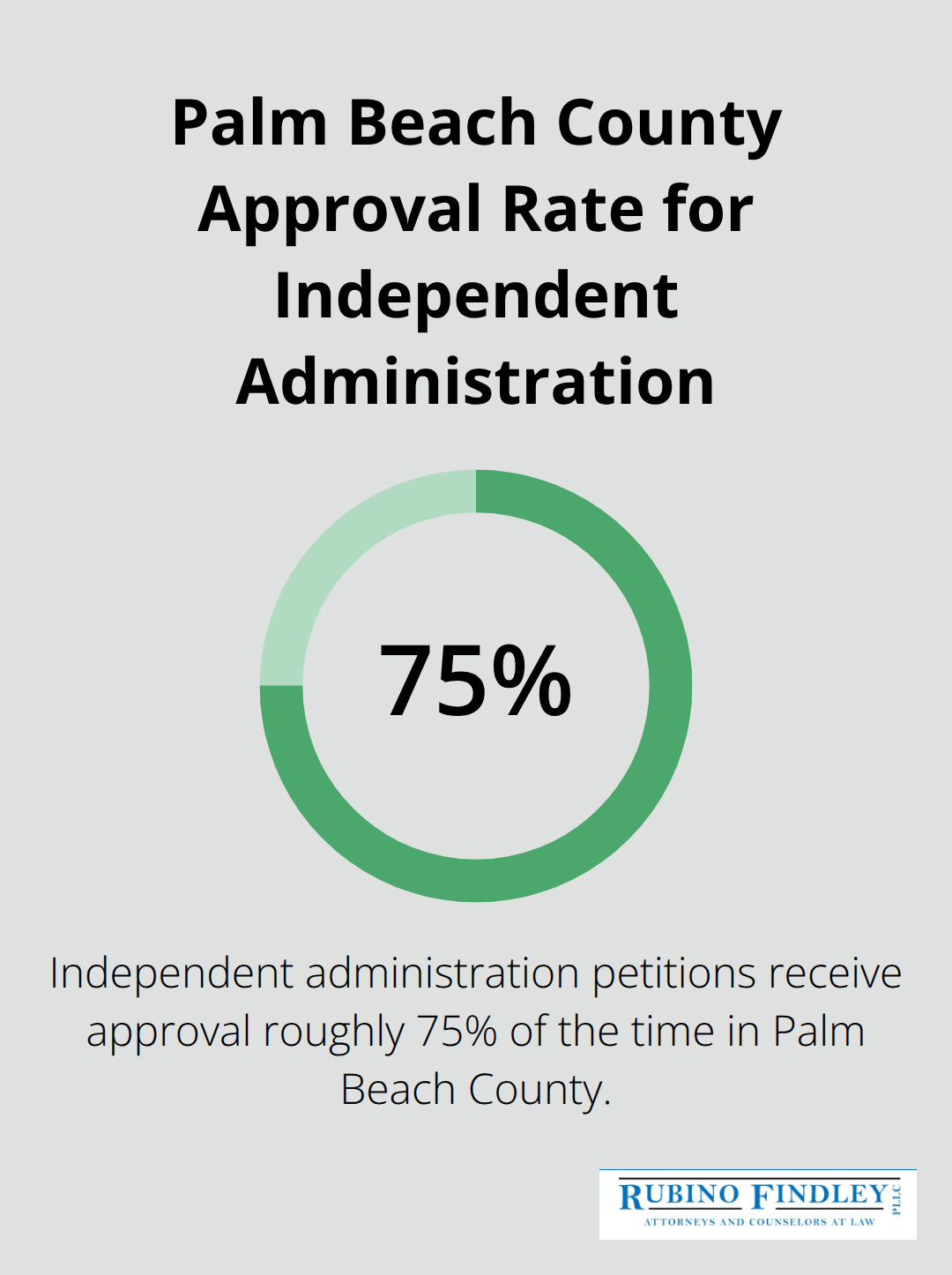
The legal framework requires the decedent to have been a Florida resident at death and demands strict adherence to notification timelines. In Palm Beach County, independent administration petitions receive approval roughly 75 percent of the time, with most denials stemming from family disputes or incomplete documentation rather than legal ineligibility. Standard probate forces the personal representative to petition the court repeatedly, wait for hearings scheduled 14 to 21 days out, and obtain written orders before proceeding. Independent administration eliminates this back-and-forth cycle entirely.
The Real Speed Advantage
Independent administration cuts probate timelines from approximately 12 months down to around 6 months based on Florida Bar data, with the fastest cases closing within 180 days after creditor claims expire. This acceleration happens because administrative tasks occur in parallel rather than sequentially waiting for court permission. Reduced legal fees follow naturally-independent administration typically costs 40 to 60 percent less than supervised probate according to Florida Bar statistics. Filing fees run $401 for estates under $75,000 in Palm Beach County, with straightforward cases taking roughly 3 to 5 weeks to reach Letters of Administration approval.
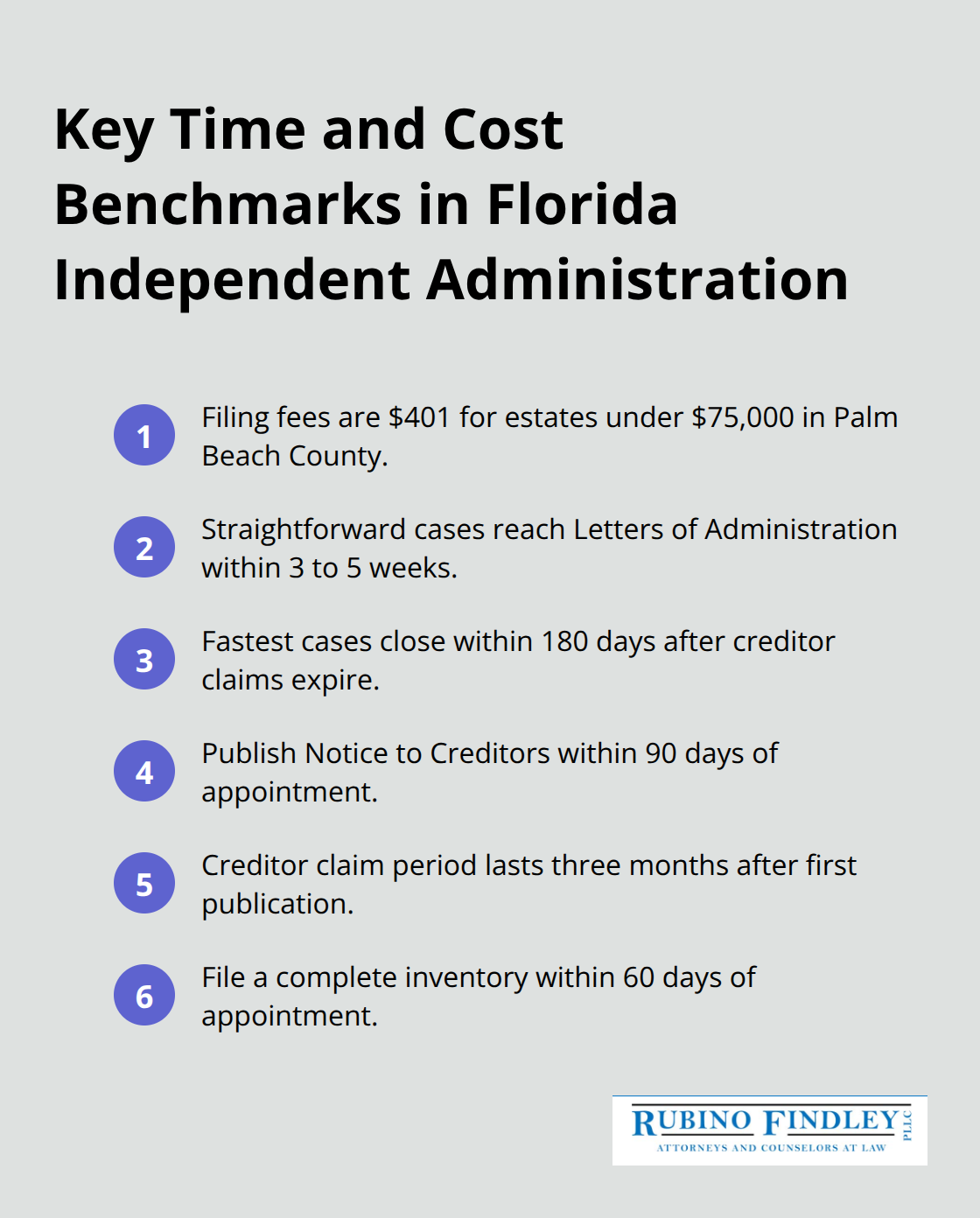
The personal representative must still publish Notice to Creditors within 90 days, honor the three-month creditor claim period, file a complete inventory within 60 days of appointment, and maintain meticulous records. These administrative tasks happen without court intervention, allowing the estate to move forward continuously.
Who Qualifies for This Path
Not every estate qualifies. The decedent must have been domiciled in Florida at death, and either the will must grant independent administration authority or all beneficiaries and creditors must consent in writing-a practical challenge when beneficiaries live scattered across the country or when creditors remain unknown. If any interested party objects before the court issues Letters of Administration, independent administration becomes unavailable and the estate reverts to formal administration.
Estates with contested wills, beneficiary disputes, or uncertain creditor lists face higher rejection rates. Conversely, straightforward estates with a clear will, cooperative beneficiaries, and modest asset complexity move smoothly through the process. The petition itself requires filing Form 12.200(a) along with the original will, certified death certificate, and a complete list of interested persons with addresses-incomplete filings delay approval and invite objections.
Getting Started with Your Petition
The path forward depends on your estate’s specific circumstances. Estates with clear documentation, willing beneficiaries, and no anticipated disputes qualify immediately. Those facing family disagreements or complex asset structures may need to explore whether independent administration remains viable or whether formal administration better protects all parties involved. Understanding these distinctions upfront prevents costly delays and helps you choose the right probate approach for your situation.
Why Independent Administration Saves Time and Money in Boca Raton Probate
Independent administration delivers measurable financial and temporal advantages that compound throughout the estate settlement process. According to Florida Bar data, this approach reduces overall probate timelines from roughly 12 months to around 6 months, with many Palm Beach County estates closing within 180 days after creditor claims expire. The acceleration stems directly from eliminating court approval cycles. In formal administration, each major action-selling property, paying bills, distributing assets-requires a separate petition, a scheduled hearing 14 to 21 days later, and a written court order before proceeding. Independent administration removes this repetitive delay entirely.
The Speed Advantage in Action
The personal representative moves forward with asset sales, debt payments, and distributions immediately upon appointment, provided proper notice requirements are met. This parallel processing cuts months from the timeline. Cost savings follow naturally. Independent administration typically costs 40 to 60 percent less than supervised probate according to Florida Bar statistics, translating to substantial savings for mid-sized estates. Filing fees in Palm Beach County run $401 for estates under $75,000, and straightforward cases reach Letters of Administration within 3 to 5 weeks. Attorney fees drop significantly because counsel spends far less time on court filings, hearing preparation, and petition drafting. Beneficiaries receive their inheritances faster, and the estate avoids the compounding legal costs of prolonged administration.
How Personal Representatives Gain Real Authority
Under independent administration, the personal representative obtains broad powers to manage estate assets without returning to court for approval. The will typically authorizes the PR to sell real property, refinance mortgages, invest funds, and make distributions-all standard activities that formal administration requires judicial permission to execute. This authority enables decisive action when time-sensitive decisions arise. A commercial property may need immediate listing to maximize sale price, or a beneficiary may face financial hardship requiring early distribution. The independent PR responds to these situations within days rather than waiting 30 to 90 days for a court order.
Real Consequences of Faster Decision-Making
Delaying a real estate sale during a market downturn can cost the estate thousands in lost value. Postponing distributions to a beneficiary facing medical bills or housing insecurity creates real hardship. Independent administration addresses these realities by vesting decision-making authority directly in the personal representative, subject to fiduciary duties and the three-month creditor claim period. The PR must still maintain meticulous records, comply with notice requirements, and act in the beneficiaries’ best interests-but the court steps out of routine operational decisions entirely.
Moving Forward with Confidence
This shift from court-supervised micromanagement to fiduciary responsibility enables faster, more responsive estate administration that serves beneficiaries’ actual needs rather than bureaucratic timelines. The personal representative gains the flexibility to adapt to changing circumstances, market conditions, and family situations without waiting for judicial approval. Understanding these operational realities helps families recognize why independent administration often outperforms formal probate for straightforward estates. The next section examines the specific challenges that arise during independent administration and how to navigate them successfully.
Common Challenges and How to Navigate Them
Independent administration moves faster than formal probate, but speed creates its own pitfalls. The personal representative gains flexibility to act without court approval, yet this freedom demands rigorous attention to procedural rules that courts no longer monitor. A single missed deadline or improper notice can derail the entire process and force conversion back to formal administration, erasing all the time and cost savings.
The Three Notification Clocks That Control Your Timeline
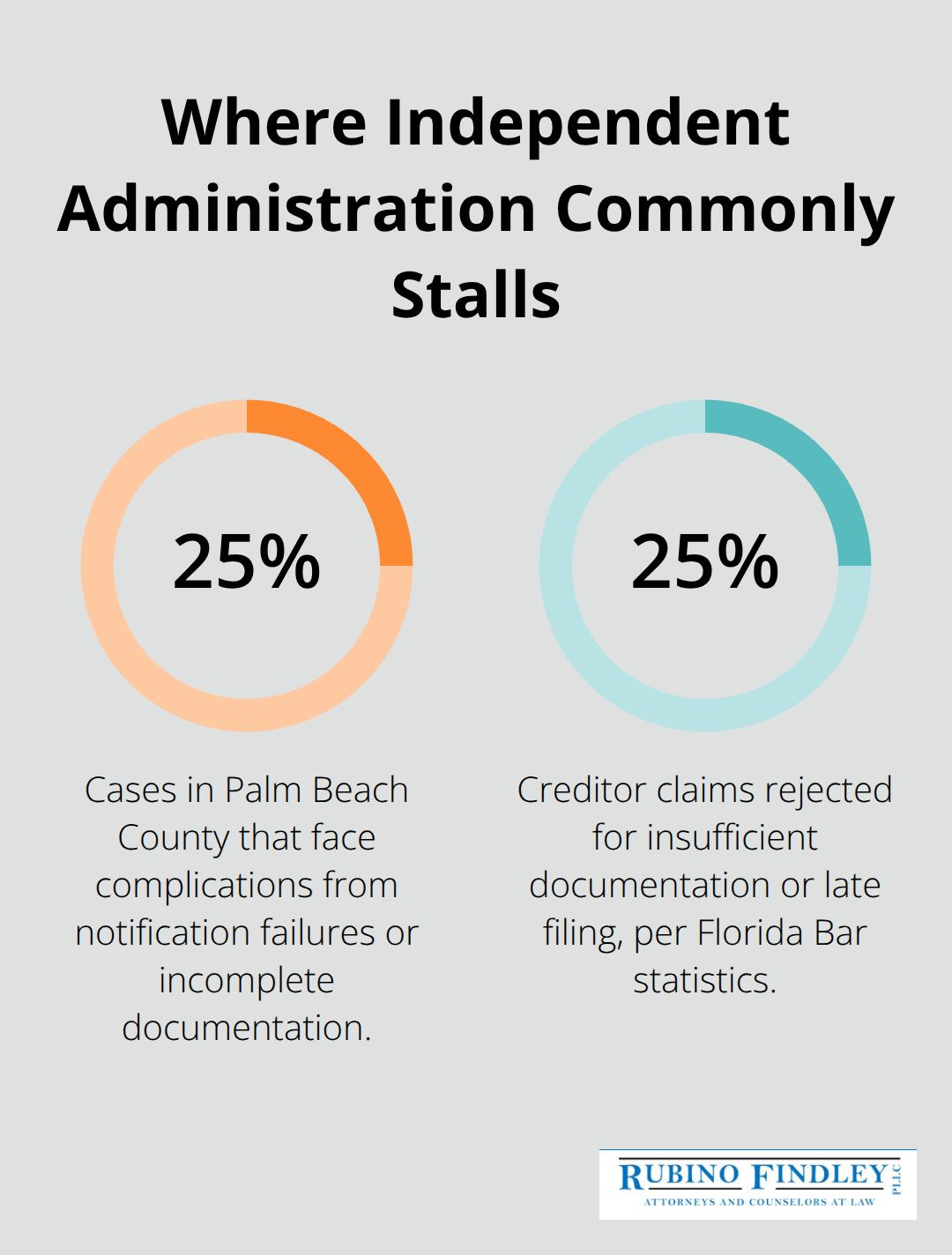
The three notification clocks start ticking immediately after the court issues Letters of Administration: publish Notice to Creditors within 90 days, serve notice of administration on beneficiaries and potential heirs, and notify reasonably ascertainable creditors within 30 days. Missing the 90-day publication deadline means creditors may file claims outside the normal three-month window, extending administration indefinitely. Incomplete or inaccurate interested-person lists invite objections that stall approval and create leverage for disgruntled beneficiaries. In Palm Beach County, roughly 25 percent of cases encounter complications from notification failures or incomplete documentation.
The solution requires meticulous record-keeping from day one. Create a comprehensive inventory within 60 days of Letters of Administration, listing each asset with fair market value. Professional appraisals are essential for real estate; household goods under $1,000 per item can be self-valued, but skipping appraisals for significant property guarantees disputes with beneficiaries and delays in distribution. Maintain a formal pleadings index documenting every filing, deadline, and correspondence. Use reliable service methods like FedEx when serving notices, and file proof of service immediately. This creates an undeniable record that satisfies creditors and protects the personal representative from liability claims.
When Family Conflict Derails Independent Administration
Estates with family conflict or asset disputes demand a fundamentally different approach than straightforward administrations. If beneficiaries contest the will’s validity, dispute asset valuations, or disagree on distribution priorities, independent administration loses its advantage because the personal representative cannot force closure without resolving underlying conflicts. Creditor claims compound the problem when the estate lacks sufficient liquid assets to pay all debts in full.
Florida law requires payment in a specific order: funeral expenses capped at $6,000, estate administration costs, federal and state taxes, then general creditors. About 25 percent of creditor claims are rejected for insufficient documentation or late filing, according to Florida Bar statistics, yet rejected claims often resurface in objections to distributions.
The personal representative must evaluate each claim carefully, object to insufficient documentation, and maintain detailed records justifying rejections.
Building Your Professional Team for Complex Estates
For complex estates involving multiple properties, business interests, or out-of-state assets, assemble a professional team early: a CPA, tax attorney, bank, appraisers, real estate agent, and securities broker. Maintain engagement letters clearly defining scope and fees. Provide timely written information to interested parties, distinguishing facts from opinions and avoiding speculative estimates. Use interim accountings monthly or quarterly to surface objections early rather than discovering disputes at final discharge. When real estate requires sale, record petitions and orders in official land records to facilitate title transfers and future title searches.
Assessing Whether Independent Administration Fits Your Estate
For estates facing genuine complexity or family tension, independent administration may prove riskier than formal administration’s judicial oversight, despite higher costs. The choice depends on honest assessment of whether beneficiaries will cooperate and whether asset disputes are resolvable without court intervention. Straightforward estates with cooperative beneficiaries and clear documentation thrive under independent administration. Contested estates with significant family disagreement or substantial creditor claims often benefit from formal administration’s judicial safeguards, even though the process takes longer and costs more.
Final Thoughts
Florida independent administration probate delivers measurable advantages when your estate qualifies and your family cooperates through the process. The path cuts probate timelines from roughly 12 months to around 6 months, reduces legal costs by 40 to 60 percent compared with formal administration, and grants your personal representative the authority to act decisively without repeated court petitions. For straightforward estates with clear documentation and willing beneficiaries, these benefits compound into genuine savings of time and money.
The decision to pursue independent administration hinges on honest assessment of your specific circumstances. Estates with cooperative beneficiaries, modest asset complexity, and no anticipated disputes thrive under this approach, while estates facing genuine family conflict, substantial creditor claims, or contested wills often benefit from formal administration’s judicial oversight despite higher costs and longer timelines. A probate attorney in Boca Raton ensures your petition includes complete documentation, your notices reach all interested parties on schedule, and your records withstand scrutiny from creditors and beneficiaries alike.
Beyond navigating independent administration, consider whether probate avoidance through estate planning serves your family better. Wills, trusts, durable powers of attorney, and beneficiary designations can keep assets out of probate entirely, eliminating court involvement and protecting privacy. We at Rubino Findley, PLLC help families throughout Palm Beach County establish comprehensive estate plans that reflect their wishes and protect their loved ones from probate complications-contact our team to discuss whether independent administration fits your situation or whether proactive estate planning offers a better path forward.