




Florida Probate Process Overview: A Clear Roadmap for Executors
Losing a loved one is difficult enough without navigating complex legal procedures. When someone passes away in Florida, their estate typically enters the probate process-a court-supervised system that can feel overwhelming for executors handling it for the first time.
We at Rubino Findley, PLLC have guided countless families through this journey in Boca Raton and throughout Palm Beach County. This guide breaks down each step so you understand what to expect and how to fulfill your responsibilities as an executor.
Understanding Florida Probate and When It’s Required
Probate in Florida is a court-supervised process that validates a will, identifies assets, pays debts and taxes, and distributes remaining property to beneficiaries. The Florida Probate Code governs this process through Chapters 732 and 733 of the Florida Statutes. Not every asset owned by the deceased goes through probate-a critical distinction many executors misunderstand. Assets with designated beneficiaries, such as life insurance policies, retirement accounts, and bank accounts with payable-on-death designations, transfer directly to those beneficiaries outside of probate. Property owned jointly with rights of survivorship also bypasses probate and passes automatically to the surviving owner. Homestead property in Florida receives special treatment and may be exempt from probate in certain circumstances.
However, if the deceased owned real estate solely in their name, held bank accounts without beneficiary designations, or possessed personal property above specific thresholds, probate becomes necessary. A will does not automatically avoid probate; instead, it provides instructions for how assets should be distributed during the probate process. The court must still validate the will’s authenticity and officially appoint you as the personal representative to carry out those wishes.
How Long Florida Probate Actually Takes
Most Florida estates complete probate within five to six months for straightforward cases, according to The Florida Bar. The creditor claim period alone lasts at least three months from the date the Notice to Creditors is published in a general-circulation newspaper in Palm Beach County. Your first 30 days are critical: the court issues Letters of Administration, you open an estate bank account, you gather date-of-death values for all assets, and you publish the Notice to Creditors. Days 31 to 60 require you to file the inventory with the court and secure real property. Days 61 to 90 involve you reviewing creditor claims and preparing tax filings. Missing the 60-day inventory deadline triggers court sanctions or potential removal as personal representative.
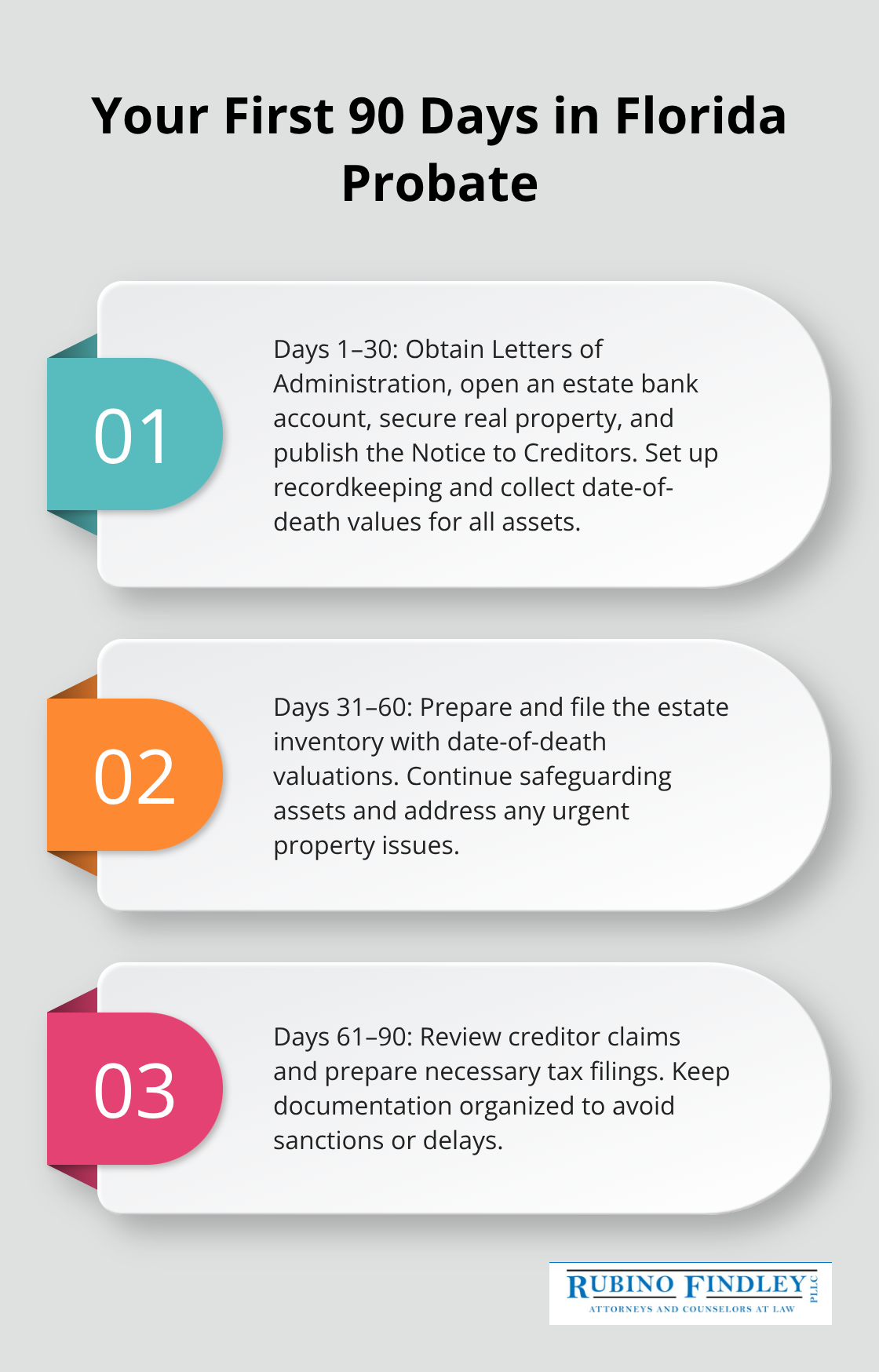
If the estate requires a federal estate tax return, the timeline extends significantly because that return is due nine months after death, and final accounting must be completed within 12 months after the extended due date. Discovering assets after probate has begun can require you to reopen or convert the case, adding months to the process.
What Florida Probate Actually Costs
Probate costs in Florida vary substantially based on estate size and complexity. Court filing fees, publication costs in newspapers, attorney fees, and professional services such as appraisers or CPAs all add up. Large estates with clean records typically incur lower relative fees as a percentage of the estate value, while smaller estates can become disproportionately expensive due to fixed costs. Attorney fees are negotiable and may follow terms in the will, contracts among parties, or the judge’s determination. The personal representative’s compensation is also reasonable and variable.
Always clarify fee structures upfront with your attorney, including what is negotiable and what costs are fixed. Summary Administration, available when probate assets do not exceed $75,000 or when the decedent has been dead more than two years, costs significantly less than formal administration because it skips the personal representative appointment and streamlines procedural steps. If you believe your estate qualifies for Summary Administration or Disposition of Personal Property Without Administration, you should confirm this early-doing so saves thousands in unnecessary expenses and months in processing time.
Choosing the Right Probate Path
Florida offers three main probate tracks, each with different requirements and timelines. Formal Administration applies to larger estates and requires the court to appoint a personal representative and issue Letters of Administration. Summary Administration streamlines the process for smaller estates and does not appoint a personal representative, making it faster and less expensive. Disposition of Personal Property Without Administration allows you to transfer certain property without opening a probate case at all, provided the net exempt property does not exceed $20,000 plus allowances for funeral and last-illness medical expenses.
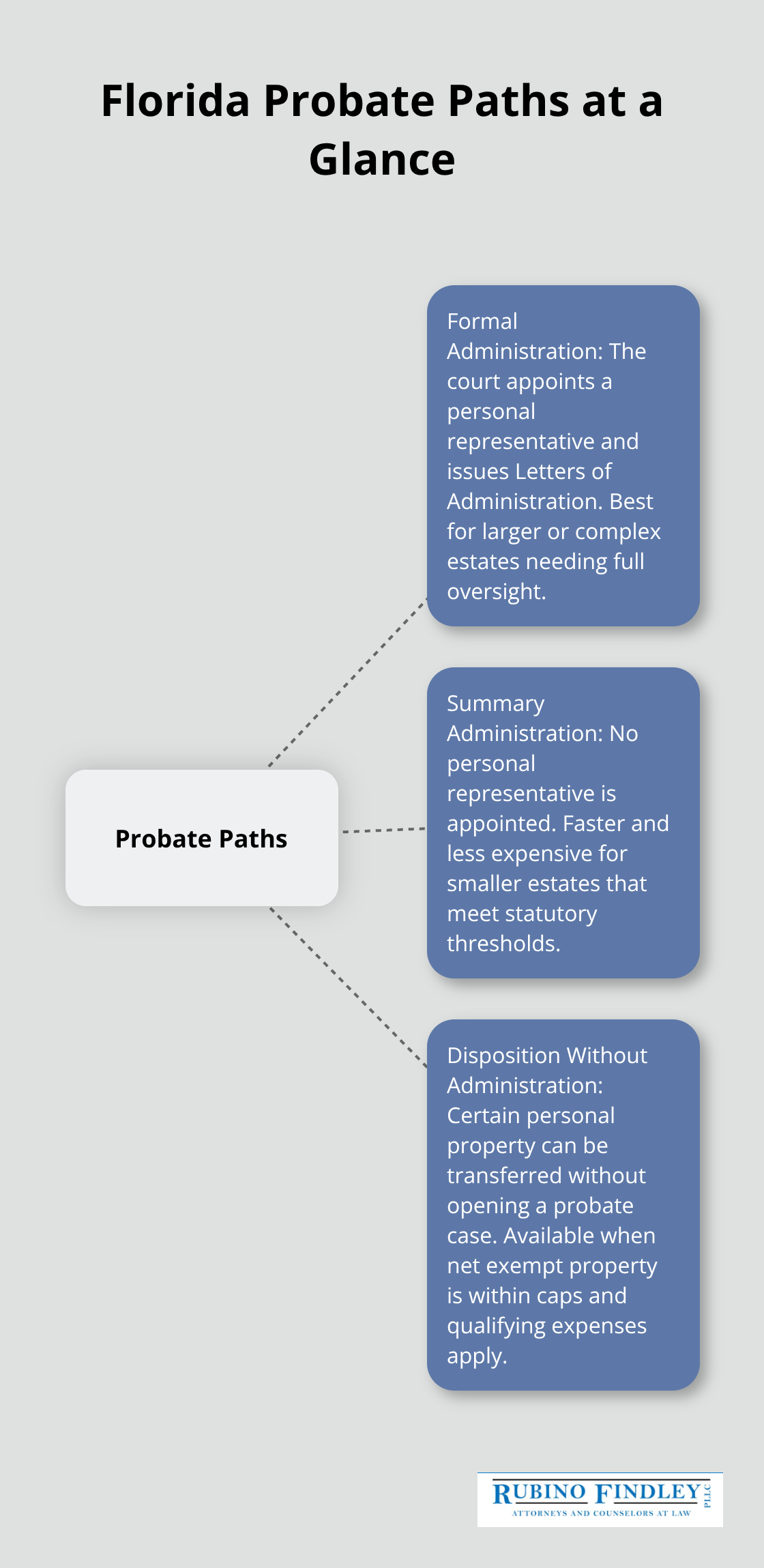
Understanding which track applies to your situation determines how much time and money the process will consume. The decisions you make now about asset structure and probate strategy directly affect what your executor faces when the time comes.
The Role and Responsibilities of an Executor
As the personal representative in a Florida probate case, you become the legal manager of the entire estate. The Florida Bar outlines your core duties: identify and collect all assets, safeguard property, open an estate bank account, publish Notice to Creditors in a general-circulation newspaper in Palm Beach County, notify all known beneficiaries and creditors, file the estate inventory with the court within 60 days, pay valid creditor claims, file federal and state tax returns, hire professionals when necessary, and distribute remaining assets to beneficiaries according to the will or Florida intestate law. This is not a passive role. You carry personal liability if you mismanage funds, fail to pay legitimate creditors, or distribute assets prematurely.
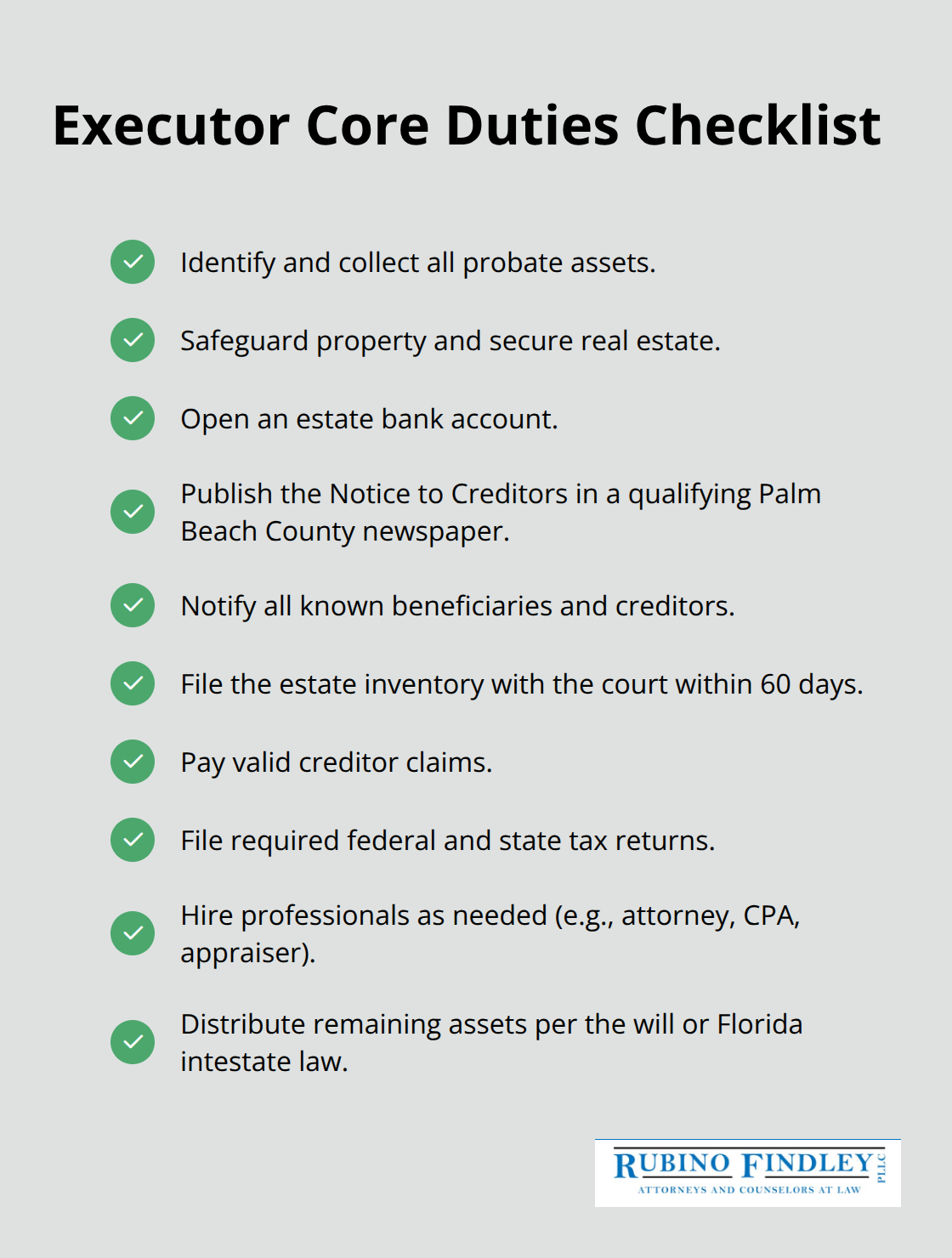
The court supervises your actions through required filings and deadlines, and beneficiaries can challenge you if you breach your fiduciary duty.
Your First 30 Days Set the Tone
Your initial month determines whether probate moves smoothly or stalls. Obtain Letters of Administration from the court, gather date-of-death values for all accounts and property, secure real estate, and arrange newspaper publication of the Notice to Creditors. The 60-day inventory deadline follows quickly-missing it triggers court sanctions or removal from your position. Most executors underestimate the time commitment, treating it as occasional paperwork when it typically demands 10 to 20 hours per month for the first three months.
The Costliest Executor Mistakes
The most damaging error is distributing assets before the three-month creditor claim period ends or before tax returns are filed. Doing so exposes you to personal liability if debts or taxes emerge later and the estate lacks funds to pay them. Another frequent mistake involves failing to maintain clear records of all transactions, which creates confusion during the mandatory accounting process and invites beneficiary disputes.
Executors often hire the wrong professionals-selecting a CPA unfamiliar with estate tax returns or an attorney who charges hourly rates without discussing scope and cost upfront. Some executors attempt to handle probate without legal counsel to save money, then incur far higher costs when they miss procedural requirements or file documents incorrectly. The court requires proposed orders to be submitted through the 15th Judicial Circuit Online Scheduling System, not by mail or in person, and many unrepresented executors stumble on this technical requirement alone.
Communication Prevents Conflict
Poor communication with beneficiaries ranks equally high as a mistake: beneficiaries who feel excluded or uninformed often file objections or remove the executor. Maintain a simple timeline, share regular updates, and organize clear agendas to prevent most of this friction. Transparency about costs, timelines, and decisions keeps everyone aligned and reduces disputes.
Homestead Property Requires Special Attention
One final critical error involves overlooking homestead property complications. Florida homestead law exempts certain property from creditors and imposes specific rules about possession and sale, requiring court approval in many cases. An executor unfamiliar with homestead status can delay distributions significantly or face legal challenges from the surviving spouse. Understanding these nuances early prevents costly missteps and protects your position as personal representative.
With these responsibilities and pitfalls in mind, you must navigate the Florida probate court system itself-a process that demands attention to filing requirements, court deadlines, and procedural steps that vary based on your specific case.
Navigating the Florida Probate Court System in Boca Raton
The Florida probate court system operates on strict timelines that catch many executors off guard. Your first critical deadline arrives within 10 days of death when you must deposit the original will with the Clerk of Court’s Probate Division at the appropriate Palm Beach County courthouse-Main West Palm Beach, South County in Delray Beach, or North County in Palm Beach Gardens. The address for West Palm Beach is P.O. Box 4667, West Palm Beach, FL 33402. This filing carries no fee, but missing it creates immediate legal problems. After the circuit court judge issues Letters of Administration, you have 60 days to file the estate inventory with the Clerk, listing all probate assets and their date-of-death values. Missing this deadline triggers court sanctions or removal as personal representative, according to The Florida Bar.
Filing Requirements and Procedural Rules
The court requires you to upload all proposed orders through the 15th Judicial Circuit Online Scheduling System rather than mail or file them in person-a procedural requirement that confuses many unrepresented executors. The system includes a video tutorial, and you must create an account before submitting anything. If the court issues a status order or deficiency memorandum, you must correct the deficiency before resubmitting your order. Death certificates can be filed electronically, but original wills and authenticated documents must be mailed, not submitted digitally. You can search existing probate cases online at mypalmbeachclerk.com by case number or decedent’s name, though online document access remains limited to parties and attorneys unless you register or request documents by mail.
Publishing Notice to Creditors
The Notice to Creditors must appear in a general-circulation newspaper in Palm Beach County with actual print circulation, not online-only publications. You arrange the publication yourself-the Clerk does not publish it for you. After the newspaper publishes the notice, you must file proof of publication with the Clerk to proceed with the case. The creditor claim period runs at least three months from publication, giving creditors time to file claims against the estate. During this window, you cannot make final distributions to beneficiaries without risking personal liability if debts emerge later.
Managing Court Communications and Deadlines
The division code on your filings indicates which judge is assigned to your case; check the Clerk’s Divisions page to find that judge’s contact details and hearing instructions. If you receive a blue memorandum from Court Administration, call the number on it for case-management guidance. These procedural details matter because one misstep-filing an order incorrectly, missing a deadline, or publishing the notice in the wrong newspaper-can delay distributions by weeks or months and expose you to court sanctions. One procedural error alone (such as uploading an order to the wrong system) can stall your entire timeline and frustrate beneficiaries waiting for their distributions.
Final Thoughts
Florida probate process overview: it is a structured, court-supervised system with clear deadlines, specific filing requirements, and defined responsibilities for executors. The path forward depends on your estate size, asset composition, and whether you choose formal administration, summary administration, or disposition without administration. Understanding these distinctions upfront prevents costly delays and protects you from personal liability.
The probate journey demands attention to detail, and missing the 60-day inventory deadline, publishing notice in the wrong newspaper, or distributing assets before creditors are paid creates serious consequences. Beneficiaries grow frustrated with delays, courts impose sanctions, and executors face removal or personal liability. These outcomes are preventable with proper planning and guidance.
If you face probate in Boca Raton or anywhere in Palm Beach County, contact Rubino Findley, PLLC to discuss your situation and explore how we can help. An attorney helps you determine which probate track applies to your situation, ensures all filings meet court requirements, manages the Notice to Creditors publication correctly, and protects you from procedural errors that derail the timeline. The cost of legal guidance is far lower than the cost of fixing mistakes after they occur.