



Florida Will Drafting Tips: Crafting a Solid Last Will
A will is one of the most important documents you’ll ever create, yet many people put it off or approach it without proper guidance. Without a clear will in place, Florida law determines how your assets are distributed-which may not align with your wishes at all.
At Rubino Findley, PLLC, we’ve helped countless families in Palm Beach County navigate Florida will drafting tips to protect their legacies. This guide walks you through the essential elements, common pitfalls, and why professional guidance makes all the difference.
Why Florida Law Won’t Protect Your Wishes Without a Will
How Florida Intestacy Law Overrides Your Preferences
Florida intestacy law dictates asset distribution when someone dies without a will, and the results rarely match what families actually want. Under Florida Statute 732.102, your spouse receives the entire estate only if you have no children. If you have children, your spouse gets half and your children split the other half-regardless of whether your spouse needs the money or your adult children are financially stable. This rigid formula ignores your actual family circumstances entirely. The Florida Supreme Court has upheld this system for decades, meaning state law, not your preferences, controls everything.
The Financial and Time Costs of Dying Without a Will
Without a will in place, probate becomes mandatory, adding court fees, attorney costs, and months or years of delays before your family sees a single dollar. Families often waste $15,000 to $50,000 in unnecessary probate expenses simply because the deceased person never drafted a will. These costs accumulate quickly through filing fees, court appearances, and administrative overhead that a will would have prevented entirely.
Florida’s Strict Legal Requirements for Valid Wills
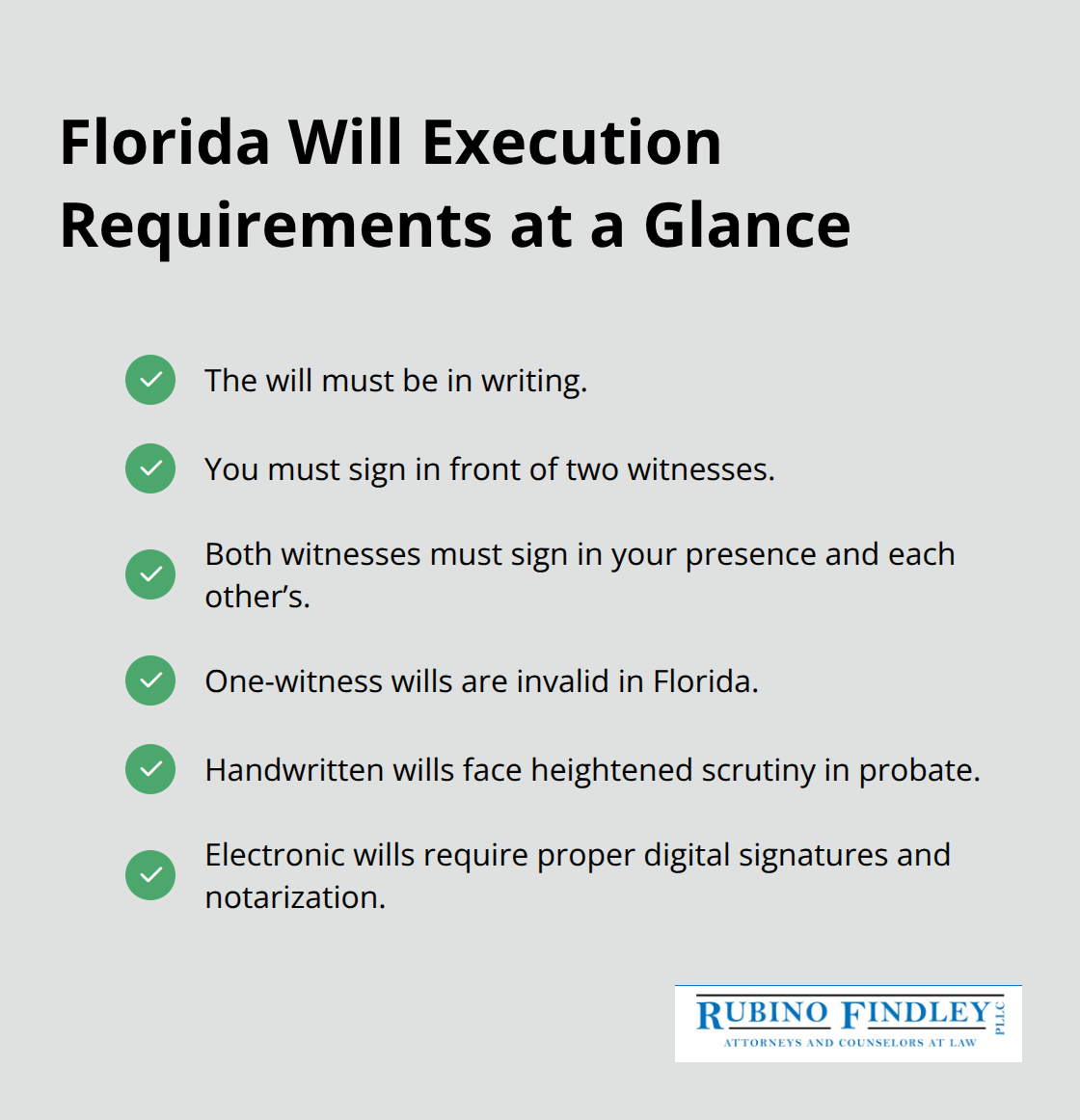
Florida requires specific legal formalities for a valid will that most people misunderstand. Your will must be in writing, signed by you in front of two witnesses, and those witnesses must sign in your presence and in each other’s presence-all on the same day. A will signed by only one witness is invalid in Florida. Handwritten wills are legal in Florida if they meet certain requirements, but courts scrutinize them heavily for authenticity during probate.
Common Myths About What Counts as a Valid Will
Many people believe that a will written on a napkin or an email counts as a valid document; it does not. Florida also recognizes electronic wills as of 2021, but they require specific digital signatures and notarization to be enforceable. The most dangerous misconception is that a will drafted in another state automatically works in Florida-it may not meet Florida’s witness requirements or statutory formalities.
Why Professional Guidance Protects Your Will from Legal Challenges
An estate planning attorney ensures your will complies with every Florida requirement and withstands legal challenges from unhappy relatives. This professional review catches formality errors before they create problems and protects your document from attacks based on improper execution or unclear language.
What Should You Actually Put in Your Will
Name Your Executor and Alternates
Your will only works if it contains the specific information that controls what happens to your assets and your family after you’re gone. The most critical decision is naming your executor-the person who manages your estate through probate and carries out your instructions. Florida law allows you to name anyone you trust, but this person must be willing to handle significant responsibility, from filing court documents to managing bank accounts and paying debts.
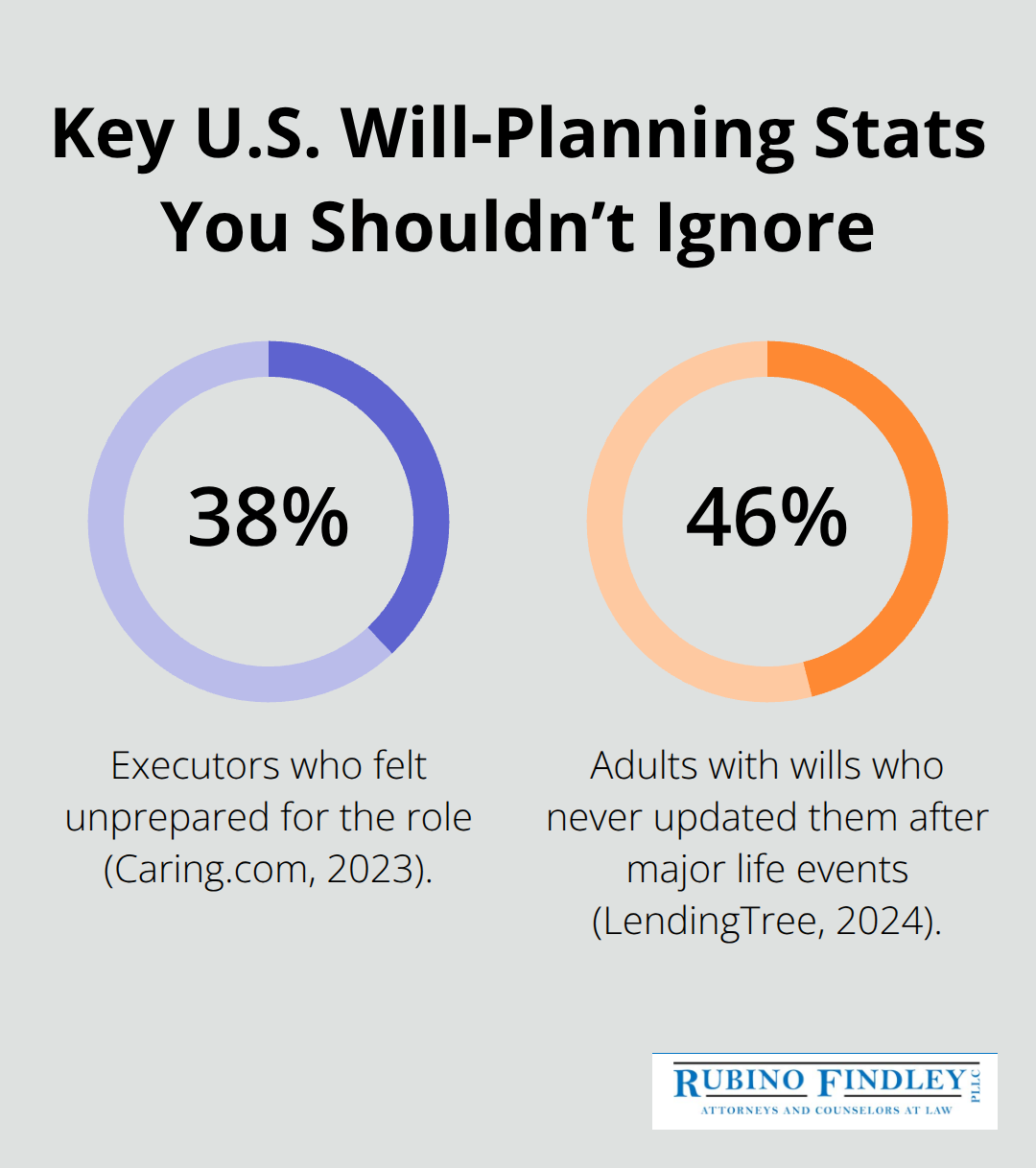
Many people name their spouse or oldest child without considering whether that person has the time, financial knowledge, or temperament for the job. A 2023 survey by Caring.com found that 38% of executors felt unprepared for the role, suggesting most people don’t discuss expectations beforehand. You should always name at least one alternate executor in case your first choice dies, becomes incapacitated, or simply refuses the position when the time comes. Without an alternate, Florida courts will appoint someone you may not have chosen, potentially delaying probate and creating family conflict.
Describe Your Assets with Precision
Your will must clearly specify which assets go to which beneficiaries, using exact descriptions rather than vague language. Writing something like “my house goes to my daughter” creates disputes if you own multiple properties or if you later acquire real estate. Instead, write the property located at [full street address], legally described as [legal description from deed], goes to [full legal name of beneficiary]. This precision prevents your family from fighting in court over what you actually intended.
Designate Guardians for Minor Children and Pets
If you have minor children or pets, your will must name guardians explicitly, as Florida courts cannot read your mind about who should raise your kids or care for your animals. A shocking number of parents die without naming guardians, forcing judges to decide based on limited information and sometimes resulting in children being placed with relatives who weren’t your preference. You should discuss guardianship with your chosen guardian before adding their name to your will, ensuring they’re willing and able to take on the responsibility.
For pets, Florida recognizes pet trusts and allows you to designate a caregiver and leave money specifically for your animal’s care, preventing your beloved dog or cat from becoming a burden on unprepared family members.
Why Specificity Matters in Your Will
Vague wills force families into unnecessary litigation to interpret the deceased’s wishes. Specificity in naming executors, describing assets, and identifying guardians transforms your will from a general statement of intent into an enforceable document that actually protects your family. The difference between a will that works and one that creates conflict often comes down to whether you took time to be precise about who gets what and who makes decisions on your behalf.
Will Drafting Mistakes That Cost Families Thousands
Most people who draft their own wills make at least one critical error that creates expensive problems for their families later. The three most damaging mistakes we see repeatedly destroy the very protection a will is supposed to provide. A 2024 study by LendingTree found that 46% of American adults with wills never updated them after major life events, meaning their documents no longer reflect their actual wishes or family structure.
Outdated Wills After Major Life Changes
An outdated will causes real financial harm when your circumstances shift. If you remarry, have children, acquire significant assets, or experience major relationship changes, your will becomes dangerously misaligned with reality. Someone who drafted a will naming their first spouse as executor and primary beneficiary, then remarried without updating anything, leaves their new spouse with nothing while their ex-spouse controls the entire estate.
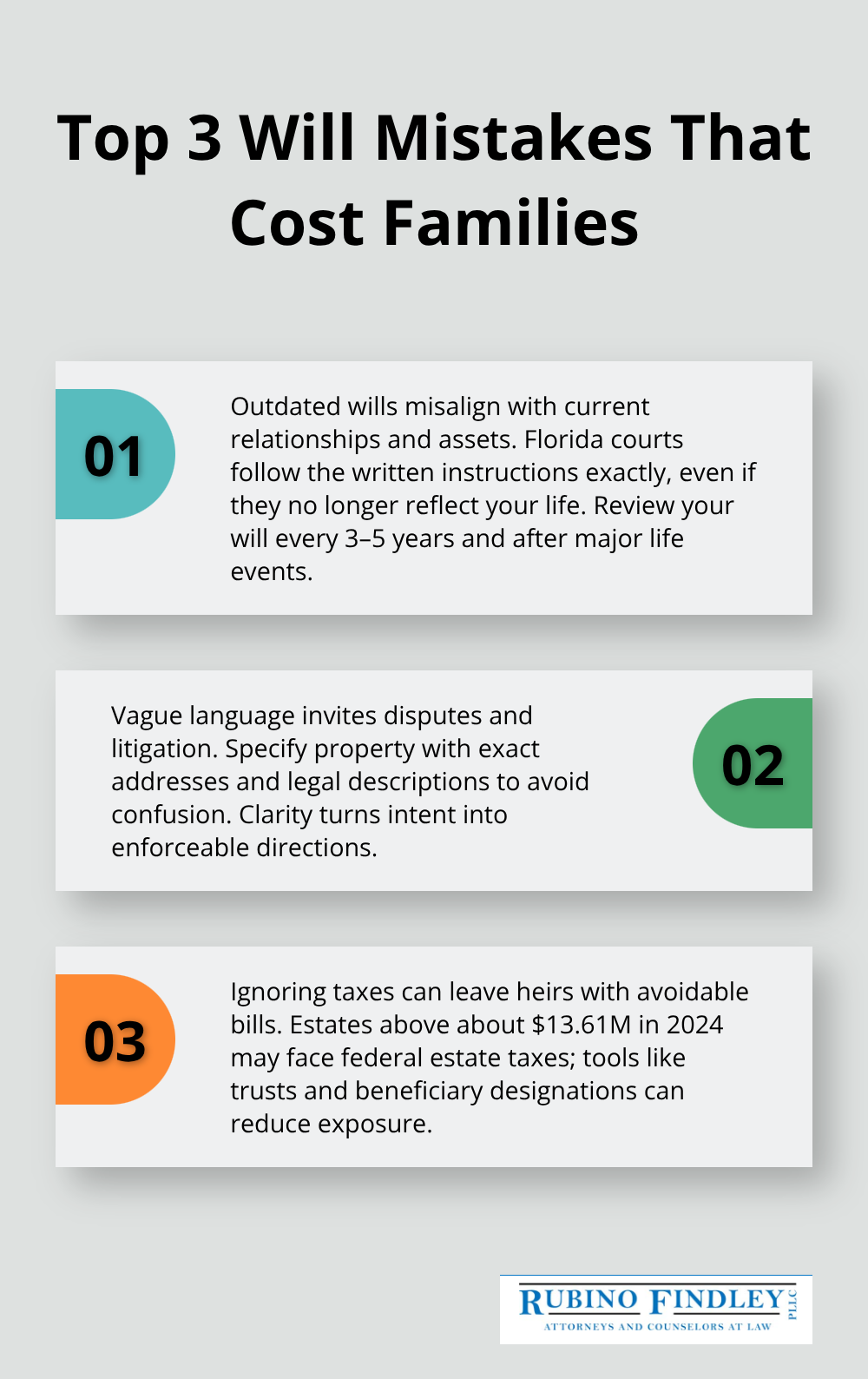
Florida courts will follow the outdated instructions exactly as written, regardless of how unfair the outcome appears. You should review your will every three to five years at minimum, and immediately after any major life change like marriage, divorce, the birth of children, significant inheritance, or acquiring property in another state.
Vague Language Creates Expensive Litigation
Unclear language in your will creates the second category of expensive mistakes that force families into litigation to interpret vague instructions. Writing that your house goes to your children equally sounds simple until your children fight in court over whether this means they own it jointly, whether one child can force a sale, or how to handle property taxes and maintenance costs. The same vague language that seemed acceptable when you wrote it becomes a legal battleground after you’re gone.
Precise descriptions prevent disputes. Instead of “my house goes to my daughter,” write the property located at [full street address], legally described as [legal description from deed], goes to [full legal name of beneficiary]. This specificity transforms your will from a general statement into an enforceable document.
Tax Implications You Cannot Ignore
Many people overlook tax implications entirely, costing their heirs thousands in unnecessary estate taxes or income taxes on inherited assets. If your estate exceeds the current federal exemption threshold of approximately $13.61 million in 2024, your beneficiaries face federal estate taxes on the excess. Florida has no state estate tax, but your heirs may still owe federal taxes depending on your total assets.
Strategic planning like establishing a trust, making lifetime gifts, or using tax-efficient beneficiary designations can reduce or eliminate these tax burdens. An experienced estate planning attorney from Rubino Findley, PLLC in Boca Raton can help Palm Beach County families structure their wills and estates to avoid these three categories of mistakes, protecting both your wishes and your family’s financial security.
Final Thoughts
Your will only works if it actually holds up in court and reflects your true intentions. An outdated will, vague language, or missed tax strategies can undo months of planning and cost your heirs thousands in unnecessary expenses. We at Rubino Findley, PLLC understand that estate planning feels overwhelming, which is why our team in Boca Raton works with families throughout Palm Beach County to create wills and trusts that protect their wishes and comply with Florida will drafting tips.
A document that fails to meet Florida’s witness requirements, contains ambiguous language about asset distribution, or ignores tax implications becomes a liability rather than protection. We handle the legal complexity so you don’t have to worry about whether your document meets Florida’s strict requirements or whether it will survive challenges from unhappy relatives. Our experience with probate administration and probate litigation means we’ve seen exactly what goes wrong when people skip professional guidance.
The peace of mind that comes from knowing your family won’t face probate delays, litigation costs, or confusion about your wishes is worth far more than the investment in professional guidance. Contact Rubino Findley, PLLC to schedule your free consultation and learn how we can help you create an estate plan that actually works.