



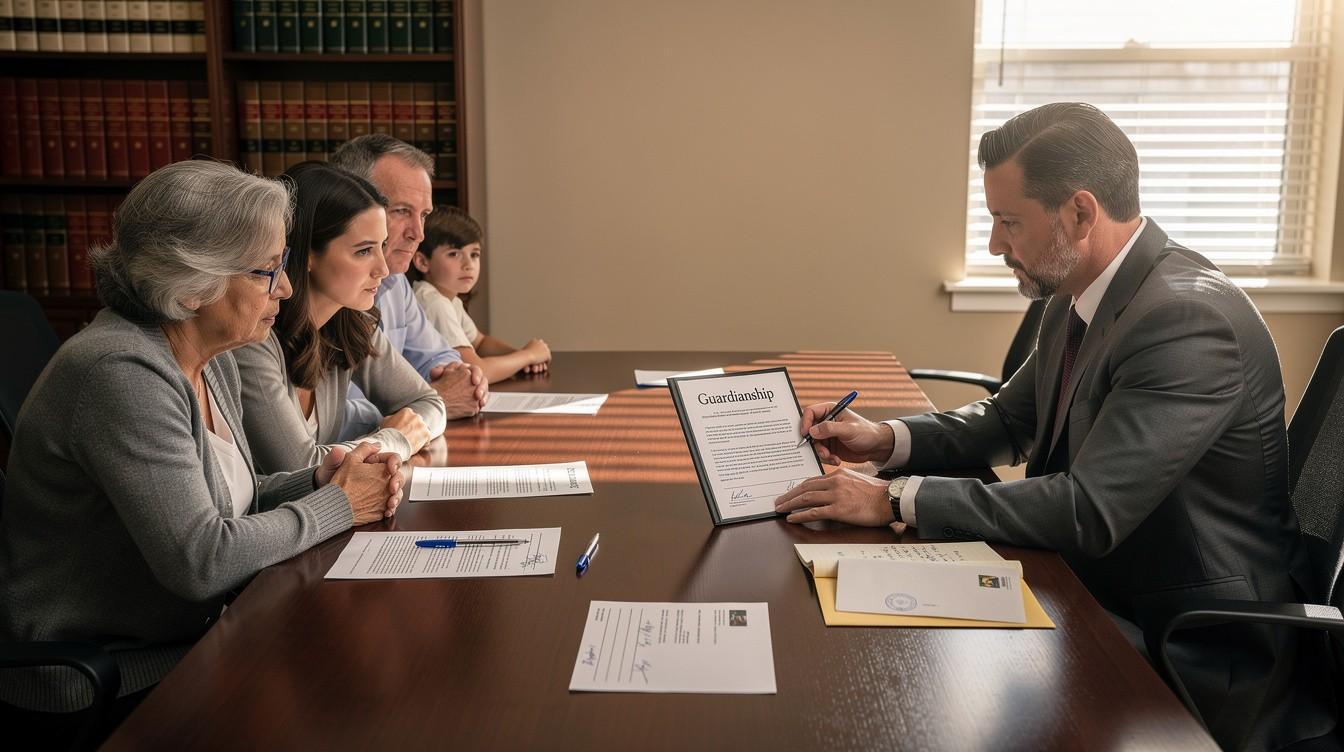
Guardianship Planning Florida: Securing Your Family’s Future
Without a guardian named in your will, Florida courts decide who raises your children. This uncertainty can create conflict and delay when your family needs stability most.
Guardianship planning in Florida protects your children by letting you choose their guardian, manage finances, and create clear legal instructions. At Rubino Findley, PLLC, we help families in Boca Raton build plans that reflect their values and priorities.
What Guardianship Planning Actually Means
Guardianship planning in Florida is the process of legally designating who will care for your minor children and manage their finances if you cannot. It goes far beyond simply naming someone in your will. Florida courts recognize guardianship as a protective arrangement for incapacitated persons, whether minors or adults, with the goal of interfering as little as possible with their rights while safeguarding their wellbeing and assets.
Without a documented plan, Florida law creates a default pathway: if both parents die or become incapacitated, the court appoints a guardian based on what a judge believes is in the child’s best interest, not what you would have chosen. This court-ordered process can take months, cost thousands in legal fees, and leave your children in temporary care while the system moves forward. AARP data show nearly 1 in 5 American adults provide unpaid care, underscoring how common family caregiving becomes when guardianship planning is missing. The reality is that guardianship planning prevents the state from making decisions about your children’s upbringing, medical care, and inheritance.
Why You Need Multiple Guardians
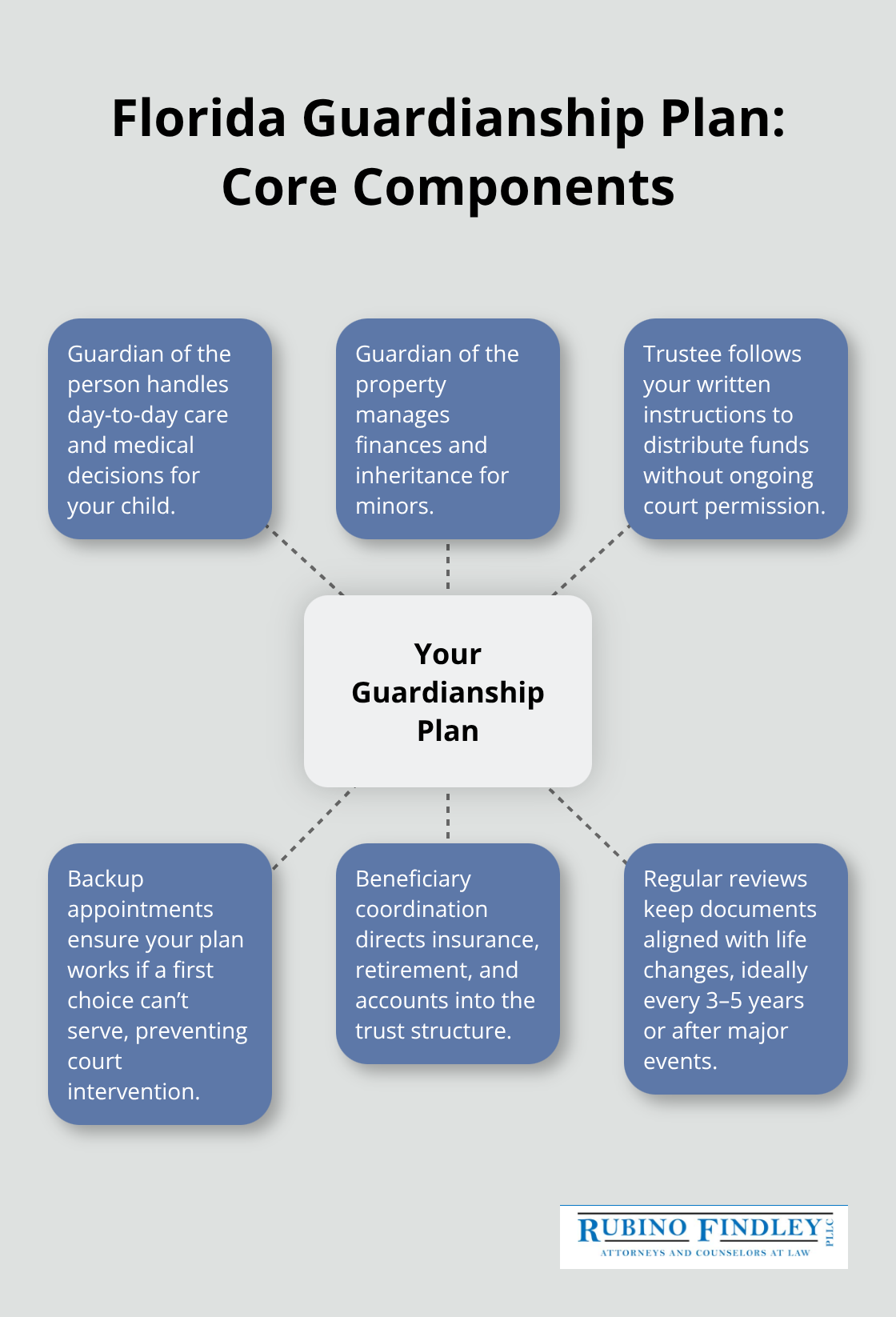
Most families make a critical mistake by naming only one guardian. If that person becomes unable to serve-due to illness, relocation, or death-your plan collapses and the court steps in again. We recommend naming a primary guardian and at least one backup guardian for both the person (day-to-day care and medical decisions) and the property (financial management and inheritance). These roles do not have to be the same person.
Many families assign physical guardianship to a trusted family member and financial guardianship to someone with stronger money management skills or to a professional trustee. Florida law allows any competent adult resident or nonresident to serve as guardian unless they have a felony conviction. This flexibility means you can choose based on capability, not just family relationships. The backup guardian is not just a formality-it is the difference between your plan working and your children facing court intervention.
Trusts Beat Court-Ordered Guardianship
A revocable or irrevocable trust funded during your lifetime bypasses probate and gives you precise control over how and when your children receive their inheritance. If a minor inherits assets outright, Florida law requires a guardian of the property to manage those funds until the child turns eighteen, even if you have already designated someone as guardian. A properly structured trust eliminates this court involvement entirely.
The trustee you name in the trust document can distribute funds for education, healthcare, or living expenses according to your written instructions, without asking permission from a judge. For families with assets over fifteen thousand dollars, this approach saves time, reduces court fees, and keeps financial decisions private. Trusts also allow you to stagger distributions-for example, releasing one-third of the inheritance at age twenty-five, another third at thirty, and the final third at thirty-five-preventing a young adult from receiving a large lump sum they may not be ready to manage.
How Your Plan Protects Against Court Delays
When you establish guardianship and trust documents before a crisis occurs, you remove uncertainty from the equation. Your children know who will care for them, and your assets flow to them according to your wishes rather than a judge’s timeline. The court still has a role in confirming the guardian’s appointment, but your documented preferences carry significant weight in that decision. Without this preparation, the court must investigate potential guardians, hold hearings, and make determinations from scratch-a process that can stretch months while your children’s future hangs in the balance. Proper planning ensures your family’s stability and gives you peace of mind that your values will guide your children’s upbringing and financial security.
Building Your Guardianship Plan in Boca Raton
Choosing the Right Guardians for Your Children
The right people to care for your children and manage their money require honest conversations about capability and willingness. Start by identifying adults who share your parenting values, have demonstrated financial responsibility, and genuinely want to take on this role. Many parents assume a spouse’s sibling or close friend will automatically accept, only to discover during estate planning that the person feels unprepared or unable.
Talk directly with potential guardians before naming them in your documents. Ask whether they would accept the responsibility, understand the financial and emotional demands, and feel confident making medical decisions for your children. This single step prevents naming someone who will later decline or request removal, which forces the court back into the decision-making process.
Separating Personal and Financial Guardianship
For the guardian of the person (day-to-day care and medical decisions), prioritize someone emotionally prepared for parenting. For the guardian of the property (financial management), you can name a separate person with stronger accounting skills or a professional fiduciary. In Palm Beach County, many families name a trusted family member as guardian of the person and a financial institution or professional trustee as guardian of the property, creating a checks-and-balance system.
Florida law permits any competent adult resident or nonresident to serve, giving you flexibility to choose based on actual capability rather than proximity or family obligation. This separation of roles means your children receive nurturing care from someone emotionally suited to parenting while their inheritance stays protected under someone with financial acumen.
Using Trusts to Eliminate Court Control
Financial management through trusts eliminates court oversight entirely and prevents the state from controlling your children’s inheritance. If your minor child inherits assets worth more than fifteen thousand dollars without a trust in place, Florida law requires a court-appointed guardian of the property to manage those funds until age eighteen, regardless of who you named as guardian. A funded revocable trust bypasses this requirement completely.
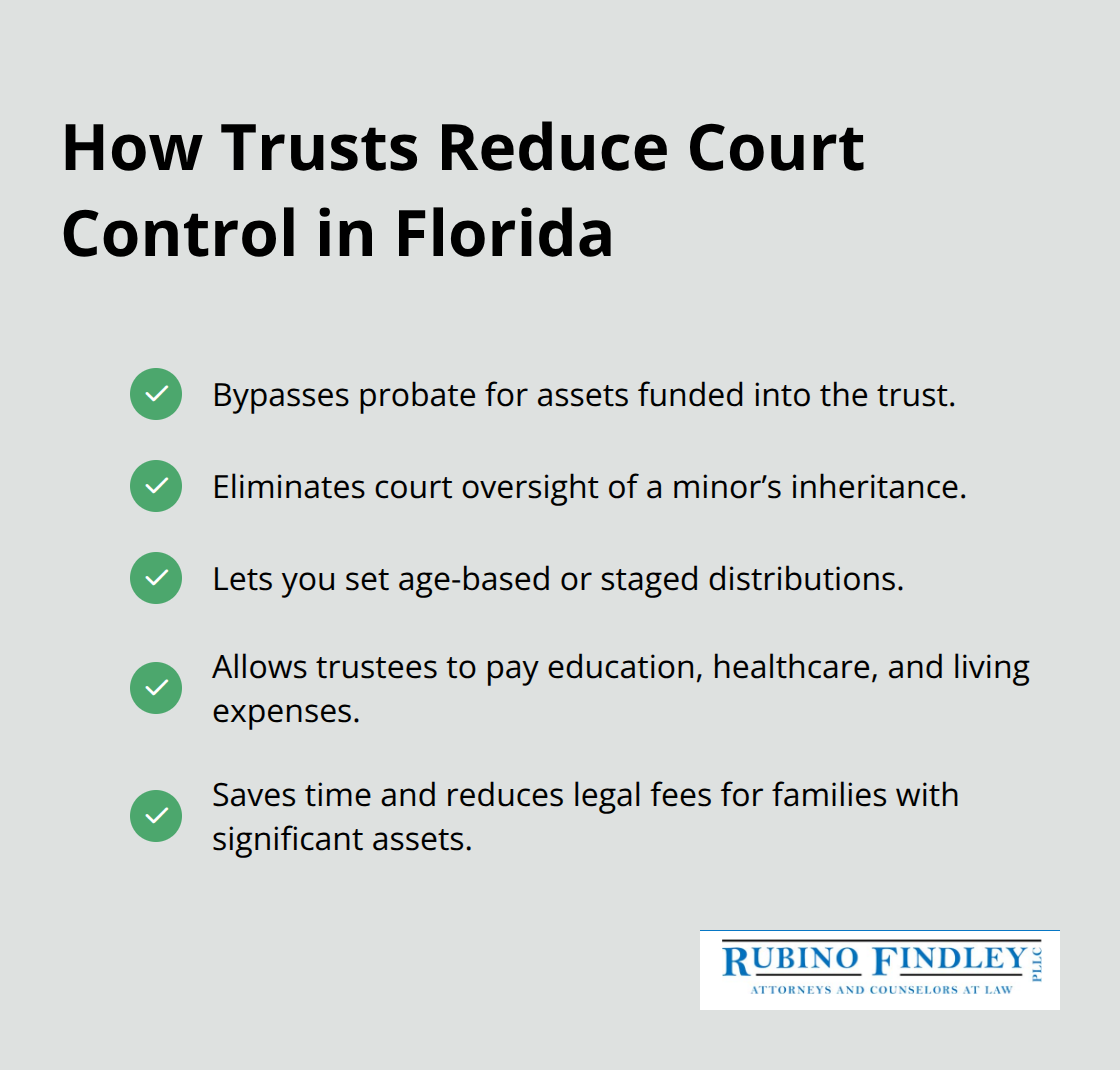
Structure the trust to distribute funds according to your timeline, not a judge’s calendar-for example, releasing funds at ages twenty-five, thirty, and thirty-five rather than one lump sum at eighteen. Name a trustee you trust absolutely, with a backup trustee ready to step in if the first cannot continue. Include specific instructions for how trust money should be spent: education, medical care, housing, or living expenses. Your trustee can pay for private school, college, therapy, or extracurricular activities without court permission, keeping decisions nimble and responsive to your child’s actual needs.
Funding Your Trust Documents
Once your documents are drafted, fund the trust during your lifetime by retitling assets like bank accounts, investment accounts, and real estate into the trust’s name. An unfunded trust is merely a piece of paper; funding it is what gives the trust legal power and prevents probate. File your documents with the court system in Palm Beach County if guardianship becomes necessary, but the detailed trust instructions guide the trustee’s decisions independently, without constant court approval.
The next critical step involves understanding what happens when your guardianship plan actually takes effect-and how to prepare your chosen guardians and trustees to handle the transition smoothly.
Common Guardianship Mistakes That Cost Families Thousands in Boca Raton
Naming a Guardian Without Legal Authority
Most families in Palm Beach County make one fatal error: they assume naming someone as guardian in their will is enough. It is not. A will only designates who you want as guardian; it does not establish the legal authority or financial structure needed when that person actually takes over. When a parent dies without proper documentation, the named guardian must still petition the court to be officially appointed, a process that takes weeks or months and costs thousands in attorney fees.
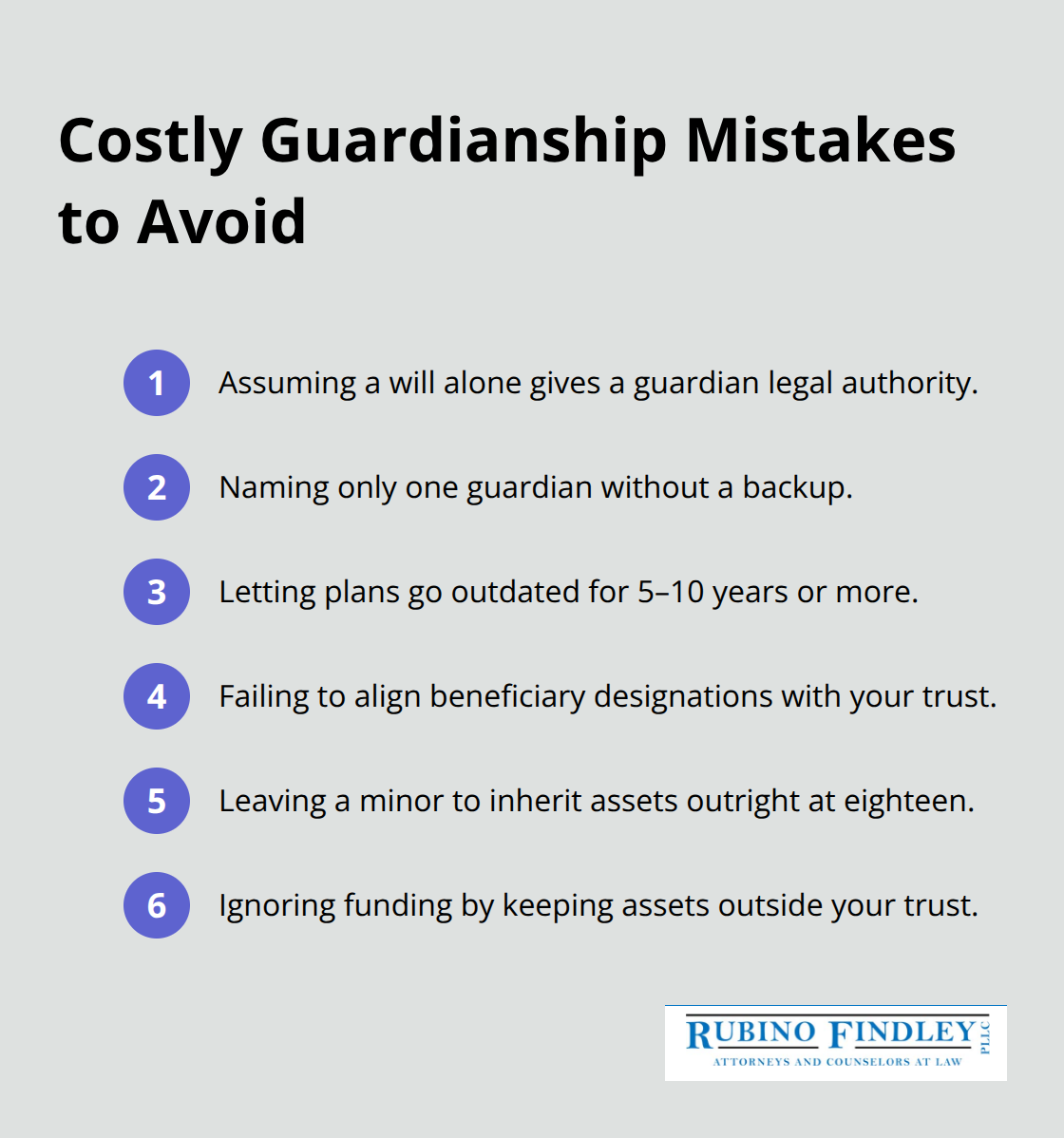
During this gap, your children may end up in temporary foster care or with a relative the court assigns, not the person you wanted. The court can reject your choice entirely if a judge believes someone else serves the child’s best interest. Worse, if you named only one guardian and that person becomes unable to serve before your death, your plan evaporates and the court decides your children’s future.
Treating Your Plan as a One-Time Task
Life changes constantly: your chosen guardian moves out of state, develops health problems, or experiences a major life disruption. Your financial situation improves or declines dramatically. Your child develops special needs or your values shift. Most families review their plans every five to ten years, if at all, meaning their documents no longer reflect reality. In Florida, courts have found guardians appointed under outdated plans ill-equipped to handle current family dynamics or financial needs. If your chosen guardians have changed jobs, relocated, or experienced personal crises, they may no longer be suitable. Your trust funding may be inadequate for your child’s actual needs, or your backup guardians may have become unavailable. We recommend reviewing your guardianship documents every three to five years or immediately after major life events like remarriage, inheritance, relocation, or significant changes in your children’s circumstances.
Misaligning Beneficiary Designations With Your Trust
The third critical mistake is ignoring the tax and financial consequences of how your guardianship plan distributes assets. Many parents name a guardian and assume their life insurance proceeds and bank accounts will automatically flow to their children, but without proper beneficiary designations and trust structures, those assets may be subject to estate taxes or forced through probate at significant cost. If your child inherits assets outright at age eighteen without trust protections, they can spend the entire inheritance immediately, leaving them financially vulnerable. Families in Broward County who fail to coordinate their beneficiary designations with their trust documents often end up with assets passing outside the trust entirely, triggering unnecessary taxes and court involvement. The solution is straightforward: name your revocable trust as the beneficiary of life insurance policies, retirement accounts, and bank accounts rather than naming your children directly. This ensures all assets flow into the trust’s protective structure and follow your timeline for distribution. Have an attorney review whether your current beneficiary designations on insurance, retirement accounts, and investment accounts actually align with your guardianship plan.
Final Thoughts
Guardianship planning in Florida requires clear legal documents, properly funded trusts, named backup guardians, and regular updates as your family changes. The mistakes families make-naming a single guardian, ignoring beneficiary designations, or treating the plan as a one-time task-cost thousands in court fees and leave your children’s future uncertain when stability matters most. Without proper paperwork in place, someone other than your loved ones may make decisions about your children, assets, and property.
We at Rubino Findley, PLLC help families in Boca Raton and throughout Palm Beach County create guardianship plans that actually work. Our team establishes wills and trusts that reflect your values, coordinates beneficiary designations with your trust structure, and names backup guardians so your plan survives unexpected changes. We handle the legal details-durable powers of attorney, trust funding, and probate administration-so you can focus on your family’s wellbeing.
Accidents happen without warning, and the time to act is now, not when a crisis forces your hand. Contact Rubino Findley, PLLC to schedule your free consultation and let our legal team review your current situation, identify gaps in your plan, and build a guardianship strategy tailored to your family’s needs.