




How Long Does Florida Probate Usually Take?
Florida probate can stretch from six months to several years, depending on your estate’s complexity. Simple estates often move faster, while contested cases drag on much longer.
We at Rubino Findley, PLLC see families asking how long does probate process take in Florida every day. The answer depends on multiple factors that can either speed up or slow down your case significantly.
What Are Realistic Florida Probate Timelines?
Simple Estates Move Faster Than You Think
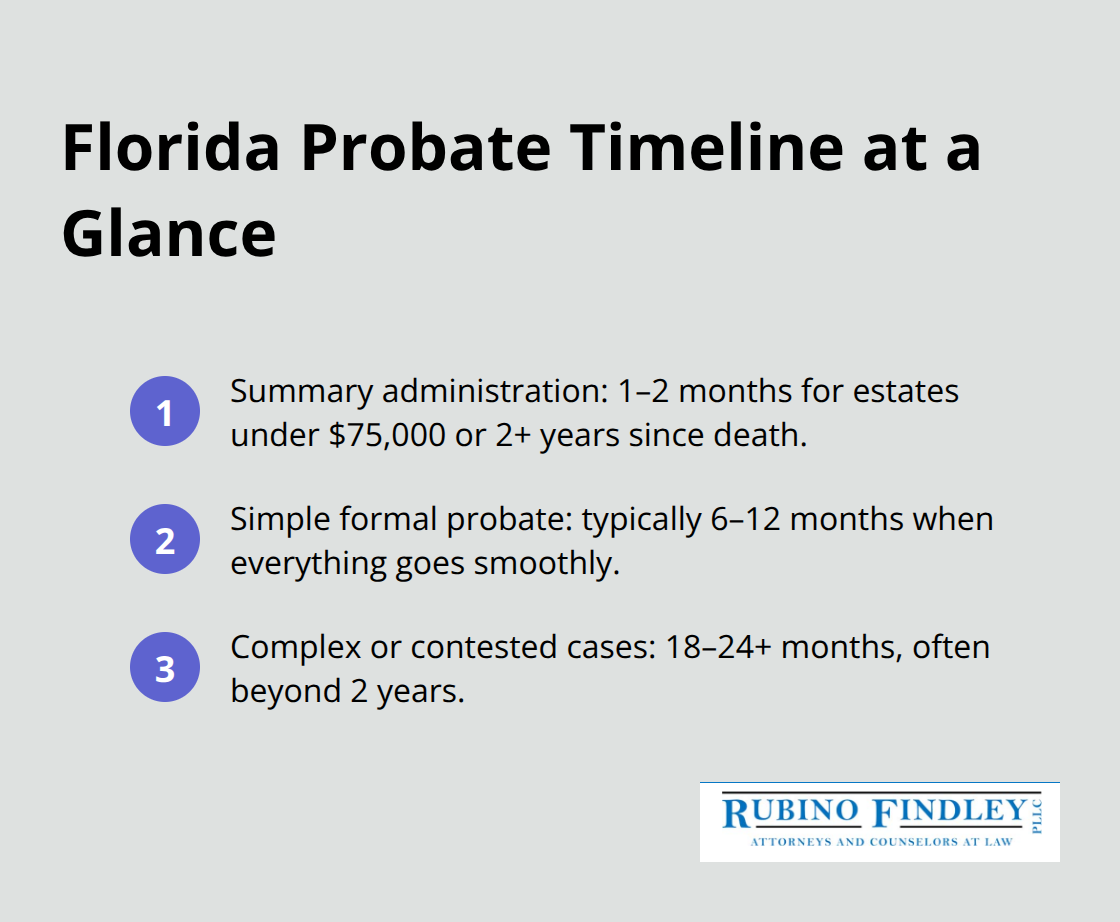
Simple Florida estates typically complete probate in 6 to 12 months when everything goes smoothly. The Florida Bar reports that straightforward cases with clear wills, cooperative beneficiaries, and minimal debts move through the system efficiently. Summary administration offers an even faster track for estates under $75,000 or when the decedent died more than two years ago, often completing in just 1 to 2 months.
This streamlined process skips many formal requirements that slow down larger estates.
Complex Cases Take Much Longer
Complex estates stretch probate to 18 months or beyond, sometimes reaching 2 years when litigation enters the picture. Contested wills, family disputes, business ownership transfers, and multiple creditor claims create bottlenecks that courts must resolve methodically. Palm Beach County courts face significant backlogs that add months to already complicated cases. Estates with real estate in multiple states, tax disputes, or missing heirs consistently exceed the 2-year mark. Florida ranks among the slower states for probate completion compared to Texas (which averages 6-8 months) or California, where simple cases close in 8 to 12 months.
Court Schedules Control Your Timeline
Palm Beach County probate courts need 7 to 10 business days just to assign case numbers after filing. Judges review petitions for legal accuracy, and deficient paperwork triggers immediate delays. The mandatory creditor notification period extends probate by 90 days minimum, during which creditors can file claims against the estate. Florida Statutes require specific waiting periods that cannot be shortened, regardless of estate cooperation or attorney efficiency.
What Happens During the Waiting Periods
Courts use the initial 6-8 weeks to review petitions and verify notifications to all interested parties. Creditors receive 90 days from the notice publication date to file their claims against the estate. Executors must provide verified statements confirming they have reviewed all potential creditor claims within four months. These mandatory periods protect all parties but extend the timeline significantly, even for cooperative families who want to move quickly through the process.
What Drives Florida Probate Delays
Estate Value Determines Your Path
Estate size directly controls which probate track you follow in Florida. Estates under $75,000 qualify for summary administration, which wraps up in 1-2 months with minimal court oversight. Estates that exceed this threshold enter formal administration, which automatically adds 6-12 months to your timeline. The Florida Bar confirms that asset valuation mistakes cause frequent reclassification delays when estates initially file for summary administration but later require formal proceedings. Real estate holdings complicate matters further, as property appraisals can take 30-60 days and market fluctuations affect final valuations. Business interests, investment portfolios, and out-of-state assets require additional documentation that extends the process by months.
Creditor Claims Create Unpredictable Delays
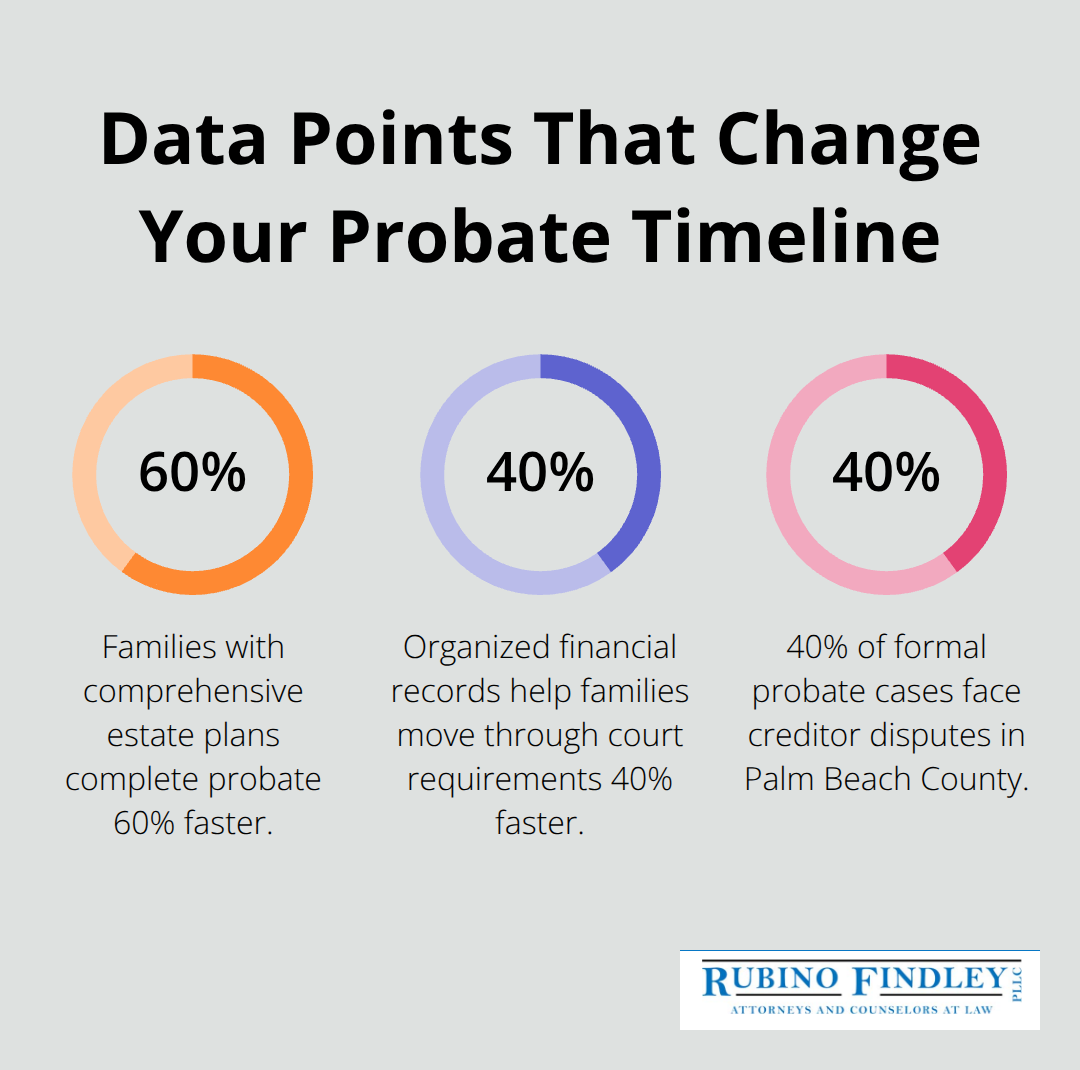
Creditor notification periods cannot be shortened under Florida law, regardless of cooperation levels. The mandatory 90-day window allows creditors to file claims, and disputed claims trigger court hearings that add 3-6 months to probate. Medical debt, credit card companies, and tax authorities frequently file late claims that require extensive verification. Palm Beach County courts report that 40% of formal probate cases face creditor disputes that extend beyond the initial timeline. Unknown creditors that surface during asset inventory force executors to restart notification periods, which creates cascading delays. Families often face surprise claims when mortgage companies, business partners, or service providers file unexpected demands months into the process.
Court Backlogs Control Your Schedule
Palm Beach County probate courts face significant scheduling constraints that affect every case. Judge availability limits hearings to 2-3 slots per month for complex matters, and contested cases wait 4-6 months for trial dates. Court staff requires 7-10 business days just to process initial filings and assign case numbers.
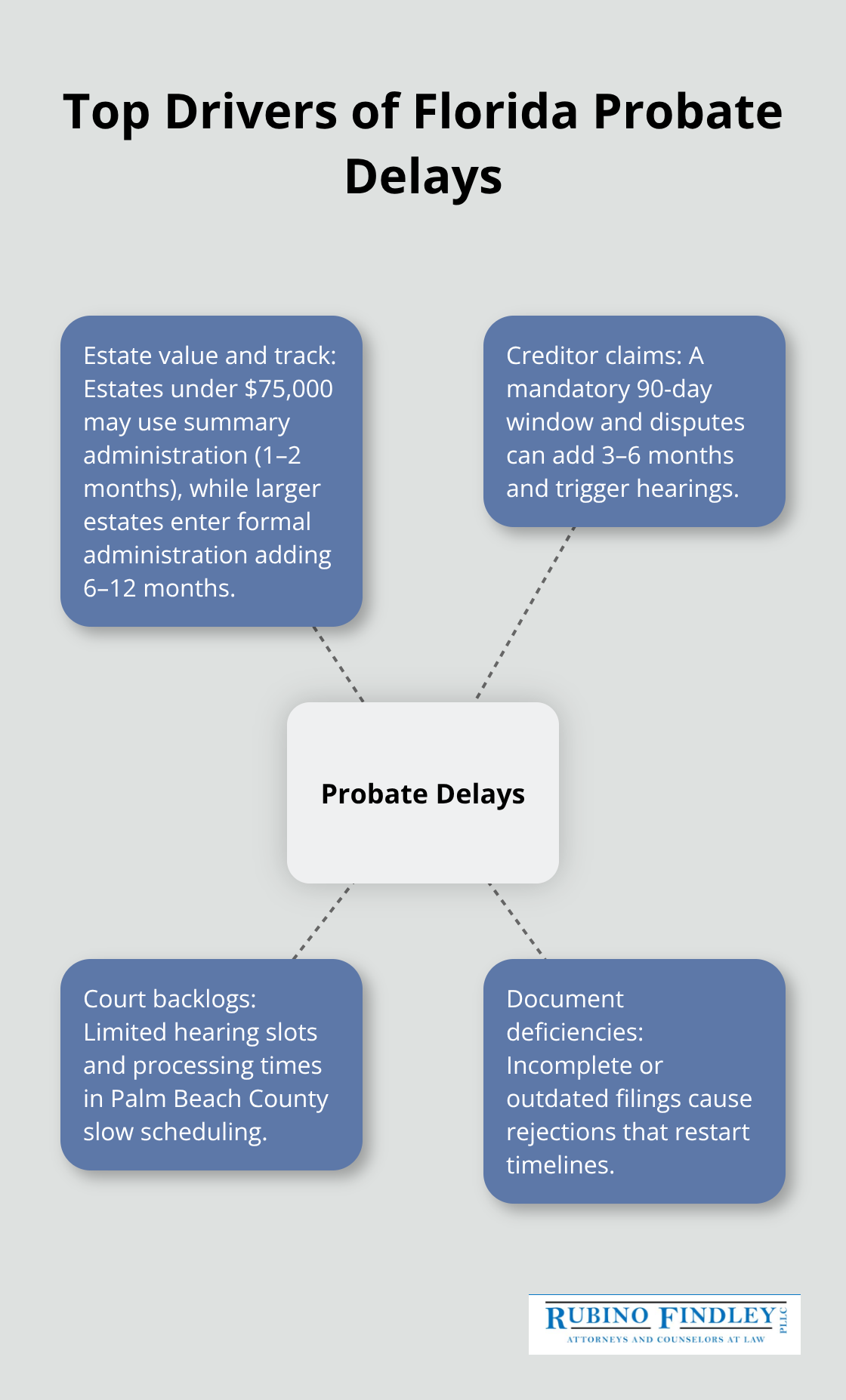
Document deficiencies trigger automatic rejections that restart the filing timeline, and outdated forms cause immediate delays. Florida Statutes mandate specific review periods that judges cannot expedite (which creates bottlenecks during peak filing seasons). Administrative backlogs worsen during winter months when seasonal residents pass away, which concentrates probate filings in Palm Beach County courts.
These delays compound quickly, but proper preparation can help you avoid the most common pitfalls that extend probate timelines unnecessarily.
How Can You Cut Your Probate Timeline
Start Estate Plans Decades Before Death
Proper estate plans eliminate most probate delays before they start. Living trusts bypass probate entirely for assets transferred into the trust, which cuts your timeline from 12 months to zero for those assets. The National Association of Estate Planners and Councils reports that families with comprehensive estate plans complete probate 60% faster than those without plans.
Payable-on-death accounts, joint ownership structures, and beneficiary designations transfer assets immediately without court involvement. Florida residents who establish revocable trusts avoid the mandatory 90-day creditor notification period that adds months to every probate case. Transfer-on-death deeds for real estate properties skip the lengthy asset valuation and distribution process that typically extends probate by 3-6 months.
Hire Attorneys Who Know Palm Beach County Courts
Attorneys familiar with local court procedures prevent the document rejections that restart your timeline. Palm Beach County judges have specific format preferences and documentation requirements that vary from other Florida counties. Experienced probate attorneys maintain relationships with court staff that expedite case number assignments and schedules. These attorneys understand Palm Beach County court procedures and can navigate the specific requirements that trip up families who attempt probate without legal guidance. Attorneys who regularly practice in local courts know which judges prefer summary hearings versus written motions (which saves weeks in delays). Complete, accurate paperwork filed the first time eliminates the 2-4 week delays caused by deficient documents that force resubmission.
Organize Financial Records Before You Need Them
Complete asset inventories prepared in advance cut probate duration by months. Families who maintain organized financial records, including bank statements, investment accounts, property deeds, and business ownership documents, move through court requirements 40% faster according to Florida Bar statistics. Digital asset inventories that include online accounts, cryptocurrency holdings, and cloud storage access prevent the discovery delays that extend probate when executors cannot locate assets. Death certificates ordered in advance allow immediate filing, while families who wait for certificates face 2-3 week delays before they can start probate proceedings (which compounds other delays throughout the process).
Final Thoughts
Florida probate timelines span from 1-2 months for summary administration to 18+ months for complex formal cases. Simple estates typically finish within 6-12 months, while contested matters extend beyond 2 years. Understanding how long does probate process take in Florida helps families set realistic expectations and plan accordingly.
Professional legal guidance makes a significant difference in probate duration. Attorneys familiar with Palm Beach County court procedures prevent document rejections and delays that restart timelines. They navigate local requirements efficiently and maintain relationships that expedite case processing.
Proactive estate plans offer the most effective solution for reducing probate delays (living trusts, beneficiary designations, and proper asset titling bypass probate entirely for many assets). We at Rubino Findley, PLLC help Palm Beach County families establish wills, trusts, and durable powers of attorney that minimize probate complications. Contact Rubino Findley, PLLC for your free consultation today.