




How to Complete Probate Administration Successfully
Probate administration in Florida doesn’t have to be overwhelming. Many families struggle with the process because they don’t understand the steps involved or the deadlines they must meet.
We at Rubino Findley, PLLC help families in Boca Raton navigate probate successfully. This guide walks you through what to expect and how to avoid costly mistakes.
What Exactly Happens During Probate Administration
Probate is the court-supervised process that transfers a deceased person’s assets to beneficiaries and settles outstanding debts. In Florida, probate assets are those owned solely in the decedent’s name at death. Assets held jointly with survivorship rights, life insurance proceeds with designated beneficiaries, retirement accounts with beneficiary designations, and payable-on-death accounts bypass probate entirely. This distinction matters because it directly affects which assets require court involvement and which transfer automatically. Understanding what counts as a probate asset saves time and prevents families from pursuing unnecessary court proceedings for assets that already have clear transfer mechanisms in place.
How Long Probate Actually Takes in Florida
The timeline depends entirely on which probate path you pursue. Formal administration, the most common route for estates valued over $75,000, typically takes six to eighteen months in Palm Beach County. According to Palm Beach County probate statistics, formal administration accounts for roughly sixty-five percent of the approximately eight thousand probate cases filed annually in the county. Summary administration, available for estates valued at $75,000 or less or when the decedent died more than two years ago, moves significantly faster and usually concludes within three to six months. The non-court option, Disposition of Personal Property Without Administration, applies only to very small estates with net values of $20,000 or less and bypasses the court entirely. Court backlogs during peak periods (particularly January through March) can push hearing dates to sixty to ninety days out, which extends timelines considerably. These delays are real and predictable, not theoretical concerns.
The Myths That Cost Families Time and Money
Many families believe that a will eliminates the need for probate. This is false. A will simply directs the court on how to distribute assets during probate. The court still must validate the will, appoint a personal representative, and oversee the entire process. Another dangerous myth is that probate is quick and inexpensive. Formal probate in Florida typically costs between three thousand and eight thousand dollars depending on complexity, and will contests can escalate costs to fifteen thousand to fifty thousand dollars or more, with timelines extending three to four years. Some families assume that all assets pass through probate, which leads them to waste resources trying to probate non-probate assets. Others incorrectly believe they can distribute assets to beneficiaries immediately after death, which violates Florida law and can result in personal liability for the representative. A final misconception is that probate is identical across states. Florida probate follows strict, state-specific rules and timelines under Florida Statutes 731 through 736, and misunderstanding these requirements can result in removal of the personal representative if duties are not properly performed.
What Separates Probate Assets from Non-Probate Assets
The assets that pass through probate differ significantly from those that transfer outside the court process. Probate assets include property owned solely in the decedent’s name, such as real estate held in the individual’s name alone, bank accounts without payable-on-death designations, and investment accounts without beneficiary designations. Non-probate assets (which bypass the court entirely) include jointly titled property with survivorship rights, life insurance policies with named beneficiaries, retirement accounts like IRAs and 401(k)s with designated beneficiaries, and accounts with payable-on-death or transfer-on-death designations. This distinction determines whether the court must approve the transfer and whether creditors can make claims against the asset. Families who understand this difference avoid unnecessary probate filings and protect assets that should transfer automatically to their intended recipients.
Why These Myths Lead to Costly Mistakes
Believing these misconceptions creates real financial and legal consequences. A family that assumes probate is unnecessary may fail to file required documents, which can delay distributions by months or trigger court sanctions. A personal representative who distributes assets without court approval or before creditor claims expire can face personal liability for the full amount distributed. A family that tries to probate non-probate assets wastes thousands in attorney fees and court costs on assets that already have clear legal transfer mechanisms. These mistakes compound when multiple family members hold different beliefs about the process, which often leads to disputes that require litigation to resolve. The cost of correcting these errors far exceeds the cost of understanding the process correctly from the start. Understanding Florida’s specific probate rules and the three available paths (formal administration, summary administration, and non-court disposition) allows families to choose the most efficient route for their situation and avoid expensive missteps.
How to Complete Probate Administration Successfully in Boca Raton
Filing Your Petition for Administration
Starting probate in Palm Beach County requires you to file a Petition for Administration with the circuit court clerk within ten days of death. You must submit the original will, a certified death certificate, and a four hundred one dollar filing fee with this petition. Missing the ten day window does not invalidate the petition, but delays create unnecessary complications and can trigger questions from the court about why you waited. Once you file, the court typically schedules a tentative hearing within thirty to forty five days, though backlogs during peak periods (January through March) can push this to sixty days or longer. At this hearing, the judge reviews your petition, validates the will if one exists, and appoints the personal representative named in the will or designates one under intestacy rules if no will exists.
Obtaining Letters of Administration
The court then issues Letters of Administration, which grant you legal authority to manage all estate matters. Without these letters, you cannot access accounts, sell property, or take any official action on behalf of the estate. The personal representative must retain an attorney for formal administration because Florida law generally requires attorney representation for this pathway. This is not optional guidance; it is a statutory requirement under Florida Statutes 733 through 736 that protects the process and ensures compliance with state law.
Notifying Heirs and Creditors
After you receive Letters of Administration, you and your attorney must notify heirs and creditors within specific timeframes. You must send certified letters to known creditors with a ninety day claims deadline, while you reach unknown creditors through publication in a Palm Beach County newspaper of general circulation (typically two hundred to four hundred dollars). The Clerk of the Circuit Court no longer forwards these notices to newspapers, so you must arrange publication directly and then file proof of publication with the Clerk. This step protects the estate by establishing a clear deadline for creditor claims and prevents claims from surfacing years later.
Inventorying Assets and Opening an Estate Account
Within sixty days of appointment, you must prepare an asset inventory and file it with the court, including real estate appraisals (typically three hundred to eight hundred dollars per property), bank statements, investment portfolios, and valuations. You must transfer estate assets into an estate bank account opened specifically for probate purposes, and you must keep liquid assets segregated until the court approves distributions. You file periodic accountings that the court reviews before major decisions or distributions occur. This court supervision continues throughout the entire process and is non negotiable under Florida law.
Understanding Your Obligations as Personal Representative
Failing to follow these steps creates liability for you as personal representative and can result in removal from the position, which extends timelines and damages family relationships significantly. The court holds you accountable for every action you take with estate funds and property. If you distribute assets without court approval or before creditor claims expire, you face personal liability for the full amount distributed. These obligations are substantial, which is why Florida law requires attorney representation for formal administration. The complexity of these requirements makes working with an experienced probate attorney in Boca Raton essential to protect yourself and the beneficiaries you serve. As you move forward with these initial steps, the next phase of probate administration focuses on the specific asset management decisions that determine how quickly and efficiently you can complete the process.
What Mistakes Derail Probate in Palm Beach County
Missing Court Deadlines Creates Immediate Problems
Florida Statute 733.2123 requires you to file the Petition for Administration within ten days of death. Filing after this window does not automatically invalidate your petition, but delays trigger unnecessary court scrutiny and can result in sanctions or removal of the personal representative. Once the court appoints you, deadlines multiply immediately. You must file an inventory within sixty days, notify creditors within three months, and respond to any court orders within the timeframes specified.
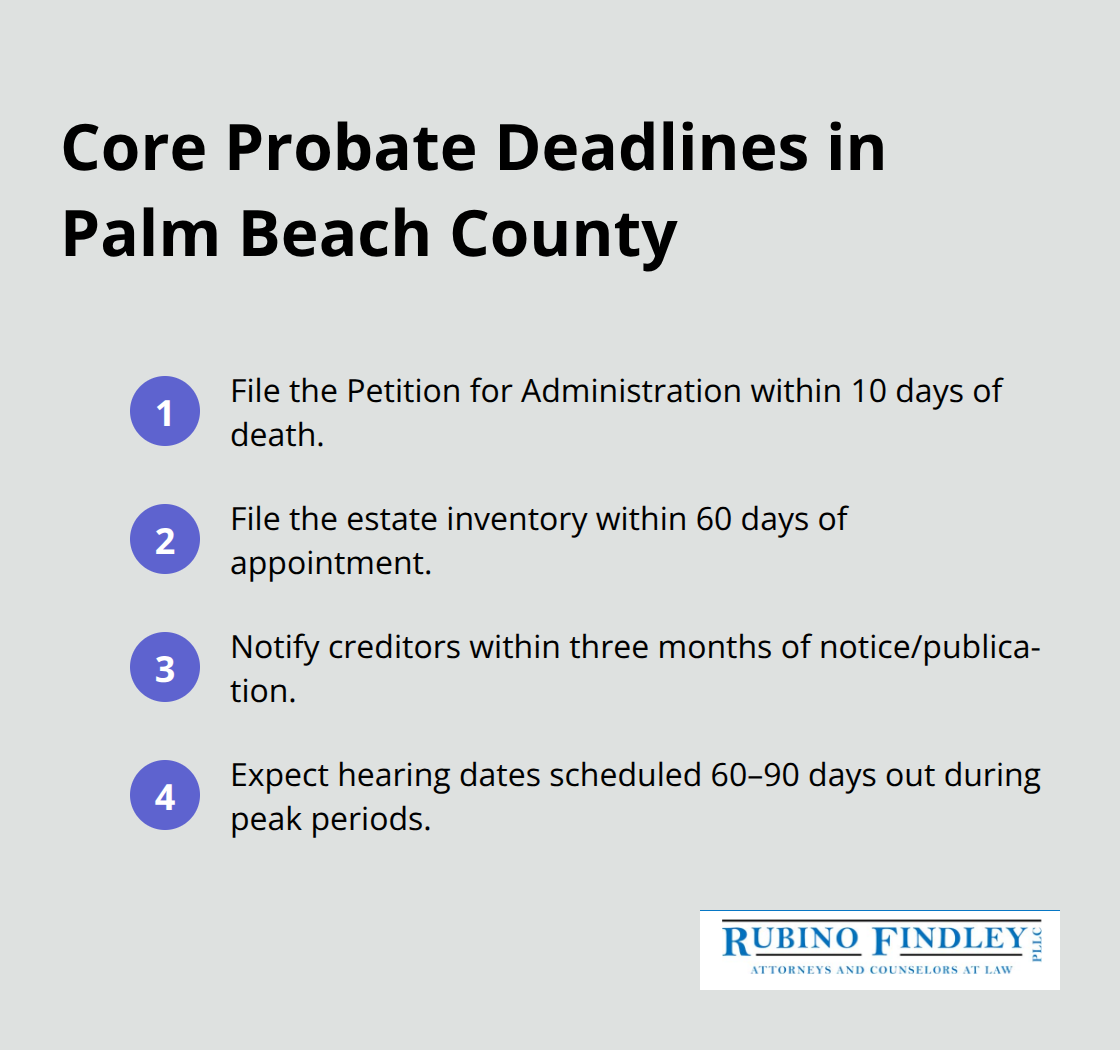
Palm Beach County’s court backlogs mean hearing dates are often scheduled sixty to ninety days in advance during peak periods. Missing even a single deadline can push your case back months and signal to the court that you lack the ability to manage the estate properly.
A calendar management system prevents these avoidable delays. You need an attorney who maintains deadline tracking protocols specifically designed for probate administration and submits documents well before due dates. This proactive approach keeps your case moving forward without interruption.
Asset Distribution Errors Create Personal Liability
Distributing funds to beneficiaries before creditor claims expire (ninety days from notice) means you become personally liable for the full amount if a valid creditor claim surfaces later. Florida law is unforgiving on this point. Many representatives rush to satisfy beneficiaries, only to face lawsuits when creditors file claims months later. Tax obligations compound this risk significantly.
Approximately forty percent of Florida probate cases involve medical debt, and creditors frequently file inflated or duplicate claims that require verification before payment. You must obtain itemized statements and proof of debt validity before paying anything. Additionally, estates have federal and state tax filing obligations that cannot be ignored. An estate with income must file a federal Form 1041, and failure to do so can trigger IRS penalties and interest that reduce distributions available to beneficiaries.
The Three-Step Protection Strategy
Three actions protect you from personal liability that can exceed the entire estate value. First, wait the full ninety-day creditor claim period before any distributions occur. Second, require creditors to provide documentation supporting every claim before you pay anything. Third, file all required tax returns and obtain tax clearances before distributing final amounts. These steps take time, but they shield you from liability that can devastate your personal finances and damage family relationships permanently.
Final Thoughts
Probate administration in Florida demands precision, timing, and knowledge of state-specific rules that shift frequently. The mistakes outlined in this guide are preventable, but only if you understand the process and follow it correctly from the start. Attempting to navigate probate without professional guidance exposes you to personal liability, court sanctions, and delays that can extend timelines by months or years.
We at Rubino Findley, PLLC help families in Boca Raton and throughout Palm Beach County complete probate administration successfully by managing deadlines, verifying creditor claims, handling tax obligations, and guiding you through every court requirement. Our team maintains deadline tracking systems specifically designed for probate cases, coordinates with the court on your behalf, and ensures that every filing meets Florida’s strict procedural standards. Contact Rubino Findley, PLLC to discuss your immediate probate needs and your long-term estate planning strategy.
Proper estate planning prevents many of these complications from arising in the first place. Wills, trusts, durable powers of attorney, and beneficiary designations allow your assets to transfer smoothly to your loved ones while minimizing court involvement and reducing administrative burden. Our team will help you understand your options, protect your interests, and ensure that your family’s financial future remains secure.