



How to Create Estate Planning for Your Beloved Pets
Most pet owners think of their animals as family members, yet few have a plan for their care if something happens to them. Without estate planning for pets, your beloved companion could end up in a shelter or with someone who doesn’t understand their needs.
At Rubino Findley, PLLC, we help families in Boca Raton protect their pets’ futures through proper legal planning. This guide walks you through the steps to give your pet the security and care they deserve.
Why Your Pet Needs Legal Protection
Without estate planning for your pet, the legal system treats your animal as property rather than a family member. This means your pet has no automatic protection if you become incapacitated or pass away. Florida law does not transfer pet ownership through a will the way it handles money or real estate, leaving a dangerous gap in most pet owners’ plans. According to Best Friends Animal Society, over 500,000 pets enter shelters annually due to owners’ death or incapacity, and many of these animals face euthanasia simply because no one had documented care instructions or funding in place.
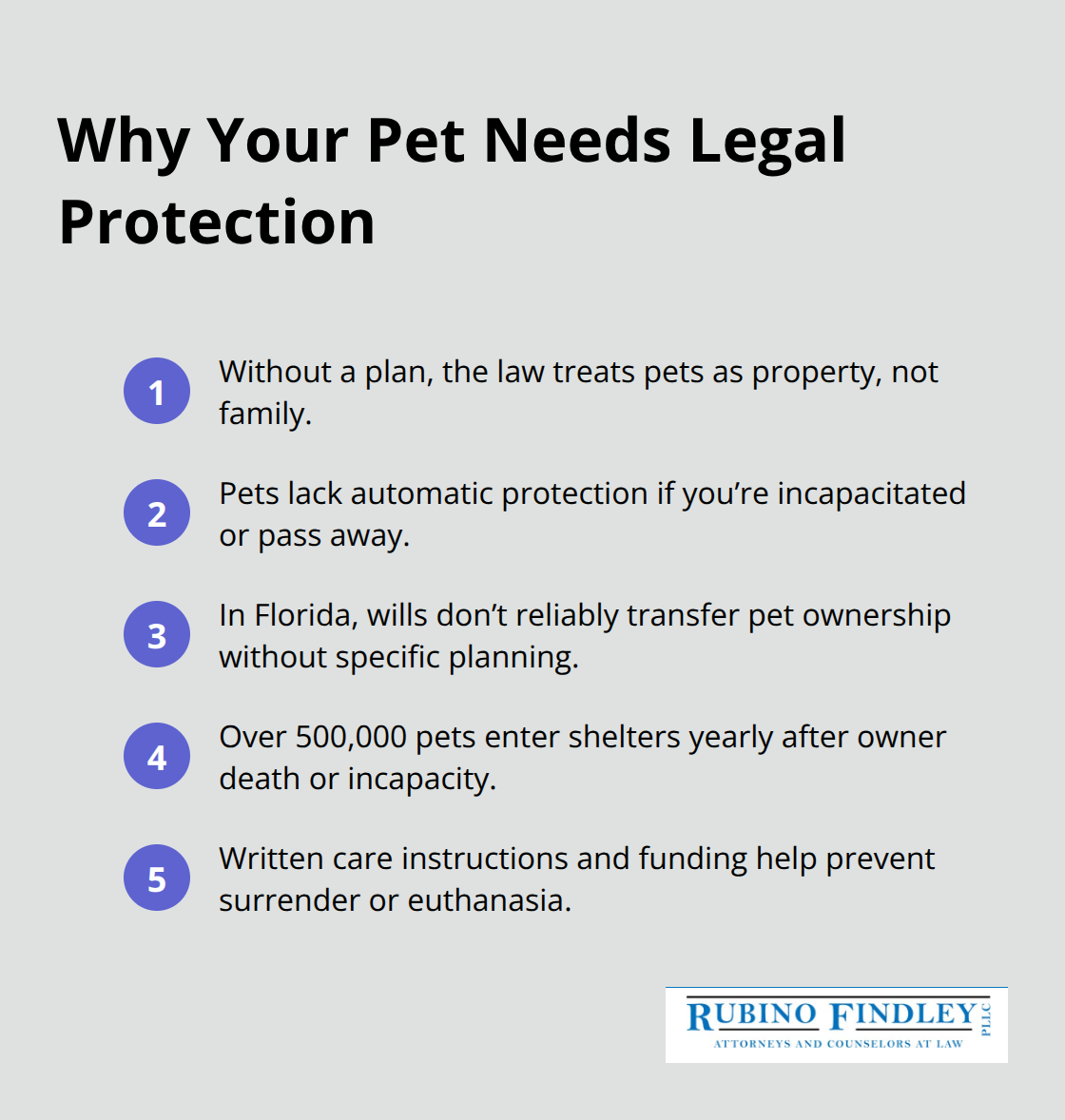
Your pet cannot advocate for itself in court, cannot choose a new home, and cannot access funds you may have intended for its care without proper legal documents.
The Real Cost of No Plan
A pet left without designated care lands in a shelter within days. Even well-meaning family members may lack the financial resources or knowledge to provide proper care, leading them to surrender the animal. Veterinary costs alone tell the story: the average dog costs between $1,500 and $3,000 annually for basic care, food, and routine medical attention, according to industry averages. A cat runs $800 to $1,500 per year. If your pet has health issues, these costs skyrocket. Without a pet trust or designated funds, a caregiver might struggle to afford necessary medications, dental work, or emergency surgery. Many people surrender pets to shelters because the financial burden becomes unmanageable, not because they stopped caring. A pet trust solves this problem by setting aside money specifically for your pet’s lifetime care, removing the financial barrier that forces difficult decisions.
Control Through Documentation
Creating a pet estate plan means you decide your pet’s future, not a court or a shelter. You choose the specific caregiver, you outline detailed care instructions (including diet preferences and medical protocols), and you determine exactly how much money goes toward care. Florida Statutes Section 737.116 recognizes pet trusts as legally enforceable, allowing you to name a trustee who manages funds and disburses them to your chosen caregiver on whatever schedule you specify. This control extends to end-of-life decisions as well-you can document your preferences for euthanasia, cremation, or burial. Without these documents, family members might disagree about where your pet should go or how much money should be spent on care. A pet trust eliminates conflict by making your wishes legally binding.
What Happens Next
The next step involves identifying who will care for your pet and how much money that care actually costs. These decisions form the foundation of any pet estate plan, and they require honest conversations with potential caregivers before you finalize any legal documents.
Who Should Care for Your Pet and How to Fund That Care
Selecting the Right Guardian
Choosing a guardian for your pet ranks as the most consequential decision in pet estate planning, yet most people rush through it or name someone without asking first. A guardian must be willing to provide daily care, financially capable of managing the responsibility, and genuinely committed to your pet’s wellbeing. Best Friends Animal Society recommends having candid conversations with potential caregivers before naming them in any legal document. Ask directly: Can you commit to caring for my pet for the next 10 to 15 years? What happens if your circumstances change? Do you have the financial means to cover unexpected veterinary bills?
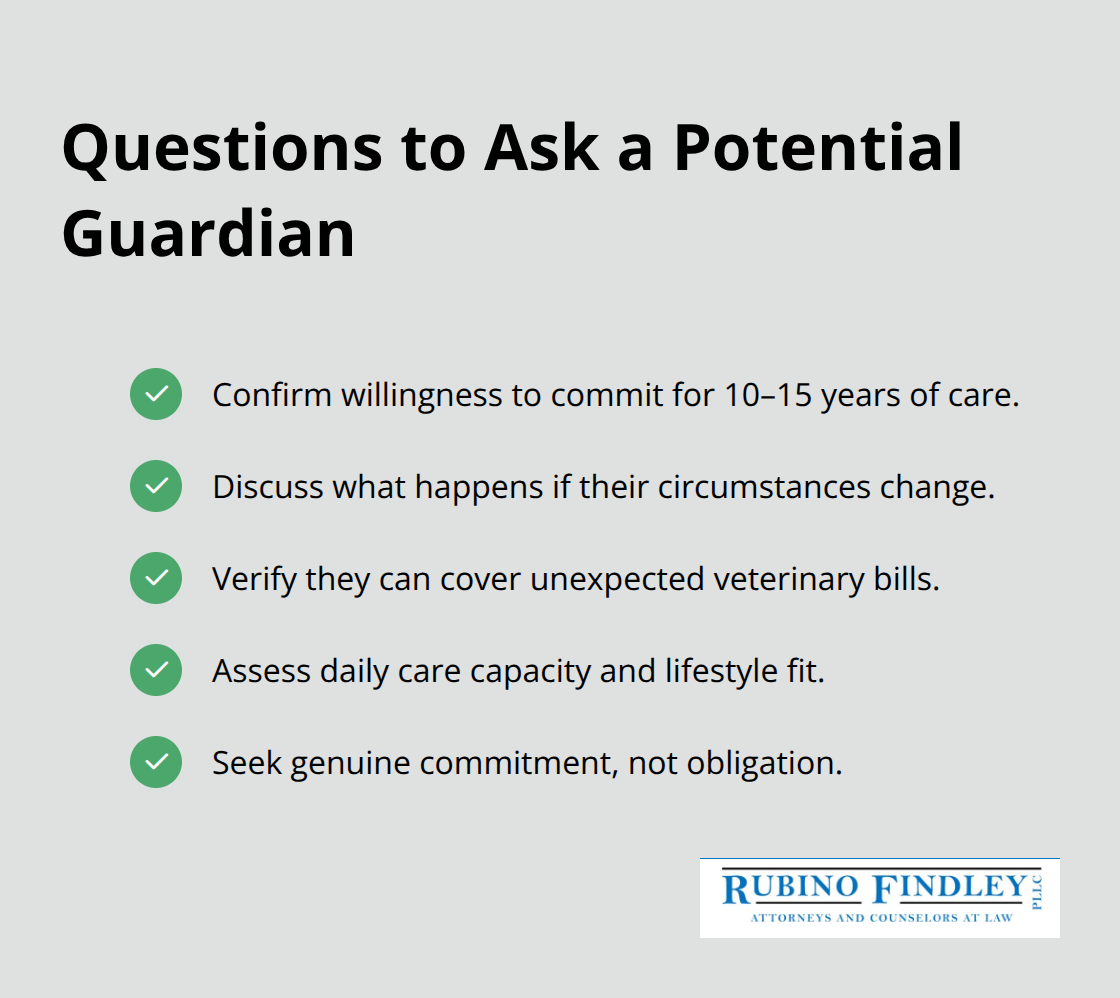
Many people feel honored when asked but haven’t actually considered the reality of the commitment. A guardian who agrees reluctantly or out of obligation will struggle when faced with expensive medical decisions or behavioral challenges. Your pet’s future depends on someone who genuinely wants this responsibility, not someone who feels pressured into it.
Building in Backup Options
You also need a backup guardian, and ideally a third option. If your first choice becomes unavailable due to relocation, health issues, or changed circumstances, your pet’s care cannot depend on a single person. Florida Statutes Section 737.116 allows you to name multiple caregivers in your pet trust, with clear instructions about who assumes responsibility if the primary guardian cannot serve. This redundancy ensures your pet never lands in a shelter because your first choice fell through.
Calculating Realistic Lifetime Costs
Funding a pet trust requires estimating realistic lifetime care costs, not just current expenses. The average dog costs $1,500 to $3,000 annually for food, routine veterinary care, and basic supplies. Cats run $800 to $1,500 per year.
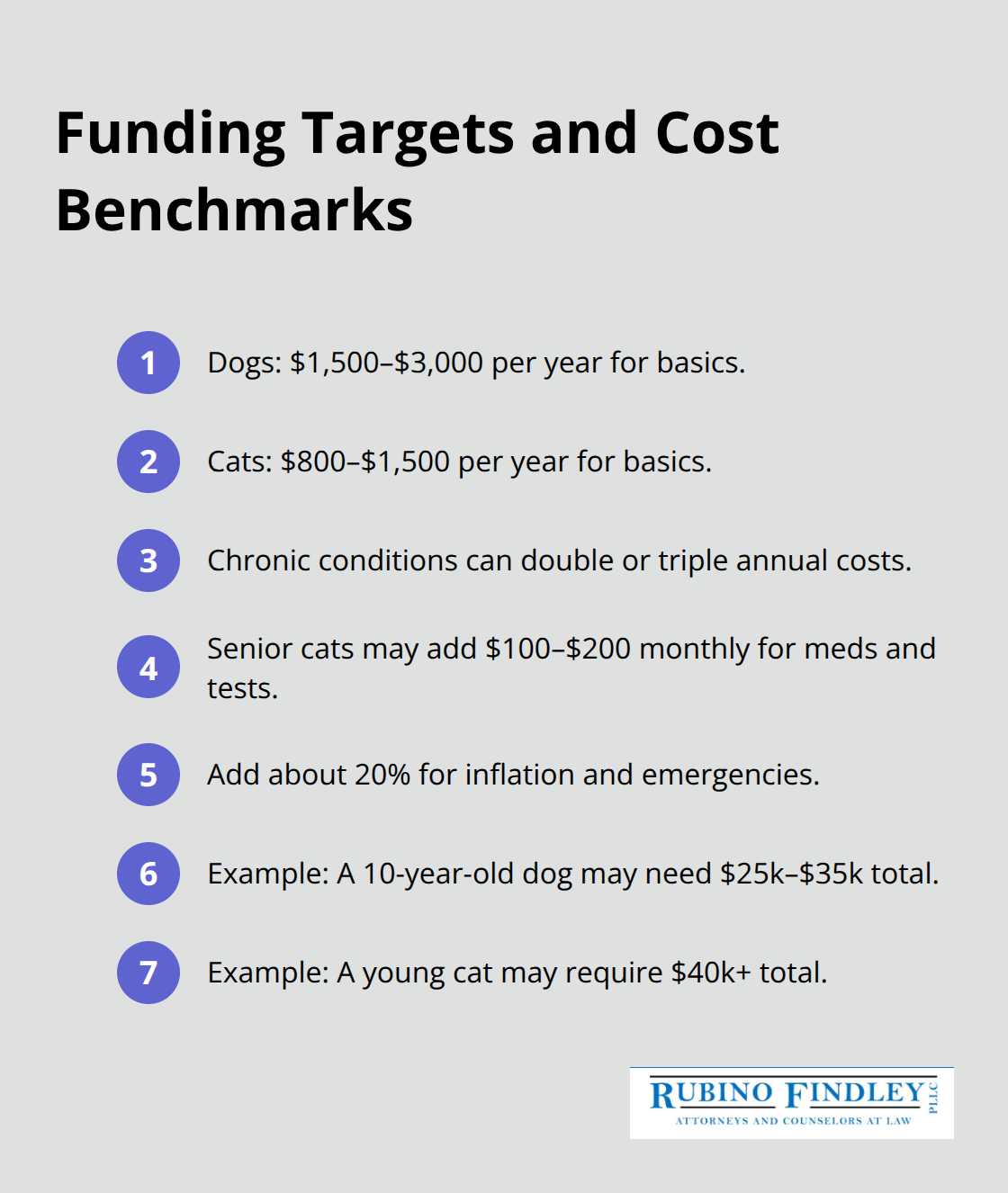
These figures assume a healthy pet with no chronic conditions. A dog with diabetes, arthritis, or heart disease easily doubles or triples these costs. A senior cat requiring monthly bloodwork and medication adds $100 to $200 monthly beyond baseline care.
Consult your veterinarian about your specific pet’s health trajectory and potential future expenses, then add 20 percent for inflation and emergency reserves. A ten-year-old dog might need $25,000 to $35,000 over its remaining lifespan, while a young cat could require $40,000 or more.
Choosing the Right Assets and Disbursement Structure
Fund the trust with specific assets: cash accounts, investment accounts, or insurance proceeds designated for this purpose. Avoid funding it with property, which creates complications for the trustee and may not convert quickly to cash when the guardian needs money for care. Your trust documents must specify exactly how the trustee disburses funds-monthly payments to the guardian, quarterly reimbursements for receipts, or whatever structure prevents misuse while ensuring the caregiver never struggles financially to keep your pet.
The trustee you select plays a critical role in making these payments happen smoothly. This person (or professional entity) holds the assets and ensures your guardian receives the funds needed without delay or dispute. With the right guardian, adequate funding, and clear disbursement instructions in place, your pet’s financial security is locked down. The next step involves putting all these decisions into legally binding documents that Florida courts will recognize and enforce.
Pet Estate Planning Mistakes That Derail Your Plans
The Guardian You Never Actually Asked
Most people fail at pet estate planning not because they lack good intentions, but because they skip the hardest conversations or underestimate the financial reality. The first and most common mistake is naming a guardian without actually asking them to take on the responsibility. Many pet owners assume a family member or close friend will happily care for their pet after they’re gone, only to discover during estate settlement that the person never agreed to this role or feels trapped by an obligation they never accepted.
This creates chaos at the worst possible time. Before you write anyone’s name into your legal documents, sit down with them and have a direct conversation. Ask whether they can commit to daily care for 10 to 15 years. Ask what happens if they relocate, face financial hardship, or develop health issues. Ask whether they understand the financial burden, especially if your pet has ongoing medical needs. If someone hesitates or gives a lukewarm response, do not name them as guardian. A reluctant caregiver will struggle with difficult decisions and may eventually surrender your pet to a shelter out of frustration or financial pressure.
Missing Backup Caregivers
The second mistake compounds the first: naming a single guardian with no backup plan. If your chosen caregiver dies, moves, or becomes unable to care for your pet, your animal has no safety net. Florida law allows you to name multiple caregivers in your pet trust with clear succession instructions, so if your first choice cannot serve, the second person automatically steps in. Without this redundancy, your pet could land in a shelter simply because circumstances changed.
Underfunding the Trust
The third mistake is underfunding the trust. Many owners set aside $5,000 or $10,000 and assume that covers lifetime care, failing to account for inflation, medical complications, or extended lifespan. A healthy ten-year-old dog with no chronic conditions might live another six years and require $25,000 or more in total care costs. A young cat could live another 15 years and cost $40,000 or more.
Consult your veterinarian about your specific pet’s health outlook and realistic expenses, then add a safety margin for inflation and emergencies. Underfunding forces your caregiver to choose between proper care and financial survival, which defeats the entire purpose of your plan. These three mistakes are entirely preventable if you approach pet estate planning with honesty and specificity rather than assumptions.
Final Thoughts on Estate Planning for Pets in Boca Raton
Pet estate planning requires concrete action and legal documentation, not just good intentions. The decisions you make now directly determine whether your pet receives proper care or ends up in a shelter, so start by scheduling a conversation with your veterinarian to establish realistic lifetime care costs for your specific animal. Then identify potential guardians and have honest discussions about their willingness and ability to commit for the next decade or more.
Once you’ve settled on a guardian and backup options, you need legal documents that Florida courts will recognize and enforce. Pet trusts require precise language around funding, trustee responsibilities, and caregiver instructions-details that DIY documents often miss. We at Rubino Findley, PLLC help families throughout Palm Beach County create comprehensive estate planning for pets that specify exactly how funds flow to your guardian, what care instructions your pet receives, and what happens to any remaining money after your pet passes.
Review your plan every two to three years or whenever major life changes occur, and share copies of your pet trust with your guardian, trustee, and family members so everyone understands your wishes. Contact Rubino Findley, PLLC to schedule a consultation and take the first step toward securing your pet’s future.