



How to Get Florida Probate Letters of Administration
When someone passes away without a will in Florida, the probate court appoints an administrator to manage the estate. This person needs Florida probate letters of administration to legally handle the deceased’s assets and affairs.
At Rubino Findley, PLLC, we help families in Boca Raton navigate this process from start to finish. This guide walks you through what these letters are, how to obtain them, and what responsibilities come with the role.
What Letters of Administration Actually Do
Understanding Your Authority as Administrator
Letters of Administration are court-issued documents that authorize you to manage a deceased person’s probate estate in Florida. They function as proof that the court has appointed you as the administrator and that banks, creditors, and other institutions must cooperate with you. Without these letters, you cannot access bank accounts, sell property, pay debts, or distribute assets to heirs. The Florida Probate Rules require the court to issue these letters before you can take meaningful action.
Why Estate Assets Require These Letters
You need Letters of Administration whenever the deceased person owned assets solely in their name without automatic succession arrangements, such as real estate held individually, bank accounts without named beneficiaries, or business interests. Assets that bypass probate entirely-like joint accounts with survivorship rights, retirement accounts with named beneficiaries, or life insurance policies-do not require Letters of Administration to transfer. This distinction matters because it determines whether you file for probate at all. Many families mistakenly believe all assets require probate administration, but proper planning means some assets transfer directly to beneficiaries without court involvement.
Letters of Administration vs. Letters Testamentary
Letters of Administration differ from Letters Testamentary in one critical way: Letters Testamentary are issued when the deceased left a valid will, while Letters of Administration are issued when there is no will or when the will is invalid. In both cases, the court appoints a fiduciary to manage the estate, but the source of authority differs. With a will, the named executor receives Letters Testamentary; without a will, the court appoints an administrator who receives Letters of Administration. The process for obtaining either type of letter follows the same general timeline and requirements in Florida.
Timeline and Costs for Obtaining Letters
Filing fees in Palm Beach County start at $401 within 10 days of death, and hearings typically occur within 30 to 45 days (though backlogs from January through March can extend this to 60 days). Attorney fees for formal administration generally range from $3,000 to $8,000 depending on estate complexity and whether disputes arise.
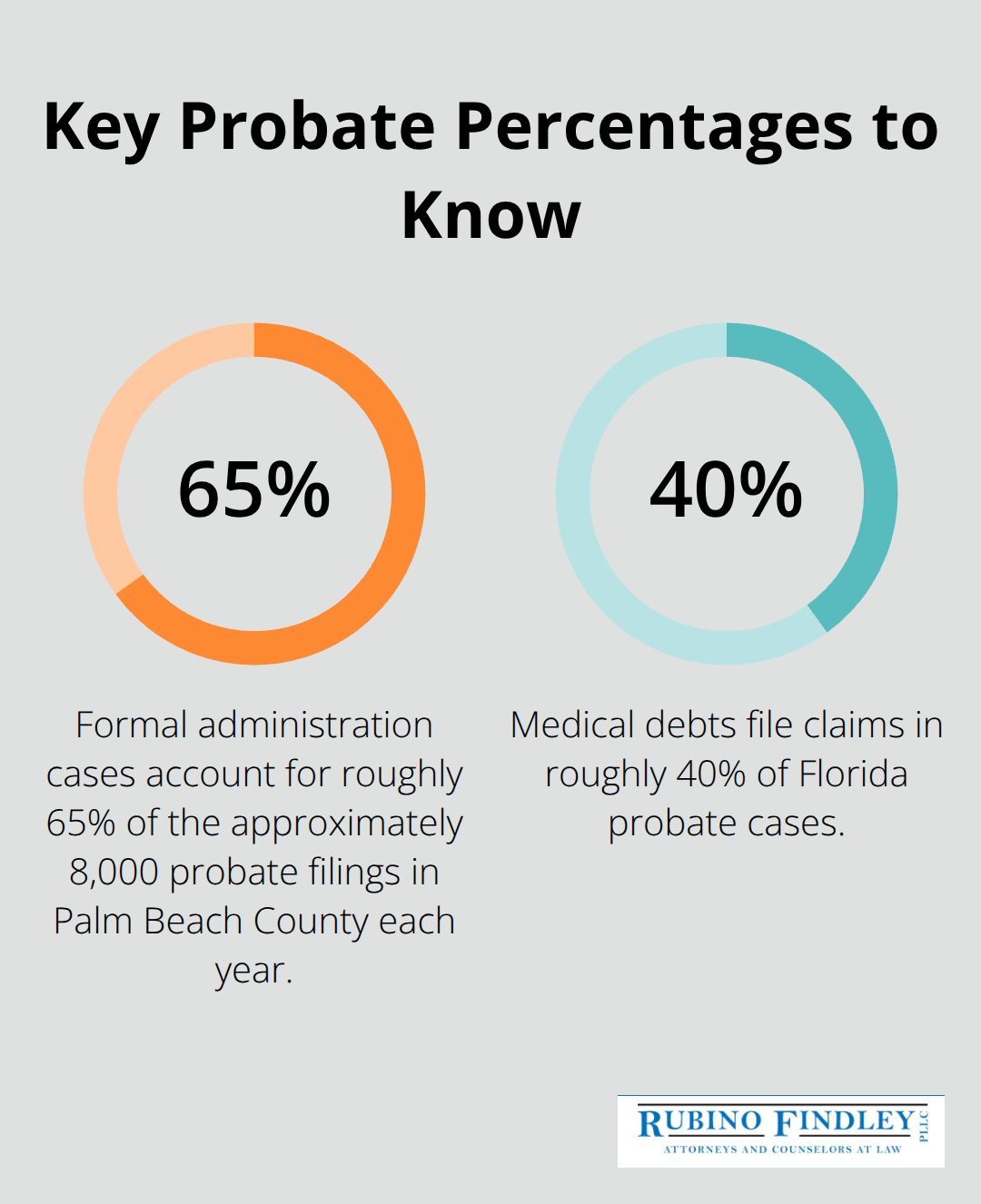
Some families explore summary administration as an alternative when the estate value does not exceed $75,000 or when the death occurred more than two years ago; summary administration typically costs $1,500 to $3,500 and completes in 3 to 6 months. In Palm Beach County, formal administration cases-which result in Letters of Administration-make up roughly 65% of the approximately 8,000 probate cases filed annually according to county records.
Choosing the Right Path Forward
The choice between formal and summary administration depends on estate size, complexity, and whether debts or disputes exist. If you are unsure whether your situation requires Letters of Administration or qualifies for a simpler probate path, an attorney can review your specific circumstances and guide you toward the right approach. Once you understand which path applies to your estate, the next step involves preparing and filing the necessary documents with the probate court.
Getting Your Letters of Administration Approved in Boca Raton
Preparing Your Filing Materials
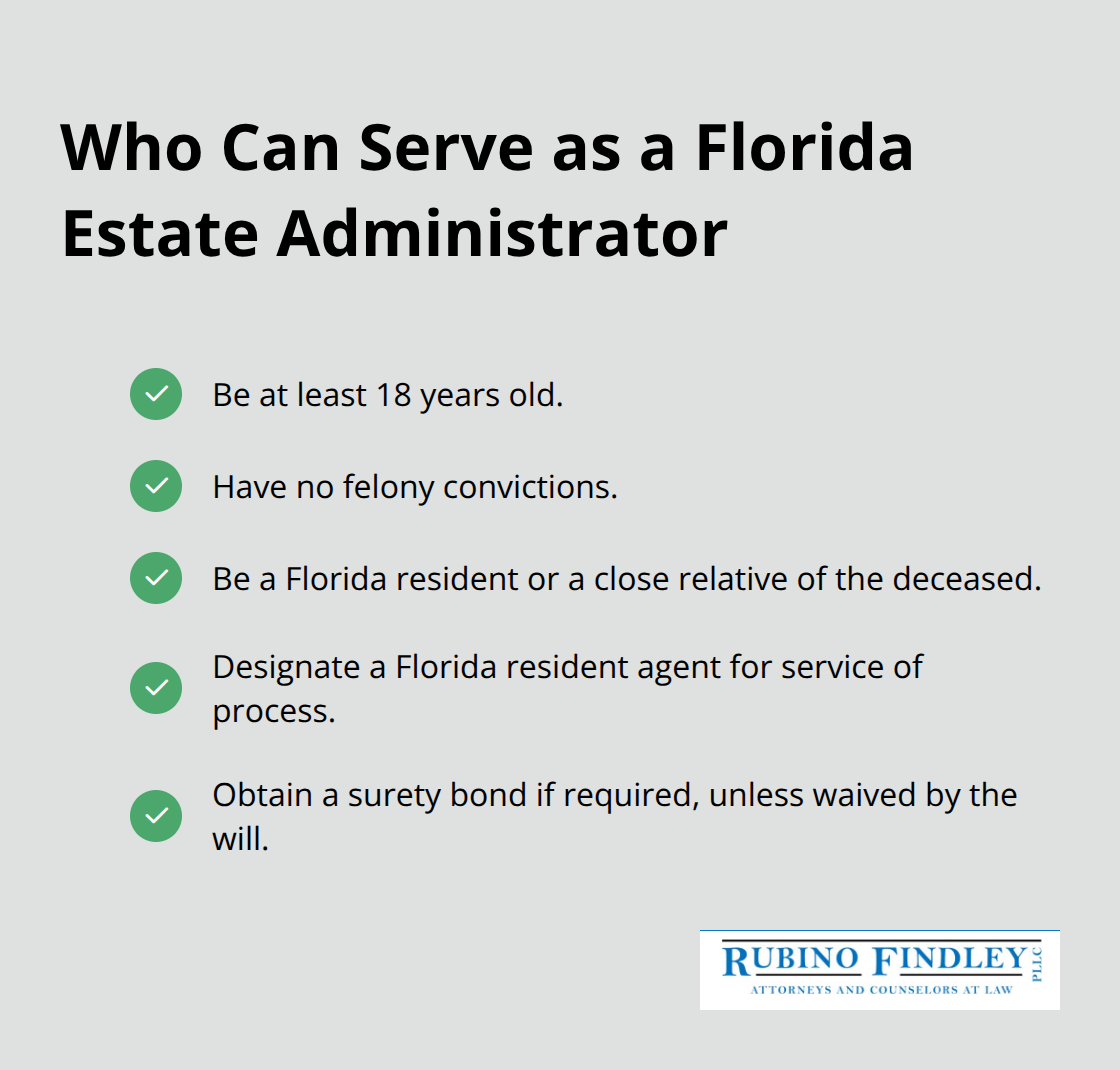
The path to obtaining Letters of Administration involves three concrete steps: preparing your filing materials, submitting your petition to the probate court, and attending your hearing. You must gather the original will (if one exists), the certified death certificate, and proof that you meet Florida’s requirements to serve as administrator. Florida law requires the administrator to be at least 18 years old, not a convicted felon, and either a Florida resident or a close relative of the deceased. You must also designate a resident agent to receive legal documents on your behalf and decide whether you need a surety bond (though many wills waive this requirement).
The filing fee in Palm Beach County is $401, due within 10 days of death according to Florida Statute 733.2123. Filing as soon as possible prevents delays that can complicate asset management and creditor notification later.
Submitting Your Petition to the Probate Court
Your attorney prepares the Petition for Administration, which formally asks the court to recognize your authority and appoint you as administrator. Once you file your petition with the Probate Division, the court schedules a hearing within 30 to 45 days under normal circumstances. However, January through March backlogs commonly push hearings to 60 days or longer, so plan accordingly if the death occurred during peak months. The judge reviews your petition, confirms the will’s validity (if one exists) or verifies that no will exists, and determines whether you meet all legal requirements. Your attorney submits unsigned draft letters through the 15th Judicial Circuit Online Scheduling System, not by mail or email.
Receiving Your Letters and Taking Action
If everything is in order, the judge signs the Letters of Administration on the spot. These letters grant you immediate authority to access bank accounts, manage assets, and begin the creditor notification process. Court backlogs mean that even after approval, the actual Letters may arrive within days but sometimes weeks, so do not delay opening an estate bank account once you receive them. The probate process from filing to receiving Letters typically takes 4 to 8 weeks in Palm Beach County, making early preparation essential for estates with time-sensitive assets or ongoing expenses. With your Letters in hand, you transition from preparation to active estate management-the next phase where you inventory assets, notify creditors, and begin settling the deceased’s financial obligations.
What Happens After You Receive Your Letters in Boca Raton
Once the court issues your Letters of Administration, the real work begins. You now have legal authority to act on behalf of the estate, but this authority comes with strict obligations. Florida law requires you to complete several tasks in a specific sequence, and mistakes can trigger disputes with heirs, creditor claims, or court sanctions.
Establish Your Estate Bank Account Immediately
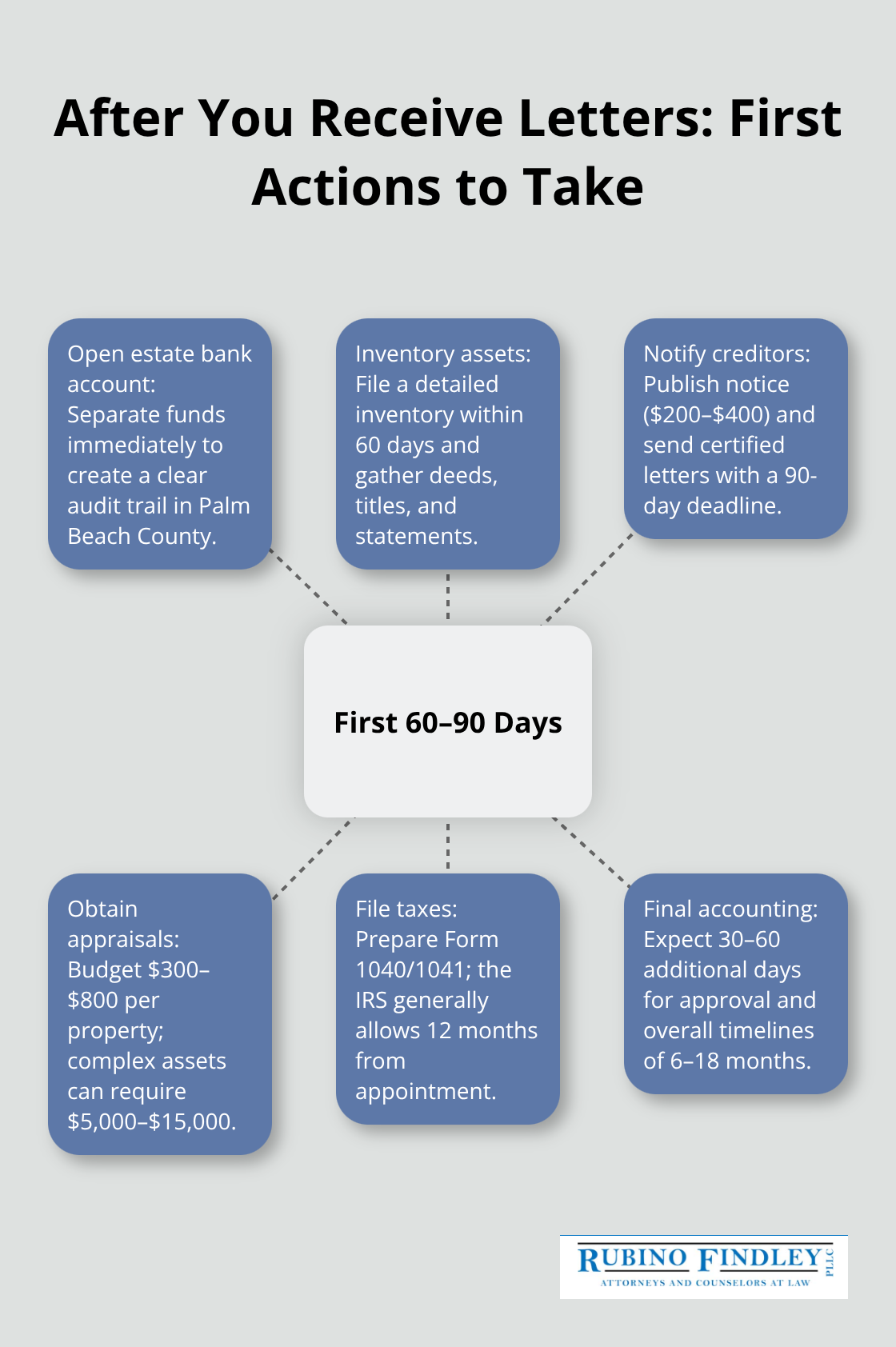
The first 60 days after receiving your Letters are critical because you must identify all estate assets, notify creditors, and establish an estate bank account. Open a dedicated account immediately at a bank in Palm Beach County where the estate is being administered. This separates estate funds from your personal finances and creates a clear audit trail for the probate court. Commingling funds under any circumstances violates fiduciary duty and provides grounds for removing you as administrator.
Inventory Assets and Obtain Professional Appraisals
Within 60 days of appointment, you must prepare a detailed inventory of all probate assets and file it with the court. Locate bank statements, investment accounts, real estate deeds, vehicle titles, and any other property owned solely by the deceased. Professional appraisals are essential for real estate and personal property; expect to pay $300 to $800 per property for a qualified appraisal. For closely-held businesses or valuable collections, appraisal costs can reach $5,000 to $15,000, but obtaining multiple appraisals upfront prevents disputes later that could extend probate by months or years.
Notify Creditors and Manage Claims
Publish a Notice to Creditors in a newspaper of general circulation in Palm Beach County, which costs $200 to $400 typically. This notice triggers a three-month creditor claim period, and you must also send certified letters to any known creditors with a 90-day deadline. Medical debts file claims in roughly 40% of Florida probate cases, and many claims arrive inflated or duplicated, so verify each one carefully before paying. Reject invalid or duplicated claims in writing, as creditors can dispute your rejection in court.
File Tax Returns and Settle Final Obligations
Once the creditor period closes, you pay valid claims from estate assets, file final income tax returns for the deceased (Form 1040 for the last partial year and Form 1041 for the estate itself), and handle any estate tax returns if the gross estate exceeds the federal threshold. The IRS generally allows 12 months from your appointment to file these returns, or longer if a federal estate tax return is required. After all debts, taxes, and administration expenses are paid, you distribute the remaining assets to heirs according to Florida intestacy law if there was no will, or to beneficiaries named in the will if one exists.
File Your Final Accounting and Await Court Approval
File a final accounting with the court showing all income, expenses, and distributions. Court backlogs, particularly January through March, mean your final accounting approval can take 30 to 60 additional days, so plan for total probate timelines of 6 to 18 months for formal administration in Palm Beach County.
Final Thoughts
Obtaining Florida probate letters of administration requires attention to detail and strict adherence to court deadlines. The letters themselves represent your legal permission to act as administrator, but they mark only the start of your responsibilities. From opening an estate bank account to managing creditor claims and filing tax returns, each task carries real consequences if you handle it incorrectly, and court backlogs in Palm Beach County mean that even straightforward cases take 6 to 18 months.
Most families attempt this process without legal guidance, which creates costly mistakes. While Florida law does not require attorney representation for summary administration or disposition without administration, formal administration cases benefit enormously from professional help (an attorney handles petition drafting, court submissions through the Online Scheduling System, and ensures your filings meet all technical requirements the first time). Attorney fees of $3,000 to $8,000 for formal administration cost far less than fixing errors or defending against creditor disputes that could add months or thousands in additional expenses.
If you face the death of a loved one and feel uncertain whether you need letters of administration, the answer depends on what assets the deceased owned and how they were titled. We at Rubino Findley, PLLC help families in Boca Raton and throughout Palm Beach County navigate probate administration, creditor management, and asset distribution. Contact us for a free consultation to discuss your specific situation and determine the right path forward for your estate.