




How to Navigate Probate and Estate Administration
When someone passes away, their estate must go through probate and estate administration-a legal process that can feel overwhelming without proper guidance. At Rubino Findley, PLLC, we help families in Boca Raton understand each step and avoid costly mistakes.
This guide walks you through what probate involves, the challenges you might face, and how to protect your family’s interests.
What Probate Actually Is
Probate is a court-supervised legal process that validates a will, identifies the decedent’s assets, pays debts and taxes, and distributes remaining property to beneficiaries according to the will or Florida’s intestacy laws. In Palm Beach County, this process typically takes 12 to 15 months for formal administration, though the timeline varies significantly based on estate size, complexity, and whether disputes arise. The process matters because without it, creditors may go unpaid, beneficiaries won’t receive clear title to assets, and family conflicts can escalate into expensive litigation. Florida law requires formal administration when the estate’s probate assets exceed $75,000 or when creditors file claims; smaller estates under $75,000 with no objections can qualify for summary administration, which moves much faster and costs considerably less.
Which Assets Enter Probate
Not all assets owned by the decedent enter probate. Property held in joint tenancy, accounts with payable-on-death designations, life insurance proceeds, and retirement accounts with named beneficiaries pass directly to the designated recipients without court involvement. Probate assets consist only of property owned solely in the decedent’s name or owned with others but lacking automatic transfer rights.
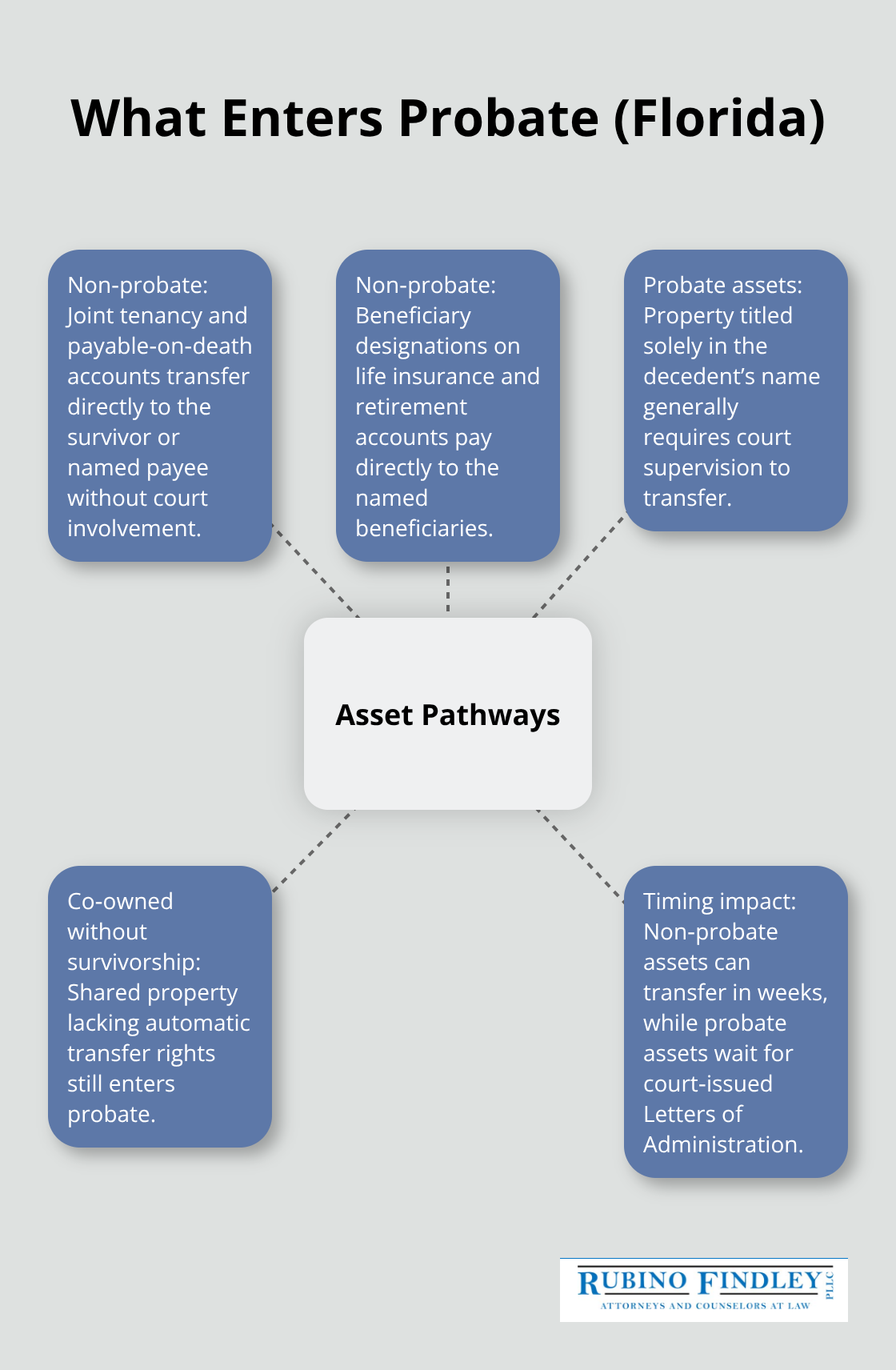
This distinction matters enormously because non-probate assets reach beneficiaries in weeks, while probate assets remain frozen until the court issues Letters of Administration. Many families overlook this separation and assume all assets require probate, which leads to unnecessary delays and costs. The key is identifying which assets fall into each category early in the process so you can expedite transfers and reduce estate expenses.
Formal Administration vs. Summary Administration
Florida law provides two main pathways for probate, and the choice affects both timeline and cost significantly. Formal administration applies to larger estates or those with creditor claims, requiring court supervision throughout the process. Summary administration applies to smaller estates (under $75,000 in probate assets) with no known creditors and all beneficiaries’ consent, and it can close in weeks rather than months. The creditor claims period runs 90 days from first publication of the Notice to Creditors in formal administration, and final accounting must be filed within 12 months of receiving Letters of Administration. These timelines exist by law, so even straightforward estates cannot close faster than the statutory requirements allow. Summary administration avoids many of these delays because it bypasses the extended creditor period and court hearings.
What Probate Actually Costs
Costs vary widely depending on whether disputes arise, but attorney fees, court filing fees, and personal representative compensation typically range from a few thousand dollars for summary administration to $10,000 or more for formal administration of larger estates. The personal representative’s compensation is set by the will, agreement among parties, or the judge if contested, and Florida law allows reasonable fees for the work involved. Probate avoidance through revocable living trusts eliminates court supervision and reduces timelines, but trusts require proper funding during life to be effective. Not all situations allow complete probate avoidance due to homestead complexities or unforeseen assets that remain outside the trust structure. Understanding these costs upfront helps families make informed decisions about whether to pursue probate avoidance strategies or proceed with administration.
Steps in the Probate Process
Filing the Will and Obtaining Letters of Administration
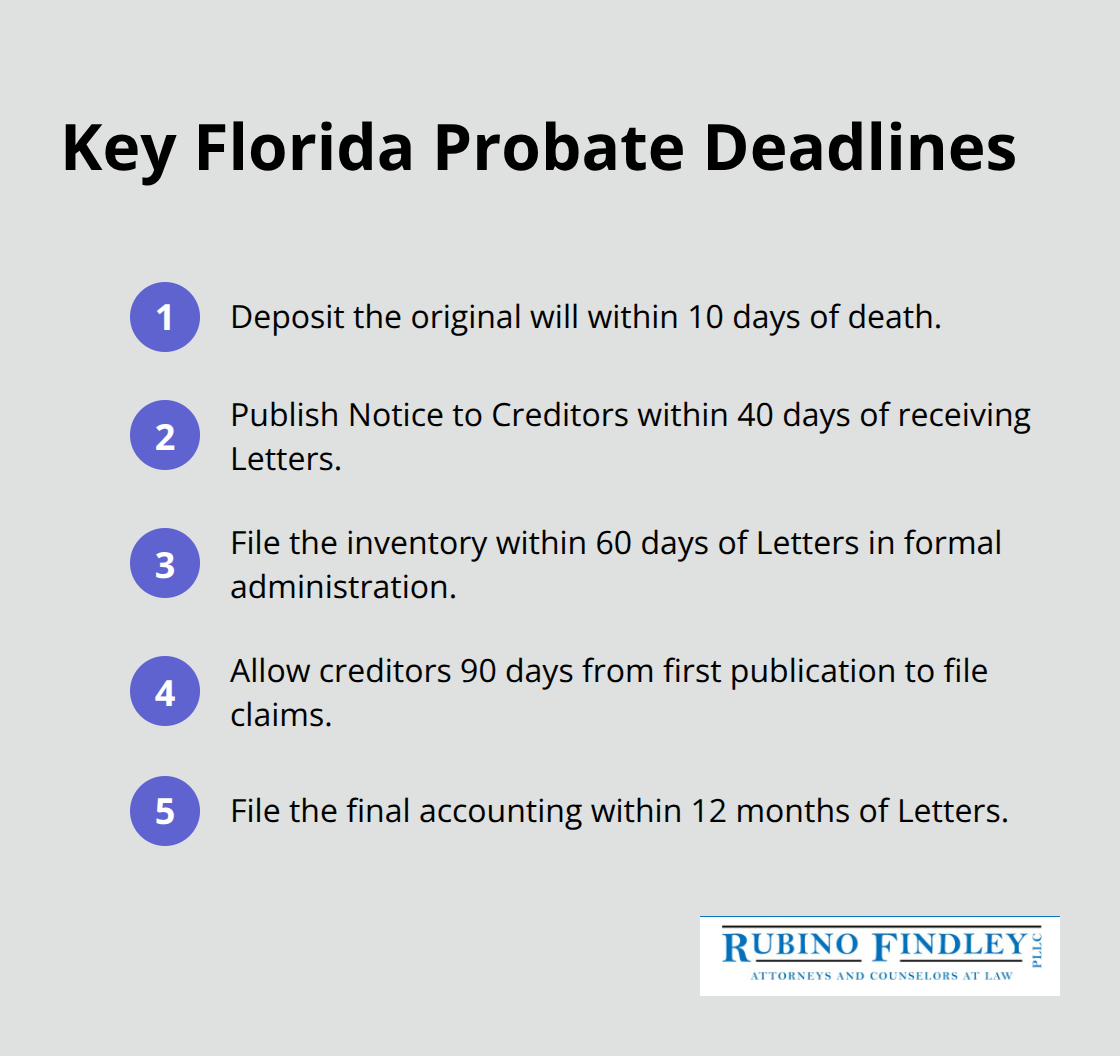
The moment you file the original will with the Clerk of the Circuit Court in Palm Beach County, the probate process officially begins. Florida law requires the will to be deposited within 10 days of death, and there’s no filing fee for this step alone, though court fees apply when you petition to open formal administration. Once filed, you’ll receive a file number and can request Letters of Administration from the judge, which authorize the personal representative to act on behalf of the estate. This document is essential because banks, investment firms, and other institutions won’t release funds or transfer assets without it. The petition itself must be submitted through the 15th Judicial Circuit’s Online Scheduling System, not by mail or email. Many families don’t realize this requirement, leading to rejected submissions and unnecessary delays. You’ll also need to identify your assigned judge by finding the two-letter division code on your paperwork and checking the 15th Judicial Circuit’s Divisions page for hearing instructions and contact information.
Publishing Notice and the Creditor Claims Period
The personal representative must publish a Notice to Creditors in a newspaper of general circulation within 40 days of receiving Letters of Administration, and the Clerk doesn’t forward this notice for you-you must arrange publication directly and file proof with the Clerk. Creditors then have 90 days from the first publication date to file claims, and this period exists by statute, meaning even simple estates must remain open long enough for creditors to respond. You’ll also serve a Notice of Administration on all known heirs and beneficiaries, which must include information about their rights and the claims process.
This dual notification requirement (creditors and heirs) protects both groups and establishes the legal foundation for the remaining administration steps.
Inventory, Appraisal, and Asset Evaluation
Meanwhile, the personal representative begins identifying and valuing all probate assets, obtaining appraisals where needed for real estate or valuable personal property. Florida law requires an inventory to be filed, and for formal administration, this must happen within 60 days of receiving Letters of Administration. Once creditor claims arrive, the personal representative must evaluate each one and either pay valid claims or file objections in court if the claim is disputed. Only after the 90-day creditor period expires and all valid claims are paid can distributions to beneficiaries begin, which typically occurs between months 9 and 15 of the process.
The next phase of probate administration involves resolving disputes that may arise during this evaluation period, and understanding how to handle these conflicts can significantly impact both the timeline and the final distribution to your beneficiaries.
Common Probate Challenges and How to Avoid Them
Family Conflicts Over Inheritance
Family conflicts over inheritance represent the largest source of probate delays and expenses in Palm Beach County. When heirs disagree about asset distribution or question the validity of the will itself, formal administration can stretch from 15 months to three years or longer. The 15th Judicial Circuit Court handles these disputes through formal hearings, and litigation costs accumulate quickly when multiple parties hire separate attorneys.
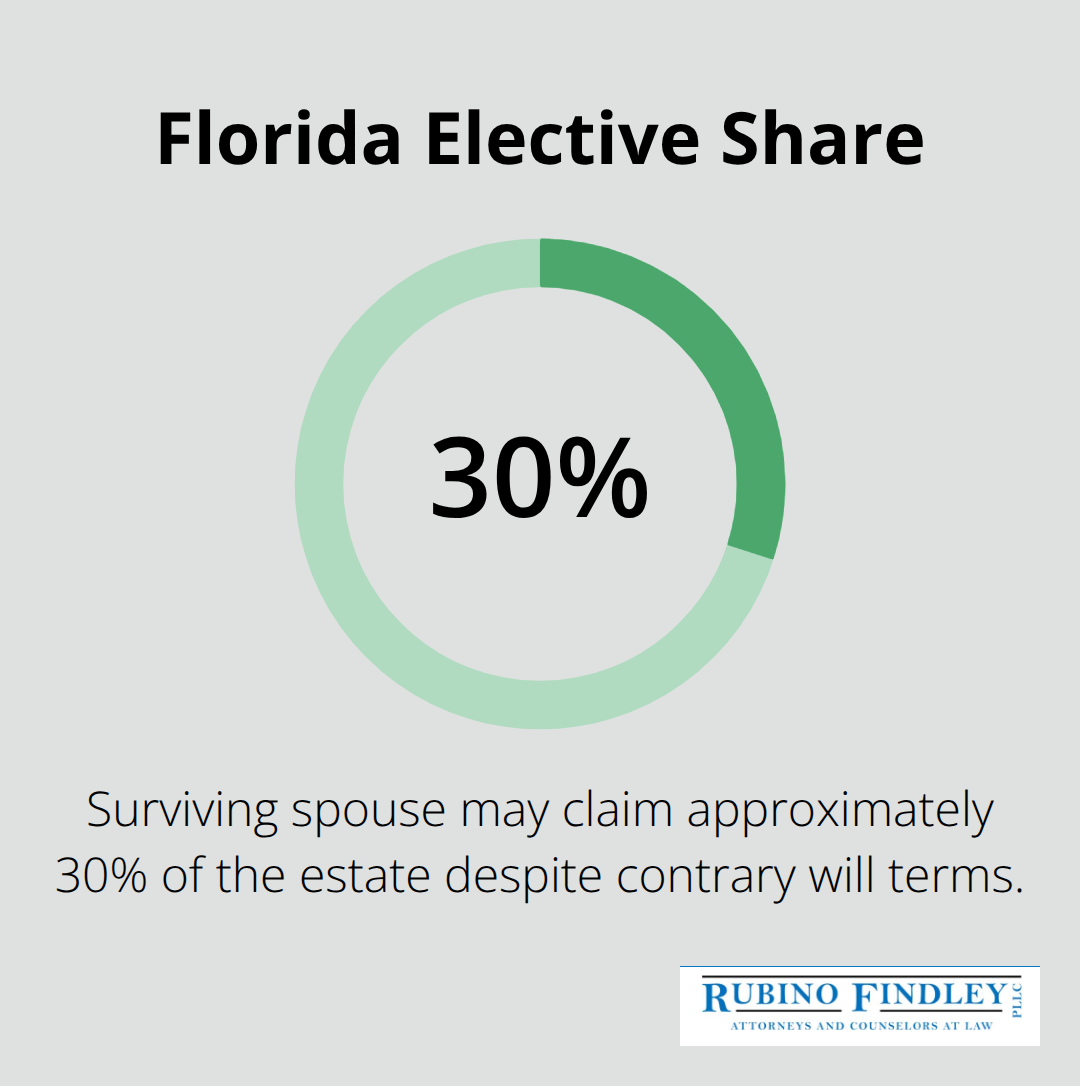
One common trigger is when a will appears to disinherit a spouse or child unexpectedly, prompting that family member to file an elective share claim. Under Florida law, a surviving spouse can claim approximately 30 percent of the estate regardless of what the will states, and this right exists even if the will explicitly excludes them.
Rather than fighting this in court, many personal representatives settle elective share claims early to avoid common pitfalls in probate.
Another frequent dispute arises when beneficiaries discover that the decedent held significant assets outside the probate estate through joint ownership or beneficiary designations, creating the impression that some heirs received preferential treatment during life. These situations rarely resolve without attorney involvement, and costs for contested probate often reach $15,000 to $25,000 or more depending on complexity.
Creditor Claims and Debt Settlement
Creditor claims present a different challenge entirely. Creditors have 90 days from the first publication of the Notice to Creditors to file claims against the estate, and the personal representative must evaluate each claim carefully. If a creditor claim appears inflated or invalid, filing an objection requires court approval, which triggers additional legal fees and delays.
Medical debt, credit card balances, and outstanding personal loans must be paid before any beneficiary receives distributions, meaning a single large creditor claim can consume months of estate funds that would otherwise go to heirs. The personal representative bears personal liability if valid creditor claims go unpaid, so careful documentation of all claims and objections protects them from future lawsuits.
Tax Implications and Planning Strategies
Tax obligations create the third major complexity in probate administration. The decedent’s final income tax return must be filed by April 15 of the year following death, and if the gross estate exceeds $13.61 million as of 2024, a federal estate tax return is required regardless of whether taxes are owed. The personal representative must file Form 1041 for the estate itself if it produces income during administration.
Many families underestimate how significant these tax obligations become when the estate includes retirement accounts, investment portfolios, or valuable real estate. A surviving spouse who inherits an IRA faces Required Minimum Distribution rules that differ depending on whether they roll the account into their own name or treat it as an inherited IRA, and this decision has permanent tax consequences.
The personal representative should understand that certain assets receive a stepped-up basis at the decedent’s death, meaning beneficiaries can sell inherited property at its fair market value on the date of death without capital gains tax consequences. This benefit applies automatically to most probate assets but not to assets transferred through beneficiary designations or joint ownership, creating another reason to structure the estate carefully before death. Working with a tax advisor during probate administration prevents costly errors, such as failing to claim income deductions or missing deadlines that trigger penalties.
Final Thoughts
Probate and estate administration in Palm Beach County follows fixed legal timelines that you cannot accelerate, no matter how straightforward your situation appears. The 90-day creditor claims period, the 12-month accounting deadline, and the requirement to publish notice in a newspaper all exist by statute, so planning around these dates matters significantly. Formal administration typically takes 12 to 15 months, while summary administration can close in weeks if your estate qualifies, but waiting until death to address these issues transforms straightforward cases into expensive litigation.
The real difference emerges when families establish proper planning during their lifetime rather than leaving these decisions to chance. Family conflicts over inheritance, creditor disputes, and tax complications all become exponentially more costly to resolve after someone passes away, and a missed deadline or overlooked asset can derail your family’s financial security for years. We at Rubino Findley, PLLC help families navigate probate and estate administration, but more importantly, we help you avoid it altogether through proper planning (whether that means a will, a revocable living trust, a durable power of attorney, or guidance on beneficiary designations).
Your next step is straightforward: reach out to Rubino Findley, PLLC to schedule a free consultation and establish the estate plan that fits your situation. We serve Palm Beach County and can help you determine whether probate administration guidance or a comprehensive strategy to bypass probate entirely makes sense for your family.