




Palm Beach Probate Process: From Filing to Final Distribution
When someone passes away in Florida, their estate typically goes through probate-a legal process that can feel overwhelming without guidance. The Palm Beach probate process involves multiple steps, from filing initial paperwork to distributing assets to beneficiaries.
We at Rubino Findley, PLLC help families navigate this journey with clarity. This guide walks you through each stage so you know what to expect.
What Happens in Palm Beach Probate and Why It Costs What It Does
Probate in Florida is the court-supervised process that validates a will, identifies heirs, settles debts, and transfers property to beneficiaries. It matters because without it, no one has legal authority to access bank accounts, sell real estate, or distribute assets. Florida law requires probate for most estates with property or assets in the deceased person’s name alone. The process protects creditors, beneficiaries, and the estate itself by creating a transparent, documented record. If someone dies without a will in Florida, the state’s intestacy laws determine who inherits, which often differs from what families expect.
Florida Probate Takes Time and Money
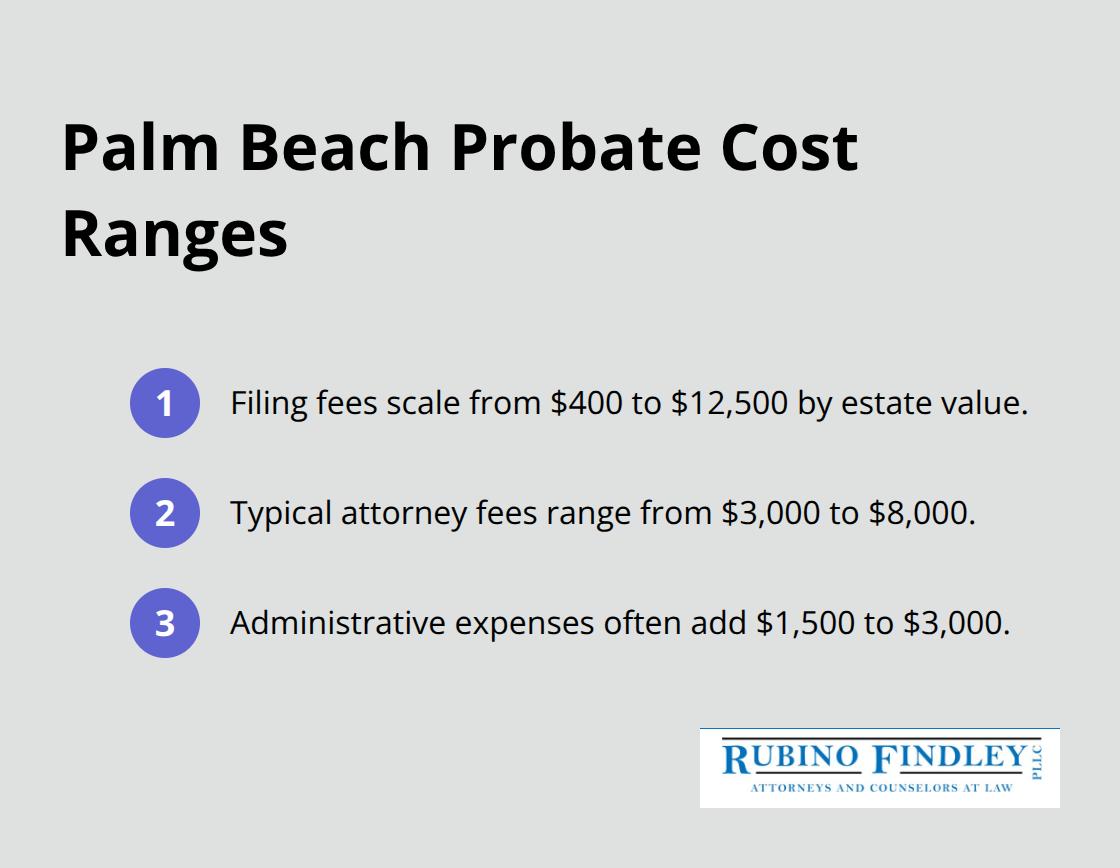
The timeline for Florida probate typically ranges from six months to two years, depending on estate complexity and whether disputes arise. A straightforward estate with no contested claims might close in eight to twelve months. More complex situations involving real estate disputes, business interests, or multiple beneficiaries frequently stretch beyond eighteen months. Florida charges probate filing fees based on estate value, starting at $400 for estates under $40,000 and escalating to $12,500 for estates exceeding $1 million, according to Florida court guidelines. Attorney fees in Palm Beach County typically run between $3,000 and $8,000 for routine probate, though contested estates can cost significantly more. Personal representatives also face accounting fees, appraiser costs, and publication expenses for creditor notices, which add another $1,500 to $3,000 on average.
Many families assume probate is avoidable, but Florida requires it whenever someone owns property titled in their individual name at death.
Myths That Cost Families Money
A common misconception is that having a will eliminates probate entirely. In reality, a will simply directs how assets are distributed once probate concludes. Another false belief is that small estates avoid probate automatically. Florida does offer a simplified process for estates under $75,000, but the property must meet specific criteria and families must file a petition anyway. Some people think named beneficiaries on bank accounts bypass probate for those accounts, which is true, but it only applies to accounts with active beneficiary designations. Many assume that joint ownership prevents probate, yet Florida courts still require probate to resolve title issues and clear the deceased owner’s interest. The costliest myth is believing you don’t need professional guidance because the process seems straightforward. Mistakes in filing, missed deadlines, or improper asset valuations create expensive delays and potential litigation among beneficiaries.
What Comes Next in Your Probate Journey
Understanding these basics prepares you for the actual steps ahead. The filing process, creditor notifications, and asset accounting form the backbone of how Palm Beach probate actually moves forward.
How Palm Beach Probate Actually Moves Forward
Filing the Petition and Obtaining Court Authority
The petition filing launches everything in motion, and timing matters immediately. In Florida, you must file the petition to open probate within a specific window, and Palm Beach County courts process these filings at the probate division courthouse in West Palm Beach. The personal representative (executor or administrator) files the original will, death certificate, and petition paperwork, paying the court filing fee upfront based on estate value. Within 30 days of filing, the court issues Letters Testamentary or Letters of Administration, which grant legal authority to manage the estate.
These letters are critical documents you’ll present to banks, title companies, and creditors repeatedly throughout the process. Many families waste weeks trying to access accounts or property without these letters in hand, so obtaining them immediately accelerates everything that follows. Once the court issues letters, the personal representative can officially begin notifying creditors, which Florida law requires within a strict timeframe.
Managing the Creditor Notification Period
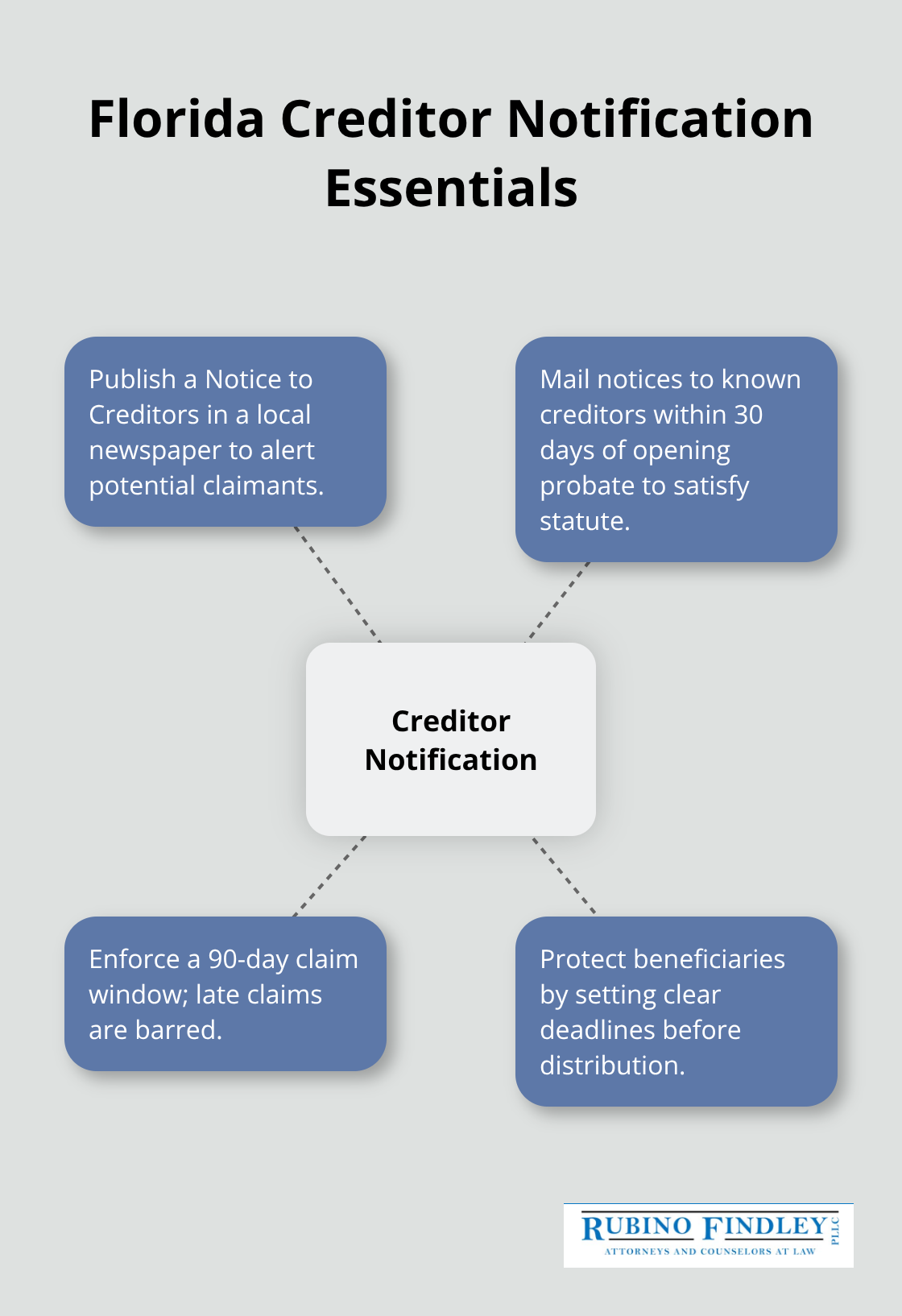
Creditor notification launches a mandatory 90-day period where claimants must present their debts or lose the right to collect. Florida requires publishing a Notice to Creditors in a local newspaper and mailing notices to known creditors within 30 days of opening probate, according to Florida Statutes Section 733.2121. This step protects the estate by creating a deadline for claims and prevents creditors from pursuing beneficiaries after distribution.
The personal representative must maintain a detailed accounting of all claims received, paid, and rejected. This documentation becomes essential when the court reviews the estate’s final accounting before closing.
Completing Asset Inventory and Appraisal
Asset inventory and appraisal happen simultaneously with creditor notification because the estate cannot distribute anything until debts are settled. Real property typically requires professional appraisals, which cost $400 to $1,200 depending on the property type and complexity. Bank accounts, securities, and personal property need valuation as of the date of death, which becomes the tax basis for beneficiaries.
The personal representative compiles a comprehensive inventory detailing every asset, its value, and its location, then files this accounting with the court. Florida courts review these accountings closely, and any discrepancies trigger additional scrutiny that delays closing. Paying creditor claims, funeral expenses, and administration costs depletes estate funds before beneficiaries receive anything, which surprises many families who expect full inheritance amounts.
Once the personal representative completes the inventory, settles all creditor claims, and prepares the final accounting, the estate moves toward the distribution phase-where disputes often surface and court approval becomes necessary.
Closing Your Palm Beach Estate
When Disputes Arise in Probate
Disputes rarely surface in straightforward probate cases, but when they do, they consume time and money rapidly. Common objections include beneficiaries challenging the will’s validity, questioning the personal representative’s decisions, or disputing asset valuations. Florida courts take these objections seriously and require the personal representative to respond formally, which often means hiring an attorney specifically for litigation. According to Florida Statutes Section 733.212, any interested party can file an objection within strict timeframes, and missing these deadlines eliminates their right to challenge later.
The personal representative must also watch for creditor disputes over claim denials. If you reject a creditor’s claim and they object, the court holds a hearing where both sides present evidence. These contested probate cases average 18 to 24 months instead of the typical 8 to 12 months, and legal costs frequently exceed $10,000 to $25,000 depending on complexity.
Real Estate Valuations and Documentation
Real estate disputes prove especially costly because property valuations can differ significantly between the appraiser’s estimate and what beneficiaries believe the property is worth. The personal representative must defend every decision with documentation, so maintaining detailed records from day one prevents most disputes from escalating. Families that hire probate guidance early avoid the majority of these conflicts entirely, because experienced attorneys structure the estate administration properly from the filing stage forward.
The Final Accounting Process
The final accounting represents the personal representative’s complete financial record of the estate, and Florida courts scrutinize these documents heavily before approving distribution. This accounting must list every asset received, every expense paid, every creditor claim settled, and every distribution made (with supporting documentation for each entry). The personal representative files this accounting with the court and serves copies to all beneficiaries and creditors, giving them a deadline to object.
Court Approval and Asset Distribution
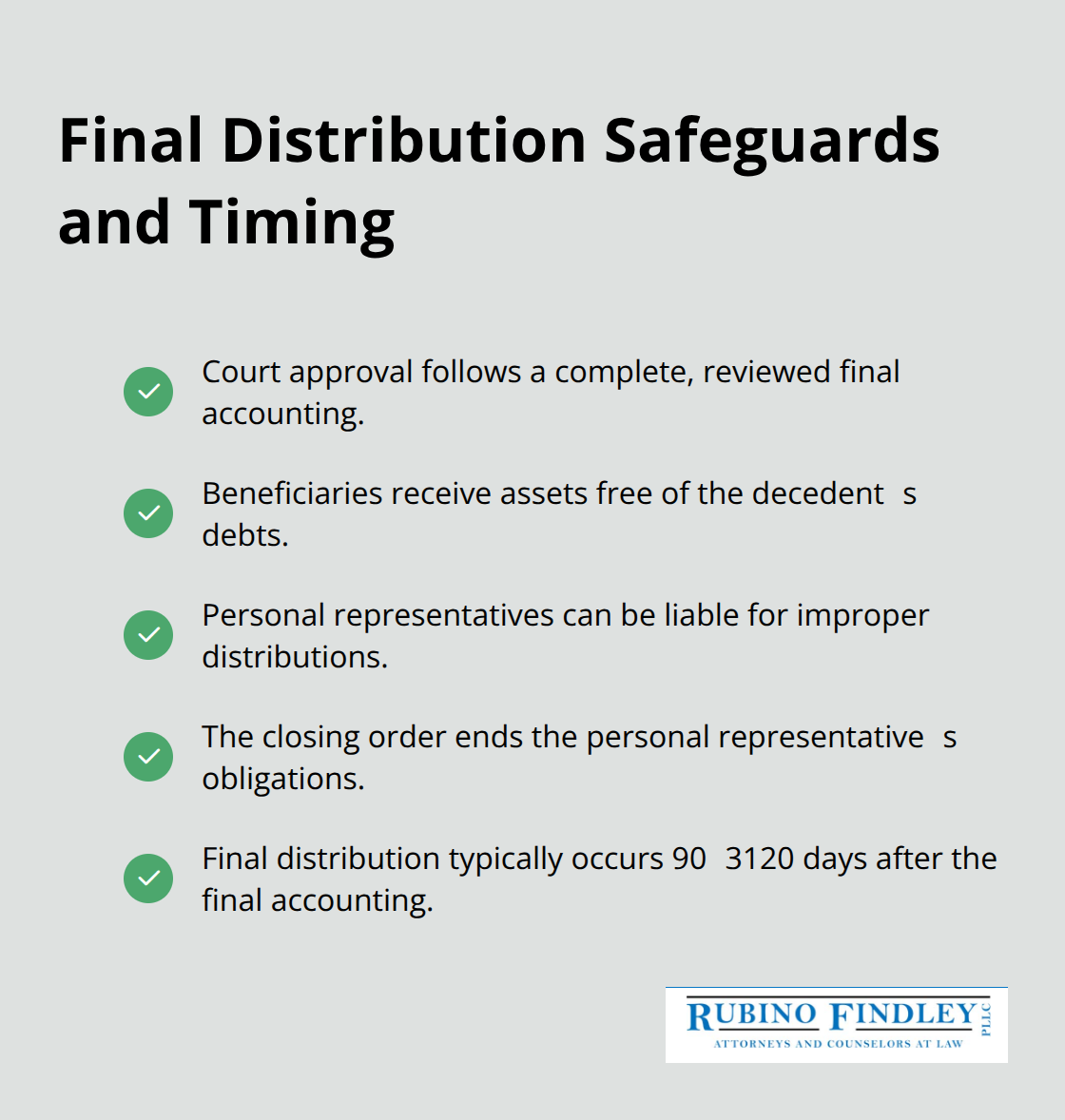
Once the court approves the final accounting, the personal representative distributes remaining assets to beneficiaries according to the will or Florida’s intestacy laws. Beneficiaries receive their inheritance free of the deceased person’s debts because creditors’ claims were satisfied during administration. Some beneficiaries expect immediate distribution, but Florida law protects estates by requiring this formal approval process.
The personal representative bears personal liability for improper distributions, meaning they could face lawsuits personally by other beneficiaries. Once the court issues an order closing the estate, the personal representative’s obligations end and beneficiaries hold clear title to their inherited property. This final step typically occurs 90 to 120 days after filing the final accounting, assuming no objections surface.
Final Thoughts
The Palm Beach probate process demands attention to detail, strict adherence to Florida timelines, and proper documentation at every stage. Families who understand what lies ahead avoid costly mistakes and unnecessary delays. The six-month to two-year timeline, combined with filing fees ranging from $400 to $12,500 depending on estate value, makes professional guidance a practical investment rather than an expense.
Probate protects everyone involved by creating a transparent, court-supervised system for settling debts and distributing assets. Without it, beneficiaries face legal uncertainty and creditors lack a clear path to collect legitimate claims. The myths surrounding probate-that wills eliminate it, that small estates automatically avoid it, or that joint ownership prevents it-cost families thousands in avoidable complications.
Whether you’re facing an active probate or planning ahead, contact Rubino Findley, PLLC for a free consultation to gain clarity on your options and a clear path forward.