



Probate Administration Florida: Steps to a Smooth Settlement
Losing a loved one is difficult enough without navigating the legal complexities that follow. Probate administration in Florida involves specific court procedures, timelines, and requirements that many families find overwhelming.
At Rubino Findley, PLLC, we help families in Boca Raton work through each stage of settlement with clarity and confidence. This guide walks you through the process step by step.
Understanding Probate Administration in Florida
What Probate Actually Accomplishes
Probate is the court-supervised process that transfers a deceased person’s assets to their beneficiaries and settles any outstanding debts. In Florida, this process exists for a concrete reason: it protects heirs by ensuring creditors receive proper notification, taxes are paid, and assets are legitimately distributed. Without probate, there would be no legal mechanism to verify ownership or settle claims against the estate. Florida Statutes Chapters 731 through 735 govern this entire process, and the requirements are specific. The court appoints a personal representative to manage the estate, who must identify all assets, publish notices to creditors, collect money owed to the estate, file tax returns, and distribute what remains to the beneficiaries named in the will or determined by Florida’s intestate succession laws. This is not optional paperwork-it is a legal obligation that protects everyone involved.
Two Paths Forward
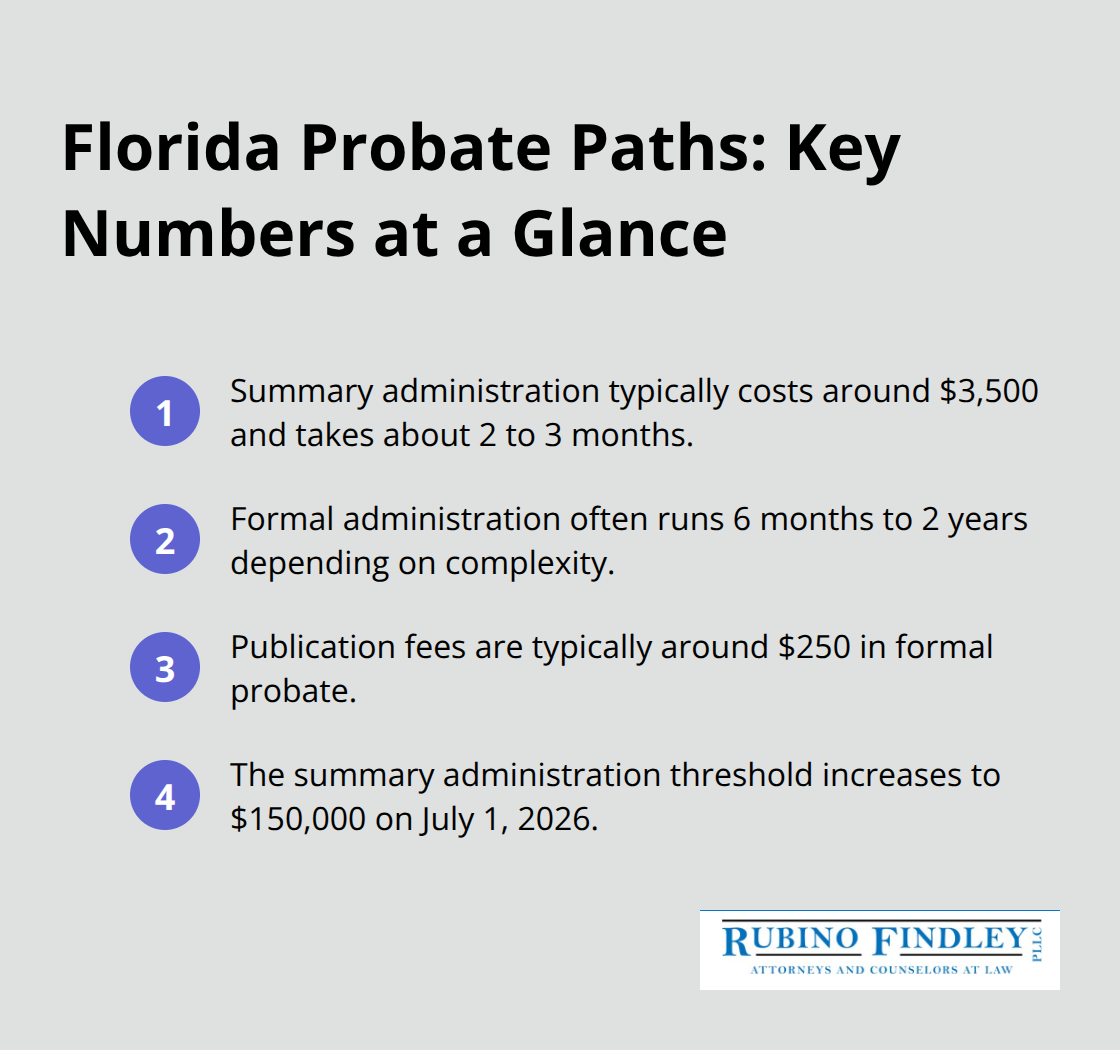
Florida offers two main administration routes based on estate size. Summary administration applies to estates with non-exempt assets under $75,000 or when the decedent has been dead more than two years. This path moves faster and costs less, typically running around $3,500 in flat fees and taking 2 to 3 months. Formal administration becomes necessary for larger estates or when the personal representative needs court-granted authority to act on behalf of the estate. Formal probate involves more steps, longer timelines of 6 months to 2 years depending on complexity, and higher costs because of court filings, publication fees (typically around $250), and attorney involvement. The threshold for summary administration rises to $150,000 on July 1, 2026, which will expand eligibility. Selecting the correct path from the start saves time and money, but selecting the wrong path can add months to settlement. This is where understanding your estate’s actual value matters-homestead property and certain exempt assets do not count toward the threshold.
The Real Cost and Timeline
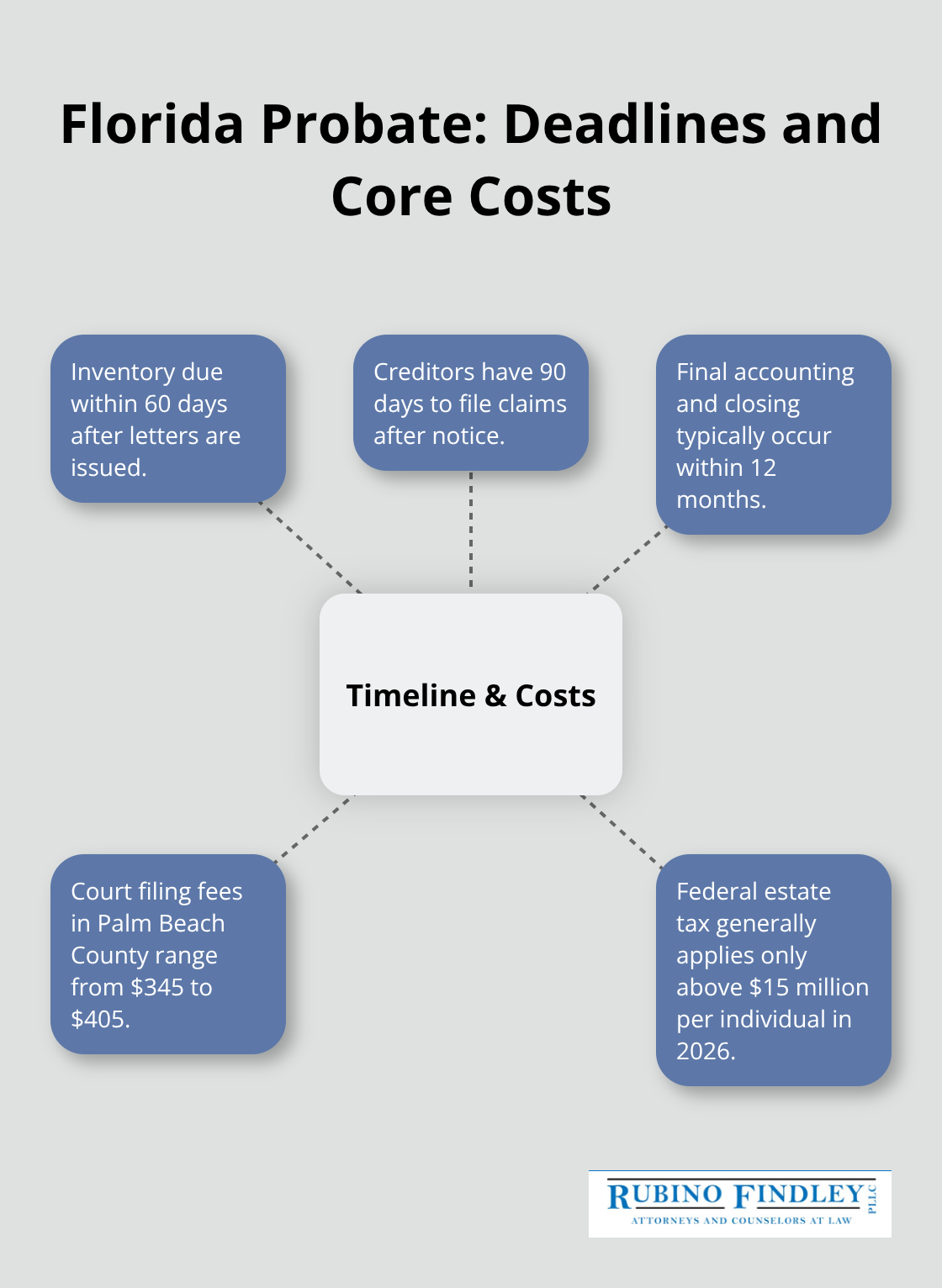
Probate costs in Palm Beach County include court filing fees ranging from $345 to $405, publication costs, and professional fees. Many families assume probate is prohibitively expensive, but summary administration with flat-fee pricing is genuinely affordable for smaller estates. Formal administration costs more because of extended court involvement and the need for a personal representative and attorney to coordinate notices, creditor claims, inventory filings, and tax returns. Federal estate taxes apply only to estates exceeding $15 million per individual as of 2026, so most Florida families avoid this burden entirely. The real timeline pressure comes from statutory deadlines: the personal representative must file the estate inventory within 60 days, creditors have 90 days to file claims, and final accounting and closing typically occur within 12 months. Missing these deadlines can result in court sanctions or removal of the personal representative. The probate process is not infinitely long, but it is not instantaneous either-understanding these specific timelines prevents surprises and allows your family to move forward with the next critical steps in settlement.
Starting the Settlement Process
Depositing the Will and Filing the Petition
The moment a death occurs, the personal representative must act within a narrow window. Within 10 days of learning about the death, any will must be deposited with the clerk of the circuit court in Palm Beach County-this is not optional under Florida Statute 732.901, and there is no filing fee for this deposit. The personal representative then files a petition for administration with the court, which triggers the official probate process. For summary administration, this petition is straightforward and typically processes quickly. For formal administration, the petition must include detailed information about the estate, the proposed personal representative, and all known heirs and beneficiaries. The court reviews the petition, and if everything is in order, it issues Letters of Administration-the document that grants the personal representative legal authority to act on behalf of the estate. Without these letters, banks will not release funds, real estate cannot transfer, and creditors cannot be properly addressed. This step sets the tone for the entire settlement; errors here create months of delays later.
Notifying Heirs and Creditors
Once the court issues letters, the personal representative must immediately notify heirs and creditors of the probate. Florida Statute 733.2121 requires that creditors receive notice through publication in a newspaper of general circulation in Palm Beach County and direct notice to known creditors. The publication notice typically costs around $250 and must appear once a week for two consecutive weeks. Known creditors receive written notice by mail or email, and they generally have 30 days from receipt to file a claim against the estate. The personal representative must also provide written notice to all beneficiaries named in the will or determined by Florida’s intestate succession laws. Many families delay these notices to avoid upsetting relatives, but delays create legal exposure-creditors can pursue claims even after the probate closes if proper notice was not given.
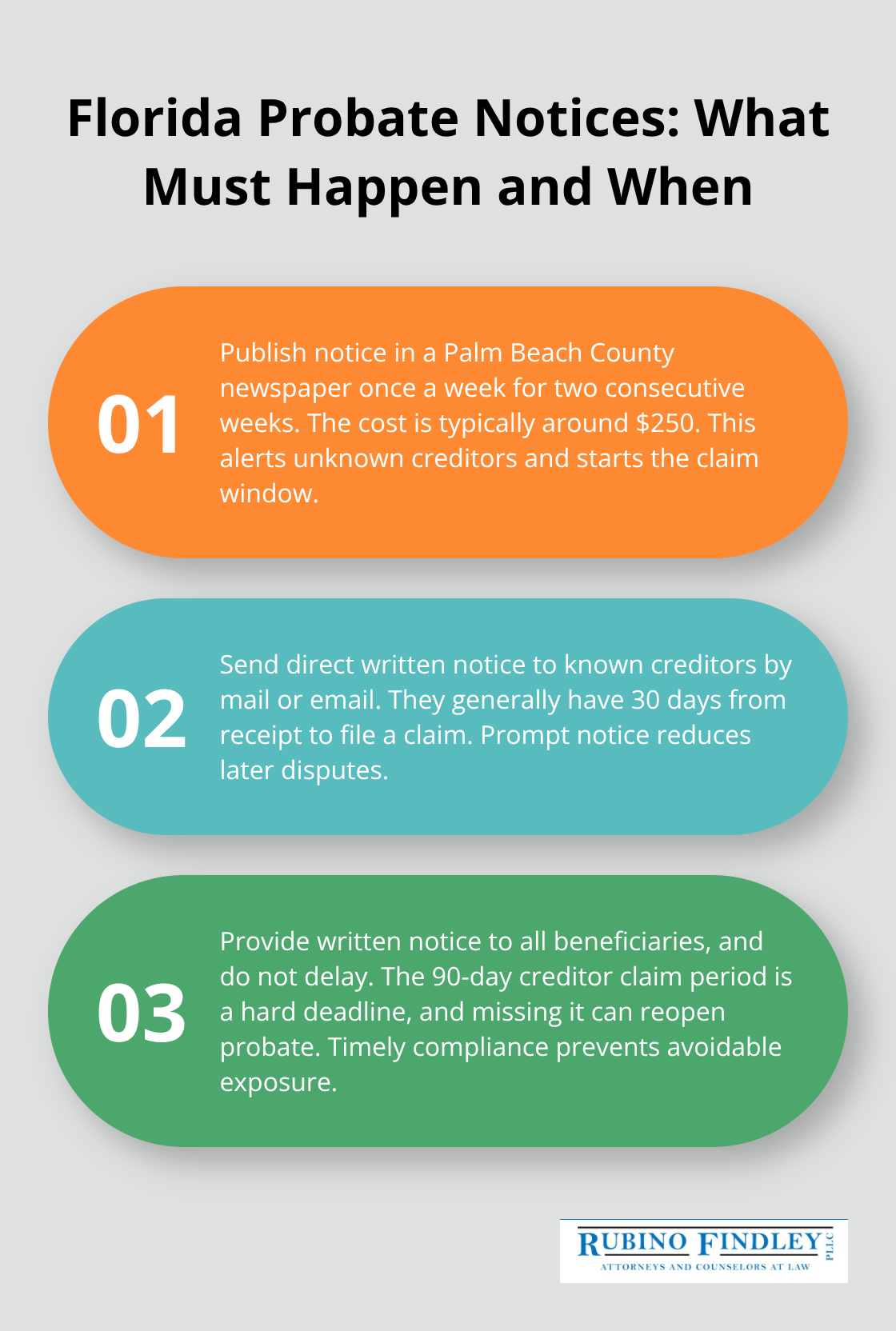
The 90-day creditor claim period is a hard deadline, and missing it can reopen the entire probate.
Filing the Inventory and Identifying Assets
Within 60 days of receiving letters of administration, the personal representative must file a detailed inventory with the court listing every asset discovered, its estimated fair market value, and whether it is exempt property. This inventory must account for bank accounts, investment accounts, real estate, vehicles, household furnishings, life insurance proceeds payable to the estate, and any other property owned solely by the decedent at death. Homestead property and certain exempt assets (up to two vehicles, household furnishings, and personal property up to $1,000) are listed separately because they have different distribution rules and creditor protection. The 60-day deadline is strict, and missing it can result in court sanctions or removal of the personal representative.
Paying Debts and Managing Creditor Claims
After the inventory is filed and the 60-day deadline passes, the personal representative begins paying legitimate debts: funeral expenses, final medical bills, property taxes, mortgages, and valid creditor claims. The personal representative should not distribute assets to beneficiaries until all creditor claims are resolved and tax returns are filed. Many personal representatives rush to distribute money early, only to discover a creditor claim or tax liability later-this creates personal liability for the representative and can force beneficiaries to return distributions. The proper sequence is inventory, notice, creditor claim period, debt payment, tax filing, and only then distribution of remaining assets. Once debts are paid and the estate is ready for final distribution, the personal representative prepares an accounting that shows all receipts, expenses, and proposed distributions to beneficiaries. This accounting must be filed with the court, and beneficiaries have the right to object if they believe the accounting is inaccurate or unfair. The court reviews the accounting and, if approved, authorizes the personal representative to distribute the remaining estate assets according to the will or Florida’s intestate succession laws.
What Derails Probate Settlement
Will Contests and Validity Disputes
Will contests and validity disputes consume more time and money than nearly any other probate complication. A beneficiary or heir may challenge whether the will was properly executed, whether the decedent had testamentary capacity at the time of signing, or whether undue influence affected the document. Florida Statute 732.502 requires that a valid will be signed by the testator with two witnesses present, and notarization is not legally required but creates a self-proved will that withstands most challenges. If a will lacks proper execution or someone contests its validity, the personal representative must defend the document in court or negotiate a settlement among heirs. These contests can add 12 months or more to probate timelines and easily cost tens of thousands in legal fees. Ensure any will was notarized and that the witnesses are identified and available if needed later.
If a will cannot be located or is presumed lost or destroyed, Florida law presumes the will was revoked, which triggers intestate succession instead and forces the estate to follow Florida Statute 732.102 and 732.103 rules for distribution. This shift from testate to intestate administration complicates matters because the court must determine who inherits based on statutory order rather than the decedent’s wishes.
Blended Families and Omitted Heirs
Blended families create another layer of complexity because step-children have no automatic inheritance rights under Florida law, and ex-spouses or former partners may have claims if they were not properly excluded from the will. If a spouse or child is omitted from the will and was alive when it was executed, Florida law may grant them an elective share or omitted family member rights regardless of what the will states. Managing these competing claims requires careful legal analysis and often settlement negotiations among multiple parties.
Creditor Claims and Tax Obligations
Creditor claims and tax obligations extend probate timelines far beyond the initial 90-day creditor claim period. Formal administration protects everyone involved by providing creditors with notice and a deadline to file claims, typically 90 days. Medicaid estate recovery claims filed by Florida’s Agency for Health Care Administration can pursue assets to recover long-term care costs paid by Medicaid, and these claims can exceed $100,000 or more depending on the decedent’s care history. Federal estate tax returns, Form 706, must be filed within nine months of death if the estate exceeds the $15 million federal exemption per individual, and extensions are available but require timely filing. Final income tax returns, Form 1040, and fiduciary returns, Form 1041, are due without extension and must be filed before the personal representative can close the estate.
Many personal representatives underestimate these tax obligations and distribute assets prematurely, only to discover unpaid taxes that create personal liability. The practical approach is having a CPA or tax professional review the estate’s financial situation early and prepare estimated tax liability before any distributions occur. Creditors sometimes file claims after the formal claim period expires, requiring the personal representative to object and defend against late claims. If the personal representative misses deadlines for publishing creditor notice or fails to notify known creditors directly, those creditors retain rights to pursue claims even after probate closes, potentially forcing the estate to reopen and disrupting distributions that have already occurred.
Final Thoughts
Probate administration in Florida demands strict attention to deadlines, coordination across multiple parties, and careful management of assets and creditor claims. The personal representative carries significant responsibility, and errors during settlement create personal liability, delay distributions, and waste estate assets on unnecessary legal fees. Working with a probate attorney in Boca Raton makes a measurable difference in avoiding these costly mistakes.
We at Rubino Findley, PLLC guide families and personal representatives through probate with clarity and confidence. Our team coordinates with banks, tax professionals, and real estate agents to keep settlement on track, handles creditor notices and required filings on time, and protects your estate from preventable errors. When disputes arise over will validity, creditor claims, or asset distribution, we manage negotiations and litigation so your family can move forward.
The most common delays stem from missed deadlines, incomplete asset identification, premature distributions, and inadequate creditor notice-all preventable with early legal counsel. Contact Rubino Findley, PLLC for a consultation if you are a personal representative managing an estate or a family member concerned about settlement in Palm Beach County.