




Probate Creditor Claims Boca Raton: How Florida Deadlines Protect the Estate
Probate creditor claims in Boca Raton are one of the most time-sensitive parts of settling a loved one’s estate. When someone passes away with unpaid obligations to banks, medical providers, credit card companies, or other creditors, Florida law does not leave those obligations open forever. Instead, the Florida Probate Code sets out a structured process with firm deadlines that tells creditors when they must come forward and tells personal representatives how to respond. Understanding that process gives you real control over the estate and helps protect the beneficiaries who are counting on you.
At Rubino Findley, PLLC, we help personal representatives and families throughout Palm Beach County work through creditor issues during probate so you can move forward with confidence. This guide explains how the creditor claims process actually works, the deadlines that matter most, and the mistakes that can expose an estate, or a personal representative, to avoidable problems.
How Creditor Claims Actually Work in Florida Probate
A creditor claim is a written demand filed in the probate proceeding by someone who believes the decedent owed them something at the time of death. Florida probate is handled in the circuit court, and under Section 733.101 of the Florida Statutes, the venue for probate is generally the county where the decedent was domiciled. For a Boca Raton resident, that typically means the probate case is opened in Palm Beach County. Once the court appoints a personal representative, one of that person’s first responsibilities is starting the formal notice process that sets the clock running on creditor claims.
The Notice to Creditors
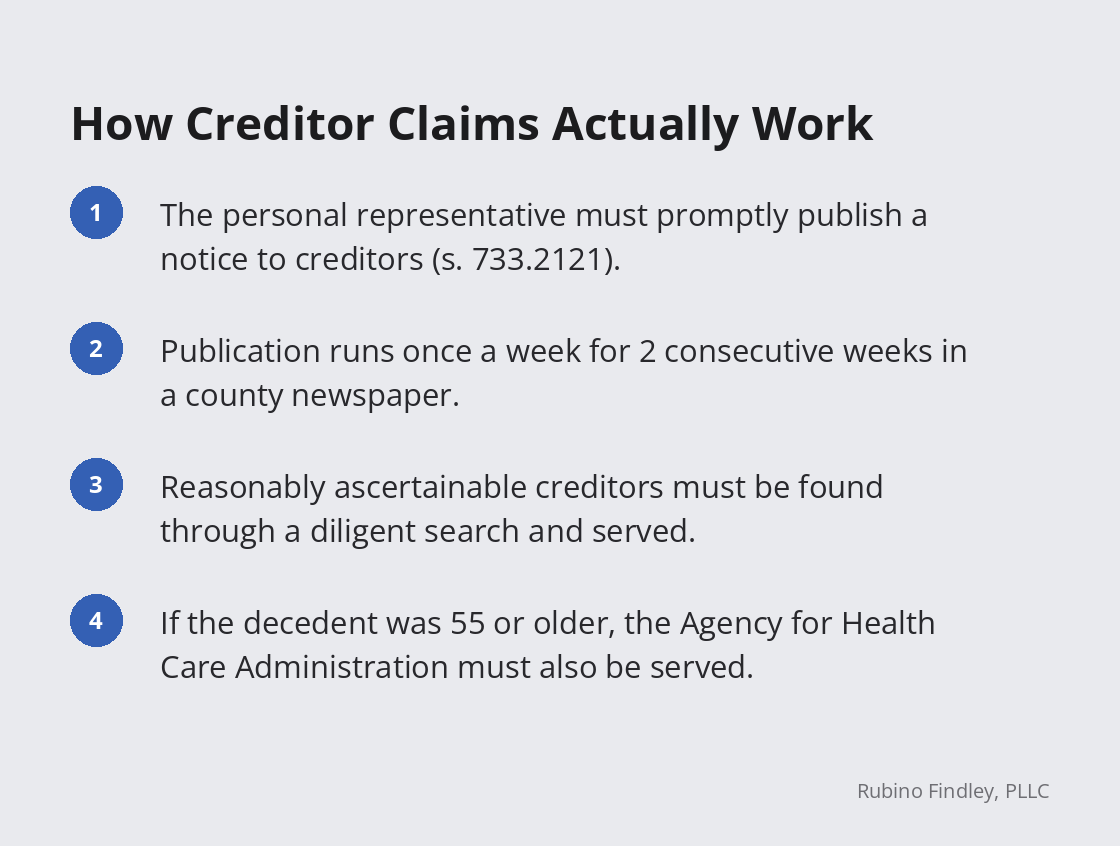
Section 733.2121 requires the personal representative to promptly publish a notice to creditors. The notice must include the decedent’s name, the estate’s file number, the name and address of the court, the name and address of the personal representative and the personal representative’s attorney, and the date of first publication. It must also state that creditors are required to file their claims with the court within the time periods set by Section 733.702 or be forever barred. Under the same statute, publication must occur once a week for two consecutive weeks in a newspaper published in the county where the estate is administered.
Serving Known Creditors
Publication alone is not enough for creditors the personal representative knows about or could reasonably find. Section 733.2121 requires the personal representative to promptly make a diligent search to determine the names and addresses of creditors who are reasonably ascertainable, even if their claims are unmatured, contingent, or unliquidated, and to serve a copy of the notice on them. The statute states that impracticable and extended searches are not required. In practice, this means reviewing the decedent’s mail, account statements, tax records, and other papers to identify who should receive direct notice.
Special Notice When the Decedent Was 55 or Older
Florida adds a specific requirement for older decedents. Under Section 733.2121, if the decedent was 55 years of age or older at the time of death, the personal representative must serve a copy of the notice to creditors and provide a copy of the death certificate to the Agency for Health Care Administration within three months after the first publication of the notice, unless the agency has already filed a statement of claim in the estate. This step is easy to overlook while a family is focused on everything else that follows a death, so it belongs on every personal representative’s checklist.
Deadlines That Control Every Florida Estate
The creditor process in Florida is driven by deadlines, and missing one can have serious consequences for both creditors and estates. Some deadlines run from the date the notice is first published, others from the date a creditor is served, and one runs from the date of death itself. Knowing which clock applies to each situation is essential to administering an estate properly.
The Three-Month and 30-Day Filing Window
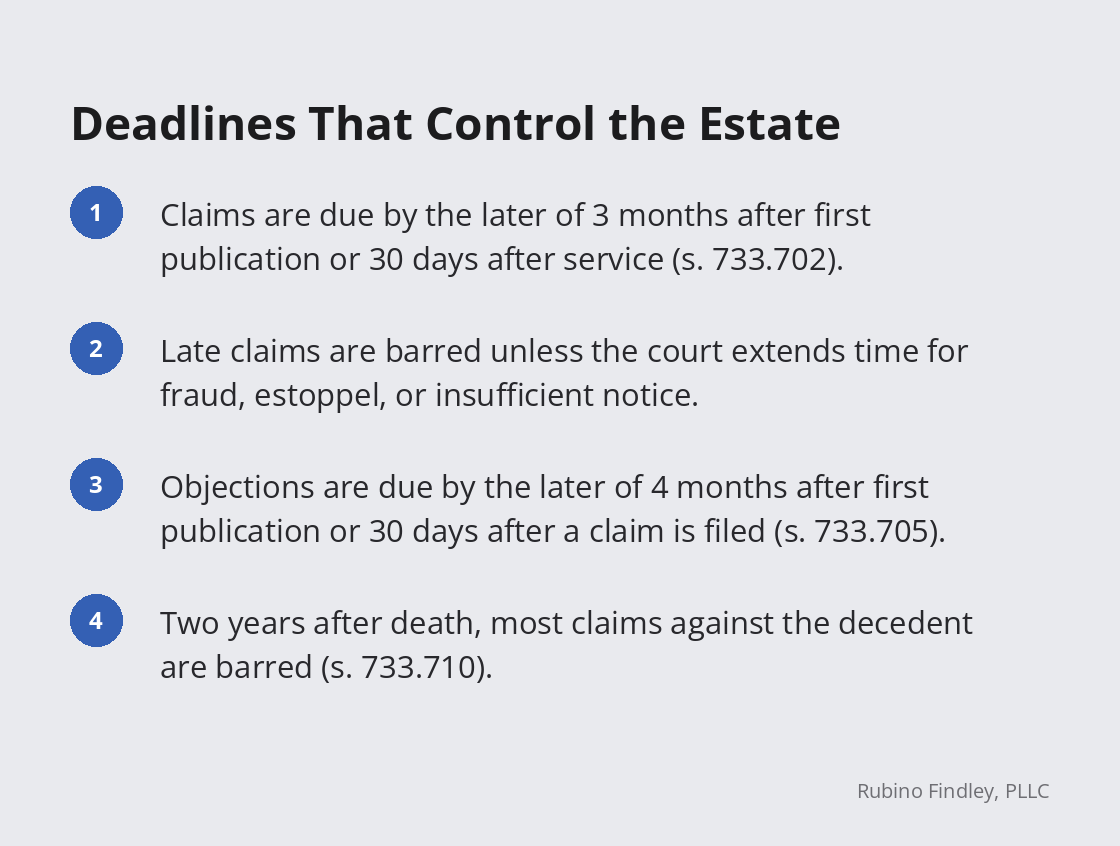
Section 733.702 sets the main filing deadline. A claim that arose before the decedent’s death is not binding on the estate, the personal representative, or any beneficiary unless it is filed in the probate proceeding on or before the later of three months after the first publication of the notice to creditors or, for a creditor who must be served with the notice, 30 days after the date of service on that creditor. Any claim not timely filed is barred even if no one objects to it, unless the court extends the time. The statute allows an extension only on grounds of fraud, estoppel, or insufficient notice of the claims period.
The Two-Year Outer Limit
Florida also has a firm outer boundary. Under Section 733.710, two years after a person’s death, neither the estate, the personal representative, nor the beneficiaries are liable for any claim or cause of action against the decedent, whether or not probate was ever opened, subject to limited exceptions. One exception protects a creditor who filed a claim within two years of the death that has not yet been paid or otherwise resolved. The statute also does not affect the lien of a duly recorded mortgage or security interest. Section 733.702 confirms that nothing in it extends this two-year period.
Secured Debts and Liens
Not every obligation is handled the same way. Section 733.702 states that its filing deadlines do not affect or prevent a proceeding to enforce a mortgage, security interest, or other lien on the decedent’s property. That means a lender holding a mortgage on a Boca Raton home or a lien on a vehicle may still be able to enforce that lien against the property even if it never filed a claim in the probate case. Personal representatives should identify secured obligations early and plan for how they will be addressed, because they can affect decisions about selling or distributing property.
Common Mistakes That Put the Estate at Risk
Most problems with creditor claims come from treating the process as a formality. A personal representative is a fiduciary, and the way claims are handled can affect how much passes to beneficiaries, how long the estate stays open, and whether disputes end up in court. Paying attention to the details at each step prevents most of the trouble.
Paying Claims Too Quickly
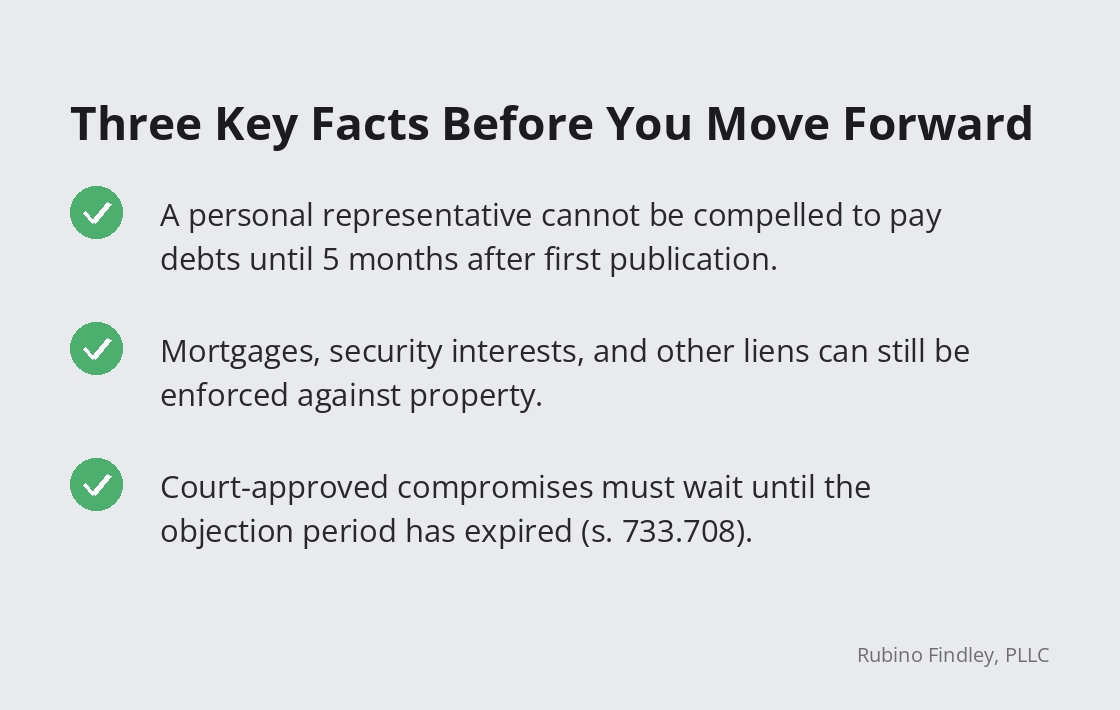
It is natural to want to pay legitimate debts right away, but rushing can create problems. Section 733.705 provides that a personal representative cannot be compelled to pay the debts of the decedent until five months after the first publication of the notice to creditors, and it generally requires claims to be paid within one year from first publication, with extensions for claims in litigation, unmatured claims, and contingent claims. Paying early before all claims are known can leave the estate unable to satisfy obligations that Florida law requires to be paid first. Section 733.707 sets an order of priority for paying expenses and obligations, so it is important to understand where each claim falls before paying anything.
Missing the Objection Deadline
Not every claim is valid. Some are duplicates, some overstate what was owed, and some relate to obligations the decedent disputed during life. Under Section 733.705, a personal representative or other interested person may file a written objection to a claim on or before the later of four months from first publication of the notice to creditors or 30 days from the timely filing or amendment of the claim. A copy of the objection must be served, and failure to serve it counts as abandonment of the objection. Once an objection is served, the claimant generally has 30 days from service to bring an independent action on the claim, unless the personal representative agrees in writing to extend that time or the court extends it for good cause.
Skipping the Diligent Search
Some personal representatives rely only on newspaper publication and never search for known creditors. That approach can leave the estate exposed, because a creditor who should have been served may argue that the claims period never properly ran against them. Section 733.2121 does offer some protection to personal representatives who act in good faith, stating that if a personal representative in good faith fails to give required notice, the personal representative is not liable for the failure and any liability rests on the estate. Even so, a careful search at the beginning is far better than litigating notice questions later, and it is part of the broader duties we discuss in our guide to probate administration in Boca Raton.
Settling Claims Without Proper Authority
Personal representatives sometimes negotiate informal deals with creditors without understanding the rules. Section 733.702 allows a personal representative to settle in full any claim without the claim being filed when the settlement has been approved by the interested persons. For compromises, Section 733.708 allows the court to authorize a compromise if it is in the best interest of the interested persons, and the order relieves the personal representative of liability for the compromise. That same statute provides that claims against the estate may not be compromised until after the time for filing objections to claims has expired. Following these procedures protects both the estate and the personal representative.
Final Thoughts
Creditor claims are a central part of Florida probate, and the deadlines in the Probate Code are designed to bring certainty to the process. Publishing and serving the notice to creditors correctly, tracking the three-month, 30-day, and two-year limits, and responding to questionable claims on time all help protect the estate and the beneficiaries who depend on it.
Serving as a personal representative is a significant responsibility, especially while you are also grieving. You do not have to manage creditor issues alone, and having a clear plan from the start makes the entire administration smoother and less stressful for your family.
If you have been named personal representative of an estate or are facing creditor claims in probate, contact Rubino Findley, PLLC to speak with our team in Boca Raton. We help clients throughout Palm Beach County handle the notice process, evaluate and respond to claims, and keep the estate moving toward distribution with confidence.