



Probate Dispute Resolution: Finding Resolutions Without Court Battles
Probate disputes can tear families apart and drain estate resources through lengthy court battles. When a will is unclear, assets are contested, or questions arise about someone’s mental capacity, the conflict escalates quickly.
We at Rubino Findley, PLLC help families in Palm Beach County resolve these conflicts without stepping foot in a courtroom. This guide shows you how probate dispute resolution works outside the traditional litigation system.
What Causes Probate Disputes in Boca Raton
Probate disputes rarely start with a single problem. They accumulate through unclear instructions, family tensions, and legitimate questions about whether the deceased person had the mental capacity to make decisions. Understanding what triggers these conflicts helps families address them before they escalate into expensive litigation.
Vague Language in Wills Creates Interpretation Problems
When a will contains ambiguous terms or incomplete instructions, family members interpret the same sentence in different ways. A phrase like “distribute my estate fairly among my children” means nothing in legal terms. Does fair mean equal? Does it account for prior gifts? Courts must then intervene to decide what the deceased person intended, which transforms a family matter into litigation. Families spend tens of thousands of dollars fighting over language that a clearer will would have prevented. Specific instructions-naming exact beneficiaries, stating dollar amounts, and listing property by address-eliminate this source of conflict entirely.
Asset Distribution Disagreements Often Mask Deeper Family Dynamics
Asset distribution conflicts frequently hide underlying family tensions. One sibling believes they deserve more because they provided caregiving. Another feels excluded because they live out of state. A third questions whether the parent had sound mind when making the will, especially if the will differs significantly from prior versions.
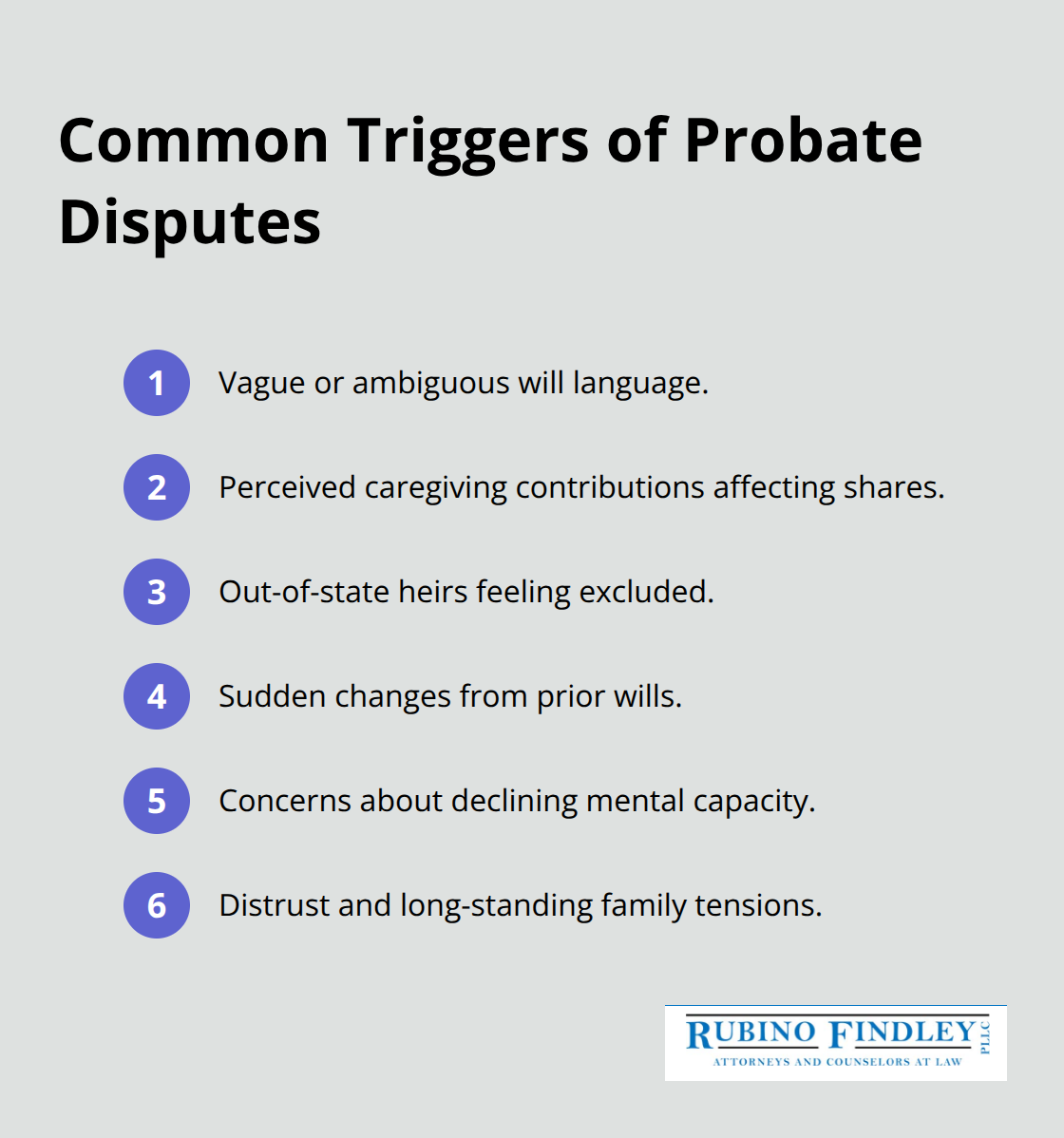
These disputes intensify when family members distrust each other or when the deceased person’s mental state deteriorated before death.
Testamentary Capacity Concerns Demand Early Attention
Questions about testamentary capacity-whether someone understood what they owned, who their family was, and what they were doing when signing the will-become legitimate legal concerns when cognitive decline occurred. Palm Beach County families facing these situations need clear evidence and honest conversation, not courtroom battles that permanently damage relationships and consume estate resources. When capacity questions arise, the path forward depends on how families respond in those critical early moments.
How to Resolve Probate Disputes Without Going to Court
Mediation Resolves Most Estate Conflicts Quickly
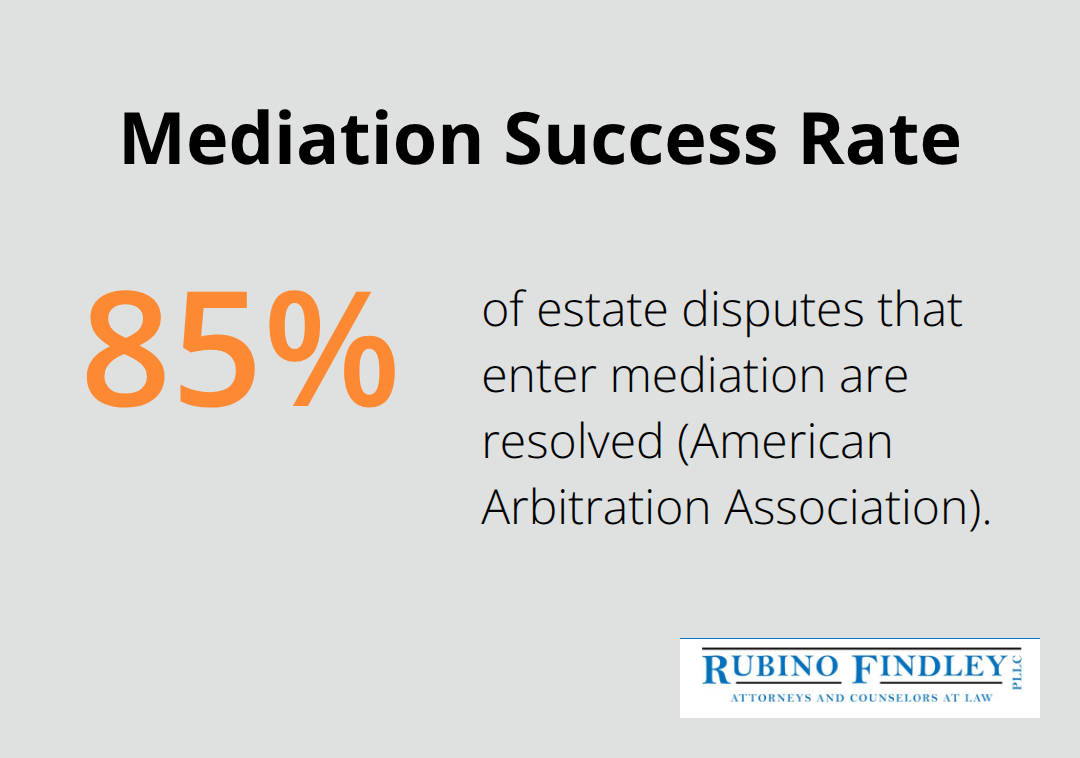
Mediation offers the fastest path to resolution for most probate disputes in Palm Beach County. A neutral mediator helps family members communicate about contested assets, unclear will language, or capacity concerns without a judge making the final decision. The American Arbitration Association reports that mediation resolves approximately 85% of estate disputes that enter the process, and families typically reach settlement within 2 to 4 months rather than the 1 to 3 years litigation requires.
Mediation costs between $1,500 and $5,000 per session depending on the mediator’s hourly rate, compared to litigation expenses that frequently exceed $50,000 when accounting for attorney fees, court costs, and expert witness testimony. The mediator never imposes a solution; instead, they facilitate conversations that help siblings, spouses, or other beneficiaries find common ground. This approach works particularly well when family members want to preserve relationships but disagree about interpretation or distribution.
Arbitration Provides Binding Decisions Without Public Court Records
Arbitration functions differently by giving a neutral arbitrator the authority to make binding decisions after hearing evidence from all parties. Unlike mediation, arbitration produces a final ruling that all parties must accept, making it appropriate when family members cannot reach agreement through discussion alone. Arbitration typically costs less than litigation and moves faster because arbitrators schedule hearings more flexibly than courts and issue decisions within weeks rather than months.
For Palm Beach County families facing serious disagreements about testamentary capacity or asset distribution, arbitration provides certainty and closure without the public record exposure that court proceedings create. The arbitrator’s decision becomes final and binding, eliminating the uncertainty that sometimes follows mediation when parties cannot agree.
Negotiation and Settlement Form the Foundation
Negotiation and settlement discussions form the foundation of all three approaches. Families who engage directly with each other early, sometimes with their attorneys present, often resolve disputes before formal mediation or arbitration becomes necessary. The key difference between these methods lies in who controls the outcome: mediation and negotiation put control in the family’s hands, while arbitration transfers that authority to a neutral decision-maker.
Each option offers distinct advantages depending on your family’s specific situation. The path forward depends on whether family members can communicate productively, whether they trust a neutral third party to help them reach agreement, or whether they need someone to make a final decision for them. Understanding these distinctions helps Palm Beach County families select the approach that matches their goals and circumstances.
Why Out-of-Court Solutions Win in Boca Raton
Litigation Costs Drain Estate Resources Rapidly
Litigation drains money faster than families realize. A probate dispute that goes to trial costs Palm Beach County families between $50,000 and $150,000 when accounting for attorney fees, expert witnesses, court costs, and depositions over 18 to 36 months.
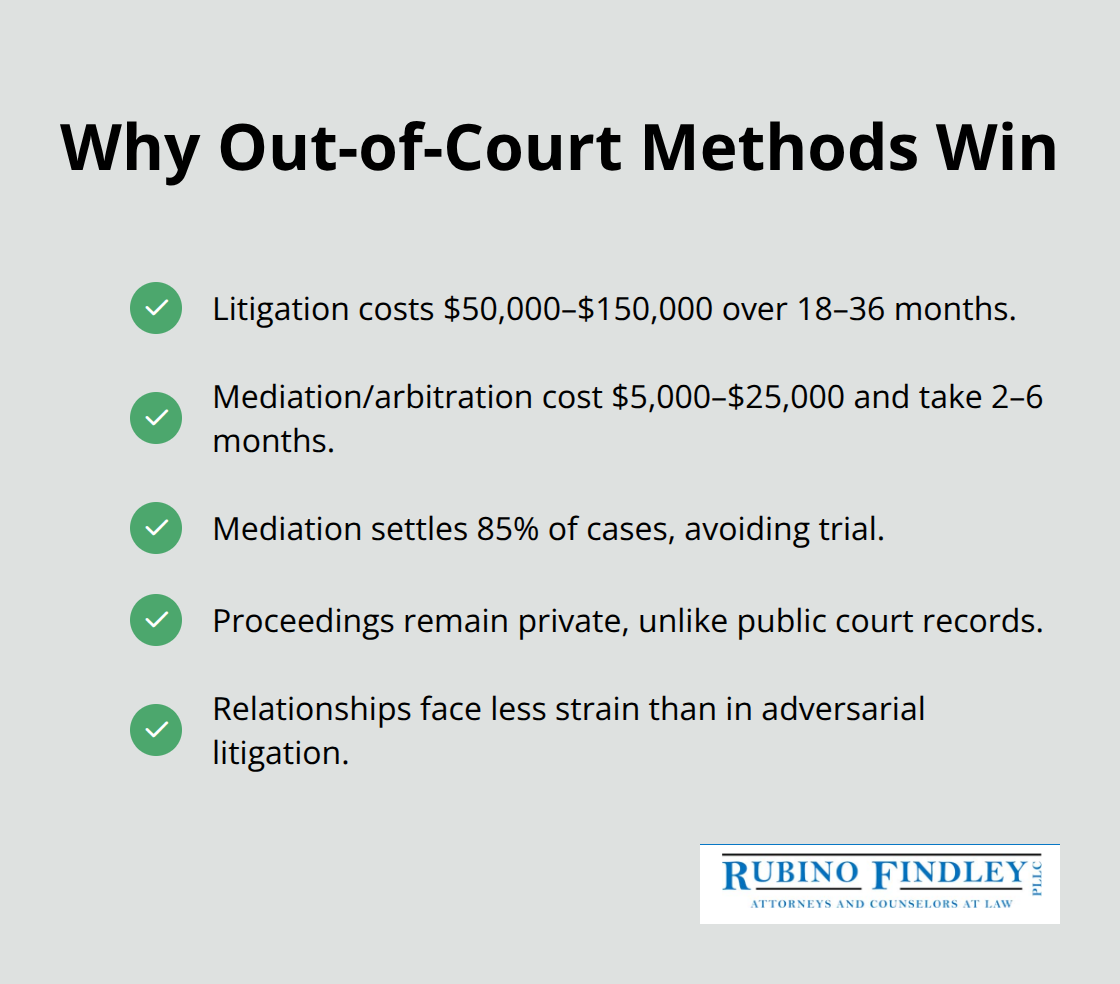
Mediation and arbitration reduce this to $5,000 to $25,000 and compress the timeline to 2 to 6 months. The National Endowment for the Arts found that mediated cases settle 85% of the time without proceeding to trial, meaning families avoid the worst-case scenario entirely.
Speed matters because every month of litigation ties up estate assets that beneficiaries need now. Interest accrues on debts, property deteriorates without maintenance, and family members spend emotional energy on conflict instead of healing. Out-of-court methods keep money in the estate where it belongs rather than sending it to courtrooms.
Privacy Protection Shields Family Finances
Privacy protection separates out-of-court resolution from public litigation. Court filings become public records that anyone can access, exposing family finances, mental health concerns, and personal disputes to neighbors, business competitors, and strangers. Mediation and arbitration happen in private offices with confidentiality agreements that prevent participants from discussing details publicly.
For families in Boca Raton where privacy matters for business reputation or personal dignity, this distinction is substantial. Your financial information stays confidential instead of appearing in court documents that the public can review.
Honest Conversation Preserves Family Bonds
Preserving relationships requires honest conversation without the adversarial structure that courtrooms create. When siblings sit across from each other in a mediation room with a neutral facilitator, they hear each other’s concerns directly instead of through lawyers’ arguments. This approach works because it acknowledges that families must continue living together after the dispute ends.
Litigation forces a winner-and-loser outcome that leaves permanent resentment. Out-of-court methods allow families to acknowledge legitimate disagreements, find middle ground, and move forward as a functioning unit. The difference between these paths determines whether family members repair their relationships or remain estranged for years.
Final Thoughts
Avoiding probate litigation saves families money, time, and relationships. The cost difference alone justifies exploring mediation or arbitration first-a contested court case drains $50,000 to $150,000 from the estate over 18 to 36 months, while mediation resolves most disputes for $1,500 to $5,000 in 2 to 4 months. Out-of-court methods preserve privacy and allow family members to communicate directly instead of through adversarial legal arguments.
Probate dispute resolution works best when families act early. The moment questions arise about will language, asset distribution, or testamentary capacity, reaching out to an attorney prevents disputes from hardening into litigation. We at Rubino Findley, PLLC help Palm Beach County families navigate these conflicts by facilitating mediation, guiding arbitration, and negotiating settlements that keep disputes out of courtrooms.
If your family faces a probate dispute or you want to prevent one through proper estate planning, contact Rubino Findley, PLLC to schedule a free consultation. Our team will review your situation and explain which resolution path makes sense for your circumstances.