




Probate Timeline Florida 2026: What Changes To Expect
Florida’s probate process is shifting in 2026, and understanding these changes matters for anyone managing an estate in Palm Beach County. The probate timeline Florida 2026 brings new filing requirements, updated court deadlines, and modified asset distribution rules that will affect how quickly estates move through the system.
At Rubino Findley, PLLC, we’ve seen how these updates impact families and their finances. This guide walks you through what’s changing and how to navigate it.
How Long Does Florida Probate Actually Take
The Standard Timeline for Straightforward Cases
Straightforward probate cases in Florida take 10 to 15 months from the date you file the petition until final distribution closes the estate. This timeline reflects unavoidable statutory requirements-Florida law mandates a three-month creditor notification period that starts around month two or three, and creditors have until that deadline expires before the personal representative can safely distribute assets. The process moves through predictable phases: Letters of Administration arrive within two to three weeks after filing, then the creditor notice period consumes three months, asset inventory and claims review take another two to three months, tax filings happen around month nine, and final accounting with court approval extends through month twelve before distributions occur in months ten to fifteen. These are actual timelines from Florida Statute 733.2121 and standard probate court operations across Palm Beach County.
What Extends the Timeline Beyond 10-15 Months
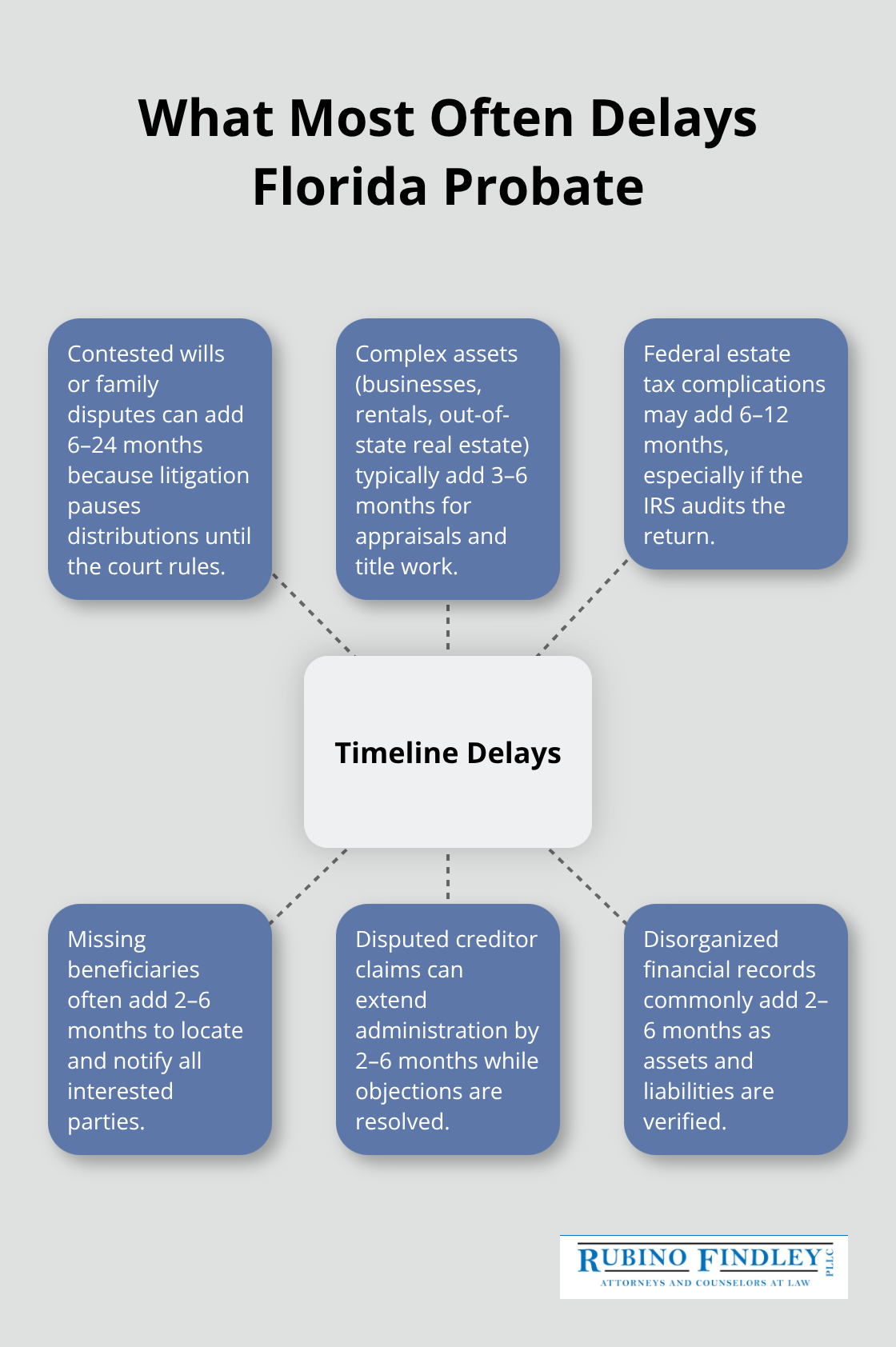
What actually determines whether your estate closes in ten months or stretches to three years depends on factors beyond the basic statutory requirements. Contested wills or family disputes add six to twenty-four months because litigation suspends distributions until the court resolves the conflict. Complex assets like businesses, multiple rental properties, or out-of-state real estate require three to six additional months for appraisals and title work. Tax complications-particularly federal estate tax filings for estates exceeding the 2026 federal exemption of fifteen million dollars per individual-can add six to twelve months if the IRS audits the return. Missing beneficiaries, disputed creditor claims, and disorganized financial records each contribute two to six months of delays.
The Role of the Personal Representative
The personal representative’s competence matters significantly; appointing someone unfamiliar with probate procedures or unable to dedicate time to the process creates bottlenecks that ripple through every phase. Someone who stays organized, communicates regularly with beneficiaries, and works with experienced counsel moves the estate forward efficiently. Recent amendments to Florida Probate Rules published in October 2025 signal potential changes coming to court timelines in 2026, though the exact impact remains unclear until implementation.
How to Stay Within the Standard Timeline
Straightforward estates with organized records, cooperative beneficiaries, and an attentive personal representative stay within the ten to fifteen month window. Those missing any of these elements should anticipate extensions. The decisions you make now about who serves as personal representative and how well you organize your financial records directly affect how quickly your estate moves through probate. Proper planning before death-establishing clear documentation, naming a capable personal representative, and working with experienced counsel-sets the foundation for a smoother process.
What’s Actually Changing in Florida Probate for 2026
The Asset Threshold Shift That Matters Most
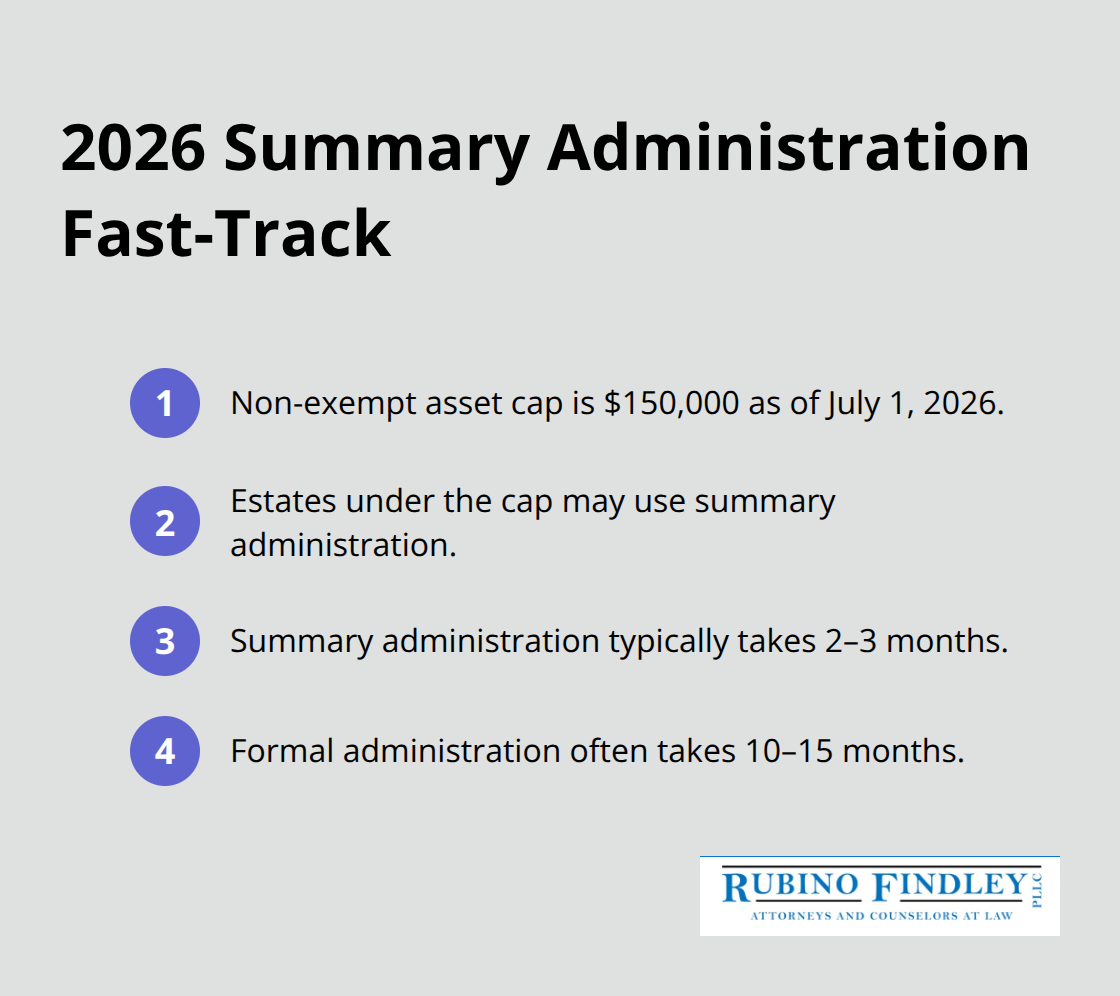
The asset threshold for summary administration increased to $150,000 for non-exempt assets as of July 1, 2026 under Florida Statutes Chapter 35. This change directly affects how fast your estate moves through the system. Estates falling under this limit now qualify for summary administration, which takes two to three months compared to ten to fifteen months for formal administration. If your estate contains non-exempt assets valued between $75,000 and $150,000, summary administration now becomes available where it wouldn’t have qualified under previous caps. This single change eliminates months of court involvement for thousands of Florida estates.
Federal Tax Exemption Changes Reduce Complications
The 2026 federal estate tax exemption jumped to $15 million per individual following the One Big Beautiful Bill Act enacted July 4, 2025. This means far fewer Florida estates will face federal estate tax complications during probate administration. Estates that would have triggered federal tax filings under the old exemption now pass through probate without that additional layer of complexity. The reduction in federal tax exposure streamlines the entire process for most Palm Beach County families.
Digital Filing Requirements Now Mandatory
Online submission of proposed probate orders through the 15th Judicial Circuit’s Online Scheduling System is now mandatory-documents cannot be submitted by mail or in person. This requirement streamlines court processing but demands that your attorney navigate the system correctly; missing this requirement delays your case unnecessarily. E-filing capabilities have expanded, though the original will still requires in-person filing with the Clerk. Video and teleconference hearings via Zoom remain common across Florida probate courts, a post-pandemic trend that continues reducing travel time and scheduling friction.
Procedural Updates That Eliminate Friction
The Clerk of the Circuit Court in Palm Beach County no longer provides closing checklists for formal administrations; practitioners must now use the Discharge checklist from the 15th Judicial Circuit’s website. These procedural changes don’t shorten probate inherently, but they eliminate unnecessary delays when handled correctly. An attorney familiar with current filing protocols prevents the frustrating backups that plague estates when outdated procedures are used.
The Three-Month Creditor Period Remains Unchanged
The three-month creditor notification period remains non-negotiable under Florida Statute 733.2121, so no rule change eliminates this minimum timeline component. What actually changes is how efficiently everything else moves around that statutory requirement. The proposed amendments to the Florida Probate Rules published on October 15, 2025 signal additional meaningful changes to court procedures and deadlines, though the exact implementation details remain fluid as courts finalize regulations. These shifts create both opportunities and pitfalls-estates that adapt to new procedures move faster, while those that don’t face unexpected delays. Understanding which changes apply to your specific situation determines whether you benefit from the 2026 updates or get caught in procedural gaps.
Stop Probate Delays Before Death
Name the Right Personal Representative
The single most effective way to minimize probate delays happens long before anyone files paperwork with the court. What you do now determines whether your estate takes ten months or three years to close. Start by naming the right personal representative-someone who lives in Florida or has time to travel to Palm Beach County regularly, understands basic financial management, and can communicate with beneficiaries without creating conflict. The personal representative shoulders responsibility for meeting court deadlines, managing assets, and coordinating with creditors and beneficiaries; picking someone disorganized or geographically distant adds months of friction to every phase.
Organize Your Financial Records Now
Next, organize your financial records into a single location your personal representative can actually find. This means creating a document listing all bank accounts with login information, investment accounts, life insurance policies with beneficiary designations, real estate titles, retirement accounts, and any debts or mortgages. Florida Statute 732.902 doesn’t require this, but estates with disorganized records typically extend timelines by three to six months because the personal representative spends months hunting for assets instead of moving distributions forward. Include information about whether you own assets with named beneficiaries or rights of survivorship-these bypass probate entirely and shouldn’t enter the formal probate process, yet disorganized estates waste court time trying to determine which assets belong in probate and which don’t.
Document Your Distribution Wishes
Write clear instructions about your wishes for asset distribution, who should serve as personal representative, and whether you want formal or summary administration if your estate qualifies. Many families delay probate unnecessarily because the decedent left no clear direction about their preferences, forcing beneficiaries to litigate decisions that clear documentation would have settled instantly.
Consider a Trust Over Probate
Work with an estate planning attorney to establish whether a trust, will, or combination of both makes sense for your situation. Trusts bypass probate entirely and distribute assets in weeks rather than months, but they require funding during your lifetime-a task many people neglect. A properly funded trust avoids the three-month creditor period, court filing fees around $345 to $405, newspaper notice costs around $250, and attorney fees typically between $2,000 and $6,000 for formal administration.
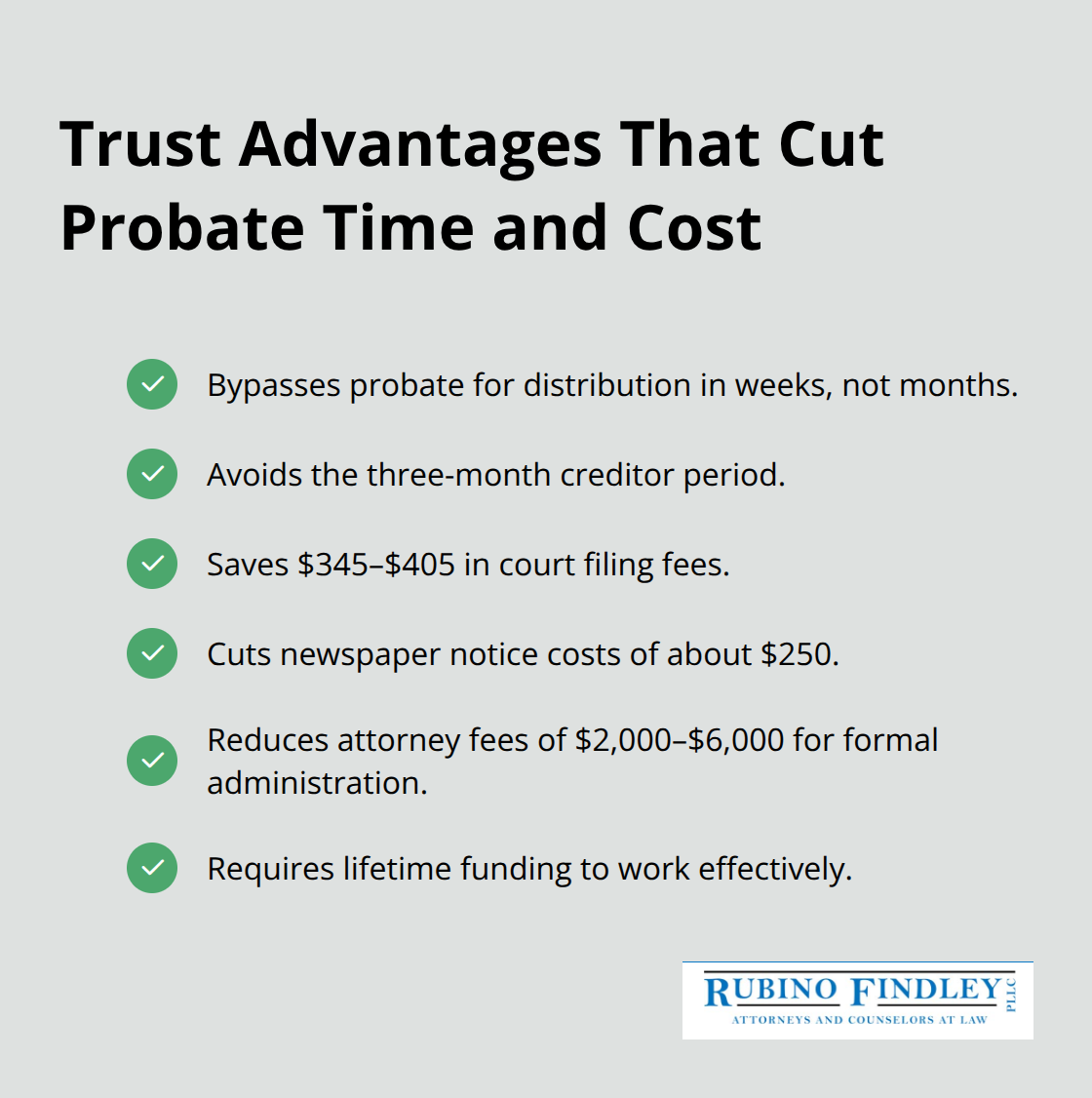
If your estate value falls below the $150,000 non-exempt asset threshold as of July 1, 2026, summary administration cuts your timeline to two to three months and costs roughly $3,500 flat, making it significantly faster than formal administration.
Trusts provide advantages beyond speed-they keep your financial details private since trusts don’t enter public court records like probate does, they allow management of assets if you become incapacitated without court involvement, and they prevent disputes about your wishes. The cost to establish a trust typically runs $250 to $350 for deed preparation if you own real estate, plus attorney fees for trust drafting, but this investment eliminates months of probate delays and courthouse involvement. If you own property in multiple states, a trust becomes even more valuable because it prevents the expensive and time-consuming process of ancillary administration in each state where you hold real estate. These decisions made now determine whether your family faces a straightforward ten-month probate process or gets tangled in complications that extend timelines to years.
Final Thoughts
Florida’s probate timeline in 2026 reflects real changes that affect how quickly your estate closes and how much your family pays in the process. The $150,000 asset threshold for summary administration, the $15 million federal tax exemption, and mandatory digital filing procedures all work together to streamline estates that meet these criteria. Straightforward cases still take ten to fifteen months due to the non-negotiable three-month creditor period, but estates under the new summary administration cap now close in two to three months instead.
What matters most is what you do before probate begins. Naming the right personal representative, organizing your financial records, and deciding whether a trust or will fits your situation determines whether your family faces a smooth process or years of complications. The decisions you make now about estate planning directly impact how the probate timeline Florida 2026 will unfold for your family.
We at Rubino Findley, PLLC help Palm Beach County families establish wills, trusts, and durable powers of attorney that prevent unnecessary probate delays and protect your wishes. Contact us in Boca Raton to schedule your free consultation and discuss your estate planning needs. The time you invest now in proper planning saves your family months of delays and thousands in unnecessary costs.