




Protecting Your Furry Family: Florida Pet Trusts Explained
Your pet is family. When something happens to you, who cares for them? Most pet owners in Florida haven’t answered this question legally, leaving their animals vulnerable.
Florida pet trusts solve this problem by letting you plan ahead. At Rubino Findley, PLLC, we help families protect their pets through proper legal arrangements that guarantee care and funding when they’re needed most.
What Is a Pet Trust
A pet trust is a legal document that sets aside money and designates a caregiver to look after your pet if you die or become unable to care for them. Under Florida Statutes §736.0408, you can create a trust specifically for your pet’s lifetime care, naming a trustee to manage the funds and a caregiver to provide daily attention. The trustee handles the money-paying the caregiver, covering veterinary bills, food, housing, and other expenses-while the caregiver makes the day-to-day decisions about your pet’s life. This separation of roles prevents conflicts and ensures both financial oversight and quality care. The trust remains active for as long as your pet lives, and any leftover funds go to whoever you name as the remainder beneficiary.
How Pet Trusts Protect Your Pet
Without a legal structure, your pet has no guaranteed protection if something happens to you. A will alone cannot protect your pet during your disability or hospitalization-it only takes effect after death and may not be enforced as you intended. A pet trust eliminates this uncertainty by making your intentions legally binding and providing the money needed to carry them out. The trustee and caregiver work together to ensure your pet receives the exact care you specified, from diet and medical treatment to end-of-life decisions.
Pet Ownership Statistics in Florida
About 62% of Americans own pets, and roughly 90% of those owners view their animals as family members, according to The Harris Poll. Yet most pet owners in Florida have no formal plan for their pet’s care. This gap between emotional attachment and legal planning creates serious risks for animals whose owners die or face incapacity.
What Happens Without a Pet Trust
When an owner dies or becomes incapacitated, the pet often ends up in a shelter or with someone the owner would never have chosen. Thousands of animals enter shelters annually because owners failed to name a caregiver or arrange funding. Without a pet trust, your pet’s future depends on luck and the goodwill of relatives who may not want the responsibility or may disagree about care decisions. Even if someone agrees to take your pet temporarily, there’s no legal obligation or funding mechanism to ensure they follow your wishes about diet, medical care, or end-of-life decisions.
Taking Action for Your Pet’s Future
The consequences of inaction are real and preventable. Your pet depends on you to make decisions today that protect them tomorrow. Working with an estate planning attorney helps you establish the legal framework your pet needs-one that names the right caregiver, sets aside appropriate funds, and creates enforceable instructions for their care. The next section explains exactly how Florida pet trusts work and what roles you need to fill to make your plan effective.
How Florida Pet Trusts Actually Work
The Three Essential Roles
A Florida pet trust operates through three distinct roles, each with specific responsibilities. The trustee manages the money set aside for your pet’s care and makes distributions to the caregiver or pays bills directly. The caregiver provides the day-to-day attention your pet needs-feeding, exercise, medical appointments, grooming. A trust enforcer (sometimes called a protector) oversees both parties and takes action if either fails to follow your instructions. Separating these roles prevents the person handling funds from also controlling care decisions, which reduces conflicts and ensures accountability.
Under Florida Statutes §736.0408, you name these individuals in your trust document. If you name no one, a court can appoint them. Your pet’s welfare depends on selecting the right people for each position.
Choosing Your Caregiver and Trustee
The caregiver must genuinely want the responsibility and have the time and ability to commit long-term. A family member who loves your pet but works 60 hours weekly and travels frequently is not a reliable choice, even with good intentions. The trustee needs financial competence or access to it-a professional trustee (a bank, trust company, or fiduciary) removes the burden from family members and provides ongoing oversight. A professional trustee typically charges 0.5% to 2% annually of the trust assets, a worthwhile cost for proper fund management and regular accounting.
Name at least one backup caregiver in case your first choice becomes unavailable. This redundancy protects your pet from sudden gaps in care.
Calculating Lifetime Costs
Funding your pet trust requires honest math about lifetime expenses. Dogs average around $600 annually in routine care; cats around $400. Emergency veterinary expenses can exceed $2,000, so build a contingency fund into your plan. Longer-lived pets demand larger funding.
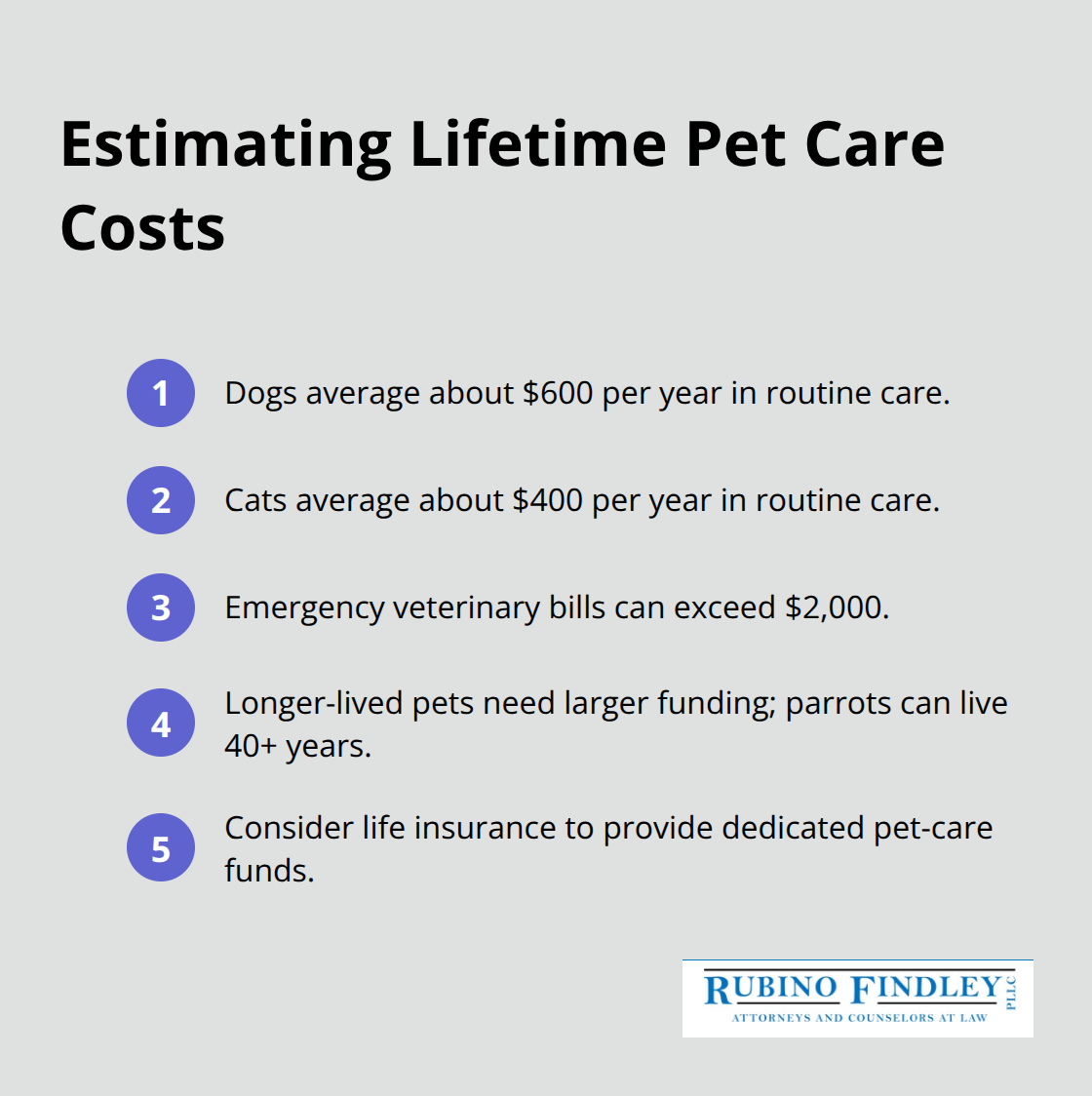
A parrot can live 40 years or more, dramatically changing the total amount needed.
Some owners fund the trust with a lump sum during their lifetime, while others use life insurance naming the pet trust as beneficiary. This approach provides liquidity specifically for pet care without depleting other estate assets.
Structuring Payments and Care Instructions
Decide whether your caregiver receives monthly payments for predictability or reimbursement for actual expenses. Monthly payments work better when the caregiver has limited savings and cannot front costs awaiting reimbursement. Your trust document should specify exactly what constitutes intended use-diet type, veterinary standards, housing conditions, exercise routines, end-of-life care preferences-so the caregiver and trustee have clear guidance.
Without these details, disputes arise. A vague instruction to provide good care means different things to different people. Include your pet’s complete medical history, current medications, microchip number, veterinarian contact information, behavioral notes, fears, and preferences. Document everything the trustee and caregiver need to continue your pet’s life as you’ve lived it.
Moving Forward With Your Plan
The specific arrangements you choose depend on your pet’s needs, your family situation, and your financial resources. Each decision-from trustee selection to funding amount to care instructions-shapes how well your pet will be protected. The next section explores the different types of pet care arrangements available in Florida and helps you determine which structure fits your circumstances best.
Pet Trust Structures That Fit Your Situation
Florida law offers flexibility in how you arrange your pet’s care, and the structure you select determines when protections activate and how much control you maintain. Each option serves different circumstances and timelines.
Traditional Pet Trusts for Immediate Protection
A traditional pet trust created during your lifetime provides the fastest and most direct protection. You fund it with assets or life insurance, name your trustee and caregiver, and the trust begins operating immediately if you become incapacitated. This approach bypasses probate entirely, meaning the trustee can distribute funds to your caregiver within days of your death rather than months. The trust terminates when your last pet dies, and any remaining money goes to remainder beneficiaries you specify.
The cost is real-attorney fees typically run several hundred to thousands of dollars, plus annual trustee fees of 0.5% to 2% of assets. But if your pet lives 15 or 20 years, that ongoing cost protects against underfunding or disputes that could leave your caregiver without resources. Many Florida owners fund traditional pet trusts through life insurance, naming the trust as the policy beneficiary. This delivers a lump sum specifically designated for pet care without tying up savings or investment accounts your human heirs might need. Funding your pet trust requires calculating realistic expenses and deciding how to deliver money to the caregiver efficiently.
Pet Provisions in Your Will
Adding pet care instructions to your will creates a secondary layer of protection but with real limitations. A will only takes effect after death and must go through probate, delaying access to funds by months or longer. Courts may treat pet care instructions as advisory suggestions rather than binding requirements, especially if heirs contest the will or if the named caregiver refuses the role. A will works best as backup to a standalone trust, not as your primary protection.
Standby Pet Trusts for Unexpected Incapacity
Standby pet trusts sit dormant until you trigger them-typically when you become incapacitated or hospitalized. You name someone to activate the trust if you cannot, and funds immediately become available for your pet’s care while you recover or throughout your disability. This structure protects your pet during your lifetime without the expense of a fully funded trust sitting idle if you remain healthy.
The catch: standby trusts require advance planning and clear written instructions about what circumstances trigger activation. If you face hospitalization unexpectedly and have no standby provisions, your pet still faces days or weeks without coverage while family members scramble to establish legal authority.
Combining Structures for Maximum Protection
The right approach depends on your age, health, and pet’s life expectancy. A younger owner with a young dog might start with a standby trust and add a traditional trust as the pet ages. An owner with a long-lived parrot or expensive medical needs should fund a traditional trust immediately to guarantee lifetime resources. A pet trust legally names a caregiver, sets aside dedicated funds, and documents exactly how your pet should be cared for. We at Rubino Findley, PLLC can help you evaluate which combination fits your specific situation and create the legal framework your pet needs.
Final Thoughts
Your pet’s future depends on decisions you make today. Florida pet trusts provide the legal framework and funding mechanism to guarantee your animal receives the care you want, even when you cannot provide it yourself. Without this protection, your pet faces uncertainty, potential shelter placement, and the risk that someone else will make decisions about their medical care, diet, and end-of-life treatment that contradict your values.
A pet trust names a caregiver you trust, sets aside money specifically for your pet’s lifetime needs, and creates enforceable instructions that guide both the caregiver and trustee. Whether you choose a traditional trust funded during your lifetime, a standby arrangement for unexpected incapacity, or a combination approach, the structure protects your pet from the moment you cannot care for them until they pass away naturally or you make end-of-life decisions on their behalf. Starting the process requires you to identify the right caregiver and trustee, calculate realistic lifetime costs based on your pet’s species and health status, and document your pet’s complete medical history and care instructions.
We at Rubino Findley, PLLC help families in Palm Beach County establish comprehensive estate plans that protect their pets. Our team can guide you through the specific decisions required for Florida pet trusts and ensure your wishes are legally binding and financially supported. Schedule a free consultation to discuss how we can help protect your pet’s future and give you peace of mind.