



Small Estate Affidavit Florida: A Simple Path Through Probate
Losing a loved one is stressful enough without navigating complex legal procedures. If the estate is small, Florida offers a streamlined alternative to traditional probate through a small estate affidavit.
We at Rubino Findley, PLLC help families in Boca Raton understand whether this simpler path applies to their situation. This guide walks you through what it is, how it works, and when it makes sense for your needs.
What a Small Estate Affidavit Actually Is
Understanding the Name and What It Really Means
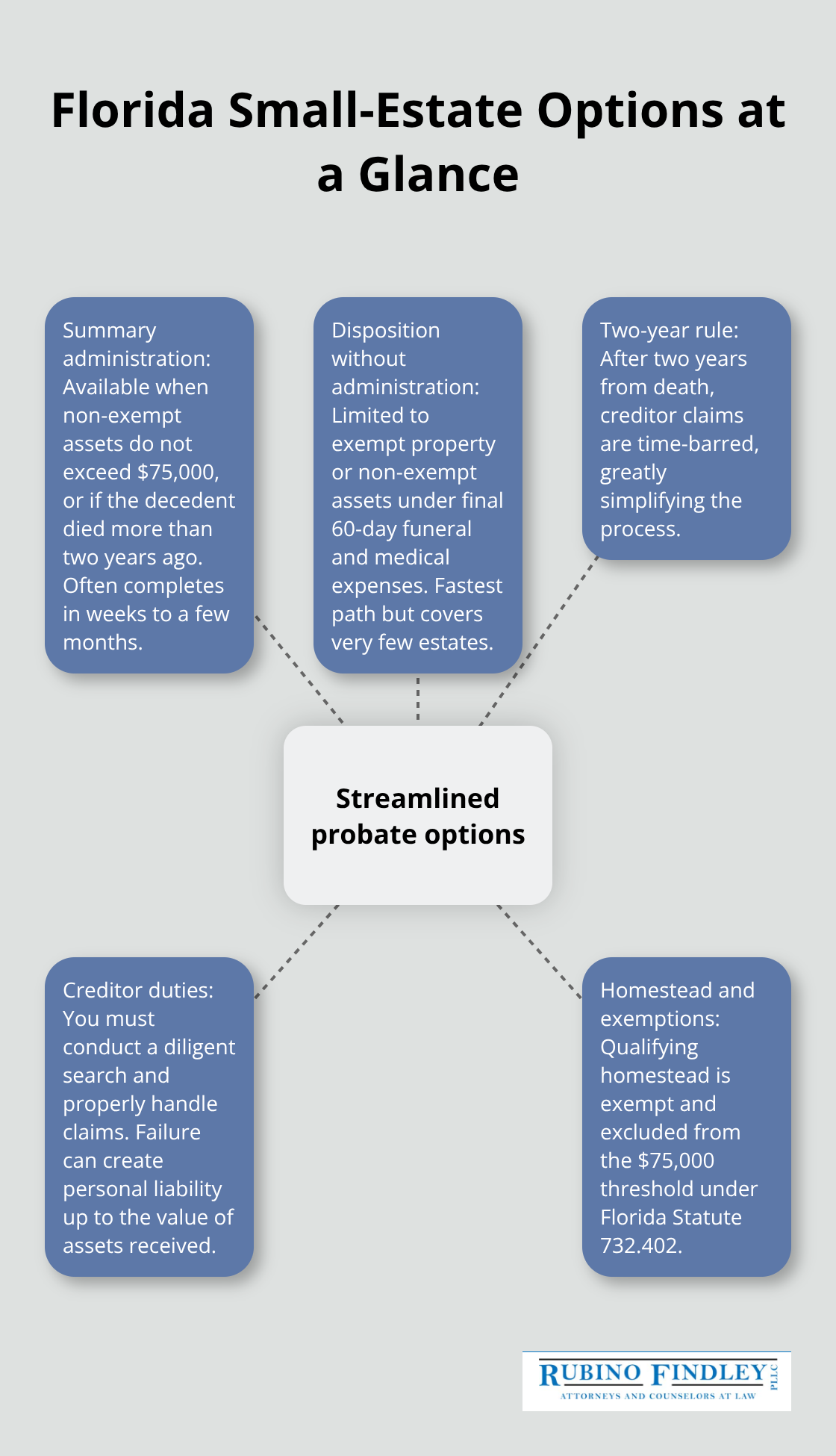
Florida’s small estate affidavit is not actually an affidavit in the traditional sense. The state calls its streamlined process summary administration or disposition without administration, depending on your situation. Summary administration applies when the estate’s net value does not exceed $75,000 in non-exempt assets, or when the person died more than two years ago. Disposition without administration is far more limited and only covers exempt property or non-exempt assets worth less than funeral and medical expenses from the final 60 days of life.
Why These Paths Exist
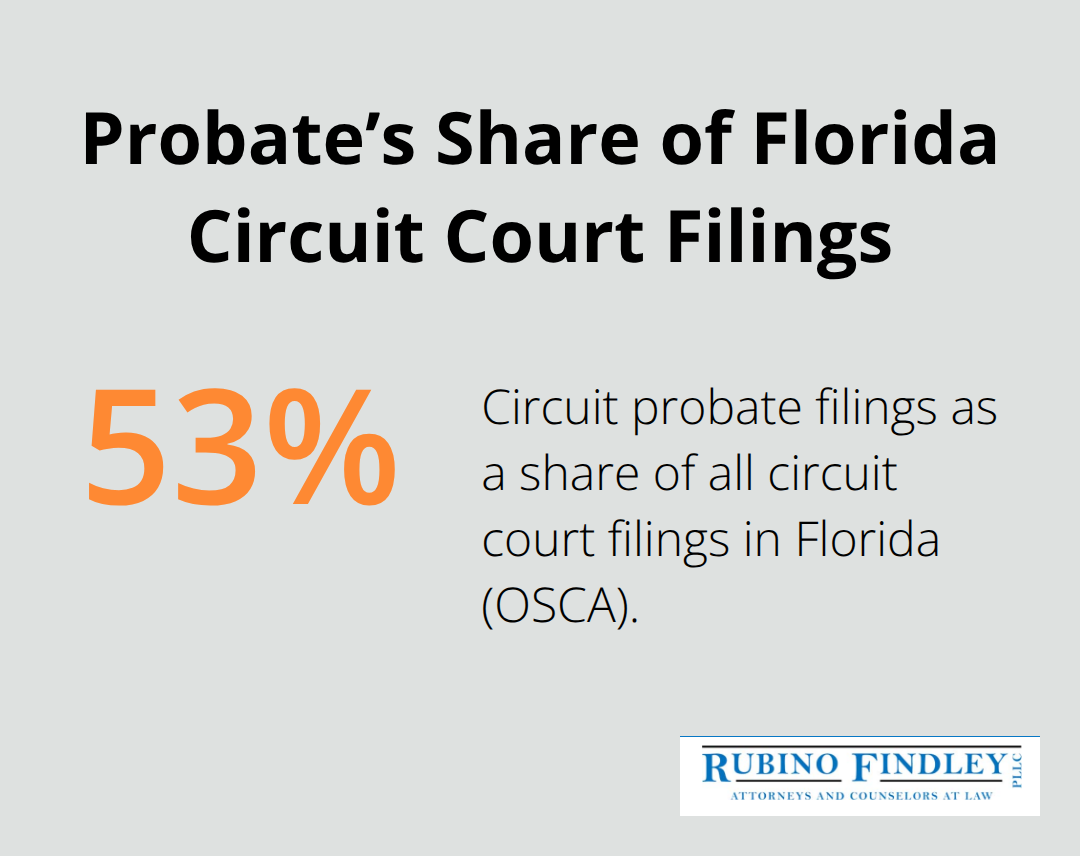
The Florida Office of the State Courts Administrator reports that circuit probate filings account for about 52.5% of all circuit court filings, showing just how common estate administration is in Florida courts. The legal purpose of both paths is simple: avoid the formality, delay, and expense of full probate when the estate is small enough to qualify. You do not need to appoint a personal representative in many cases, which eliminates court hearings, bond requirements, and months of administrative work. The court can issue an order that directly distributes property to beneficiaries, bypassing the entire formal administration process.
How Speed and Simplicity Compare to Traditional Probate
Full formal probate requires an attorney, involves multiple court filings, creditor notice periods, and ongoing court supervision, often stretching six months to over a year even for straightforward estates. Summary administration typically completes in weeks to a few months, depending on court workload and creditor issues. You must still search for creditors and handle claims properly, as failure to pay valid creditor claims can expose beneficiaries to personal liability up to the value of assets they receive.
The Two-Year Rule and Creditor Claims
The two-year rule exists because creditor claims must be filed within two years of death; after that deadline passes, claims are time-barred and no longer valid, which simplifies everything. Disposition without administration is the fastest option but covers almost no estates because it only applies when assets are exempt or minimal. Most families who qualify for a streamlined path choose summary administration because it has broader eligibility and actually covers real property and meaningful assets.
Determining Your Path Forward
Determining which path applies to your situation requires understanding Florida Statutes sections 735.201 and 735.301. An attorney can review your estate’s assets, values, and circumstances to identify whether summary administration or disposition without administration fits your needs, and then guide you through the specific filing requirements for your situation.
Why Summary Administration Saves Time and Money
The Cost Difference Between Paths
Full formal probate in Florida typically costs between $3,000 and $10,000 in attorney fees alone, plus court costs, publication fees for creditor notices, and potential bond premiums. Summary administration cuts these expenses dramatically because you avoid multiple court hearings, ongoing attorney supervision, and the need for a personal representative bond. The court issues a single order distributing assets directly to beneficiaries instead of requiring months of supervised administration. Most summary administrations in Palm Beach County complete within two to four months, compared to six months to over a year for formal probate.
Why Speed Matters for Your Family
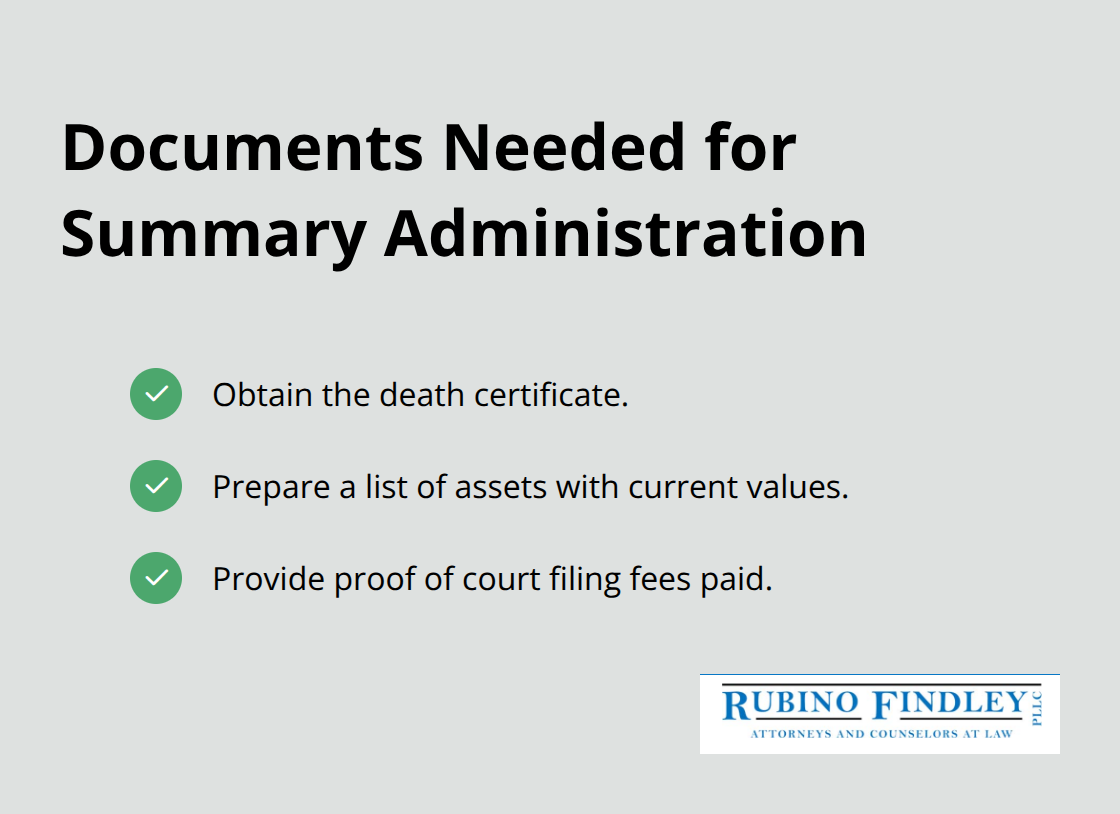
The Florida Office of the State Courts Administrator data shows that probate cases consume significant court resources, which is precisely why the state created these faster pathways for smaller estates. The practical difference shows up immediately when you start gathering documents. For summary administration, you need a death certificate, a list of assets with values, and proof of court filing fees. You do not need to publish creditor notices in newspapers for months or wait for a personal representative to be appointed and bonded.
The Two-Year Advantage and Creditor Protection
If the decedent has been dead more than two years, creditor claims are already time-barred under Florida law, which eliminates creditor liability risk entirely. Disposition without administration is even faster when it applies, though it only covers exempt property or assets under the decedent’s final funeral and medical expenses from the last 60 days of life. The key advantage is finality: beneficiaries receive their inheritance without ongoing court involvement or the risk of creditors emerging years later. This speed and certainty matter most when families are grieving and need to move forward with their lives, not spend the next year in probate court.
Understanding the financial and emotional benefits of these streamlined paths helps you make an informed decision about your estate. The next section walks you through the actual steps required to file for summary administration or disposition without administration in Boca Raton.
How to File for Summary Administration in Boca Raton
Filing for summary administration in Palm Beach County requires you to collect specific documents and submit them correctly to avoid delays or rejection. Start by gathering the original death certificate, the original will if one exists, and a comprehensive list of all estate assets with their current values. The 15th Judicial Circuit’s Self-Service Center at 561-355-7048 provides a summary administration packet with template forms at no cost, which saves time compared to drafting documents from scratch. You also need proof that court filing fees have been paid to the Clerk. The critical mistake most families make is undervaluing or misclassifying assets as exempt when they are not. Homestead property, for example, is exempt and excluded from the $75,000 threshold, but only if it qualifies under Florida Statute 732.402. If you own real estate, confirm whether homestead exemption applies before calculating whether your estate qualifies. Many families incorrectly assume they do not qualify because they did not account for exempt property exclusions.
Submitting Your Petition to the Court
Once you prepare documents, you must file the petition with the Clerk’s office in the 15th Judicial Circuit. The online scheduling system is the only method to submit proposed probate orders; the Clerk does not accept orders through mail, email, or in-person delivery. If your estate qualifies for summary administration and you must publish notice to creditors in a newspaper, you arrange this yourself through a local publication and then file the proof of publication with the Clerk. The petition itself must include a diligent search for reasonably ascertainable creditors and proof that known creditors received service. This is not optional paperwork; the court verifies that creditor notification occurred before issuing the distribution order. After you submit the petition, the court typically reviews it within two to four weeks depending on workload. The judge issues an order that directly distributes assets to beneficiaries without appointing a personal representative, which is the entire point of choosing summary administration over formal probate.
Why Professional Guidance Prevents Costly Errors
The difference between handling this alone and working with an attorney often comes down to one mistake: improper creditor handling or asset classification. If you fail to identify and pay valid creditor claims, beneficiaries face personal liability up to the value of assets they received, potentially undoing the entire benefit of the streamlined process. An attorney reviews your specific circumstances, confirms which path applies, ensures all creditor obligations are met, and handles court filings to prevent rejections or delays. The cost of legal guidance is minimal compared to the risk of distributing assets improperly and facing creditor claims years later.
Final Thoughts
Summary administration and disposition without administration save your family months of waiting and thousands in legal fees compared to formal probate. The small estate affidavit Florida process, though technically called summary administration or disposition without administration under state law, exists because families should not face unnecessary complexity when assets are modest. Your next step depends on your specific situation: gather your loved one’s death certificate, list all estate assets with their values, and determine whether homestead or other exempt property applies.
Creditor notification and asset classification are not areas where mistakes are forgivable, as improper handling exposes beneficiaries to personal liability that can erase the entire benefit of choosing a streamlined path. Contact the 15th Judicial Circuit’s Self-Service Center at 561-355-7048 to request the summary administration packet with template forms if the estate qualifies. However, the complexity of creditor obligations and court filings often makes professional guidance invaluable for families navigating this process.
We at Rubino Findley, PLLC help families in Boca Raton and throughout Palm Beach County determine which path applies to their situation and handle the filing process correctly. Our team reviews your assets, confirms eligibility, ensures creditor obligations are met, and manages court submissions to prevent delays or rejections. Reach out to us to schedule your free consultation and discuss your options.