




Wills and Trust Planning: Crafting Your Comprehensive Plan
Most people put off wills and trust planning because they think it’s complicated or unnecessary. The truth is that without proper planning, your family could face months of court delays, unexpected taxes, and disputes over your assets.
At Rubino Findley, PLLC, we help families in Palm Beach County create clear, legally sound plans that protect what matters most. This guide walks you through the differences between wills and trusts, and shows you exactly how to build a plan that fits your situation.
Why Wills and Trusts Matter
Without a will or trust in place, your family faces real financial and legal consequences. Florida probate can take anywhere from six months to two years or longer, depending on the complexity of your estate and whether anyone contests the proceedings. During this time, your family cannot access assets like bank accounts, investment portfolios, or real estate to pay bills or cover living expenses.
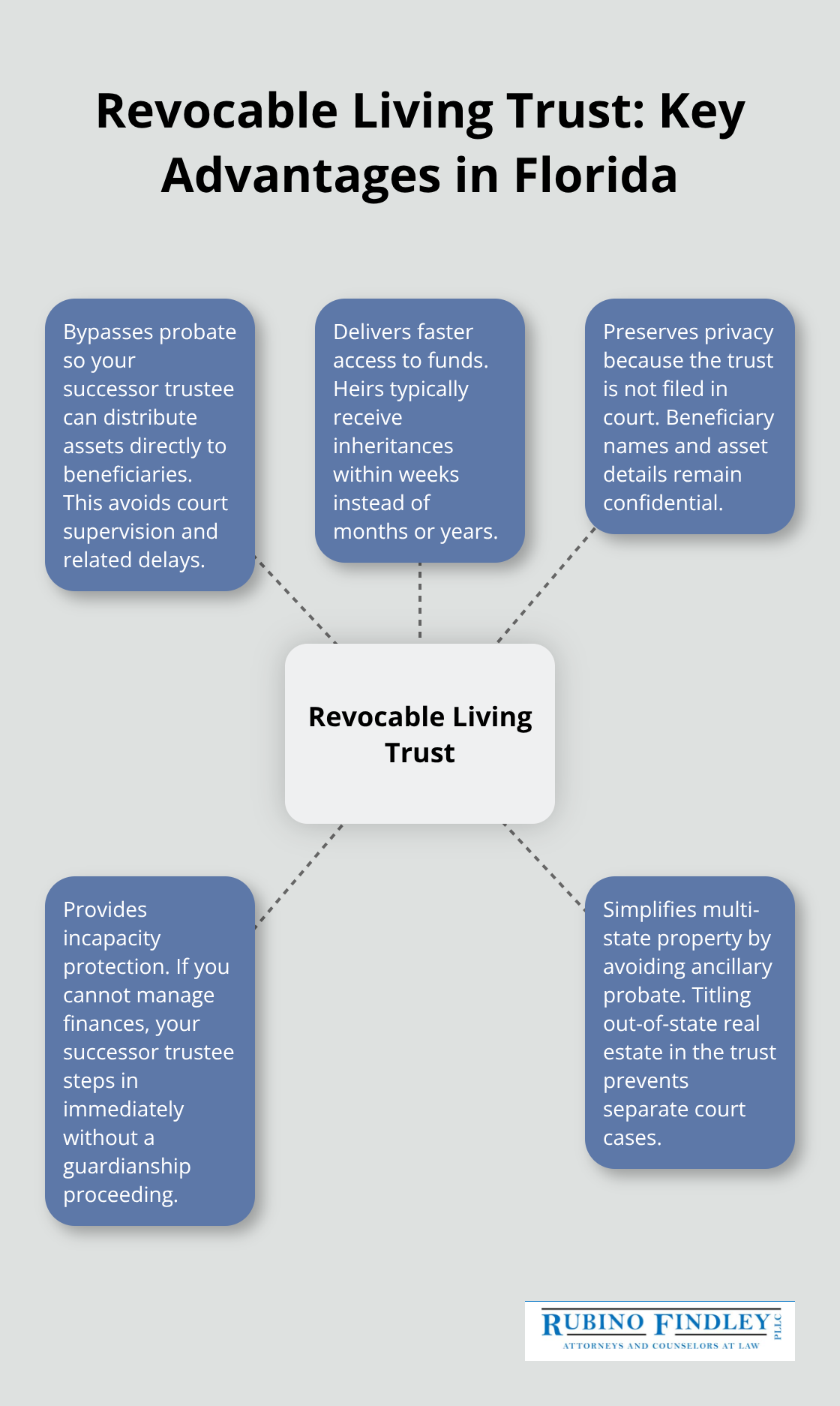
The court process also costs money-probate administration fees, attorney fees, and court costs can easily consume 3 to 7 percent of your estate’s value according to data from the American Bar Association. A revocable living trust bypasses probate entirely by transferring ownership of your assets into the trust during your lifetime. When you pass away, your successor trustee can distribute assets to your beneficiaries without court involvement, often within weeks rather than months or years. This matters because your family receives the money they need when they need it.
Keeping Your Assets Where They Belong
Your assets need protection from creditors and poor decision-making by beneficiaries. A revocable living trust does not shield your assets from creditors while you are alive, but a properly drafted trust with spendthrift provisions protects beneficiaries after your death. This means if one of your children struggles with money management or faces a lawsuit, their inheritance stays intact rather than being seized or spent recklessly. Additionally, if you own real estate in multiple states, holding property titles in your trust avoids ancillary probate in those other states (which would otherwise require separate court proceedings and additional legal fees in each location). Organizing your assets-property, savings accounts, retirement accounts, life insurance, and business interests-into a trust ensures they transfer smoothly and according to your exact wishes.
Planning for Your Children’s Future
If you have minor children, a will or trust lets you name who will raise them if both you and your spouse die unexpectedly. Without this designation, the court decides guardianship, which can lead to prolonged legal battles and outcomes that do not reflect your values. Your will also specifies how your children’s inheritance will be managed-whether it goes into a trust that releases funds at certain ages, or whether a trusted adult manages it until they reach adulthood. Life insurance beneficiary designations should coordinate with your overall plan to ensure the proceeds go to the right place and are used for your children’s education, healthcare, and living expenses.
The decisions you make now about asset protection and guardianship directly shape what happens next when you actually build your estate plan.
Wills vs. Trusts: Which Document Controls Your Estate
A will is a written document that takes effect only after you die, naming an executor to manage your estate through the probate court system. Florida law requires wills to be signed by you in front of at least two witnesses, and those witnesses must sign in your presence and in each other’s presence. The will specifies who inherits your assets, who raises your minor children, and who manages the estate’s finances during probate. However, a will does not avoid probate-it actually triggers the court process. Your executor must file the will with the probate court, notify creditors and beneficiaries, pay outstanding debts and taxes, and then distribute remaining assets. This process takes six months to two years or longer, and your family cannot access most assets during this time. Additionally, probate is public record, meaning anyone can view the details of your estate, your assets, and your beneficiaries. If your estate is valued at $75,000 or less, Florida allows summary administration, which is faster and less formal than full probate, but even this streamlined process requires court involvement and legal filings.
How a Revocable Living Trust Works
A revocable living trust operates differently and is far more practical for most families. You create the trust while alive, transfer ownership of your assets into the trust’s name, and name yourself as trustee during your lifetime. When you pass away, a successor trustee you named takes over and distributes assets directly to beneficiaries without any court involvement. This means your family receives their inheritance within weeks, not months or years. Because the trust is a private document, your beneficiaries’ names and asset details remain confidential-no public record exists.
Protection During Incapacity
The trust also covers incapacity: if you become unable to manage your finances due to illness or injury, your successor trustee steps in immediately to pay bills and manage accounts without requiring a court guardianship proceeding. This protection activates automatically when you need it most, without delays or court orders.
The Critical Role of Proper Funding
The real work with a trust is funding it properly. Assets must be retitled in the trust’s name-your home deed, bank accounts, investment accounts, and other property must legally belong to the trust for it to work. Unfunded assets sitting in your personal name still go through probate after you die, which defeats much of the trust’s purpose. Each asset type requires specific steps to transfer ownership correctly into the trust structure.
Why Most Families Need Both Documents
Many families actually need both documents. A will acts as a safety net, catching any assets that weren’t transferred into the trust during your lifetime. This pour-over will directs those remaining probate assets into your trust after death, streamlining the distribution process. Additionally, only a will allows you to name a guardian for minor children, so if you have kids under age 18, you must have a will regardless of whether you also have a trust. The combination of a revocable living trust plus a pour-over will provides the most comprehensive protection for most Palm Beach County families.
The choice between these documents depends on your situation, but understanding how each one functions reveals why most people benefit from both. Once you know which documents fit your needs, the next step involves actually building your estate plan with the right structure and details in place.
How to Build Your Estate Plan in Boca Raton
Organize Your Assets and Make Key Decisions
Start your estate plan by listing everything you own: real estate, bank and investment accounts, retirement accounts like 401(k)s and IRAs, life insurance policies, vehicles, and business interests. Write down account numbers, current values, and where documents are stored. This step takes a few hours but prevents costly mistakes later. Next, identify who will manage your affairs.
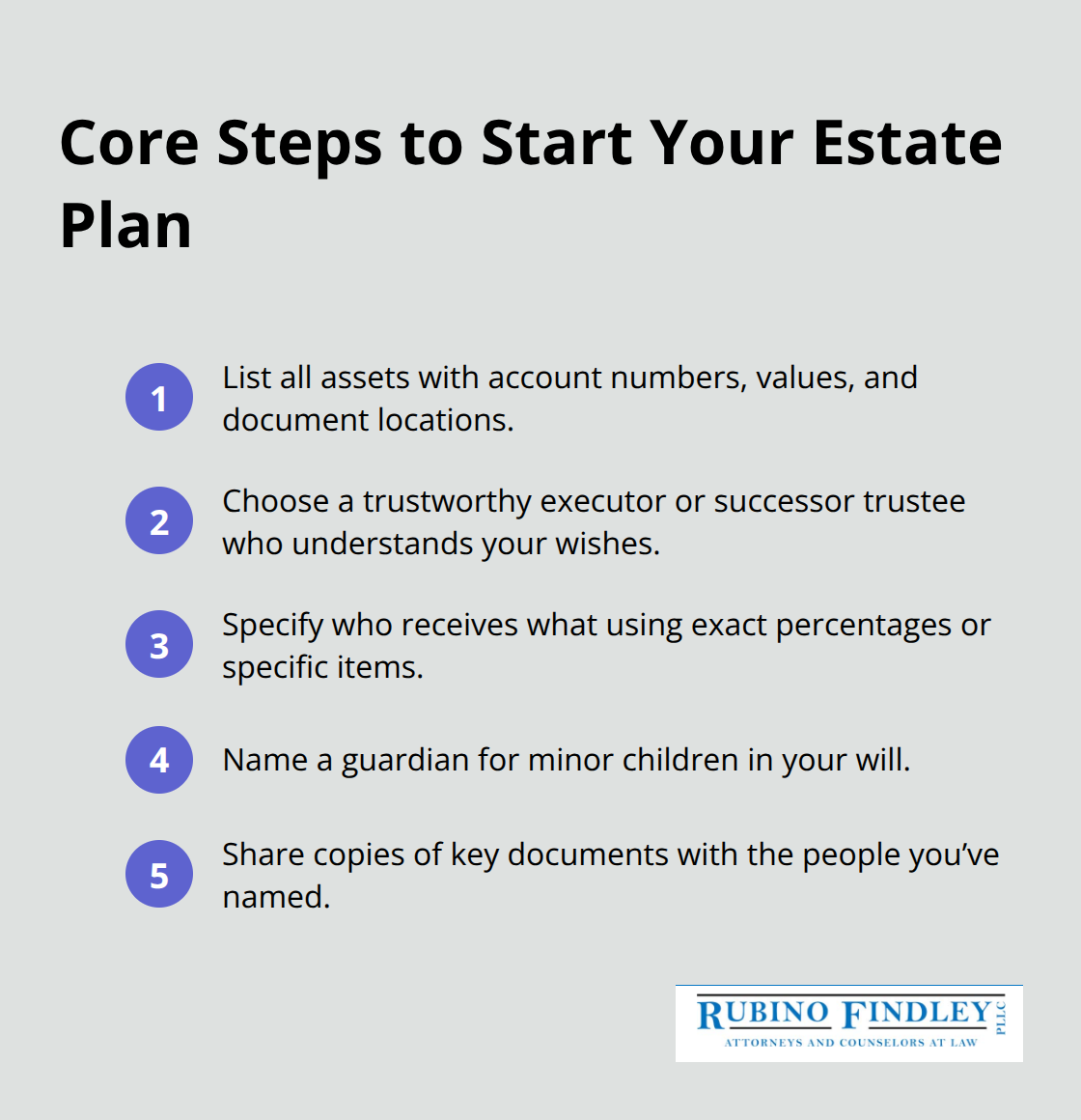
Your executor (for a will) or successor trustee (for a trust) needs to be someone trustworthy, organized, and willing to handle financial and legal responsibilities. Many people name a spouse or adult child, but you can also choose a professional trustee like a bank or trust company if family members are unavailable or unsuitable.
Whoever you select should understand your wishes and have copies of your documents before anything happens to you. For your beneficiaries, be specific about who receives what. Vague language like leaving assets to “my children equally” creates confusion if circumstances change or if a child predeceases you. Instead, state exact percentages or specific items. If you have minor children, name a guardian in your will-this is non-negotiable. Without this designation, the court appoints someone, which could be a relative you would never have chosen.
Draft Documents with Legal Precision
Work with an attorney to draft your documents correctly once you have these decisions made. Florida law requires wills to be signed by you and witnessed by two people in each other’s presence; trusts don’t have the same witness requirement but must be properly executed and funded to be effective. Attempting to draft these yourself using online templates often leads to technical errors that invalidate documents or create ambiguity that triggers disputes after your death. An experienced estate planning attorney from Rubino Findley, PLLC in Boca Raton can help you establish wills, trusts, and durable powers of attorney tailored to your specific situation.
Keep Your Plan Current as Life Unfolds
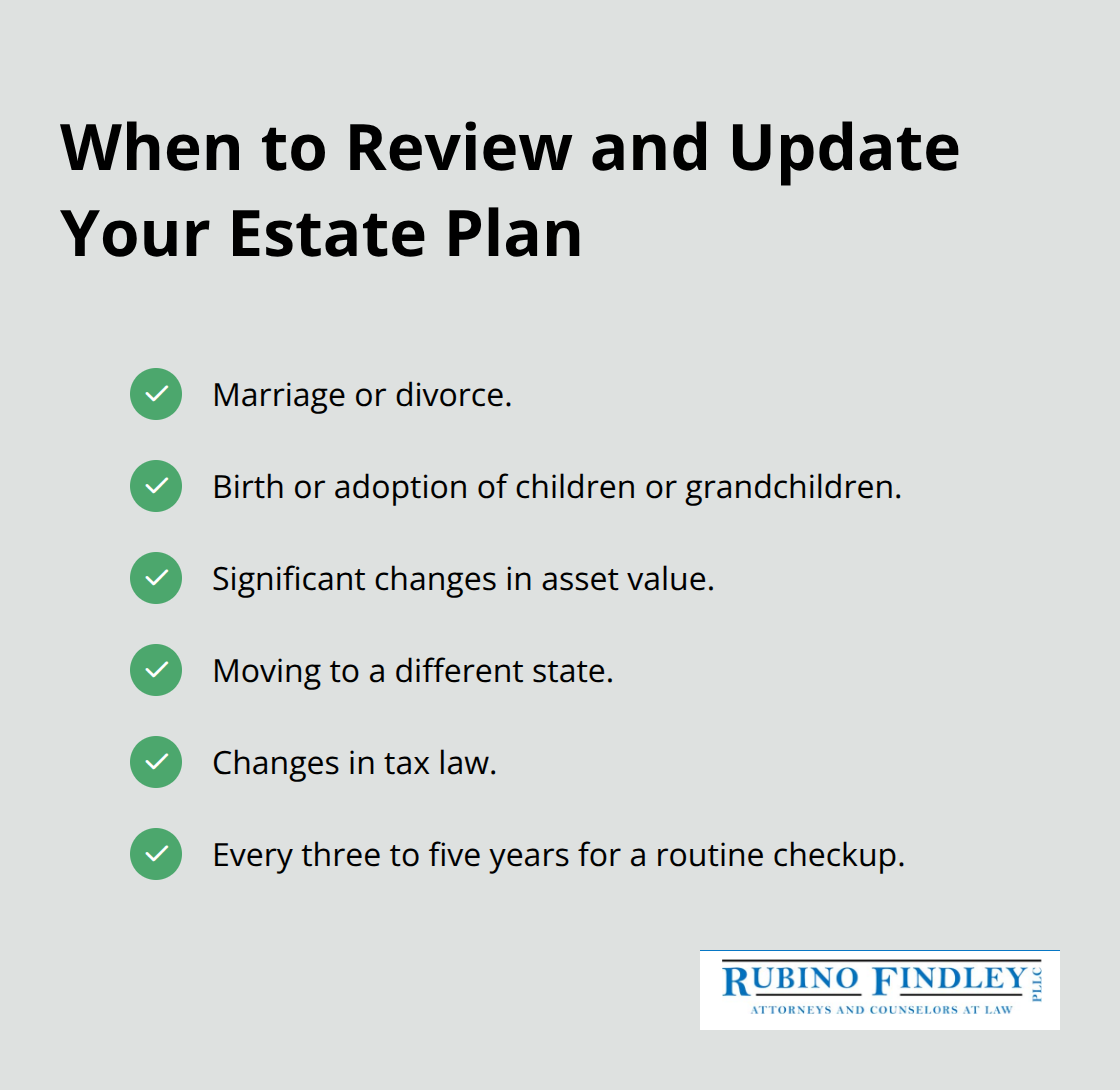
Your estate plan is not a one-time project. Life changes demand updates: marriage, divorce, the birth of children or grandchildren, significant changes in asset value, moves to different states, or changes in tax law all warrant reviewing your plan. Many people create a will or trust and then ignore it for ten or twenty years, which means it no longer reflects their actual wishes or financial situation. Schedule a review every three to five years, or immediately after major life events.
Address Business Succession and Tax Planning
If you own a business, your plan must address succession-who takes over if you die or become incapacitated? Without a clear succession plan, your business could be forced to close, eliminating its value for your family. Similarly, if you’ve accumulated significant assets since creating your original plan, you may need additional strategies to minimize estate taxes. The cost of updating a document is far lower than the cost of fixing problems created by an outdated or poorly drafted plan.
Final Thoughts
Wills and trust planning form the foundation of protecting your family’s financial future and ensuring your wishes take effect exactly as you intend. A revocable living trust bypasses probate delays and keeps your estate private, while a will provides essential protections like naming guardians for minor children and catching any assets that weren’t transferred into the trust. Together, these documents give you control over what happens to your assets, who raises your kids, and how your family avoids months of court proceedings and unnecessary expenses.
Building an effective estate plan requires more than filling out online forms or using generic templates-Florida law has specific requirements for valid wills and trusts, and improper execution or funding can render your documents useless when your family needs them most. Small mistakes in how you title assets, name beneficiaries, or structure your trust can cost your family thousands in probate fees or create disputes that drain your estate’s value. We at Rubino Findley, PLLC work directly with families in Palm Beach County to create customized plans that fit your actual situation.
The time to act is now. Contact Rubino Findley, PLLC in Boca Raton to schedule your free consultation and start protecting your family’s future today.