



Probate timeline Florida 2026: What to Expect This Year
Probate in Florida can take anywhere from six months to several years, depending on the complexity of your estate. Understanding the probate timeline Florida 2026 helps you plan ahead and avoid unnecessary delays.
At Rubino Findley, PLLC, we’ve guided countless families through this process. This guide breaks down what to expect and shows you how to protect your assets before probate becomes necessary.
How Long Does Probate Actually Take in Florida
Summary Administration vs. Formal Administration
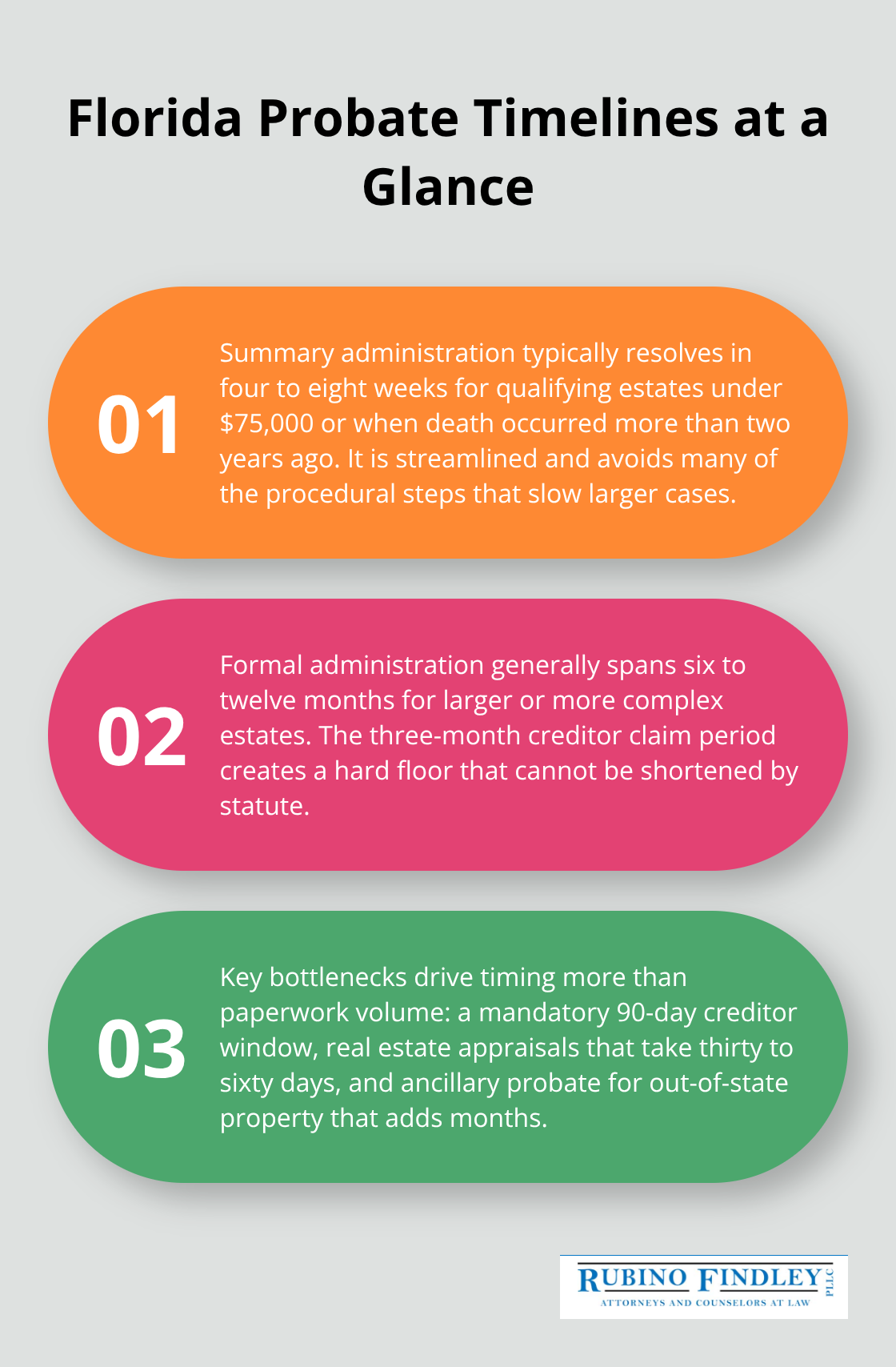
The timeline for probate in Florida splits into two distinct tracks, and the difference between them matters far more than most people realize. Summary administration finishes in four to eight weeks for estates with probate assets under $75,000 or when the decedent died more than two years ago, according to the Florida Bar. Formal administration, which handles larger estates or those with complications, typically takes six to twelve months, though the three-month creditor claim period sets an absolute floor that cannot be shortened by statute.
The Creditor Claim Period: Your Timeline’s Real Bottleneck
This creditor period is the single biggest driver of probate timelines, not the amount of paperwork or court involvement. The mandatory 90-day notification window for creditors creates a hard stop in the timeline-courts cannot accelerate this period regardless of how organized your case is. Real estate appraisals alone consume thirty to sixty days, and if your estate includes property outside Florida, ancillary probate in another state adds months to the process.
Filing Efficiency and Early Preparation
Palm Beach County probate filings typically receive case number assignments within seven to ten business days, but deficient paperwork triggers immediate delays that compound throughout the process. Maintaining organized financial records and ordering death certificates in advance reduces filing delays by two to three weeks, a small but meaningful advantage. These early steps matter because they prevent the court from rejecting your initial petition and forcing resubmissions.
How Probate-Avoidance Tools Compress Your Timeline
The real acceleration comes from what you do before probate starts. Assets placed in a revocable living trust bypass the entire probate process, eliminating the mandatory creditor notification period and reducing settlement time from approximately twelve months to zero for those assets. Payable-on-death accounts, joint ownership, and beneficiary designations move assets outside probate immediately without triggering the three-month waiting period. Transfer-on-death deeds for real property avoid lengthy asset valuations and distributions, potentially saving three to six months.
When Complications Extend the Process
If your estate involves contested wills, family disputes, business interests, or hard-to-locate heirs, probate extends to eighteen months or longer. Creditor disputes alone can add three to six months due to hearings on contested claims. The decisions you make today about how your assets are titled and structured determine whether your family faces a straightforward six-month process or a prolonged eighteen-month ordeal. Understanding these common delays helps you recognize which situations require immediate attention.
What Really Delays Your Florida Probate Case
Missing or Contested Wills
Missing or contested wills create immediate friction in probate. When a will cannot be located or multiple versions surface, Florida courts must hold hearings to determine validity, adding two to four months to your timeline. The Florida Statutes require two witnesses for a valid will, and notarization strengthens enforceability, but many families discover their loved one’s will is ambiguous or missing altogether. If beneficiaries dispute the will’s authenticity or challenge the testator’s mental capacity at the time of signing, the case shifts from routine administration to contested probate, extending timelines to eighteen months or longer.
The Ninety-Day Creditor Notification Window
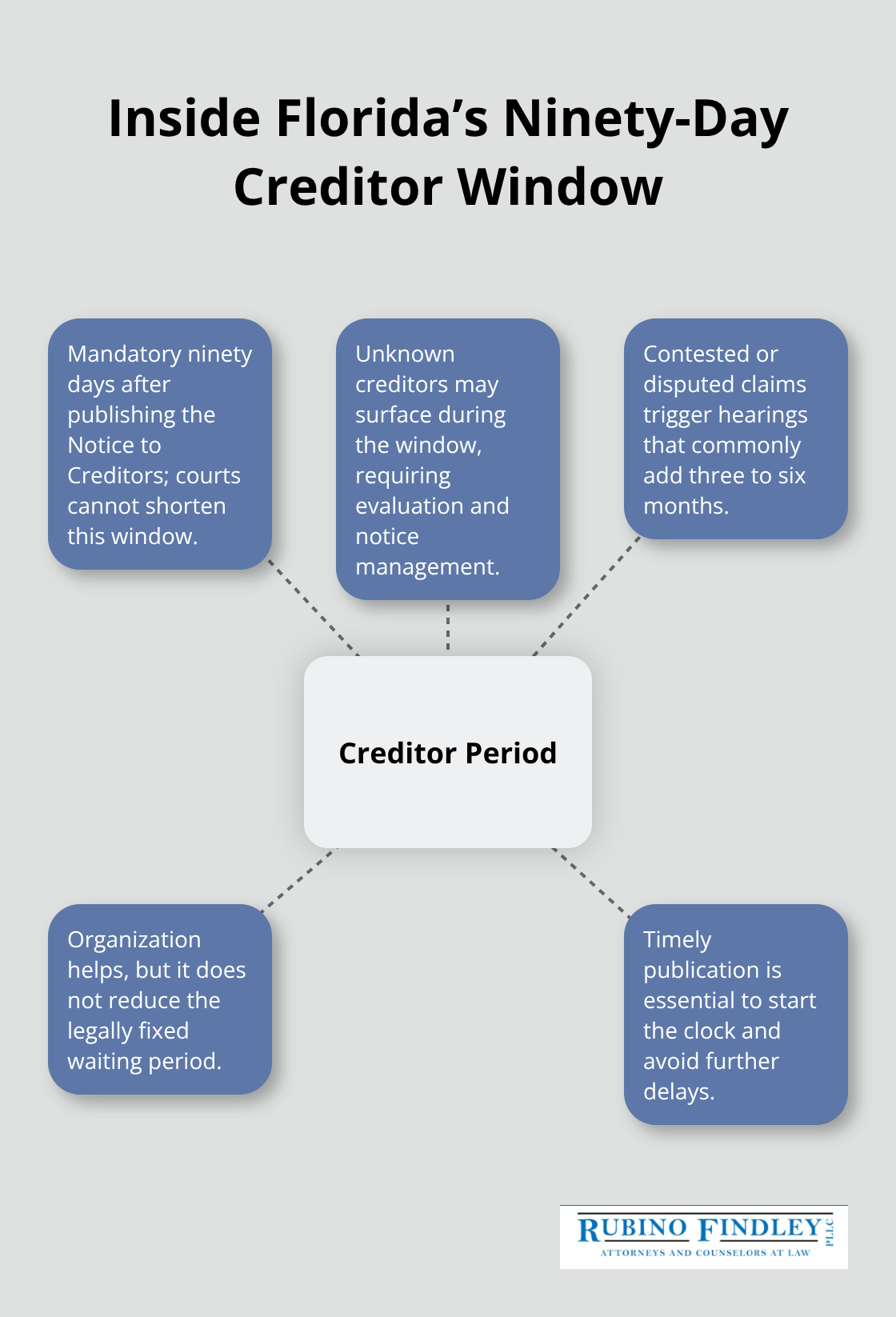
Creditor claims represent the second major delay mechanism, and this one is often misunderstood. Florida law mandates a ninety-day notification period for creditors after the Notice to Creditors is published in a newspaper, and this window cannot be shortened regardless of how organized your case is. Unknown creditors frequently surface during this period, forcing the personal representative to evaluate and potentially dispute claims, which adds three to six months depending on the number of contested claims.
Real Estate Valuations and Out-of-State Property
Complex asset distribution compounds these delays significantly, especially when estates include real estate outside Florida, business interests, or substantial investment portfolios. Real estate valuations alone consume thirty to sixty days, and ancillary probate in another state adds months to settlement. Tax disputes with the IRS or Florida Department of Revenue can stall distributions indefinitely, leaving beneficiaries waiting years to receive their inheritance.
Asset Documentation and Ownership Clarity
The estates most vulnerable to these delays are those with unclear asset ownership structures, missing documentation of account values, or outdated property records that require correction before distribution can proceed. These complications (missing deeds, unclear titles, or undocumented accounts) force courts to pause distributions until ownership is verified. When you structure your assets properly before death-through trusts, beneficiary designations, or joint ownership-you eliminate many of these documentation problems that plague probate cases.
How to Sidestep Probate Entirely in Boca Raton
Revocable Living Trusts Eliminate the Creditor Bottleneck
The fastest way to avoid the eighteen-month nightmare of contested probate is to structure your assets before you die, not after. Revocable living trusts eliminate the mandatory ninety-day creditor notification period that creates the biggest bottleneck in Florida probate, compressing settlement from twelve months to weeks for trust-funded assets. When you place real estate, investment accounts, and bank balances into a trust during your lifetime, those assets transfer directly to beneficiaries without court involvement, without creditor delays, and without the public record exposure that probate creates. The National Association of Estate Planners and Councils reports that trusts reduce timeline uncertainty and allow families to avoid the three to six month extensions caused by creditor disputes.
Transfer-on-Death Deeds and Payable-on-Death Accounts
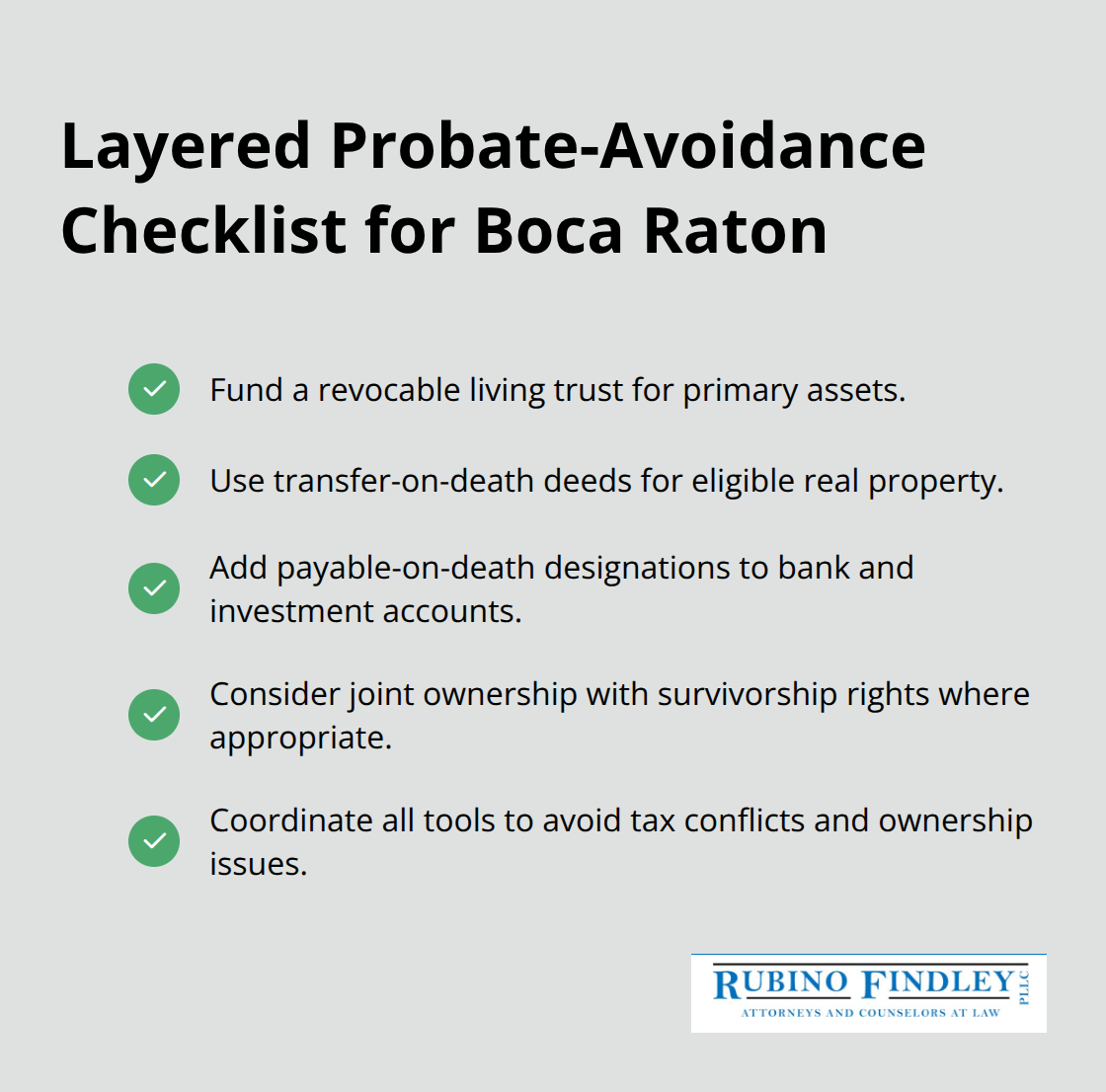
Transfer-on-death deeds for real property work similarly, avoiding the thirty to sixty day appraisal delays that complicate formal probate, though they function differently than trusts and require separate titling. Payable-on-death designations on bank and investment accounts bypass probate immediately for those specific assets, moving money to named beneficiaries within days rather than months. Joint ownership with survivorship rights transfers property automatically at death without probate processing, though this strategy carries tax and liability complications that require careful planning with an attorney.
The Cost of Missing or Outdated Beneficiary Designations
The mistake most families make is waiting until retirement or old age to address these structures, then discovering their current titling creates tax complications or triggers unwanted probate anyway. Naming beneficiaries on retirement accounts, life insurance policies, and brokerage accounts costs nothing and takes minutes, yet most people either skip this step or name outdated beneficiaries from previous relationships. A single missing or incorrect beneficiary designation forces that account into probate, adding it to the estate assets that trigger the full creditor notification process and extends your family’s waiting period by months.
Digital Assets and Password Management
Digital asset planning compounds this problem-online accounts, password managers, cryptocurrency wallets, and cloud storage often have no designated beneficiary at all, forcing executors to navigate probate court orders just to access files or accounts. You should designate a digital executor and maintain a current inventory of all online assets (email, social media, financial accounts, and cloud storage) so your family can access critical information without court intervention.
A Layered Approach to Probate Avoidance
The most practical approach combines multiple strategies: a revocable living trust as your primary probate-avoidance tool, transfer-on-death deeds for real estate you own outright, beneficiary designations on all financial accounts, and joint ownership with survivorship rights for assets like the family home when appropriate for your situation. This layered approach eliminates probate for the vast majority of your estate while addressing the specific complications that extend timelines in contested cases. An estate planning attorney can help you structure these tools correctly so they work together without creating unintended tax consequences or ownership conflicts.
Final Thoughts
Florida probate timelines in 2026 range from four to eight weeks for summary administration to eighteen months or longer for contested cases, but your family’s outcome depends entirely on decisions you make before death, not after. Estates structured with revocable living trusts, transfer-on-death deeds, and proper beneficiary designations compress settlement into weeks rather than months, while disorganized estates with unclear ownership trigger the full creditor notification delays that extend timelines indefinitely. The ninety-day creditor notification period cannot be shortened, real estate appraisals consume thirty to sixty days, and contested claims add months to your timeline, but none of these bottlenecks affect assets placed in trusts or designated through beneficiary accounts.
Working with an attorney who understands Palm Beach County probate procedures prevents the filing errors that trigger resubmissions and delays. Organized financial records, current beneficiary designations, and a clear asset inventory reduce processing time by weeks and help you avoid the thousands in unnecessary costs that plague unprepared families. An attorney identifies which assets should flow through probate and which should bypass it entirely, a distinction that saves your family months of waiting.
At Rubino Findley, PLLC, we help families in Palm Beach County establish wills, trusts, durable powers of attorney, and comprehensive estate plans that protect assets and accelerate settlement. Schedule your free consultation to discuss your estate planning needs and learn how proper planning eliminates the delays that plague unprepared families.