




Florida Independent Administration: What It Is and How It Works
Probate in Florida doesn’t always require court supervision at every step. Florida independent administration offers a streamlined path for settling estates when certain conditions are met.
At Rubino Findley, PLLC, we help families navigate this process and understand whether it’s the right choice for their situation. This guide walks you through what independent administration is, how it works, and the real benefits it delivers.
What Independent Administration Actually Means
Independent administration under Florida Statutes Section 733.601 grants the personal representative authority to settle and distribute an estate without needing court approval for routine decisions. The personal representative can sell assets, pay debts, and distribute property to beneficiaries without filing petitions or waiting for court orders, as long as the will authorizes it or all beneficiaries and creditors consent in writing. This contrasts sharply with formal administration, where nearly every action requires a judge’s sign-off.
In supervised probate, the personal representative must petition the court to sell real estate, settle claims, or make distributions. Those court hearings add months to the timeline and generate additional legal fees. Independent administration eliminates that bottleneck. Florida Bar data shows independent administration cuts the typical probate timeline from about 12 months down to approximately 6 months, and legal fees drop 40-60% compared to supervised cases because fewer court appearances occur. The personal representative still maintains fiduciary duties and must manage the estate in good faith, but the day-to-day administration happens outside the courtroom.
Eligibility Requirements for Independent Administration
Not every estate qualifies for independent administration. The decedent must have been a Florida resident at death. The will must explicitly authorize independent administration, or all beneficiaries and creditors must provide written consent. No objections against the personal representative can be pending. If the will contains the proper language granting independent authority, the process moves forward once the court issues Letters of Administration. Without that authorization in the will, obtaining consent from every beneficiary and creditor becomes impractical on larger estates.
Palm Beach County approval rates for independent administration petitions hover around 75%, with most denials stemming from family disputes or incomplete documentation. This means filing complete paperwork upfront matters significantly.
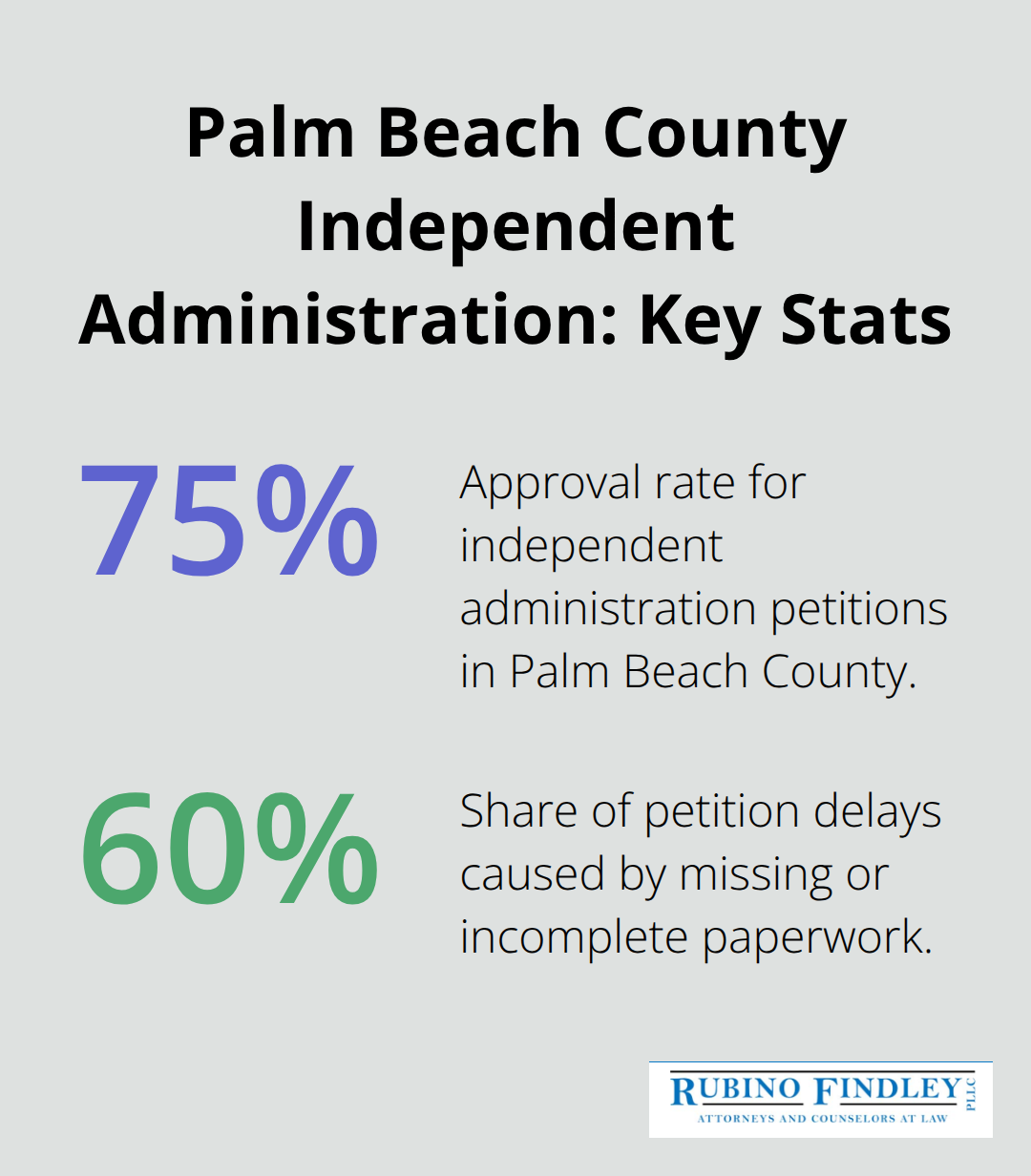
Form 12.200(a) must be filed with the Palm Beach County Probate Court along with the original will, certified death certificate, and a list of interested persons. The filing fee is $401 for estates under $75,000, with larger estates incurring additional fees. Documentation readiness is critical because 60% of petition delays occur due to missing paperwork (including notarized signatures and certified copies of out-of-state property records).
Powers and Limitations of the Personal Representative
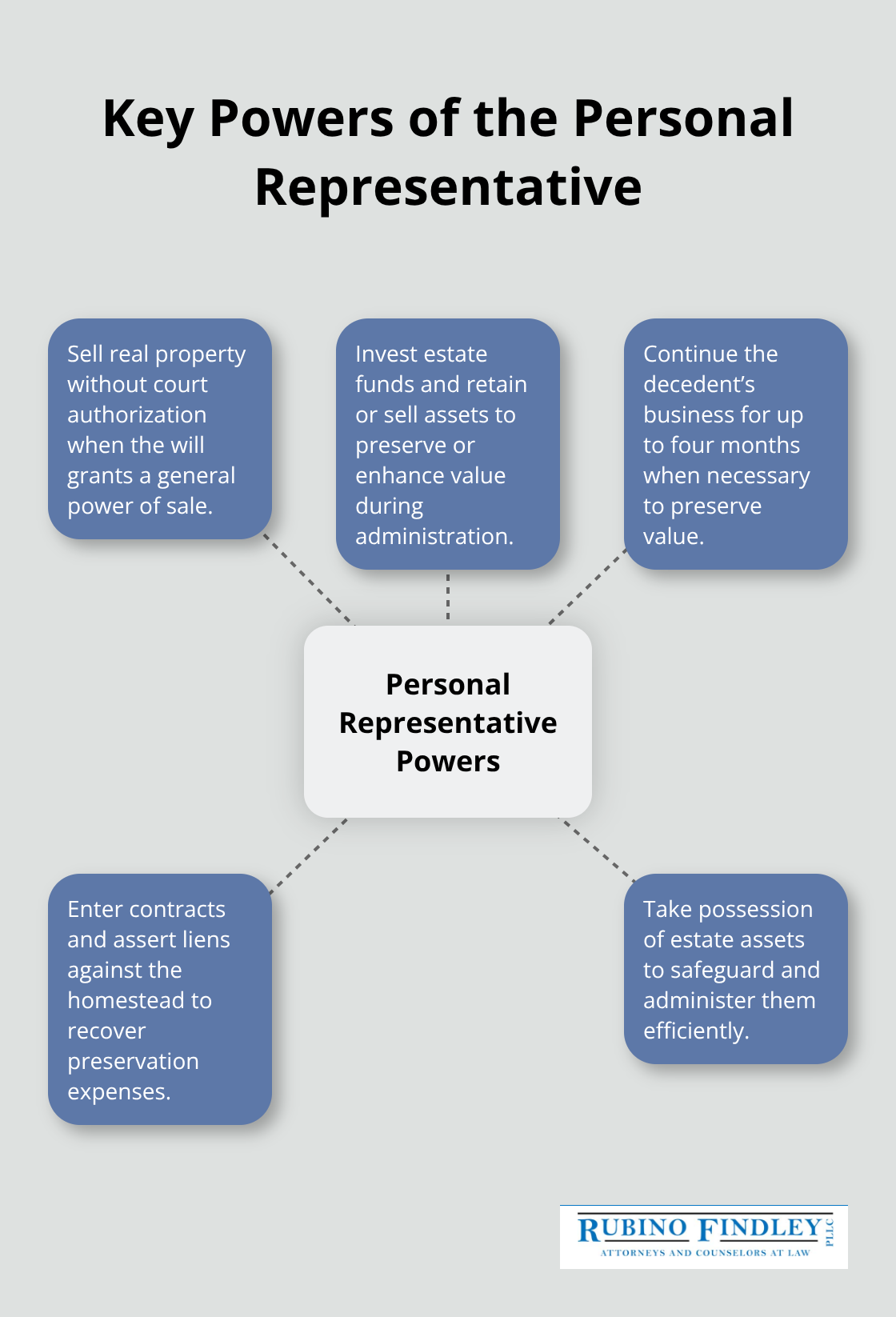
The personal representative receives broad authority to manage assets, including investing funds, retaining or selling assets, and even continuing the decedent’s business for up to four months if needed to preserve value under Florida Statutes Section 733.612. Real property can be sold without court authorization if the will grants a general power of sale. The personal representative can enter contracts, assert liens against the homestead to recover preservation expenses, and take possession of estate assets.
However, this independence comes with accountability. The personal representative must create a comprehensive asset inventory within 60 days of receiving Letters of Administration, listing assets with fair market values as of the death date. Professional appraisals are required for real estate; household goods valued under $1,000 can be self-valued. The personal representative must publish Notice to Creditors within 90 days of appointment, giving creditors a 3-month window to file claims. Known creditors must file within 30 days or 3 months from publication, whichever is later (Florida Statutes Section 733.2121).
Managing Creditor Claims and Asset Distribution
Mistakes in creditor notification, inventory preparation, or distributions create personal liability and can delay estate closure. The personal representative must pay funeral expenses, estate administration costs, federal taxes, state taxes, and then general creditors in that order. About 25% of creditor claims face rejection for insufficient documentation or late filing. Strict adherence to probate rules is essential. After the creditor claims period expires, the personal representative distributes assets per the will or intestacy laws, obtaining signed receipts from beneficiaries. Many independent administrations in Palm Beach County close within 180 days after creditor claims expire, but only when the personal representative follows each statutory requirement carefully. Understanding these responsibilities upfront helps families avoid costly mistakes and ensures the estate administration proceeds smoothly toward final closure and distribution.
Why Independent Administration Saves Time and Money in Boca Raton
Independent administration delivers concrete financial and timeline benefits that supervised probate cannot match. The numbers speak clearly: estates that qualify for independent administration in Palm Beach County close within 6-8 months on average, while supervised cases often exceed 18 months. That 10-month difference translates directly into reduced legal fees. Attorneys handling independent administration typically charge 40-60% less than those managing supervised probate because court appearances drop significantly.
The Real Cost Difference
For a $1 million estate, supervised probate costs roughly $30,000 in attorney fees alone according to Florida probate cost data; independent administration reduces that burden substantially. The personal representative avoids filing petitions for asset sales, distribution approvals, or creditor settlements. Instead, they proceed with routine administration tasks independently, with the attorney handling paperwork and ensuring statutory compliance rather than waiting in courtrooms. This efficiency matters most on larger estates where every month of delay compounds the costs. A $5 million estate spending an extra year in supervised probate could accumulate $50,000 or more in unnecessary legal and court fees.
Operational Control and Flexibility
The personal representative gains flexibility that supervised administration denies. Selling real estate happens without court authorization if the will grants a general power of sale, meaning properties move quickly in favorable market conditions. The personal representative can invest estate funds, continue a family business for up to four months to preserve value, and manage assets strategically rather than seeking permission for each decision. This operational freedom allows for better financial decisions during volatile market periods.
Managing the Timeline Effectively
Creditor notification and claims management still require strict adherence to statutory timelines, but the personal representative controls the pace without waiting for judicial calendars. Palm Beach County’s 75% approval rate for independent administration petitions reflects how straightforward the process becomes when documentation is complete and no family disputes exist. The combination of faster closure, lower legal costs, and operational control makes independent administration the practical choice for most qualifying estates in the Boca Raton area and throughout Palm Beach County. Understanding these financial and operational advantages helps families recognize when independent administration fits their situation. The next section examines the specific eligibility requirements and petition process that determine whether an estate qualifies for this streamlined approach.
Getting Your Estate Ready for Independent Administration in Boca Raton
Eligibility Requirements for Independent Administration
Independent administration requires meeting specific Florida legal criteria. The decedent must have been a Florida resident at death. The will must explicitly authorize independent administration, or alternatively, all beneficiaries and creditors must provide written consent. No objections against the personal representative can be pending at the time of filing. This distinction matters because obtaining written consent from every creditor on a substantial estate becomes impractical, so will language granting independent authority is the realistic path forward. When the will contains the proper authorization language, the process accelerates significantly once the court issues Letters of Administration.
Filing the Petition in Palm Beach County
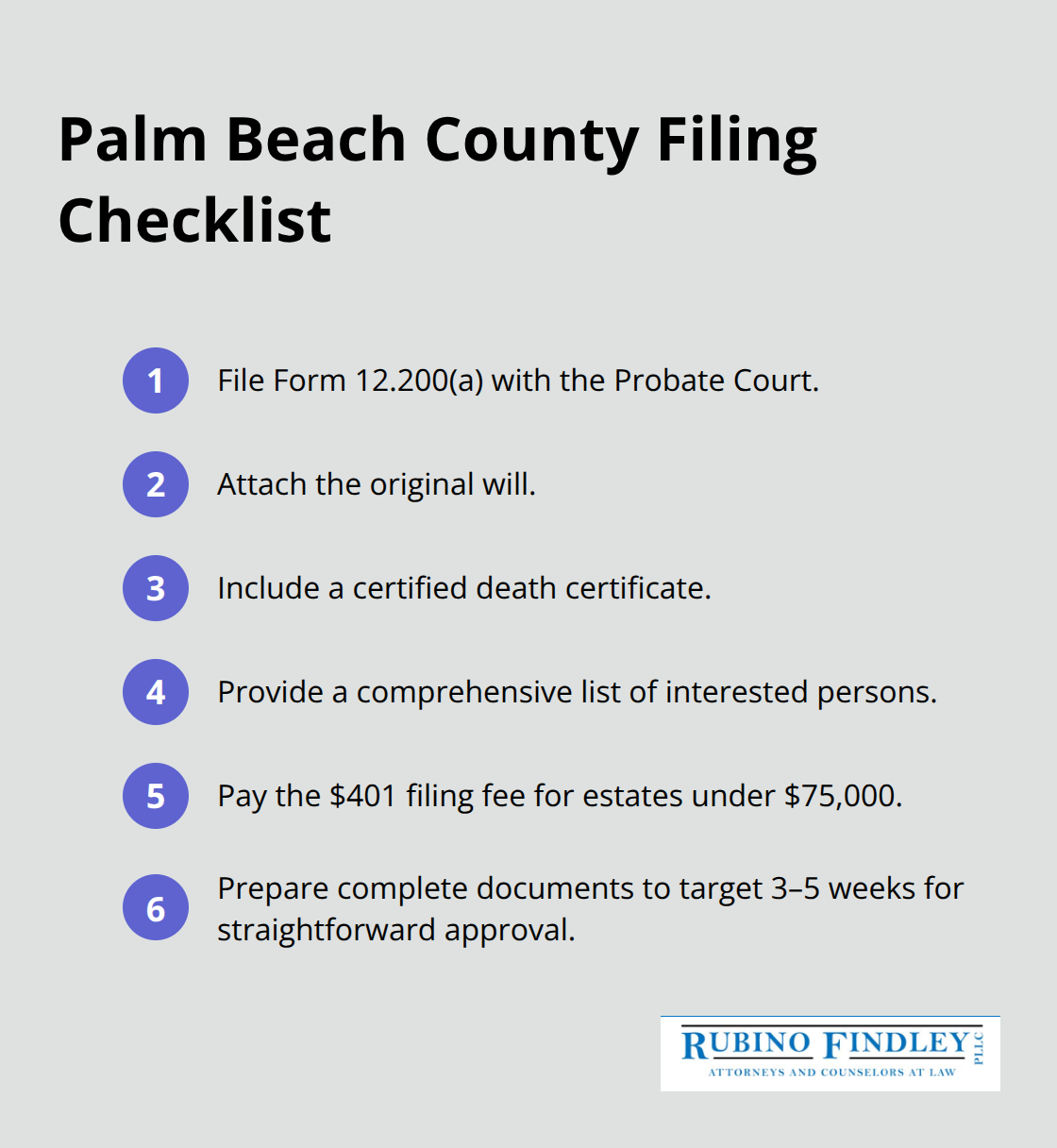
Palm Beach County approves approximately 75% of independent administration petitions, with most denials resulting from family disputes or incomplete documentation. This approval rate underscores the importance of filing complete paperwork initially rather than submitting amendments later. Form 12.200(a) must be filed with the Palm Beach County Probate Court along with the original will, a certified death certificate, and a comprehensive list of interested persons. The filing fee stands at $401 for estates under $75,000, with larger estates incurring additional fees according to the Palm Beach County Clerk’s records. Documentation readiness proves critical because approximately 60% of petition delays stem from missing paperwork (including notarized signatures and certified copies of out-of-state property records). Gathering all required documents before filing prevents these unnecessary delays and positions the personal representative to obtain court approval within 3-5 weeks for straightforward cases.
Creating the Inventory and Managing Assets
Once Letters of Administration are issued, the personal representative must create a comprehensive asset inventory within 60 days, listing all assets with fair market values as of the death date. Professional appraisals are required for real estate; household goods valued under $1,000 can be self-valued. The personal representative can sell real property without court authorization if the will grants a general power of sale, can invest estate funds strategically, and can even continue a family business for up to four months if necessary to preserve value. These powers allow the personal representative to make sound financial decisions without waiting for judicial approval.
Notifying Creditors and Managing Claims
The personal representative must publish Notice to Creditors within 90 days of appointment, giving creditors exactly three months to file claims. Known creditors must file within 30 days or three months from publication, whichever comes later, per Florida Statutes Section 733.2121. Approximately 25% of creditor claims face rejection for insufficient documentation or late filing, so the personal representative must maintain meticulous records and ensure all creditor notices meet statutory requirements. Payment must follow the established priority order: funeral expenses, estate administration costs, federal taxes, state taxes, and then general creditors.
Fiduciary Duties and Final Distribution
The personal representative holds fiduciary duties throughout this process and must manage the estate in good faith. Violations of these duties create personal liability for the personal representative, making strict adherence to statutory timelines and procedures non-negotiable. After the creditor claims period expires, the personal representative distributes assets per the will or intestacy laws, obtaining signed receipts from beneficiaries. Many independent administrations in Palm Beach County close within 180 days after creditor claims expire when the personal representative follows each statutory requirement carefully. Diligent attention to detail makes this timeline achievable, and the personal representative who maintains organized records and meets all deadlines positions the estate for smooth closure and distribution to beneficiaries.
Final Thoughts
Florida independent administration works best for estates where the will authorizes it and no family disputes exist. The financial and timeline advantages are substantial: closing in 6-8 months instead of 18 months, and reducing legal costs by 40-60% compared to supervised probate. For a $1 million estate, that difference means saving roughly $12,000 to $18,000 in attorney fees alone.
Consider independent administration if the decedent was a Florida resident, the will contains proper authorization language, and beneficiaries are in agreement. If the estate involves family conflict, the will lacks independent administration language, or creditors cannot provide written consent, supervised probate may be necessary despite its longer timeline and higher costs. Starting the process requires gathering complete documentation before filing with Palm Beach County, since missing paperwork causes 60% of petition delays.
At Rubino Findley, PLLC, we help families in Palm Beach County understand whether Florida independent administration fits their situation and guide them through the petition process. We also work with clients on estate planning to help avoid probate altogether through wills, trusts, and durable powers of attorney. Schedule a free consultation with our team to discuss your estate’s needs.