




Pet Trust Planning Florida: Building a Secure Plan for Your Pet
Your pet depends on you for everything-including what happens if you’re no longer able to care for them. Without pet trust planning in Florida, your beloved companion could end up in an uncertain situation.
At Rubino Findley, PLLC, we’ve seen too many pet owners leave this critical decision to chance. A proper plan protects your pet’s future and gives you genuine peace of mind.
Why Florida Law Doesn’t Automatically Protect Your Pet
Florida Treats Pets as Property, Not Family
Florida law treats pets as property, not as family members deserving special legal consideration. This means that without a formal pet trust, your pet has zero legal protections if something happens to you. When a pet owner passes away or becomes incapacitated, Florida courts have no mechanism to automatically assign guardianship to someone you’d choose. Instead, your pet becomes part of your estate and could be sold off or rehomed by whoever handles your property. The state does not recognize informal agreements or verbal promises about pet care, which is why countless pets end up in shelters or with people who never knew their owners’ wishes.
What Florida Statute 737.116 Actually Requires
Florida Statute 737.116 does allow pet trusts, but only if you create one explicitly-the law will not create it for you. You must take action and document your wishes in writing. Without this formal step, Florida courts treat your pet exactly like any other asset in your estate.
Why Family Assumptions Fail in Court
Many pet owners assume their family will simply take over care, but this assumption causes real problems. If you die without a pet trust and your family members disagree about who should care for your animal, Florida courts treat it like any property dispute. Your pet could sit in legal limbo while your family fights, and the court will make decisions based on property law, not what’s best for your companion.
The Missing Link Between Guardian and Funds
Financial support for your pet’s care is completely separate from guardianship decisions. You could name someone as guardian, but if you have not set aside dedicated funds, that person might struggle to afford veterinary care, food, and other expenses. Without specific documentation of your pet’s medical history, dietary needs, behavioral quirks, and preferences, even a willing guardian might make choices that stress or harm your animal.
How a Pet Trust Solves These Problems
The solution is straightforward: create a pet trust that names a guardian, funds their care, and documents everything your pet needs to thrive. This formal approach (combined with proper legal language) transforms vague intentions into enforceable instructions. When you work with an estate planning attorney from Rubino Findley, PLLC in Boca Raton, you can establish a comprehensive plan that protects your pet’s future. The next step involves understanding exactly what goes into creating that trust and how to fund it properly.
Setting Up Your Pet Trust
Choose a Guardian Who Will Actually Commit
The first step toward protecting your pet is selecting someone who will step into the guardian role if you cannot. This person must be someone you trust completely, someone who shares your values about animal care, and someone who has already agreed to take on this responsibility. Too many pet owners name a guardian without ever having a real conversation about it. When the time comes, that person might refuse, move away, or lack the financial means to provide proper care.
Before you finalize anything legally, sit down with your potential guardian and discuss your pet’s personality, medical history, dietary needs, and daily routine. Ask them directly: Will you commit to caring for my pet if something happens to me? If they hesitate or seem uncertain, keep looking. A reluctant guardian creates more problems than no plan at all.
Calculate Realistic Funding for Your Pet’s Care
Funding your pet trust demands precision and realism about costs. The American Pet Products Association reported that pet owners spent approximately 136.4 billion dollars on their pets in 2023, with veterinary care representing a significant portion of that spending. For your specific pet, calculate realistic lifetime costs including food, routine veterinary visits, emergency care, medications, grooming, boarding, and end-of-life care. Many people drastically underestimate these costs.
A senior dog with chronic health issues could require 5,000 to 15,000 dollars annually in veterinary expenses alone. Set aside enough money in your trust to cover your pet’s expected lifespan plus a buffer for unexpected medical emergencies. Florida law allows you to fund the trust with a specific dollar amount, and any unused funds can go to a charity of your choice or back to your estate.
Document Your Pet’s Complete Medical and Behavioral Profile
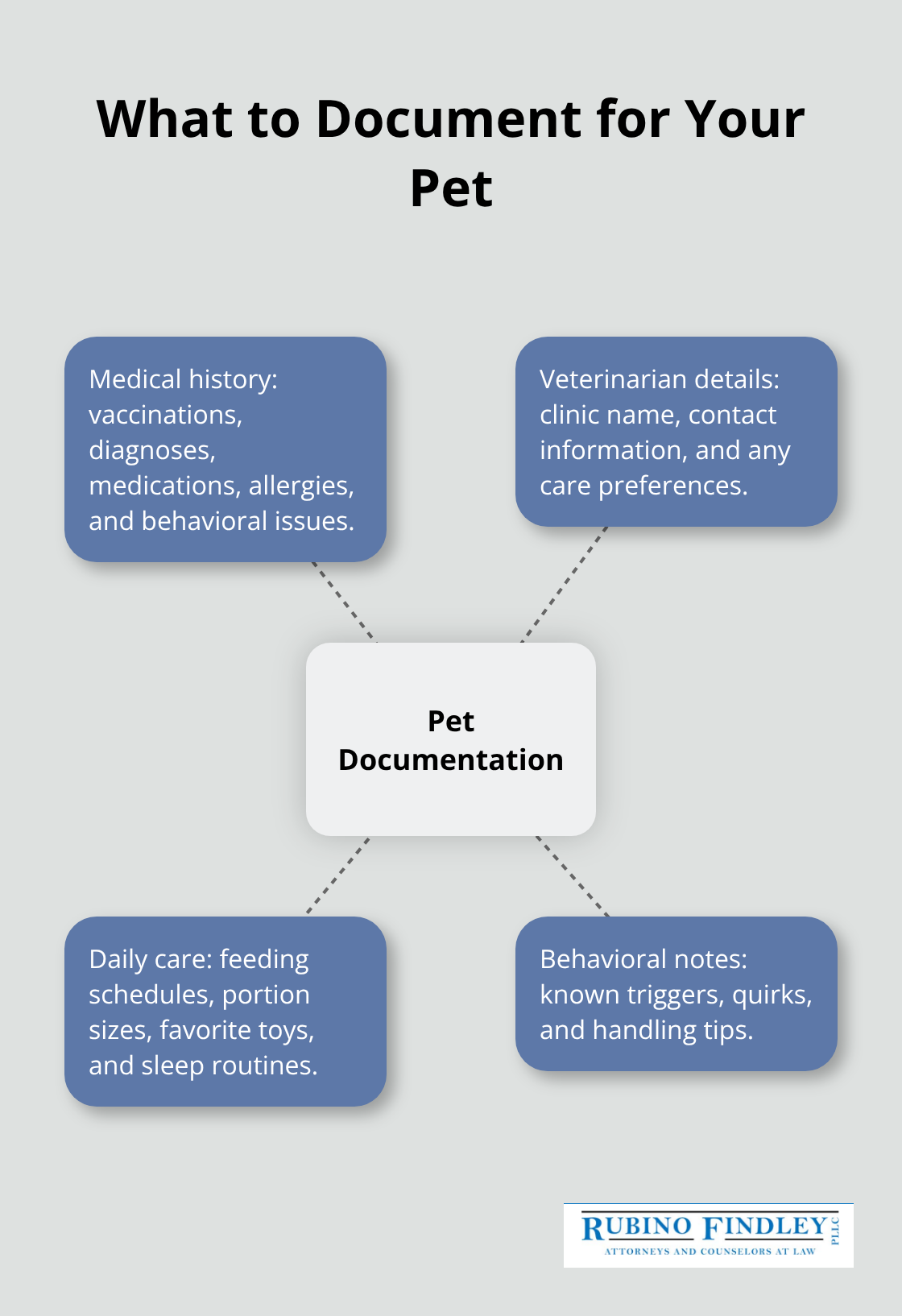
Your pet’s documentation forms the backbone of effective guardianship. Record your pet’s complete medical history, including vaccination records, previous diagnoses, medications, allergies, and behavioral issues. Include the name and contact information of your current veterinarian and any veterinary preferences you have.
Write down feeding schedules, portion sizes, favorite toys, sleep routines, and any behavioral triggers your pet has. This level of detail prevents your guardian from making guesses that could harm your pet’s wellbeing or cost thousands in unnecessary treatments. A pet trust that names a guardian but lacks documentation and funding becomes essentially worthless when it matters most.
Connect Your Guardian to Your Funding
The connection between your chosen guardian and the trust funds you set aside determines whether your pet actually receives proper care. Your guardian needs immediate access to those funds without bureaucratic delays or legal complications. When you work with an estate planning attorney in Boca Raton, you can structure the trust so your guardian can pay veterinary bills, purchase food, and cover other expenses without jumping through hoops.
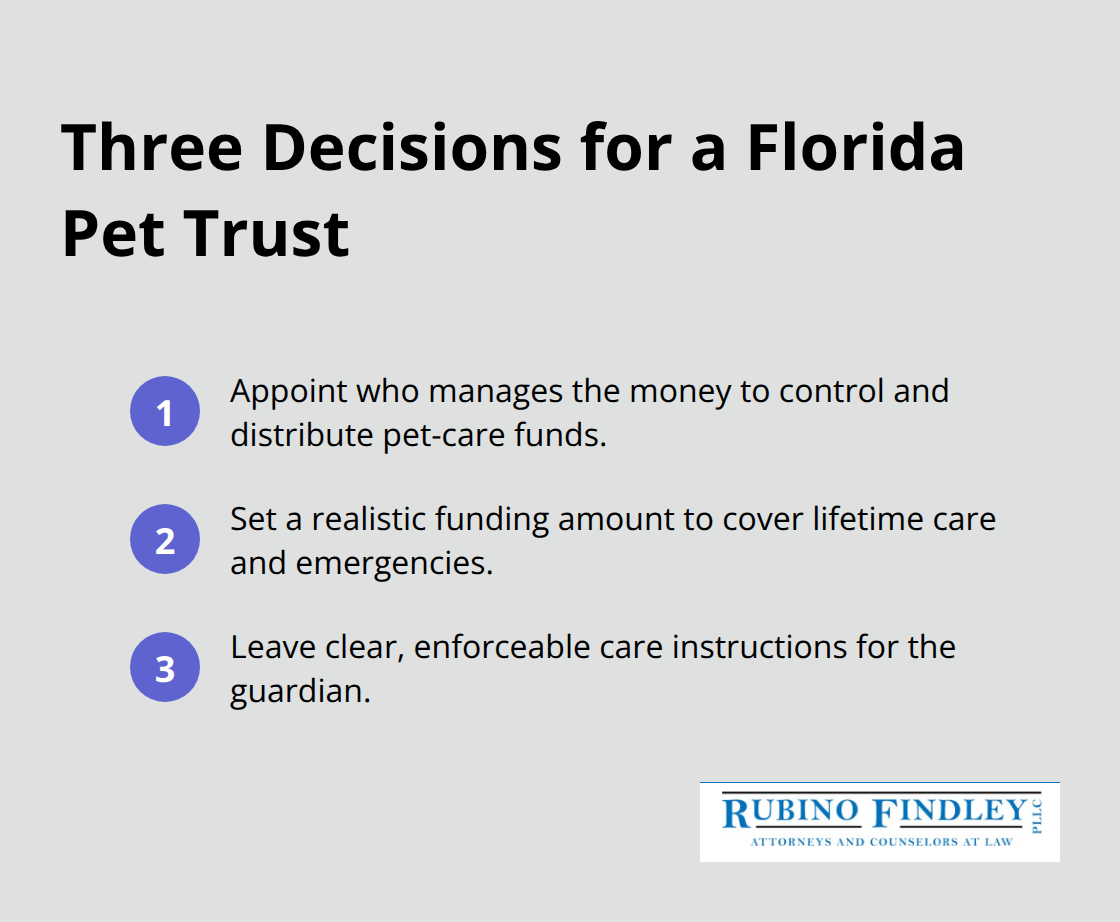
Without this connection, even a willing and capable guardian might struggle to afford your pet’s care. Setting up a pet trust in Florida requires three concrete decisions: who manages the money, how much money you set aside, and what instructions you leave behind. The next section covers the common mistakes pet owners make when they fail to address these three elements together.
Common Mistakes Pet Owners Make Without a Plan
Family Assumptions Collapse Without Legal Documentation
Most pet owners believe their family will automatically step in and care for their pet if something happens to them. This assumption ranks among the costliest mistakes in pet planning. When you die without a formal pet trust, Florida law treats your pet as property, not as a family member deserving consideration. Your family members might genuinely want to help, but they have no legal standing to claim your pet, and they cannot access funds you intended for your pet’s care. If multiple family members disagree about who should take the pet, Florida courts will treat it like any property dispute, meaning your pet could languish in a shelter or boarding facility while lawyers argue over ownership. The reality is harsher than most people expect: without a trust naming a specific guardian and providing dedicated funds, your pet’s fate depends entirely on whoever happens to be managing your estate at that moment.
Naming a Guardian Without Confirmation Creates Chaos
The second fatal error occurs when pet owners name a guardian without ever confirming that person will actually accept the responsibility. You might mention casually to your sister that she could care for your dog, but that conversation holds no legal weight. When the time comes, your sister might refuse, claiming she never agreed to anything binding. She might lack the financial ability to afford your pet’s medical care. She might have moved across the country or developed allergies. Her living situation might not permit pets. The conversation you thought you had simply does not hold up in court or in practice.
Pet owners who discuss their plans with potential guardians report significantly higher follow-through rates, yet most people skip this uncomfortable conversation entirely. You must sit down with your chosen guardian, explain your pet’s needs in detail, discuss the financial commitment involved, and get explicit confirmation they will accept this role. If they hesitate or equivocate, that hesitation tells you everything: they are not the right person. A reluctant guardian creates chaos precisely when your pet needs stability.
Insufficient Funding Leaves Your Pet Vulnerable
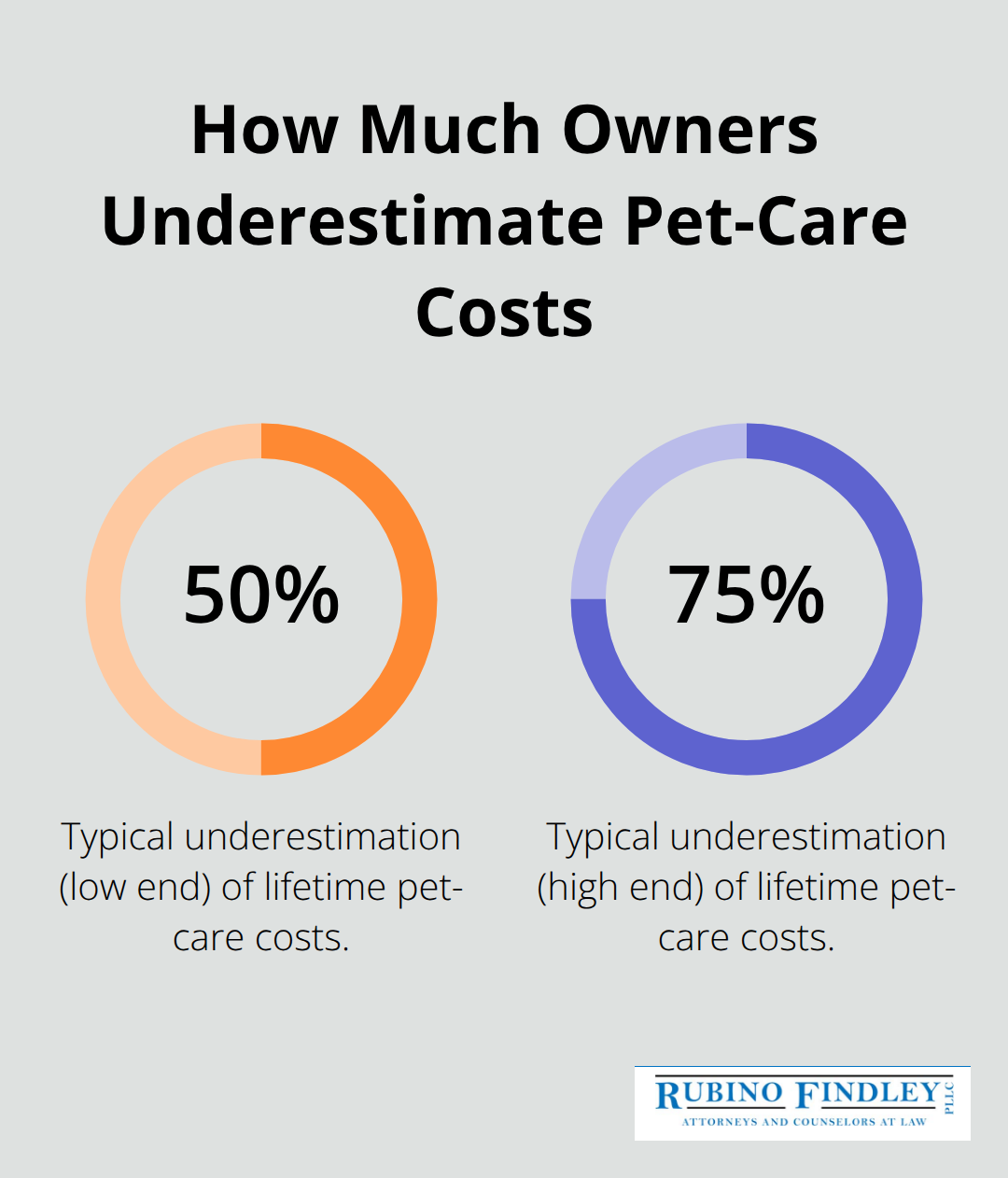
The third critical mistake involves setting aside insufficient funds for long-term care. Pet owners frequently underestimate lifetime costs by 50 to 75 percent. A cat with chronic kidney disease might need twice-monthly veterinary visits costing 200 to 400 dollars each, plus prescription medications, special diet food, and potential hospitalization.
A senior dog with arthritis and declining health could require 8,000 to 20,000 dollars annually in veterinary expenses. Many pet owners set aside 5,000 or 10,000 dollars thinking that will suffice, only to watch that money disappear within two years.
Your guardian then faces the impossible choice of cutting corners on your pet’s care or paying out of pocket. When you work with an estate planning attorney to calculate realistic funding based on your pet’s specific age, breed, medical history, and expected lifespan, you prevent the heartbreaking scenario where your pet receives inferior care because the money simply ran out.
Final Thoughts
A pet trust planning Florida strategy transforms uncertainty into concrete protection for your animal. Without one, your pet faces real danger: potential placement in a shelter, separation from family members who would have cared for them, or inadequate medical treatment due to insufficient funds. The three elements we’ve covered-naming a committed guardian, funding realistic lifetime costs, and documenting your pet’s complete needs-work together to prevent these outcomes.
Working with an estate planning attorney eliminates the guesswork and costly mistakes that plague pet owners who attempt this alone. An attorney ensures your guardian has immediate access to funds, your pet’s medical history receives proper documentation, and your wishes carry legal weight in Florida courts. The difference between a casual conversation with family and a formal pet trust is the difference between hope and certainty.
We at Rubino Findley, PLLC in Boca Raton help clients throughout Palm Beach County establish comprehensive estate plans that protect their pets. Your pet cannot advocate for themselves, which means you must act now while you’re able to make these decisions. Contact us today to schedule a free consultation and learn how we can help you build a pet trust that actually works.