



Florida Wills Planning Tips: Practical Advice for Pinpointing Your Wishes
A will is one of the most important documents you’ll ever create, yet many Florida residents put it off or skip critical steps. Without a proper will, Florida state law decides who gets your assets and who raises your children-not you.
We at Rubino Findley, PLLC have helped countless Boca Raton and Palm Beach County families avoid costly mistakes. This guide covers Florida wills planning tips that protect your wishes and your loved ones.
Why Your Will Matters in Florida
Florida law sets strict requirements for wills, and violations invalidate your entire document. Your will must be written, signed by you at the end, and witnessed by at least two people who sign in your presence and in each other’s presence. Florida Statutes § 732 governs these execution rules, and no flexibility exists here-if you miss even one requirement, a probate court will throw out your will and treat you as if you died intestate. That means Florida’s intestacy laws take over, and your assets distribute according to a rigid statutory formula that has nothing to do with what you actually wanted. Without a valid will, your spouse, children, or other heirs might receive shares vastly different from your intentions. The court appoints a personal representative, which costs time and money, and your family loses control over the process entirely.
What Actually Happens When You Skip a Will
If you die without a valid will in Florida, intestate succession rules determine everything. Your spouse receives a share, your children receive shares, and if you have no spouse or children, your parents, siblings, or more distant relatives inherit based on a fixed order that Florida law establishes. This process is not quick-formal administration can take months or even years, during which your family cannot access most of your assets. Your minor children don’t automatically go to the guardian you would have chosen; instead, the court appoints one. Your digital assets, business accounts, and personal property sit frozen until the probate court issues Letters of Administration (which only happen after opening a formal probate case and hiring an attorney). The entire situation drains your estate’s resources and creates stress for the people you care about most.
Florida’s Homestead Rule Changes Everything
Florida’s homestead protection complicates wills significantly. If you own a primary residence in Florida and you’re survived by a spouse or minor child, you cannot will that homestead to anyone else-it passes automatically to your spouse or, if you have no spouse, to your children in equal shares. This restriction exists in Florida Statutes § 732.4015 and catches many residents off guard. You can own the homestead, control it during your lifetime, and still lose the ability to direct where it goes after you die. If you want to protect your home for specific beneficiaries or use it strategically in your estate plan, you need to structure ownership differently (often through a trust or a Lady Bird Deed). Ignoring this rule means your carefully drafted will conflicts with Florida law, and the law wins every time.
Why Professional Guidance Matters Now
The complexity of Florida’s execution rules, homestead restrictions, and intestacy laws makes professional guidance essential. An experienced estate planning attorney from Rubino Findley, PLLC in Boca Raton can help you navigate these requirements and create a will that actually reflects your wishes. We work with families throughout Palm Beach County to establish wills, trusts, and other documents that protect what matters most. The next section covers the key components you must include in your will to make it effective and enforceable.
What Goes Into Your Will
Your will needs three critical pieces to work in Florida, and each one demands precision. First, you must name an executor (called a personal representative in Florida law) who will manage your estate after you die. This person must be a Florida resident or an eligible out-of-state relative under Florida Statutes § 732.3101, or the court will appoint a new administrator and strip away your choice entirely. Pick someone you trust completely-this person will handle everything from paying bills to distributing assets, and they’ll have access to your financial records.
Designating Your Executor and Beneficiaries
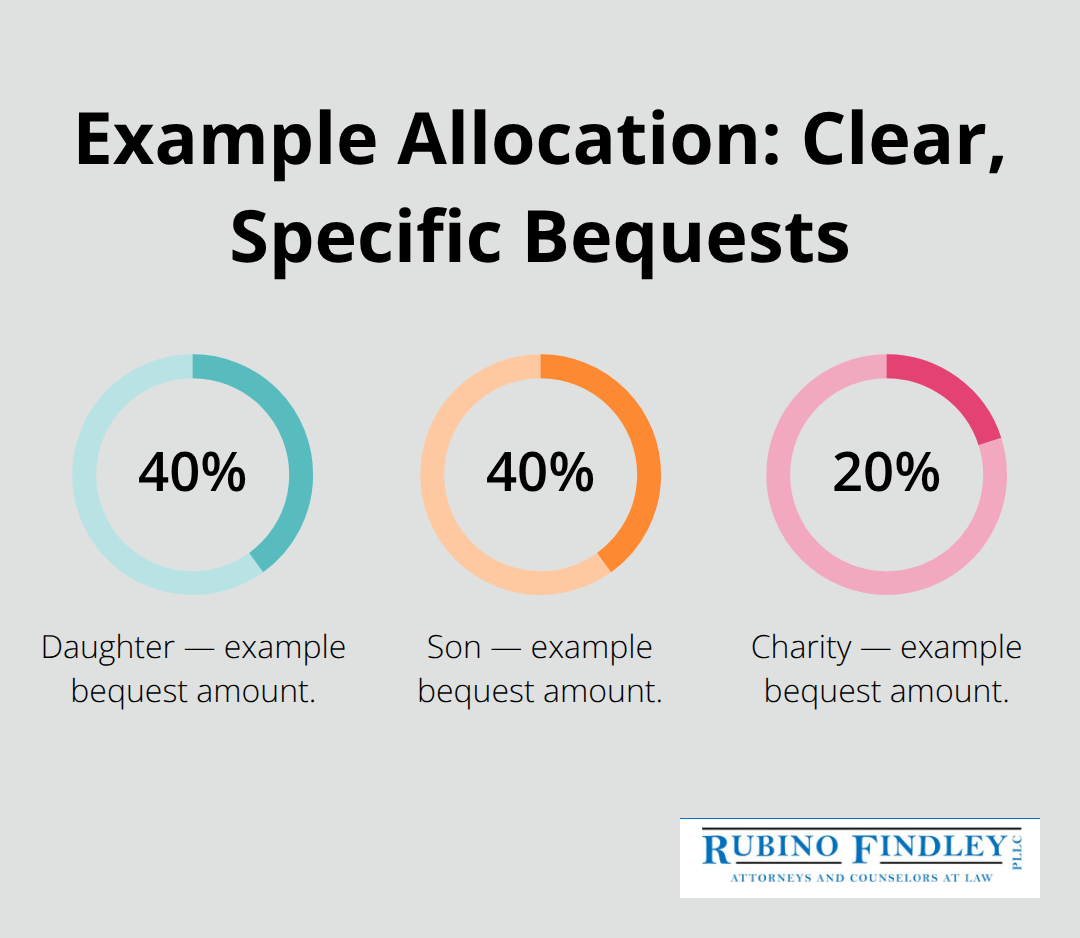
Second, you must clearly designate who receives what. Vague language like leaving your estate to people you care about creates litigation. Instead, specify amounts or percentages: 40 percent of my estate to my daughter, 40 percent to my son, 20 percent to charity. If you own real property like a home in Boca Raton or elsewhere in Palm Beach County, name it explicitly and describe it accurately.
Third, if you have minor children, name a guardian in your will. Without this designation, the court appoints a guardian based on what it thinks is best, not what you want. You can nominate one person to manage finances and another to raise the children-split guardianship is legal and sometimes practical.
Execution Requirements That Courts Enforce Strictly
The execution matters as much as the content. After you write your will and name these key people, you must sign it at the end in front of two witnesses who watch you sign and then sign the document themselves in your presence and each other’s presence. Florida courts have invalidated wills signed incorrectly, forcing families into intestate succession and months of probate delays. One missed step-a witness signing outside your presence, for example-voids the entire document.
Storing Your Will and Managing Digital Assets
Beyond execution, store your original will somewhere secure. Do not place it in a safe deposit box (banks seal those after death, creating access problems). Instead, keep it in a fireproof safe at home or in your attorney’s office. Tell your personal representative where it is.
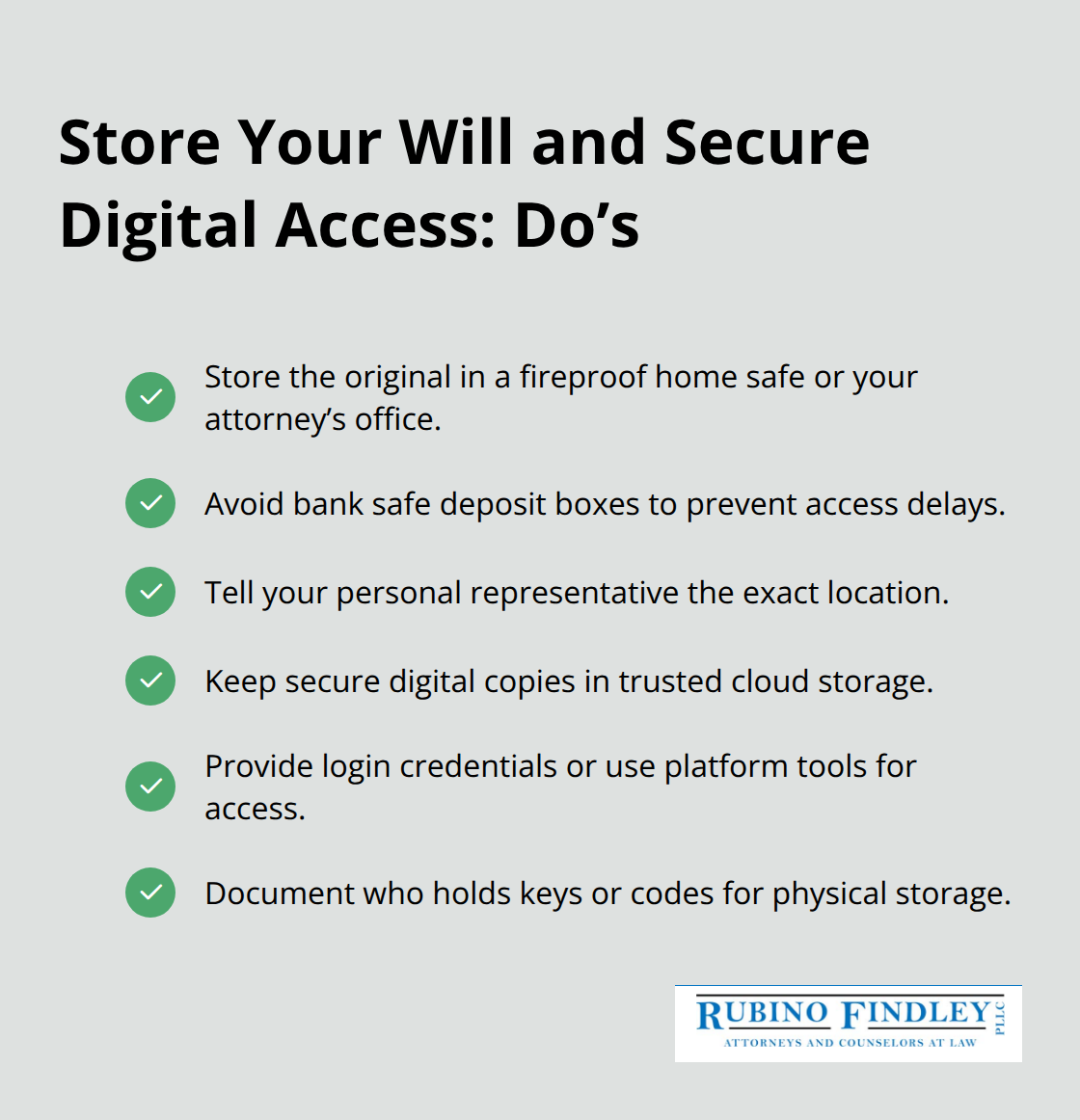
Many families in Palm Beach County waste thousands of dollars and months of time searching for a missing will or dealing with a copy that courts won’t accept.
Digital assets complicate things further. Your will should address online accounts, cryptocurrency, domain names, and photos stored in the cloud. Name a digital fiduciary or give your personal representative clear instructions on accessing these accounts using platform tools like Google Inactive Account Manager or Apple Digital Legacy. Without this guidance, your digital legacy disappears or remains inaccessible to your family. Once you understand what your will must contain and how to execute it properly, the next step involves recognizing the mistakes that derail many Florida residents-and how to avoid them.
Mistakes That Invalidate Your Will
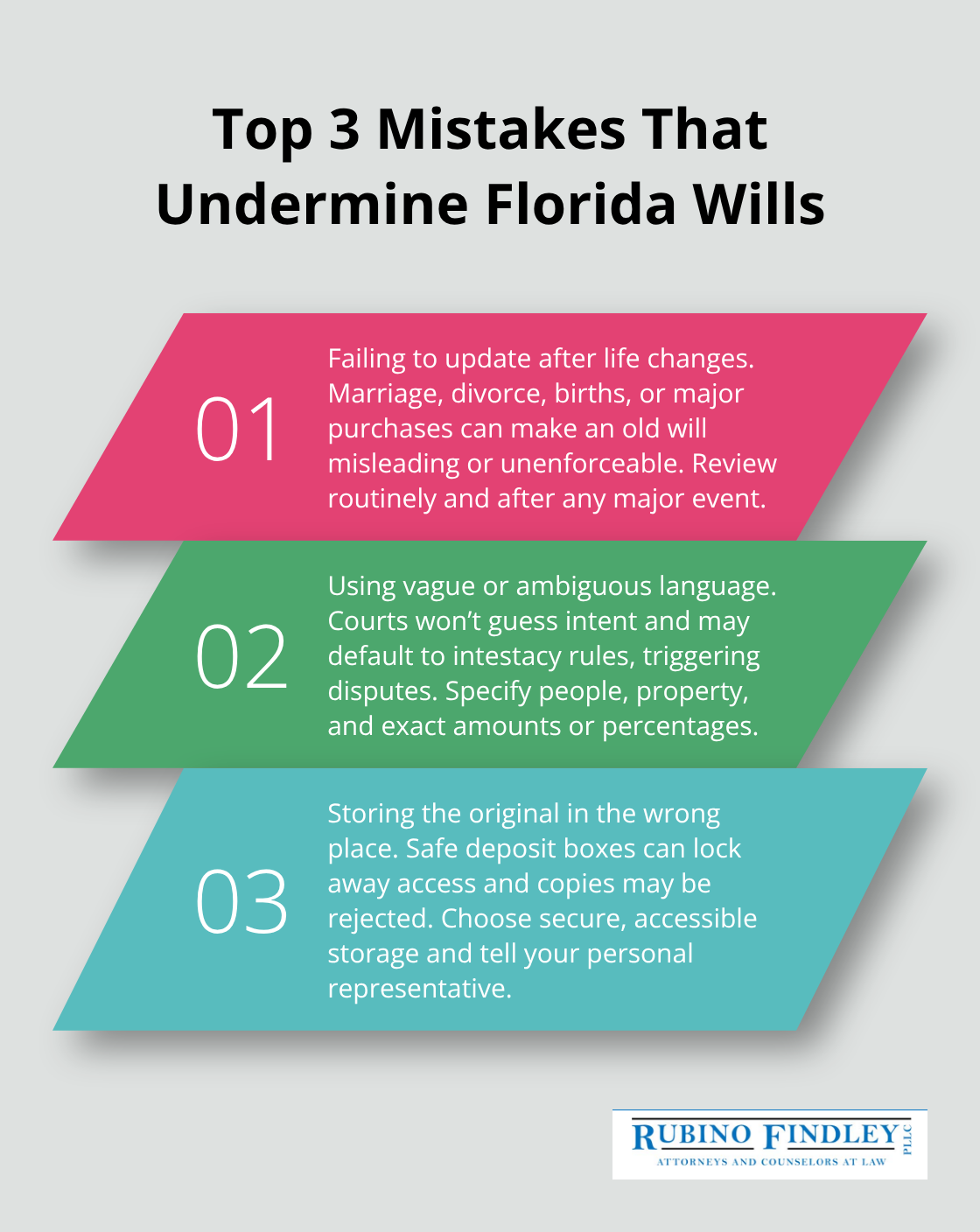
Most Palm Beach County residents treat their will as a one-time document rather than a living plan that needs updates. Florida courts have thrown out countless wills because testators failed to address major life changes, used language so vague it sparked litigation, or stored the original in a location that made it impossible to find. These are not minor oversights-they directly undermine everything your will is supposed to accomplish.
Failing to Update Your Will After Major Life Changes
The first major mistake is ignoring your will after marriage, divorce, the birth of children, a significant inheritance, or a job change. Florida law does not automatically revoke your old will when you marry, but a new spouse may have legal rights to your estate that contradict your intentions. Your will might fail to name the new children you wanted to protect. If you divorce and never update your will, your ex-spouse could still inherit under your old document unless you specifically removed them.
The same applies to retirement accounts and life insurance beneficiary designations-these pass outside your will entirely. If they still name your ex-spouse or deceased parent, your actual wishes get ignored. Courts have seen families spend tens of thousands of dollars fighting over assets that should have gone to the intended beneficiaries if only the will had been updated after a major life event.
The solution is straightforward: review your will every three to five years, and immediately after any significant change like a marriage, birth, divorce, major purchase, or new job. This is not optional-it is the most practical step you can take to protect your legacy.
Using Unclear Language That Courts Must Interpret
The second critical mistake is writing your will in language so unclear that a probate court must interpret what you actually meant. Phrases like “I leave my property to my loved ones” or “I want my family to share equally” fail to specify who receives what. Courts will not guess your intent-they will apply Florida’s intestacy rules instead. Ambiguity also invites beneficiaries to challenge your will, turning your death into a courtroom battle.
If you own real estate in Boca Raton or multiple properties across Palm Beach County, describe each one by its street address and legal description, not by vague references like “my beach house.” If you want specific amounts or percentages, state them clearly-not “my children should get most of my money,” but rather “my daughter receives 50 percent and my son receives 50 percent.” Precise language eliminates confusion and protects your intentions from court interpretation.
Storing Your Will in the Wrong Location
The third mistake is storing your original will in a safe deposit box at a bank. When you die, the bank locks that box, and your family cannot access it without a court order (which takes weeks or months). Your personal representative cannot retrieve the will to begin probate. If only a copy surfaces, courts may reject it as insufficient proof of your wishes.
Store your original will in a fireproof safe at your home, in your attorney’s office, or with the Clerk of Court in Palm Beach County. You can deposit it for safekeeping without filing a probate case. Tell your personal representative exactly where it is and how to access it. Digital copies should also be stored securely-cloud services like Google Drive or Dropbox work, but your personal representative must have login credentials to retrieve them. Without this practical planning, your family faces delays, costs, and uncertainty at the exact moment they need clarity and access to your assets.
Final Thoughts
Your will forms the foundation of your estate plan, but a durable power of attorney and healthcare directive complete the picture by handling your finances during incapacity and ensuring your medical wishes receive respect. These three documents work together to protect your family and your assets from uncertainty. The Florida wills planning tips outlined in this guide-proper execution, clear language, regular updates, and secure storage-demand attention to detail, but they are straightforward to implement.
Start now by inventorying your assets, identifying your intended heirs, and deciding who will manage your estate and raise your minor children. If you own property in Boca Raton or elsewhere in Palm Beach County, address how it will transfer after your death. Review your beneficiary designations on retirement accounts and life insurance to confirm they align with your will, and consider whether a trust makes sense for your situation (especially if you want to avoid probate or protect assets for minor children).
We at Rubino Findley, PLLC help families throughout Palm Beach County establish wills, trusts, powers of attorney, and healthcare directives that actually work. Contact Rubino Findley, PLLC today to schedule your free consultation and create an estate plan tailored to your family’s needs.