




Florida Probate Steps Guide: A Clear Path Through the Probate Process
Probate can feel overwhelming when you’re grieving and managing an estate at the same time. This Florida probate steps guide walks you through each phase of the process, from filing initial documents to distributing assets to beneficiaries.
We at Rubino Findley, PLLC help families in Palm Beach County navigate probate with clarity and confidence. Understanding these steps now can save you time, money, and stress later.
Understanding Florida Probate
Probate is the court-supervised legal process that identifies a decedent’s assets, pays their debts and taxes, and distributes what remains to beneficiaries. In Florida, probate exists because property titled solely in someone’s name requires court authorization to transfer ownership after death. Without probate, no official mechanism would exist to prove who owns what or who has the legal right to collect assets. The process protects creditors by giving them a chance to file claims and protects beneficiaries by ensuring assets transfer fairly and legally.
Three Distinct Probate Paths
Florida offers three distinct probate options, and selecting the right one saves significant time and money. Formal Administration applies to most estates and involves a judge appointing a personal representative and issuing Letters of Administration to oversee the entire process from start to finish.
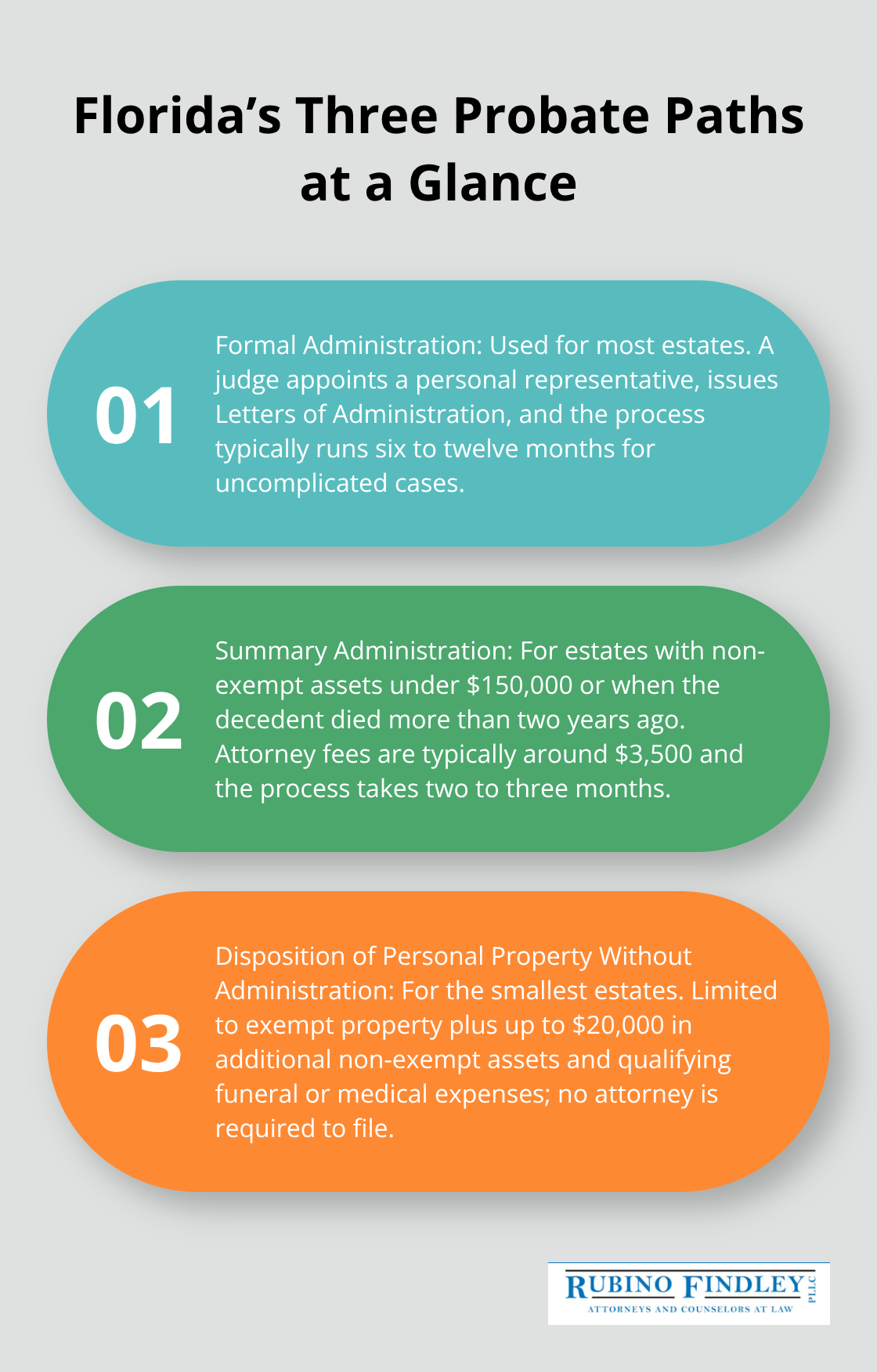
This path becomes necessary when the estate exceeds $150,000 in non-exempt assets or when the will directs formal administration. Summary Administration streamlines matters for estates with non-exempt assets under $150,000 or when the decedent died more than two years ago. This option typically costs around $3,500 in attorney fees and takes two to three months, compared to six to twelve months for formal administration. Disposition of Personal Property Without Administration handles the smallest estates, limited to exempt property plus up to $20,000 in additional non-exempt assets and funeral or medical expenses. Neither Summary Administration nor Disposition Without Administration requires an attorney to file, though many people hire one anyway to avoid mistakes.
What You’ll Actually Pay
Court filing fees in Palm Beach County range from $232 to $401 depending on the probate type. Summary Administration costs $236 for estates under $1,000 and $346 for larger estates. Attorney fees typically run $2,000 to $6,000 for straightforward cases, plus newspaper publication costs around $250 to notify creditors.
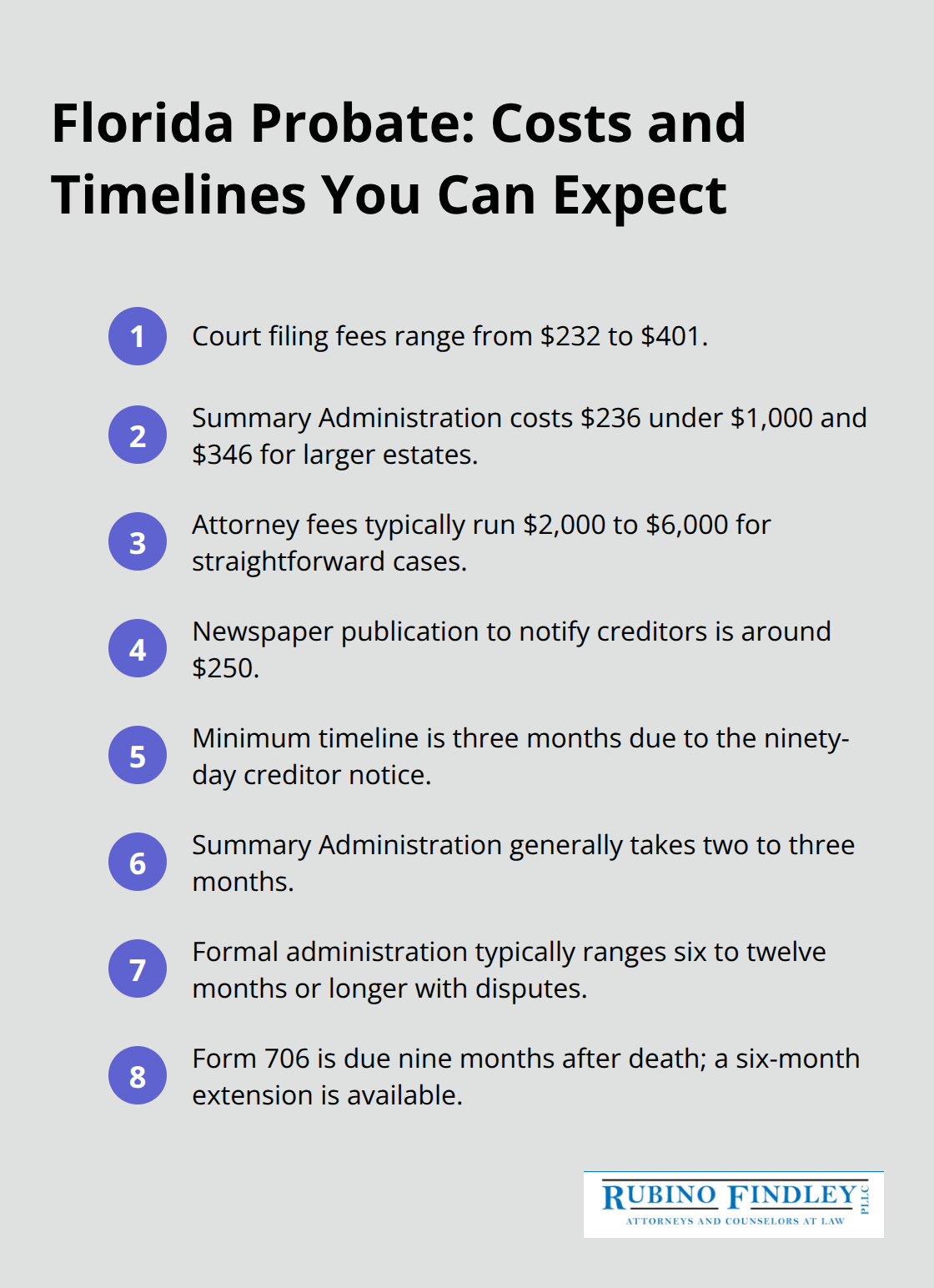
The minimum timeline is three months because Florida law requires a ninety-day notice period for creditors in formal administration. Summary Administration generally takes two to three months, while formal administration ranges from six to twelve months or longer when disputes arise. Federal tax deadlines also affect timing-Form 706 for federal estate tax is due nine months after death (though a six-month extension is available). Understanding these specifics upfront prevents budget surprises and allows families to plan accordingly.
Moving Forward With Your Estate
The probate path you select depends on your estate’s size, complexity, and whether a valid will exists. Once you understand which option applies to your situation, the next step involves filing the proper documents with the court and notifying all required parties.
How the Probate Process Actually Moves Forward in Boca Raton
Filing Your Initial Documents
Once you’ve selected your probate path, the real work begins. The first critical step involves filing the petition with the Palm Beach County Clerk’s office, along with the original will (if one exists), a death certificate, and any required checklists specific to your probate type. For formal administration, you must submit proposed orders through the 15th Judicial Circuit’s Online Scheduling System, not by mail or standard e-filing. This distinction matters because orders submitted the wrong way face rejection, which delays your case by weeks.
The Clerk’s filing fee ranges from $232 to $401 depending on whether you pursue formal, summary, or disposition administration. Within ten days of the decedent’s death, any existing will must reach the Clerk at P.O. Box 4667, West Palm Beach, FL 33402. Missing this deadline creates complications later when you try to admit the will to probate.
Publishing Notice and Managing the Creditor Period
Next comes the notice phase, which is non-negotiable and often the longest waiting period in probate. You must publish a Notice of Administration in a newspaper of general circulation in Palm Beach County and file proof of publication with the Clerk. The Clerk does not handle this publication for you, so you’ll contact a local newspaper directly. In formal administration, creditors have ninety days from publication to file claims against the estate. Known creditors must receive personal notice as well, typically via certified mail. This ninety-day period is why formal probate cannot close faster than three months, regardless of how straightforward the estate appears.
Identifying and Inventorying Assets
While the creditor notice period runs, the personal representative must identify, collect, and inventory all probate assets. Real estate, bank accounts, investment accounts, vehicles, and personal property all require documentation. For accounts worth more than a few thousand dollars, you’ll likely need a professional appraisal to establish fair market value as of the decedent’s date of death. This valuation matters for both federal tax purposes and fair distribution among beneficiaries.
Settling Debts and Tax Obligations
Once assets are inventoried, debts and taxes must be paid before anything goes to beneficiaries. Federal income tax returns (Form 1040 for the decedent’s final year) and estate income tax returns (Form 1041) are typically due, and if the gross estate exceeds federal thresholds, Form 706 for federal estate tax is due nine months after death. Florida imposes no state estate tax, which simplifies matters compared to other states. The personal representative can claim a reasonable fee for administering the estate, and attorney fees typically range from $2,000 to $6,000 for uncomplicated cases, though more complex estates with disputes cost considerably more.
Moving Toward Asset Distribution
Only after all debts, taxes, and administration costs are paid can the remaining assets distribute to beneficiaries according to the will or Florida’s intestacy laws. In summary administration, this entire process compresses to two to three months. In formal administration with no disputes, expect six to twelve months. Any objections, missing heirs, or tax complications extend the timeline significantly. Once you understand how assets move through the system, the next critical consideration involves recognizing common mistakes that derail probate cases and cost families thousands in additional fees.
Common Probate Mistakes to Avoid in Boca Raton
Probate mistakes are expensive, and most stem from poor documentation or incomplete understanding of Florida’s requirements. The most damaging mistake involves submitting proposed orders through the wrong filing system. Palm Beach County’s 15th Judicial Circuit requires all proposed probate orders to go through the Online Scheduling System, not mail or standard e-filing. Orders submitted incorrectly face immediate rejection, which pushes your case back by weeks or months. This error happens repeatedly and remains entirely preventable.
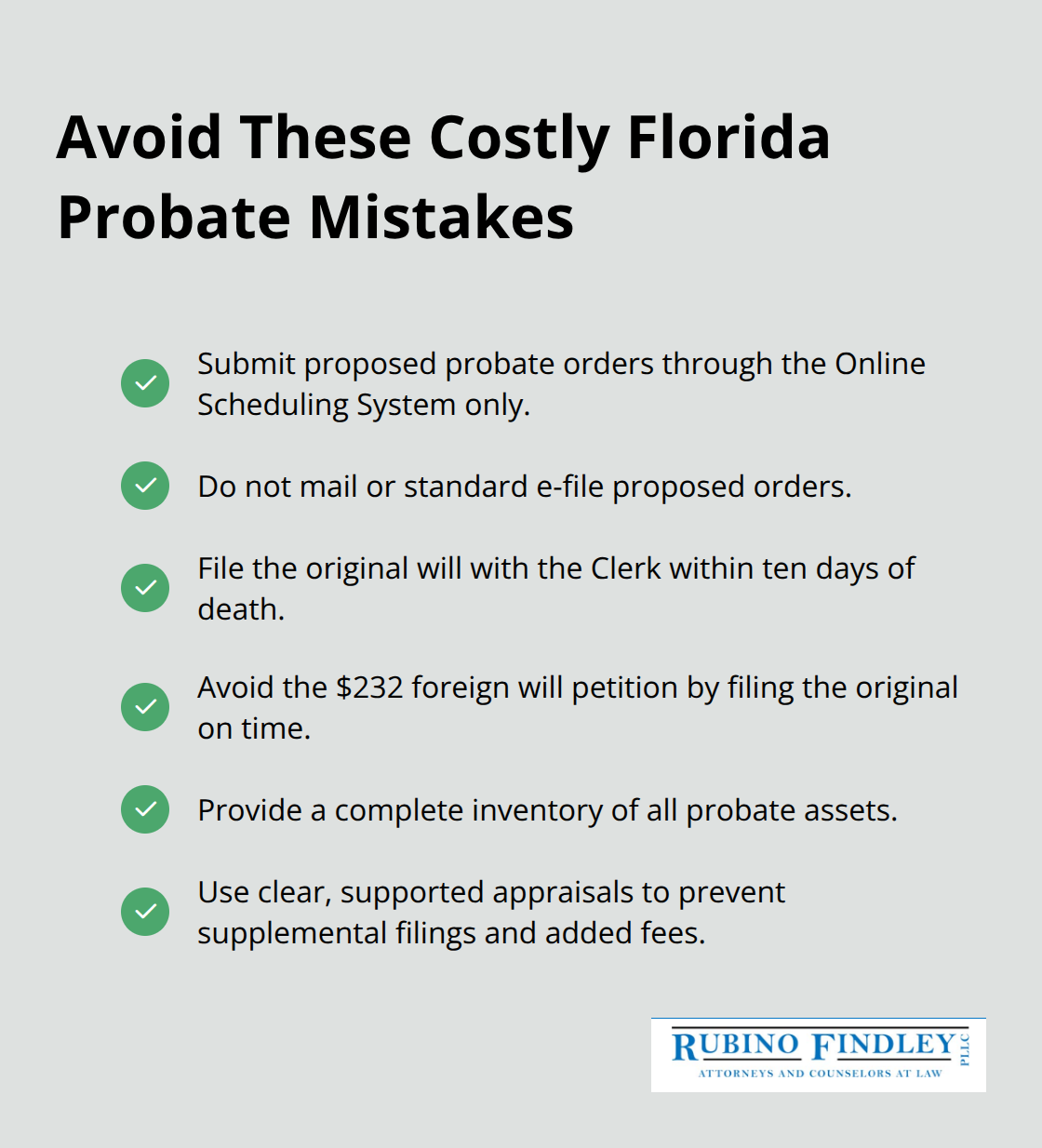
A second critical error occurs when you fail to file the original will with the Clerk within ten days of death. Missing this window creates complications when you admit the will to probate later, and some families end up filing a Petition to Admit Foreign Will when they should have filed the original will on time. The filing fee alone for a foreign will petition reaches $232, but the real cost involves delay and added complexity. Documentation mistakes also include incomplete inventories of estate assets. When a personal representative fails to identify all probate assets or provides vague appraisals, the court may require supplemental filings and corrected accountings, which multiplies attorney fees significantly.
Asset Mismanagement and Personal Liability
Mishandling estate assets ranks as the second most costly mistake families make. The personal representative must immediately safeguard all probate assets, which means securing real estate, freezing bank accounts, and preventing unauthorized withdrawals. Personal representatives who pay personal debts from estate funds or allow family members to remove items from the estate before proper accounting create serious problems. Florida law holds personal representatives personally liable for asset mismanagement, meaning they could owe the difference from their own pocket. This liability extends to any unauthorized transfers or commingling of estate funds with personal accounts.
Creditor Claims and Tax Filing Deadlines
Ignoring creditor claims and tax obligations creates the third category of expensive mistakes. In formal administration, creditors have exactly ninety days from published notice to file claims, and the personal representative must respond to each claim within thirty days. Failing to publish notice properly or missing the creditor claim deadline can result in creditors filing suit after the estate closes, which forces you to reopen the probate case. The reopening fee in Palm Beach County is $50, but litigation costs far exceed that amount. Federal tax returns must be filed even if no tax is owed, and Form 706 for federal estate tax is required if the gross estate exceeds the federal threshold. Skipping these filings triggers IRS penalties and interest that eat into what beneficiaries receive.
Exempt Property Oversights
Many families also overlook Florida’s exempt property rules, which allow certain assets like homestead property, two vehicles, household furnishings, and up to $1,000 in personal property to bypass probate entirely. Misunderstanding these exemptions leads families to probate assets unnecessarily, which wastes time and money on assets that should have transferred outside the court system. Understanding which assets qualify for exemption status prevents unnecessary court involvement and preserves more funds for your beneficiaries.
Final Thoughts
Florida probate steps guide you through a process that protects your family’s interests while honoring the decedent’s wishes. The key takeaway is straightforward: understanding which probate path applies to your situation, filing documents correctly, and meeting all deadlines prevents costly delays and mistakes. Court filing fees range from $232 to $401, attorney fees typically run $2,000 to $6,000 for straightforward cases, and the minimum timeline is three months due to creditor notice requirements.
We at Rubino Findley, PLLC understand that probate feels overwhelming when you manage grief and estate responsibilities simultaneously. Our team helps families in Palm Beach County navigate probate with clarity, ensuring proper documentation, timely filings, and compliance with Florida’s specific requirements. Beyond probate administration, we also assist with estate planning to help you avoid probate altogether through wills, trusts, and durable powers of attorney.
Your next step depends on your current situation-if you’re already in probate, contact us immediately to review your case and identify any filing gaps or procedural errors. If you’re planning ahead, reach out to Rubino Findley, PLLC to establish an estate plan that protects your family and preserves your assets. Professional guidance now prevents expensive problems later.