



Florida Probate Timeline Overview: From Filing to Final Discharge
When someone passes away in Florida, their estate enters a legal process that can feel overwhelming without guidance. The Florida probate timeline overview varies significantly depending on the complexity of the estate and whether simplified or full administration applies.
At Rubino Findley, PLLC, we help families in Palm Beach County navigate this process from start to finish. Understanding what to expect at each stage helps you prepare for the months ahead.
How Long Does Florida Probate Really Take
The timeline from death to final discharge in Florida probate ranges from four months for streamlined cases to two years or longer for complex estates. Summary Administration, available when an estate’s value is under $150,000 or the decedent died more than two years ago, typically closes within four to six months under Florida Statutes 735.201. Formal Administration, which handles larger or more complicated estates, generally takes twelve to twenty-four months. The speed depends heavily on whether disputes arise, how quickly assets are located and valued, and whether creditors file claims.
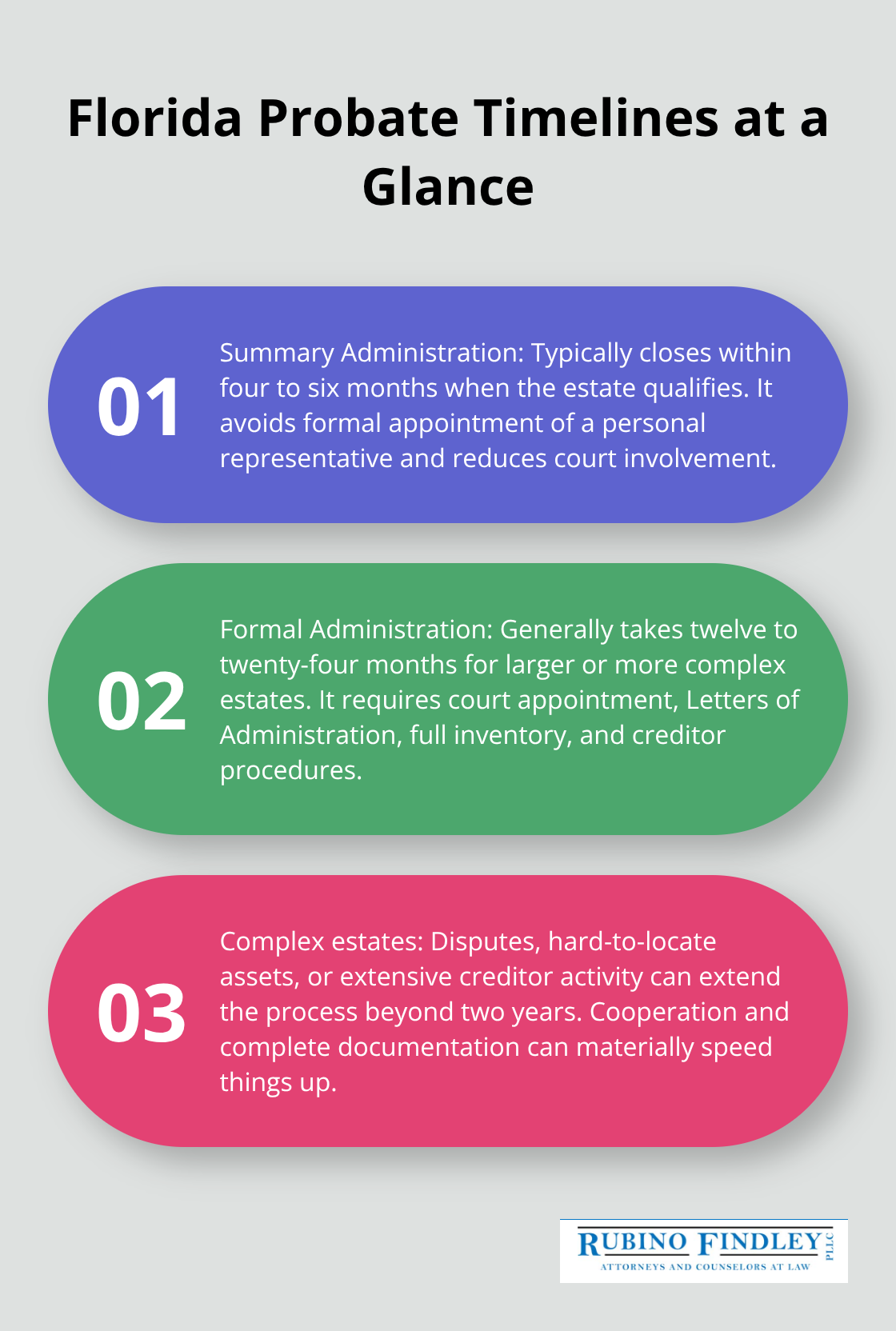
Cases in Palm Beach County move faster when documentation is complete from the start and beneficiaries cooperate throughout the process.
What Determines Your Specific Timeline
Estate complexity matters far more than most people realize. A straightforward estate with liquid assets, no disputes, and clear beneficiaries moves through Formal Administration in twelve to eighteen months. An estate with real property in multiple states, pending lawsuits, or significant tax obligations can extend to three years or beyond. The creditor notification period alone lasts four months under Florida law, during which creditors can file claims and potentially slow distribution. Missing deadlines during this phase creates substantial delays-the court will not allow asset distribution until the creditor period expires and all claims are resolved. Incomplete death certificates, missing original wills filed with the Clerk’s Probate Division, or failure to submit proposed orders through the 15th Judicial Circuit Online Scheduling System adds weeks or months to the timeline.
Simplified Administration Versus Full Administration
Disposition Without Administration, governed by Florida Statute 735.301, represents the fastest option when applicable. This path allows transfer of certain property without any court involvement when the estate contains up to $20,000 in exempt property plus funeral and medical expense payments. No attorney is required for this process, and closure happens within weeks rather than months. Summary Administration avoids formal appointment of a personal representative and moves significantly faster than Formal Administration, typically closing within four to six months. Formal Administration requires an attorney under Florida law and involves court appointment of a personal representative, issuance of Letters of Administration, and full asset inventory and creditor notification. The difference is stark: Summary Administration costs substantially less and takes half the time, but only applies to smaller estates or those where the decedent died more than two years prior.
Selecting the Right Administration Path
Choosing the correct administration type from the beginning prevents costly restarts and unnecessary delays throughout the probate process. Many families in Palm Beach County face extended timelines simply because they selected the wrong path initially. An attorney can review your estate’s value, assets, and circumstances to recommend whether Disposition Without Administration, Summary Administration, or Formal Administration applies to your situation. This decision shapes everything that follows-from court involvement to total cost to final closure date. The next section examines the key milestones you’ll encounter once the probate process officially begins.
Key Milestones in the Florida Probate Process
Once you file the petition for probate in Palm Beach County, the court assigns your case to a division judge and issues Letters of Administration if you’ve chosen Formal Administration. The personal representative receives these letters within two to four weeks, granting legal authority to manage the estate. You must submit all proposed probate orders through the 15th Judicial Circuit Online Scheduling System-no in-person submissions, mail, or general e-filing are accepted. This system requirement exists across all Palm Beach County probate cases, and failure to use it creates immediate rejection and delays.
Filing and Initial Court Appearances
The initial court appearance typically occurs four to eight weeks after filing, where the judge reviews the petition and confirms the personal representative’s appointment. During this phase, Florida Statute 733 governs the formal administration process, and any errors in your initial filing documentation become apparent quickly. Missing the original will filed with the Clerk’s Probate Division, incomplete death certificates, or omitted beneficiary information forces you to refile, adding six to twelve weeks to your timeline. The Division code on your case paperwork identifies your assigned judge, whose contact information and hearing submission instructions appear on the 15th Circuit Divisions page.
The Four-Month Creditor Notification Period
After the initial appearance, the four-month creditor notification period begins under Florida law. The Clerk no longer publishes Notices to Creditors for you-you must arrange publication in a Palm Beach County newspaper and file proof of publication with the Clerk yourself. This requirement is not optional, and many families overlook it, thinking the court handles it. Creditors have four months from the first publication to file claims against the estate.
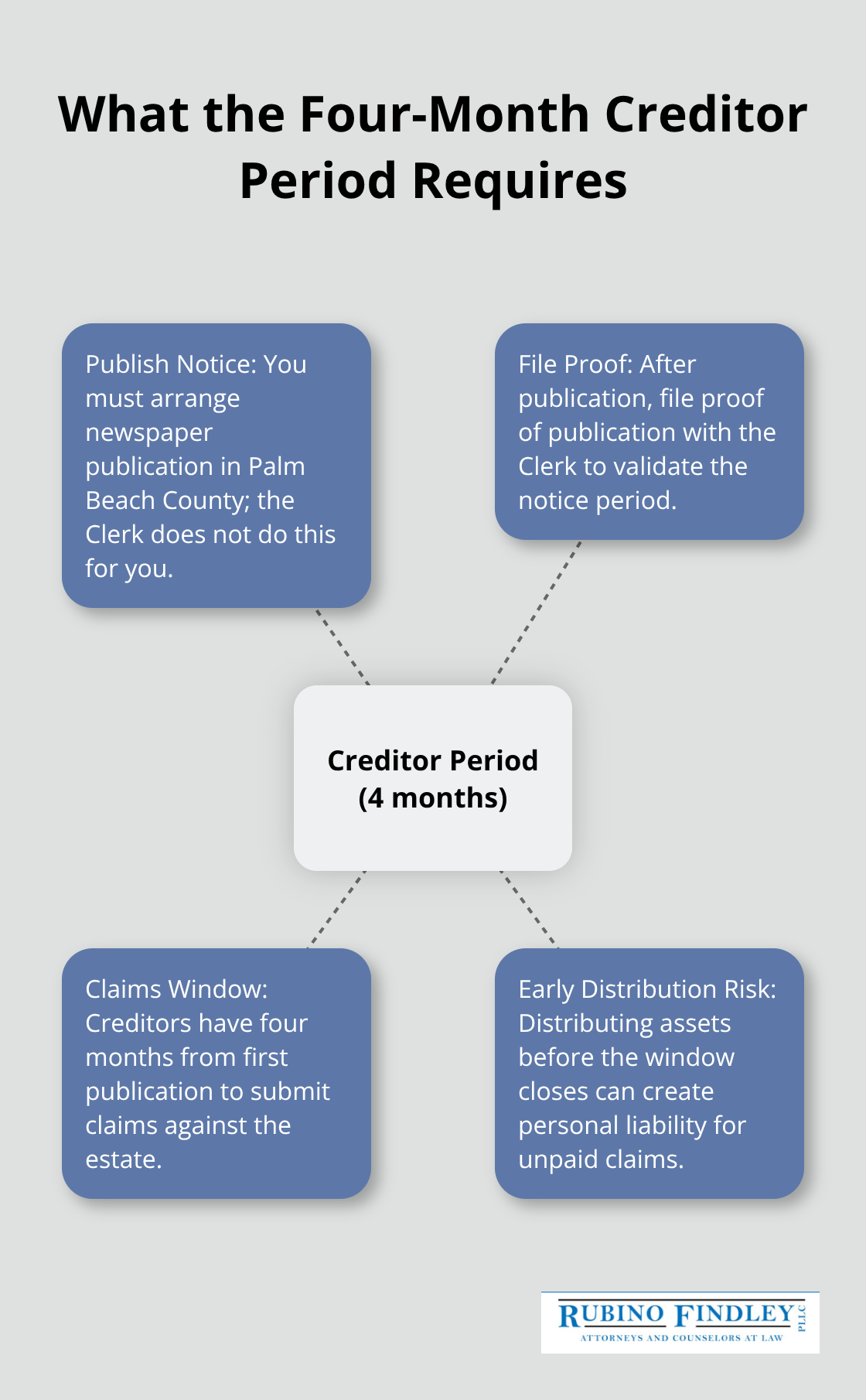
If you distribute assets before this period expires, you face personal liability for unpaid creditor claims.
Asset Inventory and Valuation
The asset inventory must be completed and filed with the court before the creditor period ends. Real property requires appraisals, bank accounts need current statements, and business interests demand valuation. This inventory phase typically takes six to ten weeks once the personal representative begins gathering documentation. Contested claims can extend the timeline by six months or longer, significantly impacting your overall probate duration.
Distribution and Final Discharge
After the creditor period closes and all claims are resolved, distribution can finally begin. The personal representative distributes remaining assets according to the will or Florida intestacy law. The final accounting and discharge petition come next, using the 15th Judicial Circuit discharge checklist under Administrative Order 6.202-06/22. Final discharge typically occurs within sixty to ninety days after the accounting is filed, assuming no objections arise from beneficiaries or the court. Understanding these milestones helps you anticipate what comes next, but complications often arise that derail even well-planned timelines.
Common Delays and How to Avoid Them
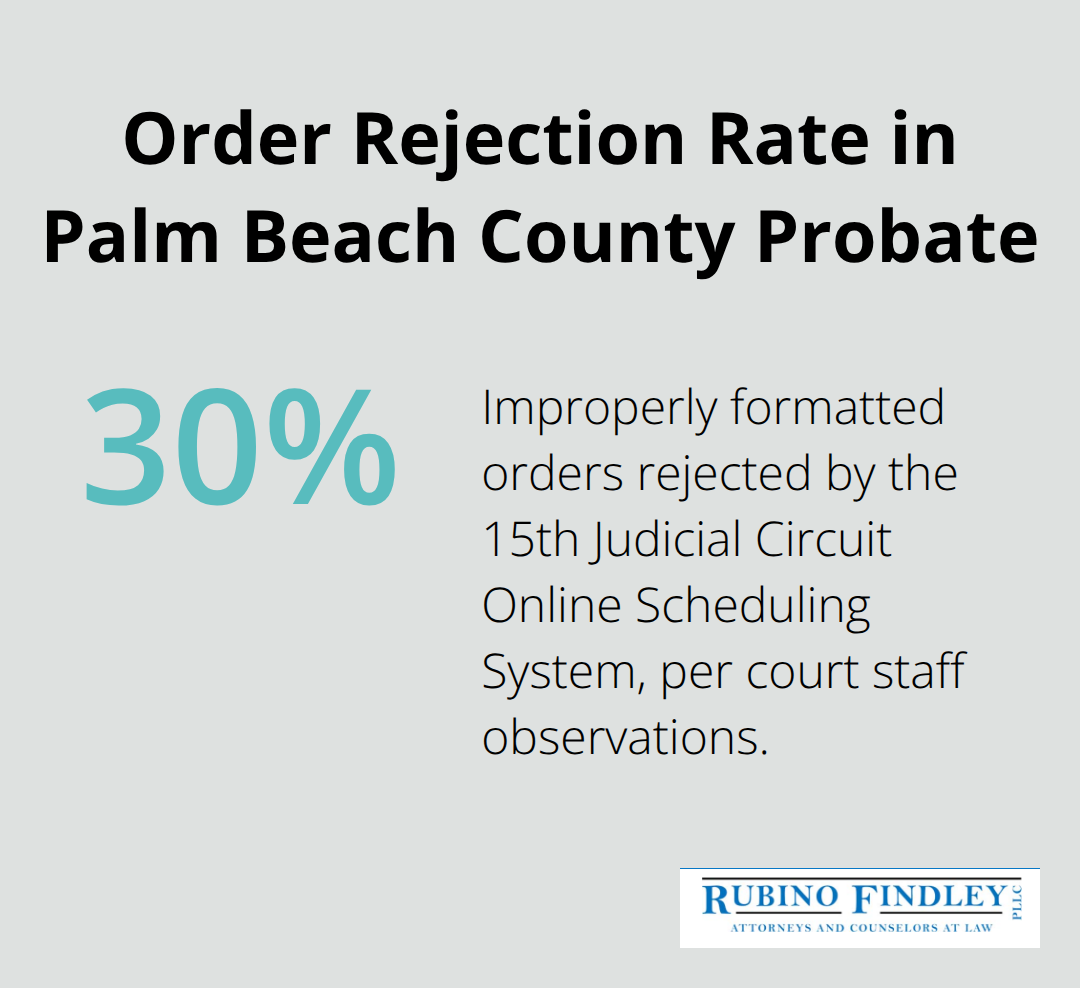
Incomplete documentation ranks as the single largest cause of probate delays in Palm Beach County, yet it remains entirely preventable. Missing or illegible death certificates, failure to file the original will with the Clerk’s Probate Division, omitted beneficiary information, and unsigned documents force you to refile petitions and restart the timeline. The 15th Judicial Circuit Online Scheduling System rejects improperly formatted orders at rates exceeding thirty percent according to court staff observations, costing weeks of lost time.
Verify that your death certificate is clear and complete, ensure the original will arrives at the Clerk’s office via hand delivery or mail to P.O. Box 4667, West Palm Beach, FL 33402, and triple-check that all beneficiary addresses and estate values are accurate before filing.
The Creditor Notification Trap
Many families miss the critical requirement that the Clerk no longer publishes Notices to Creditors for you-you must arrange publication in a Palm Beach County newspaper yourself and file proof with the Clerk. Overlooking this step invalidates your creditor notification period and extends your timeline by months. Creditor claims filed during the four-month notification period can consume three to six months resolving if legitimate disputes arise about debt amounts or validity. Contested claims require court hearings and formal resolution before asset distribution can proceed, making beneficiary patience essential during this phase.
Beneficiary Disputes and Escalating Costs
Disputes among beneficiaries create the second major delay category, and they escalate costs dramatically. When beneficiaries disagree about asset distribution, the validity of the will, or the personal representative’s decisions, you enter probate litigation that can extend timelines by one to three years. Out-of-state property further complicates matters because you may need to open ancillary probate proceedings in other states, each with their own creditor periods and filing requirements.
Tax Obligations and Multi-State Property
Tax obligations stall distributions if the estate owes federal or state taxes-you cannot distribute assets until the IRS confirms no additional liability exists, a process taking six to twelve weeks. Real estate owned in multiple states requires separate probate filings, each adding four to six months to your overall timeline.
Preventing Delays Before They Start
Avoid disputes by ensuring your will is properly drafted and executed, selecting a trustworthy personal representative, and communicating openly with all beneficiaries throughout the process. If disputes do arise, mediation often resolves them faster and cheaper than litigation. An experienced estate planning attorney can help you navigate these complex situations and resolve conflicts before they derail your entire probate administration.
Final Thoughts
Florida probate timelines range from four months for streamlined cases to two years or longer for complex estates, but this variation reflects real differences in how you structure your estate plan. The Florida probate timeline overview shows that most families face twelve to eighteen months for Formal Administration when documentation is complete and no disputes arise. Missing deadlines, incomplete paperwork, or beneficiary conflicts can easily extend this to three years or beyond.
Working with an attorney matters because the stakes are too high for guesswork. Florida law requires an attorney for Formal Administration, and even simplified paths benefit from professional guidance (an attorney ensures your death certificate and original will reach the Clerk’s Probate Division correctly, your proposed orders submit through the 15th Judicial Circuit Online Scheduling System without rejection, and you arrange newspaper publication for creditor notification). These details sound minor until they cost you months of delay and thousands in additional fees.
We at Rubino Findley, PLLC help families in Palm Beach County establish wills, trusts, probate administration, and durable powers of attorney before crisis strikes. Whether you’re facing probate now or want to avoid it entirely, contact our team to discuss your situation. Starting your estate plan today protects your family from the delays and complications that probate creates tomorrow.