



Petition for Probate Florida: How to Initiate the Process
When a loved one passes away in Florida, initiating probate can feel overwhelming. A petition for probate Florida is your formal request to the court to validate the will and distribute the estate according to law.
We at Rubino Findley, PLLC help families in Boca Raton and throughout Palm Beach County navigate this process. This guide walks you through each step, from gathering documents to filing your petition and avoiding costly mistakes.
What Probate Actually Does in Florida
Probate in Florida is the court process that validates a will and transfers the deceased person’s assets to their rightful heirs. The legal mechanism proves the will is genuine, identifies who owns what, pays off debts and taxes, and then distributes remaining property according to either the will or Florida’s intestacy laws if no will exists. The process centers on appointing a personal representative (executor) who collects assets, manages the estate during probate, and eventually distributes funds to beneficiaries. Not every asset goes through probate-bank accounts with named beneficiaries, life insurance proceeds, and property owned with survivorship rights bypass the process entirely. Only assets titled solely in the decedent’s name without a designated beneficiary require probate administration.
When Your Estate Needs Probate
Probate becomes necessary when someone dies with assets in their name alone and no beneficiary designation. If the deceased owned real estate, a business, or substantial bank accounts without a co-owner or payable-on-death designation, those assets trigger probate. Florida law requires probate for estates with non-exempt assets exceeding $150,000 unless the person has been dead for more than two years, according to Florida Statute 735.201. Even smaller estates sometimes need probate if creditors have claims or beneficiaries dispute the distribution. Conversely, if most assets pass through beneficiary designations or survivorship arrangements, probate may be unnecessary. The decedent’s circumstances determine whether probate is truly required or whether simpler alternatives exist.
Three Paths Through Florida Probate
Florida offers three distinct administration routes depending on estate size and complexity. Formal administration applies to larger estates and situations where the personal representative needs court authority to sell property or resolve disputes-this typically runs six to twelve months. Summary administration handles smaller estates under $150,000 with no significant debts and takes roughly two to three weeks from petition to court order, as noted in Florida Statute 735.201.
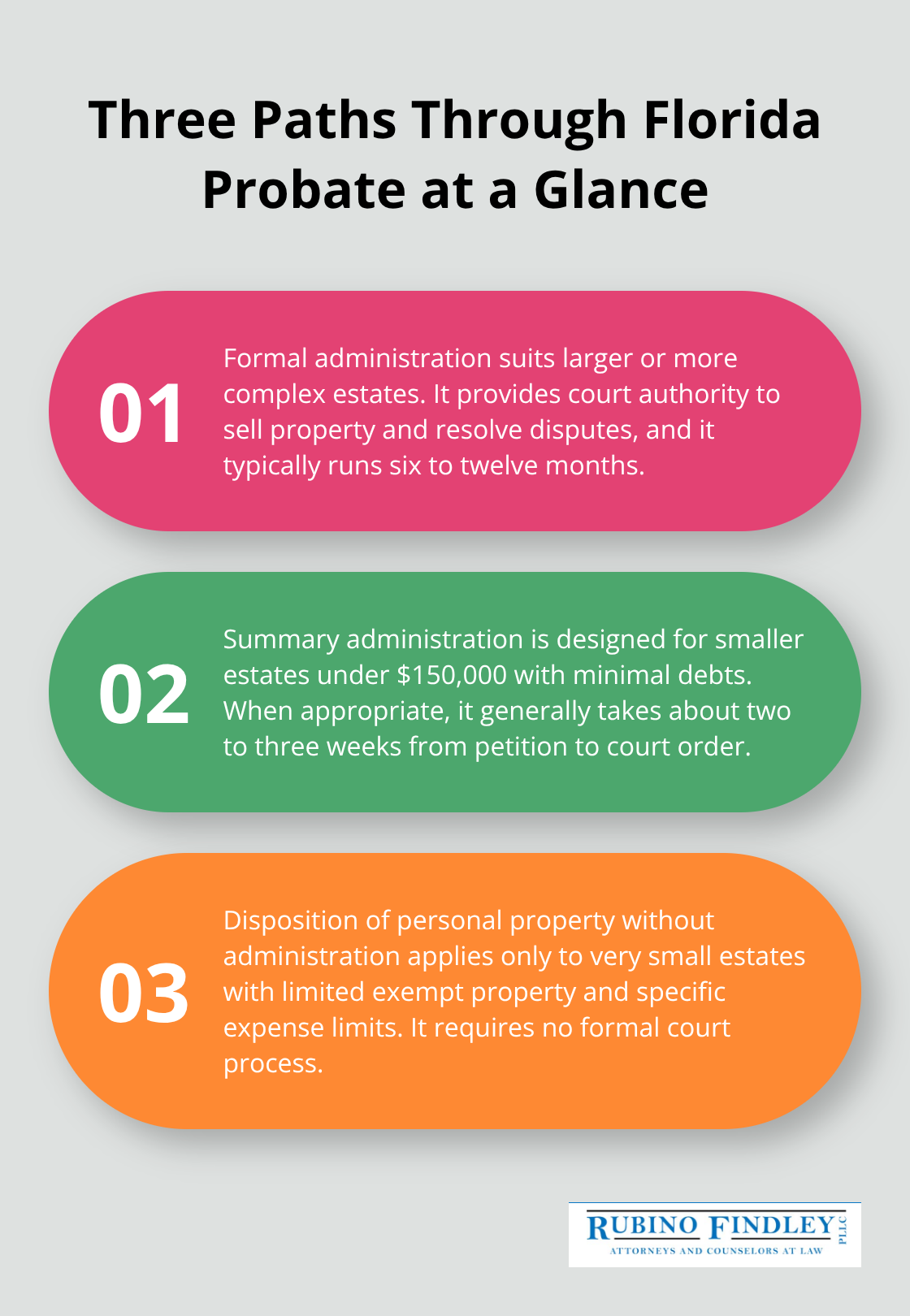
Disposition of personal property without administration applies only to very small estates with exempt property under $20,000 and funeral or medical expenses within statutory limits, requiring no formal court process. Estates with real property located outside Florida require ancillary administration in that state as well, adding complexity and cost.
Which Path Fits Your Situation
Choosing the correct administration route saves time and money. A formal administration makes sense when the estate includes substantial assets, real property that needs to be sold, or when beneficiaries cannot agree on distribution. Summary administration works well for straightforward situations where all heirs consent and debts are minimal or nonexistent. If the estate consists primarily of exempt property (homestead, vehicles, household furnishings) and funeral expenses, disposition without administration may apply. The size of the estate and the presence of out-of-state property determine your next steps in the filing process.
How to Gather Documents and File Your Petition
Collect the Essential Documents First
You must locate the decedent’s original will, if one exists, along with a certified death certificate from the Florida Department of Vital Statistics. Gather the decedent’s financial records, property deeds, bank statements, and any life insurance policies to understand what assets exist and what requires probate. According to Florida Statute 732.901, if a will was deposited with the clerk before death, you must retrieve it rather than file a new copy. The personal representative should collect Social Security numbers, account numbers, and contact information for all known creditors and beneficiaries, as these details appear in court documents and notices.
Prepare Complete and Accurate Information
For formal administration, the attorney handling your case will complete the actual petition forms, but you must provide complete and accurate information about assets, liabilities, and beneficiaries. Incomplete documentation causes delays-the court will issue deficiency memoranda that require corrections before your petition moves forward, typically adding two to four weeks to the timeline. Accuracy matters because courts reject petitions with missing or contradictory information about the estate’s composition.
Know Where and How to File in Palm Beach County
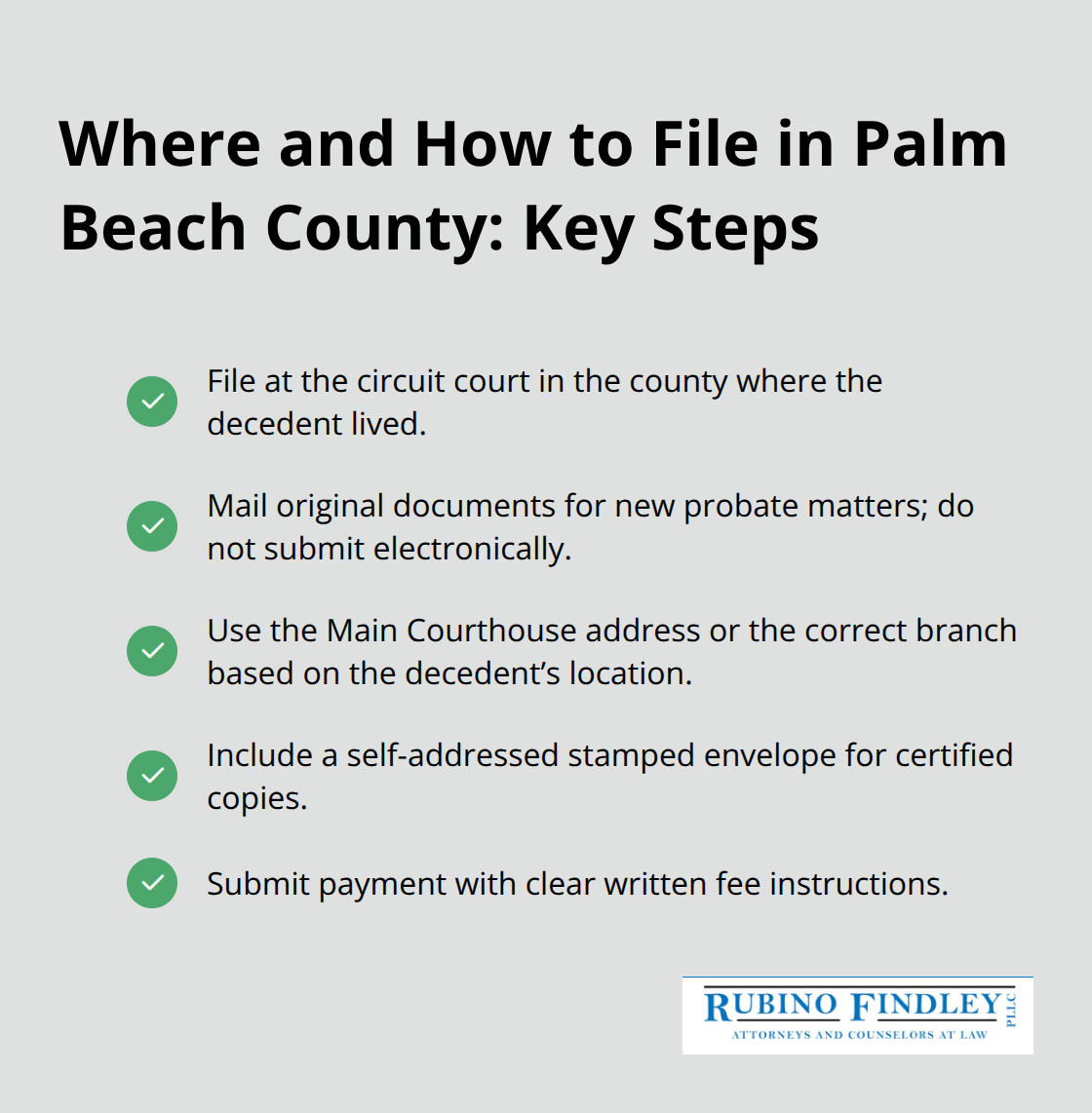
You must file at the circuit court in the county where the decedent lived. In Palm Beach County, original documents must be mailed to the courthouse rather than submitted electronically for new probate matters, according to the 15th Judicial Circuit’s procedures. Mail documents to the Main Courthouse at 205 North Dixie Highway, West Palm Beach, FL 33401, or to the appropriate branch office if the decedent lived in South or North County. Include a self-addressed stamped envelope if you need certified copies back, and submit payment with clear written instructions about fees.
Understand the Costs and Timeline
Filing fees in Florida typically run between $345 and $405 depending on the county and administration type, plus publication costs around $250 for the creditor notice in a newspaper of general circulation. For summary administration, the court generally issues an order within two to three weeks. For formal administration, the personal representative is usually appointed within four to six weeks, after which the 90-day creditor notice period begins.
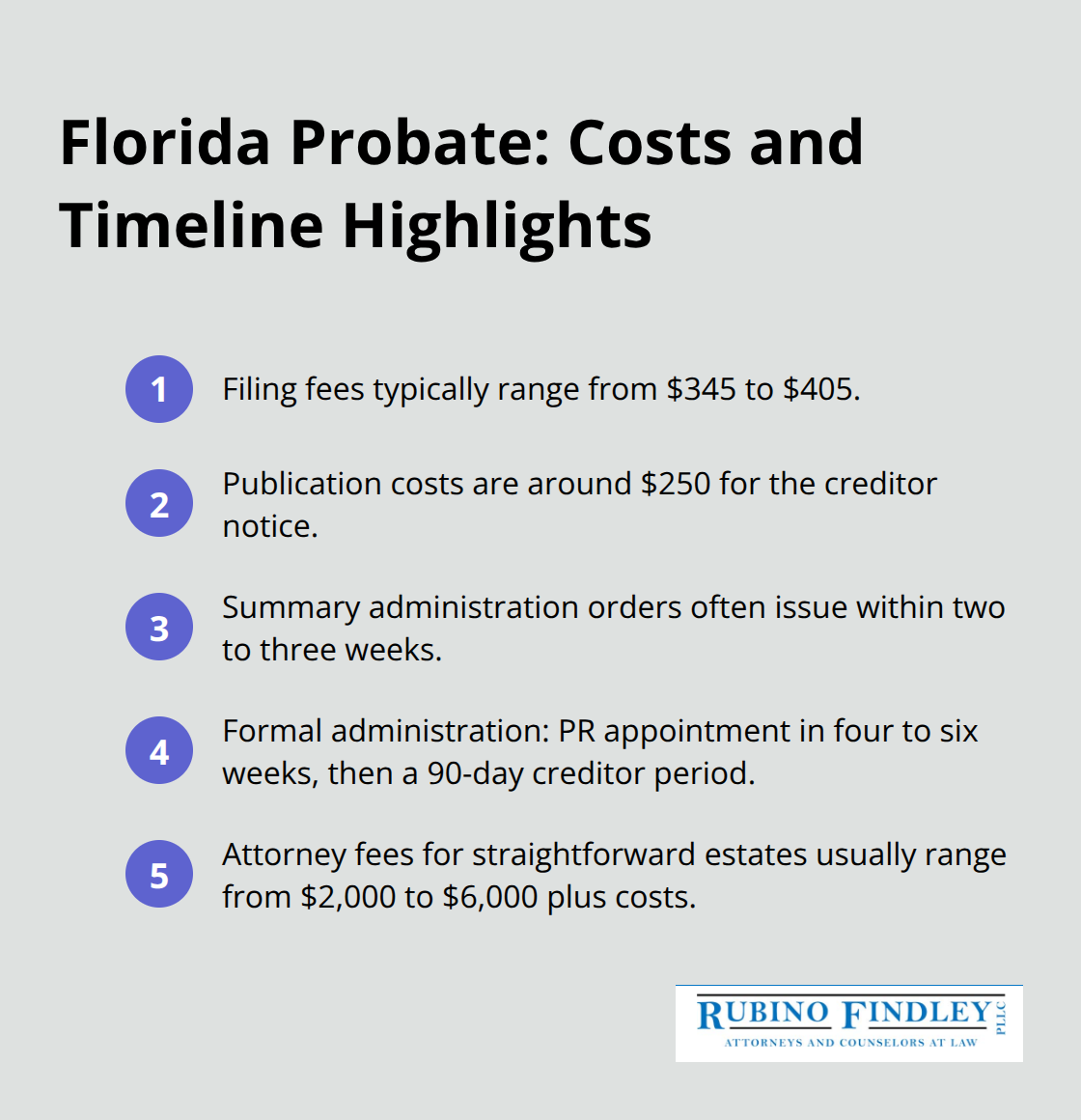
Attorney fees for straightforward estates without complications typically range from $2,000 to $6,000 plus court costs, making professional assistance far more affordable than filing errors that trigger additional court appearances.
What Happens After You File
Once you submit your petition, the court reviews your documents for completeness and accuracy. If deficiencies exist, you must cure them before the petition advances. The timeline from filing to appointment of the personal representative varies by administration type and court workload, but understanding these costs and timelines helps you plan accordingly. The next critical step involves understanding what mistakes commonly derail probate petitions and how to avoid them.
Common Mistakes to Avoid When Filing for Probate in Boca Raton
Filing errors in probate court create cascading delays that extend your timeline by weeks or months. The 15th Judicial Circuit in Palm Beach County issues deficiency memoranda when documents are incomplete or inaccurate, and you must correct these problems before your petition moves forward. Courts reject petitions missing information about assets, liabilities, beneficiaries, or the decedent’s residency, forcing you to resubmit corrected versions. Document deficiencies, missing death certificates, or unsigned documents all trigger deficiency notices. Each deficiency adds two to four weeks to your timeline, and if you must hire an attorney to fix errors you initially attempted yourself, attorney fees rise substantially.
The Original Will Problem
The most common error we observe is the failure to locate and include the original will if one exists. Florida Statute 732.901 requires deposited wills to be retrieved from the clerk, but many families file new petitions without checking whether a will was already on file. This oversight forces the court to reject the petition and require amended filings. Before you submit anything to the court, contact the clerk’s office in the county where the decedent lived and ask whether a will was deposited with them. This single step prevents costly rejections and restarts.
Filing in the Wrong Format or Location
The 15th Judicial Circuit requires original documents to be mailed to the courthouse, not submitted electronically for new probate matters, yet many people attempt to file online and watch their submissions get rejected. When you file a formal administration petition, you must complete the appropriate checklist in the Online Local System and upload proposed orders, but failure to follow this exact procedure delays your case. Mail documents to the Main Courthouse at 205 North Dixie Highway, West Palm Beach, FL 33401, or to the appropriate branch office if the decedent lived in South or North County. Include a self-addressed stamped envelope if you need certified copies back, and submit payment with clear written instructions about fees.
Creditor Notice Deadlines and Publication Requirements
The 90-day creditor notice period begins only after the personal representative receives appointment, and missing this deadline can extend your probate timeline significantly. Publication of the creditor notice in a newspaper of general circulation must occur before the notice period can run, and if publication is delayed or incomplete, creditors gain additional time to file claims. Florida law requires notice to all known creditors within specific timeframes (typically 30 days of appointment), and failure to provide proper notice can result in creditors filing late claims that restart portions of the probate process. Known creditors must receive written notice, not just publication in a newspaper, yet many representatives rely on publication alone and miss actual creditor claims.
Beneficiary and Creditor Notification Failures
Failing to notify beneficiaries and creditors according to Florida Statute 733.2121 exposes the personal representative to personal liability. Beneficiaries must receive notice of administration early in the formal administration process, and if they discover later that they were not properly notified, they can challenge the validity of distributions and delay the estate’s closure. The personal representative who fails to provide proper notice can be personally liable for creditor claims that should have been paid from estate assets. Maintain detailed records of every notification sent, including certified mail receipts and publication proofs, because these documents protect the personal representative from liability claims.
Final Thoughts
Filing a petition for probate Florida requires careful attention to detail, accurate documentation, and understanding which administration path fits your estate. The three main takeaways are straightforward: you must gather all original documents including the will and death certificate, file in the correct location using the proper procedures for your county, and avoid common mistakes like incomplete information or missed creditor notice deadlines. These steps determine whether your probate moves smoothly or stalls for weeks due to deficiency memoranda and corrections.
You should seek legal assistance if your estate exceeds $150,000, includes out-of-state property, or involves any complexity beyond a simple distribution to willing heirs. An attorney prevents costly filing errors that extend your timeline and protects the personal representative from liability for improper notifications or missed creditor claims. The cost of professional help typically ranges from $2,000 to $6,000 for straightforward estates, which is far less than the expense of fixing mistakes or facing personal liability later.
We at Rubino Findley, PLLC help families in Boca Raton and throughout Palm Beach County navigate probate administration and avoid these pitfalls. Beyond probate, we also assist with estate planning services including wills, trusts, and durable powers of attorney that can help you avoid probate entirely for your loved ones. Contact our team to learn how we can guide you through probate or help you plan ahead.